

ReadingFaithfully.org icon Facebook icon Bluesky icon Reddit icon Tumblr icon Mastodon icon RSS icon

SN 45.24 Dutiyapaṭipadāsutta: The Way (2)

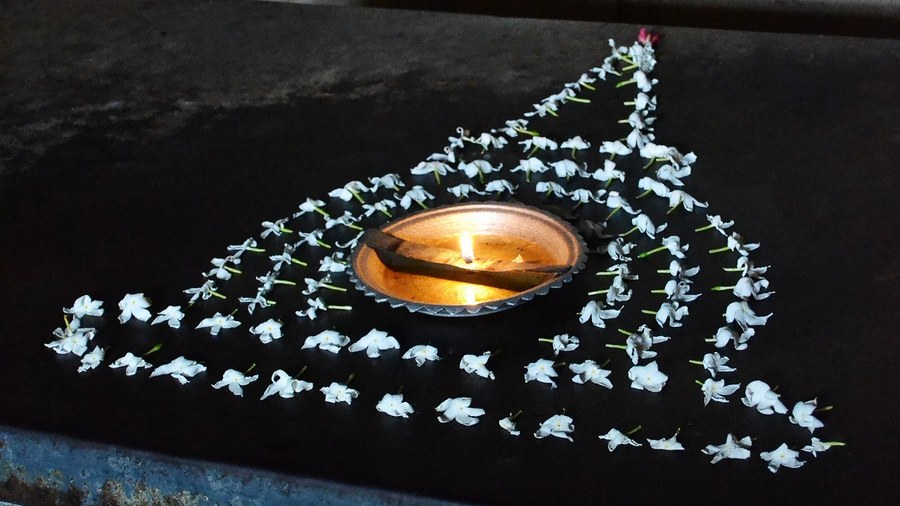
An oil lamp offered with a design of a stupa surrounding it made out of jasmine flowers.

At Savatthī. “Bhikkhus, whether for a layperson or one gone forth, I do not praise the wrong way. Whether it is a layperson or one gone forth who is practising wrongly, because of undertaking the wrong way of practice he does not attain the method, the Dhamma that is wholesome. And what, bhikkhus, is the wrong way? It is: wrong view … wrong concentration. This is called the wrong way. Whether it is a layperson or one gone forth who is practising wrongly, because of undertaking the wrong way of practice he does not attain the method, the Dhamma that is wholesome.

“Bhikkhus, whether for a layperson or one gone forth, I praise the right way. Whether it is a layperson or one gone forth who is practising rightly, because of undertaking the right way of practice he attains the method, the Dhamma that is wholesome. And what, bhikkhus, is the right way? It is: right view … right concentration. This is called the right way. Whether it is a layperson or one gone forth who is practising rightly, because of undertaking the right way of practice he attains the method, the Dhamma that is wholesome.”


Read this translation of Saṁyutta Nikāya 45.24 Dutiyapaṭipadāsutta: The Way (2) by Bhikkhu Bodhi on SuttaCentral.net. Or read a different translation on SuttaCentral.net. Or listen on SC-Voice.net. Or explore the Pali on DigitalPaliReader.online.

Or read a translation in Deutsch, Bengali, Español, Indonesian, မြန်မာဘာသာ, Norsk, ру́сский язы́к, සිංහල, ไทย, Tiếng Việt, or 汉语. Learn how to find your language.

AN 4.62 Ānaṇyasutta: Freedom From Debt

Wooden cutout toy of house next to stacks of coins with plants sprouting out of them.

Then the householder Anāthapiṇḍika approached the Blessed One…. The Blessed One said to him:

“Householder, there are these four kinds of happiness that may be achieved by a layperson who enjoys sensual pleasures, depending on time and occasion. What four? The happiness of ownership, the happiness of enjoyment, the happiness of freedom from debt, and the happiness of blamelessness.

(1) “And what, householder, is the happiness of ownership? Here, a clansman has acquired wealth by energetic striving, amassed by the strength of his arms, earned by the sweat of his brow, righteous wealth righteously gained. When he thinks, ‘I have acquired wealth by energetic striving … righteously gained,’ he experiences happiness and joy. This is called the happiness of ownership.

(2) “And what is the happiness of enjoyment? Here, with wealth acquired by energetic striving, amassed by the strength of his arms, earned by the sweat of his brow, righteous wealth righteously gained, a clansman enjoys his wealth and does meritorious deeds. When he thinks, ‘With wealth acquired by energetic striving … righteously gained, I enjoy my wealth and do meritorious deeds,’ he experiences happiness and joy. This is called the happiness of enjoyment.

(3) “And what is the happiness of freedom from debt? Here, a clansman has no debts to anyone, whether large or small. When he thinks, ‘I have no debts to anyone, whether large or small,’ he experiences happiness and joy. This is called the happiness of freedom from debt.

(4) “And what is the happiness of blamelessness? Here, householder, a noble disciple is endowed with blameless bodily, verbal, and mental action. When he thinks, ‘I am endowed with blameless bodily, verbal, and mental action,’ he experiences happiness and joy. This is called the happiness of blamelessness.

“These are the four kinds of happiness that a layperson who enjoys sensual pleasures may achieve, depending on time and occasion.”

Having known the happiness of freedom from debt,
one should recall the happiness of ownership.
Enjoying the happiness of enjoyment,
a mortal then sees things clearly with wisdom.

While seeing things clearly, the wise one
knows both kinds of happiness.
The other is not worth a sixteenth part
of the bliss of blamelessness.


Read this translation of Aṅguttara Nikāya 4.62 Ānaṇyasutta: Freedom From Debt by Bhikkhu Bodhi on SuttaCentral.net.

Or read a different translation on SuttaCentral.net or DhammaTalks.org. Or listen on PaliAudio.com or SC-Voice.net. Or explore the Pali on DigitalPaliReader.online.

Or read a translation in Čeština, Deutsch, Polski, Bengali, Español, Français, Indonesian, Italiano, မြန်မာဘာသာ, Norsk, ру́сский язы́к, සිංහල, ไทย, Tiếng Việt, or 汉语. Learn how to find your language.

SN 46.39 Rukkhasutta: Trees

Close up of a banyan tree encircling another tree.

“Bhikkhus, there are huge trees with tiny seeds and huge bodies, encirclers of other trees, and the trees which they encircle become bent, twisted, and split. And what are those huge trees with tiny seeds and huge bodies? The assattha, the banyan, the pilakkha, the udumbara, the kacchaka, and the kapitthana: these are those huge trees with tiny seeds and huge bodies, encirclers of other trees, and the trees which they encircle become bent, twisted, and split. So too, bhikkhus, when some clansman here has left behind sensual pleasures and gone forth from the household life into homelessness, he becomes bent, twisted, and split because of those same sensual pleasures, or because of others worse than them.

“These five, bhikkhus, are obstructions, hindrances, encirclers of the mind, weakeners of wisdom. What five? Sensual desire is an obstruction, a hindrance encircling the mind, a weakener of wisdom. Ill will … Sloth and torpor … Restlessness and remorse … Doubt is an obstruction … a weakener of wisdom. These are the five obstructions, hindrances, encirclers of the mind, weakeners of wisdom.

“These seven factors of enlightenment, bhikkhus, are nonobstructions, nonhindrances, nonencirclers of the mind; when developed and cultivated they lead to the realization of the fruit of true knowledge and liberation. What seven? The enlightenment factor of mindfulness is a nonobstruction … The enlightenment factor of discrimination of states … The enlightenment factor of energy … The enlightenment factor of rapture … The enlightenment factor of tranquillity … The enlightenment factor of concentration … The enlightenment factor of equanimity is a nonobstruction.… These seven factors of enlightenment are nonobstructions, nonhindrances, nonencirclers of the mind; when developed and cultivated they lead to the realization of the fruit of true knowledge and liberation.”


Read this translation of Saṁyutta Nikāya 46.39 Rukkhasutta: Trees by Bhikkhu Bodhi on SuttaCentral.net.
Or read a different translation on SuttaCentral.net. Or listen on SC-Voice.net. Or explore the Pali on DigitalPaliReader.online.

Or read a translation in Deutsch, Bengali, Español, Indonesian, မြန်မာဘာသာ, Norsk, Português, ру́сский язы́к, සිංහල, ไทย, Tiếng Việt, or 汉语. Learn how to find your language.

SN 45.2 Upaḍḍhasutta: Half the Holy Life

People worshiping at an elaborate Buddhist shrine featuring the Buddha in several postures with paintings from the life of the Buddha in the background.

[Note: Often just a single line of the Buddha’s response to Ven. Ananda is quoted from this sutta. But it’s important to remember the detailed meaning that the Buddha reveals.]

Thus have I heard. On one occasion the Blessed One was dwelling among the Sakyans where there was a town of the Sakyans named Nagaraka. Then the Venerable Ānanda approached the Blessed One. Having approached, he paid homage to the Blessed One, sat down to one side, and said to him:

“Venerable sir, this is half of the holy life, that is, good friendship, good companionship, good comradeship.”

“Not so, Ānanda! Not so, Ānanda! This is the entire holy life, Ānanda, that is, good friendship, good companionship, good comradeship. When a bhikkhu has a good friend, a good companion, a good comrade, it is to be expected that he will develop and cultivate the Noble Eightfold Path.

“And how, Ānanda, does a bhikkhu who has a good friend, a good companion, a good comrade, develop and cultivate the Noble Eightfold Path? Here, Ānanda, a bhikkhu develops right view, which is based upon seclusion, dispassion, and cessation, maturing in release. He develops right intention … right speech … right action … right livelihood … right effort … right mindfulness … right concentration, which is based upon seclusion, dispassion, and cessation, maturing in release. It is in this way, Ānanda, that a bhikkhu who has a good friend, a good companion, a good comrade, develops and cultivates the Noble Eightfold Path.

By the following method too, Ānanda, it may be understood how the entire holy life is good friendship, good companionship, good comradeship: by relying upon me as a good friend, Ānanda, beings subject to birth are freed from birth; beings subject to aging are freed from aging; beings subject to death are freed from death; beings subject to sorrow, lamentation, pain, displeasure, and despair are freed from sorrow, lamentation, pain, displeasure, and despair. By this method, Ānanda, it may be understood how the entire holy life is good friendship, good companionship, good comradeship.”


Read this translation of Saṁyutta Nikāya 45.2 Upaḍḍhasutta: Half the Holy Life by Bhikkhu Bodhi on SuttaCentral.net.

Or read a different translation on SuttaCentral.net or DhammaTalks.org. Or listen on SC-Voice.net. Or explore the Pali on DigitalPaliReader.online.

Or read a translation in Deutsch, Lietuvių Kalba, Polski, Bengali, Español, Français, Magyar, Indonesian, Italiano, မြန်မာဘာသာ, Nederlands, Norsk, Português, ру́сский язы́к, සිංහල, ไทย, Tiếng Việt, or 汉语. Learn how to find your language.

AN 4.13 Padhānasutta: Striving

Old person wearing white meditating at the base of a gigantic brick stupa.

“Bhikkhus, there are these four right strivings. What four? (1) Here, a bhikkhu generates desire for the non-arising of unarisen bad unwholesome states; he makes an effort, arouses energy, applies his mind, and strives. (2) He generates desire for the abandoning of arisen bad unwholesome states; he makes an effort, arouses energy, applies his mind, and strives. (3) He generates desire for the arising of unarisen wholesome states; he makes an effort, arouses energy, applies his mind, and strives. (4) He generates desire for the persistence of arisen wholesome states, for their non-decline, increase, expansion, and fulfillment by development; he makes an effort, arouses energy, applies his mind, and strives. These are the four right strivings.”

Those who strive rightly
overcome the realm of Māra;
they are unattached,
gone beyond fear of birth and death.

They are contented and unstirred,
having conquered Māra and his mount;
those happy ones have overcome
all Namuci’s armies.


Note: Namuci is another name for Māra.

Read this translation of Aṅguttara Nikāya 4.13 Padhānasutta: Striving by Bhikkhu Bodhi on SuttaCentral.net. Or read a different translation on SuttaCentral.net. Or listen on PaliAudio.com or SC-Voice.net. Or explore the Pali on DigitalPaliReader.online.

Or read a translation in Čeština, Deutsch, Bengali, Français, Indonesian, မြန်မာဘာသာ, Nederlands, ру́сский язы́к, සිංහල, ไทย, Tiếng Việt, or 汉语. Learn how to find your language.

AN 8.13 Assājānīyasutta: Thoroughbred

Pure white horse running.

“Bhikkhus, possessing eight factors, a king’s excellent thoroughbred horse is worthy of a king, an accessory of a king, and reckoned as a factor of kingship. What eight?

  1. “Here, a king’s excellent thoroughbred horse is well born on both sides, maternal and paternal; he is born in whatever area other excellent thoroughbred horses are born.
  2. He respectfully eats whatever food they give him, whether moist or dry, without scattering it.
  3. He is repelled by sitting down or lying down near feces or urine.
  4. He is mild and pleasant to live with, and he does not agitate other horses.
  5. He reveals his tricks, ploys, gambits, and wiles as they really are to his trainer so that his trainer can make an effort to stamp them out of him.
  6. He carries loads, determined: ‘Whether or not the other horses carry loads, I myself will carry them.’
  7. When moving, he moves only along a straight path.
  8. He is strong, and he shows his strength right up until the end of his life.

Possessing these eight factors, a king’s excellent thoroughbred horse is worthy of a king, an accessory of a king, and reckoned as a factor of kingship.

“So too, bhikkhus, possessing eight qualities, a bhikkhu is worthy of gifts … an unsurpassed field of merit for the world. What eight?

  1. “Here, a bhikkhu is virtuous; he dwells restrained by the Pātimokkha, possessed of good conduct and resort, seeing danger in minute faults. Having undertaken the training rules, he trains in them.
  2. He respectfully eats whatever food they give him, whether coarse or excellent, without being annoyed.
  3. He is repelled by bodily, verbal, and mental misconduct; he is repelled by the acquisition of the numerous kinds of bad unwholesome qualities.
  4. He is mild and pleasant to live with, and he does not agitate other bhikkhus.
  5. He reveals his tricks, ploys, gambits, and wiles as they really are to the Teacher or to his wise fellow monks so that they can make an effort to stamp them out of him.
  6. He is one who takes up the training, determined: ‘Whether or not other bhikkhus train, I will train.’
  7. When moving, he moves only along a straight path. In this connection, this is the straight path: right view, right intention, right speech, right action, right livelihood, right effort, right mindfulness, right concentration.
  8. He has aroused energy thus: ‘Willingly, let only my skin, sinews, and bones remain, and let the flesh and blood dry up in my body, but I will not relax my energy so long as I have not attained what can be attained by manly strength, energy, and exertion.’

Possessing these eight qualities, a bhikkhu is worthy of gifts … an unsurpassed field of merit for the world.”


Read this translation of Aṅguttara Nikāya 8.13 Assājānīyasutta: Thoroughbred by Bhikkhu Bodhi on SuttaCentral.net. Or read a different translation on SuttaCentral.net or DhammaTalks.org. Or listen on SC-Voice.net. Or explore the Pali on DigitalPaliReader.online.
Or read a translation in Deutsch, Bengali, Indonesian, Italiano, မြန်မာဘာသာ, ру́сский язы́к, සිංහල, ไทย, Tiếng Việt, or 汉语. Learn how to find your language.

SN 45.150 Bījasutta: Seeds

Several small seedlings.

“Bhikkhus, just as whatever kinds of seed and plant life attain to growth, increase, and expansion, all do so based upon the earth, established upon the earth, so too, based upon virtue, established upon virtue, a bhikkhu develops and cultivates the Noble Eightfold Path, and thereby he attains to growth, increase, and expansion in wholesome states.

“And how does a bhikkhu do so? Here, bhikkhus, a bhikkhu develops right view … right intention … right speech … right action … right livelihood … right effort … right mindfulness … right concentration, which is based upon seclusion, dispassion, and cessation, maturing in release. It is in this way, bhikkhus, that a bhikkhu, based upon virtue, established upon virtue, develops and cultivates the Noble Eightfold Path, and thereby attains to growth, increase, and expansion in wholesome states.”


Read this translation of Saṁyutta Nikāya 45.150 Bījasutta: Seeds by Bhikkhu Bodhi on SuttaCentral.net.
SN 45.155 Ākāsasutta: The Sky

Person wearing white walking down a forest path.

“Bhikkhus, just as various winds blow in the sky—easterly winds, westerly winds, northerly winds, southerly winds, dusty winds and dustless winds, cold winds and hot winds, gentle winds and strong winds —so too, when a bhikkhu develops and cultivates the Noble Eightfold Path, then for him

  • the four establishments of mindfulness go to fulfilment by development;
  • the four right strivings go to fulfilment by development;
  • the four bases for spiritual power go to fulfilment by development;
  • the five spiritual faculties go to fulfilment by development;
  • the five powers go to fulfilment by development;
  • the seven factors of enlightenment go to fulfilment by development.

“And how is this so? Here, bhikkhus, a bhikkhu develops right view … right intention … right speech … right action … right livelihood … right effort … right mindfulness … right concentration, which is based upon seclusion, dispassion, and cessation, maturing in release. It is in this way, bhikkhus, that when a bhikkhu develops and cultivates the Noble Eightfold Path, then for him the four establishments of mindfulness … the seven factors of enlightenment go to fulfilment by development.”


Read this translation of Saṁyutta Nikāya 45.155 Ākāsasutta: The Sky by Bhikkhu Bodhi on SuttaCentral.net. Or read a different translation on SuttaCentral.net or DhammaTalks.org. Or listen on SC-Voice.net. Or explore the Pali on DigitalPaliReader.online.

Or read a translation in Deutsch, Bengali, Español, Indonesian, မြန်မာဘာသာ, Norsk, ру́сский язы́к, සිංහල, ไทย, Tiếng Việt, or 汉语. Learn how to find your language.

AN 5.25 Anuggahitasutta: Assisted

Large golden Buddha statue.

“Bhikkhus, when right view is assisted by five factors, it has liberation of mind as its fruit, liberation of mind as its fruit and benefit; it has liberation by wisdom as its fruit, liberation by wisdom as its fruit and benefit. What five? Here, right view is assisted by

  1. virtuous behavior,
  2. learning,
  3. discussion,
  4. calm, and
  5. insight.

When right view is assisted by these five factors, it has liberation of mind as its fruit, liberation of mind as its fruit and benefit; it has liberation by wisdom as its fruit, liberation by wisdom as its fruit and benefit.”


Read this translation of Aṅguttara Nikāya 5.25 Anuggahitasutta: Assisted by Bhikkhu Bodhi on SuttaCentral.net. Or read a different translation on SuttaCentral.net or DhammaTalks.org. Or listen on SC-Voice.net. Or explore the Pali on DigitalPaliReader.online.
Or read a translation in Deutsch, Bengali, Čeština, Español, Français, Magyar, Indonesian, Italiano, မြန်မာဘာသာ, Português, ру́сский язы́к, සිංහල, ไทย, Tiếng Việt, or 汉语. Learn how to find your language.

MN 117 Mahācattārīsakasutta: The Great Forty

Bust of a giant Buddha statue.

[Note: Today’s sutta is very long, but it’s an important one when studying the Noble Eightfold Path. It includes the definition of two types of right view, right intention, right action, right speech and right livelihood.]

Thus have I heard. On one occasion the Blessed One was living at Sāvatthī in Jeta’s Grove, Anāthapiṇḍika’s Park. There he addressed the bhikkhus thus: “Bhikkhus.”—“Venerable sir,” they replied. The Blessed One said this:

“Bhikkhus, I shall teach you noble right concentration with its supports and its requisites. Listen and attend closely to what I shall say.”—“Yes, venerable sir,” the bhikkhus replied. The Blessed One said this:

“What, bhikkhus, is noble right concentration with its supports and its requisites, that is, right view, right intention, right speech, right action, right livelihood, right effort, and right mindfulness? Unification of mind equipped with these seven factors is called noble right concentration with its supports and its requisites.

View

“Therein, bhikkhus, right view comes first. And how does right view come first? One understands wrong view as wrong view and right view as right view: this is one’s right view.

“And what, bhikkhus, is wrong view? ‘There is nothing given, nothing offered, nothing sacrificed; no fruit or result of good and bad actions; no this world, no other world; no mother, no father; no beings who are reborn spontaneously; no good and virtuous recluses and brahmins in the world who have realised for themselves by direct knowledge and declare this world and the other world.’ This is wrong view.

“And what, bhikkhus, is right view? Right view, I say, is twofold: there is right view that is affected by taints, partaking of merit, ripening in the acquisitions; and there is right view that is noble, taintless, supramundane, a factor of the path.

“And what, bhikkhus, is right view that is affected by the taints, partaking of merit, ripening in the acquisitions? ‘There is what is given and what is offered and what is sacrificed; there is fruit and result of good and bad actions; there is this world and the other world; there is mother and father; there are beings who are reborn spontaneously; there are in the world good and virtuous recluses and brahmins who have realised for themselves by direct knowledge and declare this world and the other world.’ This is right view affected by taints, partaking of merit, ripening in the acquisitions.

“And what, bhikkhus, is right view that is noble, taintless, supramundane, a factor of the path? The wisdom, the faculty of wisdom, the power of wisdom, the investigation-of-states enlightenment factor, the path factor of right view in one whose mind is noble, whose mind is taintless, who possesses the noble path and is developing the noble path: this is right view that is noble, taintless, supramundane, a factor of the path.

“One makes an effort to abandon wrong view and to enter upon right view: this is one’s right effort. Mindfully one abandons wrong view, mindfully one enters upon and abides in right view: this is one’s right mindfulness. Thus these three states run and circle around right view, that is, right view, right effort, and right mindfulness.

Intention

“Therein, bhikkhus, right view comes first. And how does right view come first? One understands wrong intention as wrong intention and right intention as right intention: this is one’s right view.

“And what, bhikkhus, is wrong intention? The intention of sensual desire, the intention of ill will, and the intention of cruelty: this is wrong intention.

“And what, bhikkhus, is right intention? Right intention, I say, is twofold: there is right intention that is affected by taints, partaking of merit, ripening in the acquisitions, and there is right intention that is noble, taintless, supramundane, a factor of the path.

“And what, bhikkhus, is right intention that is affected by taints, partaking of merit, ripening in the acquisitions? The intention of renunciation, the intention of non-ill will, and the intention of non-cruelty: this is right intention that is affected by taints…ripening in the acquisitions.

“And what, bhikkhus, is right intention that is noble, taintless, supramundane, a factor of the path? The thinking, thought, intention, mental absorption, mental fixity, directing of mind, verbal formation in one whose mind is noble, whose mind is taintless, who possesses the noble path and is developing the noble path: this is right intention that is noble…a factor of the path.

“One makes an effort to abandon wrong intention and to enter upon right intention: this is one’s right effort. Mindfully one abandons wrong intention, mindfully one enters upon and abides in right intention: this is one’s right mindfulness. Thus these three states run and circle around right intention, that is, right view, right effort, and right mindfulness.

Speech

“Therein, bhikkhus, right view comes first. And how does right view come first? One understands wrong speech as wrong speech and right speech as right speech: this is one’s right view.

“And what, bhikkhus, is wrong speech? False speech, malicious speech, harsh speech, and gossip: this is wrong speech.

“And what, bhikkhus, is right speech? Right speech, I say, is twofold: there is right speech that is affected by taints, partaking of merit, ripening in the acquisitions; and there is right speech that is noble, taintless, supramundane, a factor of the path.

“And what, bhikkhus, is right speech that is affected by taints, partaking of merit, ripening in the acquisitions? Abstinence from false speech, abstinence from malicious speech, abstinence from harsh speech, abstinence from gossip: this is right speech that is affected by taints…ripening in the acquisitions.

“And what, bhikkhus, is right speech that is noble, taintless, supramundane, a factor of the path? The desisting from the four kinds of verbal misconduct, the abstaining, refraining, abstinence from them in one whose mind is noble, whose mind is taintless, who possesses the noble path and is developing the noble path: this is right speech that is noble…a factor of the path.

“One makes an effort to abandon wrong speech and to enter upon right speech: this is one’s right effort. Mindfully one abandons wrong speech, mindfully one enters upon and abides in right speech: this is one’s right mindfulness. Thus these three states run and circle around right speech, that is, right view, right effort, and right mindfulness.

Action

“Therein, bhikkhus, right view comes first. And how does right view come first? One understands wrong action as wrong action and right action as right action: this is one’s right view.

“And what, bhikkhus, is wrong action? Killing living beings, taking what is not given, and misconduct in sensual pleasures: this is wrong action.

“And what, bhikkhus, is right action? Right action, I say, is twofold: there is right action that is affected by taints, partaking of merit, ripening in the acquisitions; and there is right action that is noble, taintless, supramundane, a factor of the path.

“And what, bhikkhus, is right action that is affected by taints, partaking of merit, ripening in the acquisitions? Abstinence from killing living beings, abstinence from taking what is not given, abstinence from misconduct in sensual pleasures: this is right action that is affected by taints…ripening in the acquisitions.

“And what, bhikkhus, is right action that is noble, taintless, supramundane, a factor of the path? The desisting from the three kinds of bodily misconduct, the abstaining, refraining, abstinence from them in one whose mind is noble, whose mind is taintless, who possesses the noble path and is developing the noble path: this is right action that is noble…a factor of the path.

“One makes an effort to abandon wrong action and to enter upon right action: this is one’s right effort. Mindfully one abandons wrong action, mindfully one enters upon and dwells in right action: this is one’s right mindfulness. Thus these three states run and circle around right action, that is, right view, right effort, and right mindfulness.

Livelihood

“Therein, bhikkhus, right view comes first. And how does right view come first? One understands wrong livelihood as wrong livelihood and right livelihood as right livelihood: this is one’s right view.

“And what, bhikkhus, is wrong livelihood? Scheming, talking, hinting, belittling, pursuing gain with gain: this is wrong livelihood.

“And what, bhikkhus, is right livelihood? Right livelihood, I say, is twofold: there is right livelihood that is affected by taints, partaking of merit, ripening in the acquisitions; and there is right livelihood that is noble, taintless, supramundane, a factor of the path.

“And what, bhikkhus, is right livelihood that is affected by taints, partaking of merit, ripening in the acquisitions? Here, bhikkhus, a noble disciple abandons wrong livelihood and gains his living by right livelihood: this is right livelihood that is affected by taints…ripening in the acquisitions.

“And what, bhikkhus, is right livelihood that is noble, taintless, supramundane, a factor of the path? The desisting from wrong livelihood, the abstaining, refraining, abstinence from it in one whose mind is noble, whose mind is taintless, who possesses the noble path and is developing the noble path: this is right livelihood that is noble…a factor of the path.

“One makes an effort to abandon wrong livelihood and to enter upon right livelihood: this is one’s right effort. Mindfully one abandons wrong livelihood, mindfully one enters upon and dwells in right livelihood: this is one’s right mindfulness. Thus these three states run and circle around right livelihood, that is, right view, right effort, and right mindfulness.

The Great Forty

“Therein, bhikkhus, right view comes first. And how does right view come first? In one of right view, right intention comes into being; in one of right intention, right speech comes into being; in one of right speech, right action comes into being; in one of right action, right livelihood comes into being; in one of right livelihood, right effort comes into being; in one of right effort, right mindfulness comes into being; in one of right mindfulness, right concentration comes into being; in one of right concentration, right knowledge comes into being; in one of right knowledge, right deliverance comes into being. Thus, bhikkhus, the path of the disciple in higher training possesses eight factors, the arahant possesses ten factors.

“Therein, bhikkhus, right view comes first. And how does right view come first? In one of right view, wrong view is abolished, and the many evil unwholesome states that originate with wrong view as condition are also abolished, and the many wholesome states that originate with right view as condition come to fulfilment by development.

“In one of right intention, wrong intention is abolished, and the many evil unwholesome states that originate with wrong intention as condition are also abolished, and the many wholesome states that originate with right intention as condition come to fulfilment by development.

“In one of right speech, wrong speech is abolished…In one of right action, wrong action is abolished…In one of right livelihood, wrong livelihood is abolished …In one of right effort, wrong effort is abolished…In one of right mindfulness, wrong mindfulness is abolished…In one of right concentration, wrong concentration is abolished…In one of right knowledge, wrong knowledge is abolished…In one of right deliverance, wrong deliverance is abolished, and the many evil unwholesome states that originate with wrong deliverance as condition are also abolished, and the many wholesome states that originate with right deliverance as condition come to fulfilment by development.

“Thus, bhikkhus, there are twenty factors on the side of the wholesome, and twenty factors on the side of the unwholesome. This Dhamma discourse on the Great Forty has been set rolling and cannot be stopped by any recluse or brahmin or god or Māra or Brahmā or anyone in the world.

“Bhikkhus, if any recluse or brahmin thinks that this Dhamma discourse on the Great Forty should be censured and rejected, then there are ten legitimate deductions from his assertions that would provide grounds for censuring him here and now. If that worthy one censures right view, then he would honour and praise those recluses and brahmins who are of wrong view. If that worthy one censures right intention, then he would honour and praise those recluses and brahmins who are of wrong intention. If that worthy one censures right speech… right action…right livelihood…right effort…right mindfulness…right concentration…right knowledge…right deliverance, then he would honour and praise those recluses and brahmins who are of wrong deliverance. If any recluse or brahmin thinks that this Dhamma discourse on the Great Forty should be censured and rejected, then these are ten legitimate deductions from his assertions that would provide grounds for censuring him here and now.

“Bhikkhus, even those teachers from Okkala, Vassa and Bhañña, who held the doctrine of non-causality, the doctrine of non-doing, and the doctrine of nihilism, would not think that this Dhamma discourse on the Great Forty should be censured and rejected. Why is that? For fear of blame, attack, and confutation.”

That is what the Blessed One said. The bhikkhus were satisfied and delighted in the Blessed One’s words.


Read this translation of Majjhima Nikāya 117 Mahācattārīsakasutta: The Great Forty by Bhikkhu Bodhi on SuttaCentral.net. Or read a different translation on SuttaCentral.net or DhammaTalks.org. Or listen on PaliAudio.com or SC-Voice.net. Or explore the Pali on DigitalPaliReader.online.

Or read a translation in Lietuvių Kalba, Bengali, Català, Deutsch, Español, Français, हिन्दी, Magyar, Indonesian, Italiano, မြန်မာဘာသာ, Nederlands, Norsk, Português, ру́сский язы́к, සිංහල, Srpski, ไทย, Tiếng Việt, or 汉语. Learn how to find your language.

AN 3.62 Bhayasutta: Perils

Hillside with houses on fire.

“Bhikkhus, the uninstructed worldling speaks of these three perils that separate mother and son. What three?

(1) “There comes a time when a great conflagration arises. When the great conflagration has arisen, it burns up villages, towns, and cities. When villages, towns, and cities are burning up, the mother does not find her son and the son does not find his mother. This is the first peril that separates mother and son of which the uninstructed worldling speaks.

(2) “Again, there comes a time when a great rain cloud arises. When the great rain cloud has arisen, a great deluge takes place. When the great deluge takes place, villages, towns, and cities are swept away. When villages, towns, and cities are being swept away, the mother does not find her son and the son does not find his mother. This is the second peril that separates mother and son of which the uninstructed worldling speaks.

(3) “Again, there comes a time of perilous turbulence in the wilderness, when the people of the countryside, mounted on their vehicles, flee on all sides. When there is perilous turbulence in the wilderness, and the people of the countryside, mounted on their vehicles, are fleeing on all sides, the mother does not find her son and the son does not find his mother. This is the third peril that separates mother and son of which the uninstructed worldling speaks.

“These are the three perils that separate mother and son of which the uninstructed worldling speaks.

“There are, bhikkhus, these three perils when mother and son reconnect that the uninstructed worldling speaks of as perils that separate mother and son. What three?

(1) “There comes a time when a great conflagration arises. When the great conflagration has arisen, it burns up villages, towns, and cities. When villages, towns, and cities are burning up, there is sometimes an occasion when the mother finds her son and the son finds his mother. This is the first peril when mother and son reconnect that the uninstructed worldling speaks of as a peril that separates mother and son.

(2) “Again, there comes a time when a great rain cloud arises. When the great rain cloud has arisen, a great deluge takes place. When the great deluge takes place, villages, towns, and cities are swept away. When villages, towns, and cities are being swept away, there is sometimes an occasion when the mother finds her son and the son finds his mother. This is the second peril when mother and son reconnect that the uninstructed worldling speaks of as a peril that separates mother and son.

(3) “Again, there comes a time of perilous turbulence in the wilderness, when the people of the countryside, mounted on their vehicles, flee on all sides. When there is perilous turbulence in the wilderness, and the people of the countryside, mounted on their vehicles, are fleeing on all sides, there is sometimes an occasion when the mother finds her son and the son finds his mother. This is the third peril when mother and son reconnect that the uninstructed worldling speaks of as a peril that separates mother and son.

“These are the three perils when mother and son reconnect that the uninstructed worldling speak of as perils that separate mother and son.

“There are, bhikkhus, these three perils that separate mother and son. What three? The peril of old age, the peril of illness, and the peril of death.

(1) “When the son is growing old, the mother cannot fulfill her wish: ‘Let me grow old, but may my son not grow old!’ And when the mother is growing old, the son cannot fulfill his wish: ‘Let me grow old, but may my mother not grow old!’

(2) “When the son has fallen ill, the mother cannot fulfill her wish: ‘Let me fall ill, but may my son not fall ill!’ And when the mother has fallen ill, the son cannot fulfill his wish: ‘Let me fall ill, but may my mother not fall ill!’

(3) “When the son is dying, the mother cannot fulfill her wish: ‘Let me die, but may my son not die!’ And when the mother is dying, the son cannot fulfill his wish: ‘Let me die, but may my mother not die!’

“These are the three perils that separate mother and son.

There is a path, bhikkhus, there is a way that leads to the abandoning and overcoming of these three perils when mother and son reconnect and of these three perils that separate mother and son. And what is the path and way? It is just this noble eightfold path; that is, right view, right intention, right speech, right action, right livelihood, right effort, right mindfulness, and right concentration. This is the path and way that leads to the abandoning and overcoming of these three perils when mother and son reconnect and of these three perils that separate mother and son.”


Read this translation of Aṅguttara Nikāya 3.62 Bhayasutta: Perils by Bhikkhu Bodhi on SuttaCentral.net. Or read a different translation on SuttaCentral.net, or Ancient-Buddhist-Texts.net. Or listen on PaliAudio.com or SC-Voice.net. Or explore the Pali on DigitalPaliReader.online.

Or read a translation in Deutsch, Português, Bengali, Magyar, Indonesian, Italiano, မြန်မာဘာသာ, ру́сский язы́к, සිංහල, ไทย, Tiếng Việt, or 汉语. Learn how to find your language.

SN 45.9 Sūkasutta: The Spike

Hand grabbing stalks of grain.

At Savatthī. “Bhikkhus, suppose a spike of rice or a spike of barley were wrongly directed and were pressed upon by the hand or the foot. That it could pierce the hand or the foot and draw blood: this is impossible. For what reason? Because the spike is wrongly directed. So too, bhikkhus, that a bhikkhu with a wrongly directed view, with a wrongly directed development of the path, could pierce ignorance, arouse true knowledge, and realize Nibbāna: this is impossible. For what reason? Because his view is wrongly directed.

“Bhikkhus, suppose a spike of rice or a spike of barley were rightly directed and were pressed upon by the hand or the foot. That it could pierce the hand or the foot and draw blood: this is possible. For what reason? Because the spike is rightly directed. So too, bhikkhus, that a bhikkhu with a rightly directed view, with a rightly directed development of the path, could pierce ignorance, arouse true knowledge, and realize Nibbāna: this is possible. For what reason? Because his view is rightly directed.

“And how does a bhikkhu do so? Here, bhikkhus, a bhikkhu develops right view, which is based upon seclusion, dispassion, and cessation, maturing in release. He develops right intention … right speech … right action … right livelihood … right effort … right mindfulness … right concentration, which is based upon seclusion, dispassion, and cessation, maturing in release.

“It is in this way, bhikkhus, that a bhikkhu with a rightly directed view, with a rightly directed development of the path, pierces ignorance, arouses true knowledge, and realizes Nibbāna.”


Read this translation of Saṁyutta Nikāya 45.9 Sūkasutta: The Spike by Bhikkhu Bodhi on SuttaCentral.net. Or read a different translation on SuttaCentral.net. Or listen on SC-Voice.net. Or explore the Pali on DigitalPaliReader.online.
Or read a translation in Deutsch, Bengali, Español, Indonesian, မြန်မာဘာသာ, Norsk, ру́сский язы́к, සිංහල, ไทย, Tiếng Việt, or 汉语. Learn how to find your language.

SN 45.8 Vibhaṅgasutta: Analysis

Ancient Buddhist ruins with Buddha statues.

At Savatthī. “Bhikkhus, I will teach you the Noble Eightfold Path and I will analyse it for you. Listen to that and attend closely, I will speak.”

“Yes, venerable sir,” those bhikkhus replied. The Blessed One said this:

“And what, bhikkhus, is the Noble Eightfold Path? Right view, right intention, right speech, right action, right livelihood, right effort, right mindfulness, right concentration.

“And what, bhikkhus, is right view? Knowledge of suffering, knowledge of the origin of suffering, knowledge of the cessation of suffering, knowledge of the way leading to the cessation of suffering: this is called right view.

“And what, bhikkhus, is right intention? Intention of renunciation, intention of non-ill will, intention of harmlessness: this is called right intention.

“And what, bhikkhus, is right speech? Abstinence from false speech, abstinence from divisive speech, abstinence from harsh speech, abstinence from idle chatter: this is called right speech.

“And what, bhikkhus, is right action? Abstinence from the destruction of life, abstinence from taking what is not given, abstinence from sexual misconduct: this is called right action.

“And what, bhikkhus, is right livelihood? Here a noble disciple, having abandoned a wrong mode of livelihood, earns his living by a right livelihood: this is called right livelihood.

“And what, bhikkhus, is right effort? Here, bhikkhus, a bhikkhu generates desire for the nonarising of unarisen evil unwholesome states; he makes an effort, arouses energy, applies his mind, and strives. He generates desire for the abandoning of arisen evil unwholesome states…. He generates desire for the arising of unarisen wholesome states…. He generates desire for the maintenance of arisen wholesome states, for their nondecay, increase, expansion, and fulfilment by development; he makes an effort, arouses energy, applies his mind, and strives. This is called right effort.

“And what, bhikkhus is right mindfulness? Here, bhikkhus, a bhikkhu dwells contemplating the body in the body, ardent, clearly comprehending, mindful, having removed covetousness and displeasure in regard to the world. He dwells contemplating feelings in feelings, ardent, clearly comprehending, mindful, having removed covetousness and displeasure in regard to the world. He dwells contemplating mind in mind, ardent, clearly comprehending, mindful, having removed covetousness and displeasure in regard to the world. He dwells contemplating phenomena in phenomena, ardent, clearly comprehending, mindful, having removed covetousness and displeasure in regard to the world. This is called right mindfulness.

“And what, bhikkhus, is right concentration? Here, bhikkhus, secluded from sensual pleasures, secluded from unwholesome states, a bhikkhu enters and dwells in the first jhana, which is accompanied by thought and examination, with rapture and happiness born of seclusion. With the subsiding of thought and examination, he enters and dwells in the second jhana, which has internal confidence and unification of mind, is without thought and examination, and has rapture and happiness born of concentration. With the fading away as well of rapture, he dwells equanimous and, mindful and clearly comprehending, he experiences happiness with the body; he enters and dwells in the third jhana of which the noble ones declare: ‘He is equanimous, mindful, one who dwells happily.’ With the abandoning of pleasure and pain, and with the previous passing away of joy and displeasure, he enters and dwells in the fourth jhana, which is neither painful nor pleasant and includes the purification of mindfulness by equanimity. This is called right concentration.”


Read this translation of Saṁyutta Nikāya 45.8 Vibhaṅgasutta: Analysis by Bhikkhu Bodhi on SuttaCentral.net. Or read a different translation on SuttaCentral.net or DhammaTalks.org. Or listen on SC-Voice.net. Or explore the Pali on DigitalPaliReader.online.
Or read a translation in Deutsch, Lietuvių Kalba, Bengali, Español, Français, Indonesian, Italiano, မြန်မာဘာသာ, Norsk, Português, ру́сский язы́к, සිංහල, Slovenščina, Svenska, தமிழ், ไทย, Tiếng Việt, or 汉语. Learn how to find your language.

AN 10.30 Dutiyakosalasutta: Kosala (2)

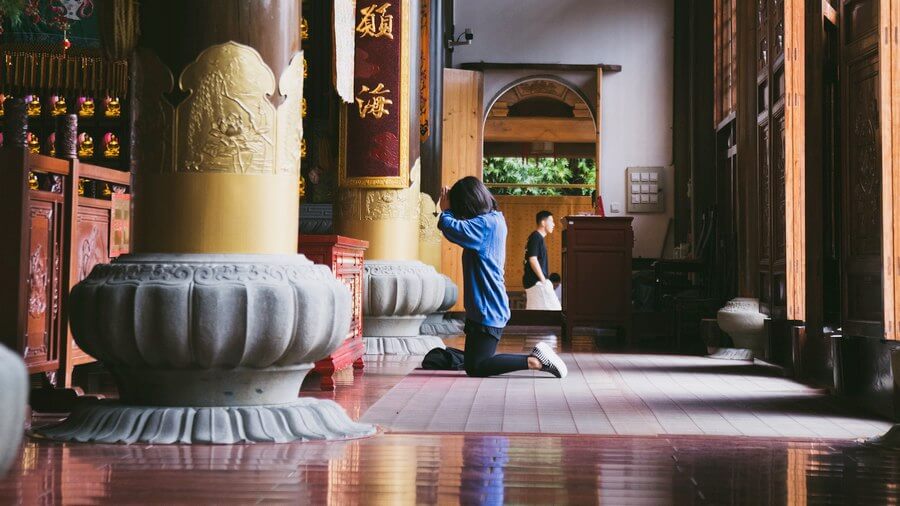
Person worshiping at a shrine.

On one occasion the Blessed One was dwelling at Sāvatthī in Jeta’s Grove, Anāthapiṇḍika’s Park. Now on that occasion King Pasenadi of Kosala had returned from the war front, victorious in battle, his purpose having been achieved. Then King Pasenadi of Kosala set out for the park. He went by carriage as far as the ground was suitable for a carriage, and then he dismounted from his carriage and entered the park on foot. Now on that occasion a number of bhikkhus were walking back and forth in the open air. Then King Pasenadi of Kosala approached those bhikkhus and asked them:

“Bhante, where is the Blessed One, the Arahant, the Perfectly Enlightened One now dwelling? For I wish to see the Blessed One, the Arahant, the Perfectly Enlightened One.”

“Great king, that is his dwelling with the closed door. Approach it quietly. Without hurrying, enter the porch, clear your throat, and tap on the bolt. The Blessed One will open the door for you.”

Then, King Pasenadi of Kosala went quietly up to the dwelling with the closed door. Without hurrying, he entered the porch, cleared his throat, and tapped on the bolt. The Blessed One opened the door.

Then King Pasenadi of Kosala entered the dwelling, prostrated himself with his head at the Blessed One’s feet, and covered the Blessed One’s feet with kisses and caressed them with his hands, pronouncing his name: “Bhante, I am King Pasenadi of Kosala! Bhante, I am King Pasenadi of Kosala!”

“But, great king, what reasons do you have for showing such supreme honor to this body and displaying such an offering of loving-kindness?”

“Bhante, it is out of my gratitude and thankfulness that I show such supreme honor toward the Blessed One and display such an offering of loving-kindness to him.

(1) “For, Bhante, the Blessed One is practicing for the welfare of many people, for the happiness of many people; he has established many people in the noble method, that is, in the way of the good Dhamma, in the way of the wholesome Dhamma. This is one reason I show such supreme honor toward the Blessed One and display such an offering of loving-kindness to him.

(2) “Again, Bhante, the Blessed One is virtuous, of mature behavior, of noble behavior, of wholesome behavior, possessing wholesome behavior. This is another reason I show such supreme honor toward the Blessed One….

(3) “Again, Bhante, for a long time the Blessed One has been a forest-dweller who resorts to remote lodgings in forests and jungle groves. Since that is so, this is another reason I show such supreme honor toward the Blessed One….

(4) “Again, Bhante, the Blessed One is content with any kind of robe, almsfood, lodging, and medicines and provisions for the sick. This is another reason I show such supreme honor toward the Blessed One….

(5) “Again, Bhante, the Blessed One is worthy of gifts, worthy of hospitality, worthy of offerings, worthy of reverential salutation, an unsurpassed field of merit for the world. This is another reason I show such supreme honor toward the Blessed One….

(6) “Again, Bhante, the Blessed One gets to hear at will, without trouble or difficulty, talk concerned with the austere life that leads to the elimination of defilements, that is conducive to opening up the heart, that is, talk on fewness of desires, on contentment, on solitude, on not getting bound up with others, on arousing energy, on virtuous behavior, on concentration, on wisdom, on liberation, on the knowledge and vision of liberation. This is another reason I show such supreme honor toward the Blessed One….

(7) “Again, Bhante, the Blessed One gains at will, without trouble or difficulty, the four jhānas that constitute the higher mind and are pleasant dwellings in this very life. This is another reason I show such supreme honor toward the Blessed One….

(8) “Again, Bhante, the Blessed One recollects his manifold past abodes, that is, one birth, two births, three births, four births, five births, ten births, twenty births, thirty births, forty births, fifty births, a hundred births, a thousand births, a hundred thousand births, many eons of world-dissolution, many eons of world-evolution, many eons of world-dissolution and world-evolution thus: ‘There I was so named, of such a clan, with such an appearance, such was my food, such my experience of pleasure and pain, such my life span; passing away from there, I was reborn elsewhere, and there too I was so named, of such a clan, with such an appearance, such was my food, such my experience of pleasure and pain, such my life span; passing away from there, I was reborn here.’ Thus he recollects his manifold past abodes with their aspects and details. Since that is so, this is another reason I show such supreme honor toward the Blessed One….

(9) “Again, Bhante, with the divine eye, which is purified and surpasses the human, the Blessed One sees beings passing away and being reborn, inferior and superior, beautiful and ugly, fortunate and unfortunate, and he understands how beings fare in accordance with their kamma thus: ‘These beings who engaged in misconduct by body, speech, and mind, who reviled the noble ones, held wrong view, and undertook kamma based on wrong view, with the breakup of the body, after death, have been reborn in the plane of misery, in a bad destination, in the lower world, in hell; but these beings who engaged in good conduct by body, speech, and mind, who did not revile the noble ones, who held right view, and undertook kamma based on right view, with the breakup of the body, after death, have been reborn in a good destination, in the heavenly world.’ Thus with the divine eye, which is purified and surpasses the human, he sees beings passing away and being reborn, inferior and superior, beautiful and ugly, fortunate and unfortunate, and he understands how beings fare in accordance with their kamma. Since that is so, this is another reason I show such supreme honor toward the Blessed One….

(10) “Again, Bhante, with the destruction of the taints, the Blessed One has realized for himself with direct knowledge, in this very life, the taintless liberation of mind, liberation by wisdom, and having entered upon it, he dwells in it. Since that is so, this is another reason I show such supreme honor toward the Blessed One and display such an offering of loving-kindness to him.

“And now, Bhante, we must be going. We are busy and have much to do.”

“You may go, great king, at your own convenience.”

Then King Pasenadi of Kosala rose from his seat, paid homage to the Blessed One, circumambulated him keeping the right side toward him, and departed.


Read this translation of Aṅguttara Nikāya 10.30 Dutiyakosalasutta: Kosala (2) by Bhikkhu Bodhi on SuttaCentral.net. Or read a different translation on SuttaCentral.net. Or listen on SC-Voice.net. Or explore the Pali on DigitalPaliReader.online.
Or read a translation in Deutsch, Bengali, Español, Indonesian, မြန်မာဘာသာ, Português, ру́сский язы́к, සිංහල, ไทย, Tiếng Việt, or 汉语. Learn how to find your language.

SN 46.42 Cakkavattisutta: Wheel-Turning Monarch

Bust of a giant Buddha statue.

“Bhikkhus, with the manifestation of a wheel-turning monarch comes the manifestation of seven gems. What seven? There comes the manifestation of the wheel-gem, the elephant-gem, the horse-gem, the jewel-gem, the woman-gem, the steward-gem, and the commander-gem.

“With the manifestation of a Tathagata, bhikkhus, an Arahant, a Perfectly Enlightened One, comes the manifestation of the seven gems of the factors of enlightenment. What seven? There comes the manifestation of

  • the gem of the enlightenment factor of mindfulness
  • the gem of the enlightenment factor of discrimination of states,
  • the gem of the enlightenment factor of energy,
  • the gem of the enlightenment factor of rapture,
  • the gem of the enlightenment factor of tranquillity,
  • the gem of the enlightenment factor of concentration
  • the gem of the enlightenment factor of equanimity.

With the manifestation of a Tathagata, an Arahant, a Perfectly Enlightened One, comes the manifestation of these seven gems of the factors of enlightenment.”


Note: You can learn about the nutriment for each of the enlightenment factors in SN 46.2 Kāya. You can learn about the seven gems of a wheel turning monarch in MN 129 Bālapaṇḍita.

Read this translation of Saṁyutta Nikāya 46.42 Cakkavattisutta: Wheel-Turning Monarch by Bhikkhu Bodhi on SuttaCentral.net. Or read a different translation on SuttaCentral.net. Or listen on SC-Voice.net. Or explore the Pali on DigitalPaliReader.online.

Or read a translation in Deutsch, Bengali, Español, Indonesian, မြန်မာဘာသာ, Norsk, Português, ру́сский язы́к, සිංහල, ไทย, Tiếng Việt, or 汉语. Learn how to find your language.

SN 46.51 From… Āhārasutta: Nutriment

Abstract painting, possibly of fire and sky.

At Savatthī. “Bhikkhus, I will teach you the nutriment and the denourishment in regard to the five hindrances and the seven factors of enlightenment. Listen to that.…

“And what, bhikkhus, is the nutriment for the arising of unarisen ill will and for the increase and expansion of arisen ill will? There is, bhikkhus, the sign of the repulsive: frequently giving careless attention to it is the nutriment for the arising of unarisen ill will and for the increase and expansion of arisen ill will.

“And what, bhikkhus, is the denourishment that prevents unarisen ill will from arising and arisen ill will from increasing and expanding? There is, bhikkhus, the liberation of mind through lovingkindness: frequently giving careful attention to it is the denourishment that prevents unarisen ill will from arising and arisen ill will from increasing and expanding.


Read the entire translation of Saṁyutta Nikāya 46.51 Āhārasutta: Nutriment by Bhikkhu Bodhi on SuttaCentral.net. Or read a different translation on SuttaCentral.net or DhammaTalks.org. Or listen on SC-Voice.net. Or explore the Pali on DigitalPaliReader.online.

AN 5.51 Āvaraṇasutta: Obstacles

Swiftly flowing mountain river.

Thus have I heard. On one occasion the Blessed One was dwelling at Sāvatthī in Jeta’s Grove, Anāthapiṇḍika’s Park. There the Blessed One addressed the bhikkhus: “Bhikkhus!”

“Venerable sir!” those bhikkhus replied. The Blessed One said this:

“Bhikkhus, there are these five obstructions, hindrances, encumbrances of the mind, states that weaken wisdom. What five?

(1) Sensual desire is an obstruction, a hindrance, an encumbrance of the mind, a state that weakens wisdom.
(2) Ill will …
(3) Dullness and drowsiness …
(4) Restlessness and remorse …
(5) Doubt is an obstruction, a hindrance, an encumbrance of the mind, a state that weakens wisdom.

These are the five obstructions, hindrances, encumbrances of the mind, states that weaken wisdom.

“Bhikkhus, without having abandoned these five obstructions, hindrances, encumbrances of the mind, states that weaken wisdom, it is impossible that a bhikkhu, with his powerless and feeble wisdom, might know his own good, the good of others, or the good of both, or realize a superhuman distinction in knowledge and vision worthy of the noble ones. Suppose a river were flowing down from a mountain, traveling a long distance, with a swift current, carrying along much flotsam. Then, on both of its banks, a man would open irrigation channels. In such a case, the current in the middle of the river would be dispersed, spread out, and divided, so that the river would no longer travel a long distance, with a swift current, carrying along much flotsam. So too, without having abandoned these five obstructions … it is impossible that a bhikkhu … might realize a superhuman distinction in knowledge and vision worthy of the noble ones.

“But, bhikkhus, having abandoned these five obstructions, hindrances, encumbrances of the mind, states that weaken wisdom, it is possible that a bhikkhu, with his powerful wisdom, might know his own good, the good of others, and the good of both, and realize a superhuman distinction in knowledge and vision worthy of the noble ones. Suppose a river were flowing down from a mountain, traveling a long distance, with a swift current, carrying along much flotsam. Then a man would close up the irrigation channels on both of its banks. In such a case, the current in the middle of the river would not be dispersed, spread out, and divided, so that the river could travel a long distance, with a swift current, carrying along much flotsam. So too, having abandoned these five obstructions … it is possible that a bhikkhu … might realize a superhuman distinction in knowledge and vision worthy of the noble ones.”


Read this translation of Aṅguttara Nikāya 5.51 Āvaraṇasutta: Obstacles by Bhikkhu Sujato on SuttaCentral.net. Or read a different translation on SuttaCentral.net, or DhammaTalks.org. Or listen on SC-Voice.net.

AN 5.31 Sumanasutta: Sumanā

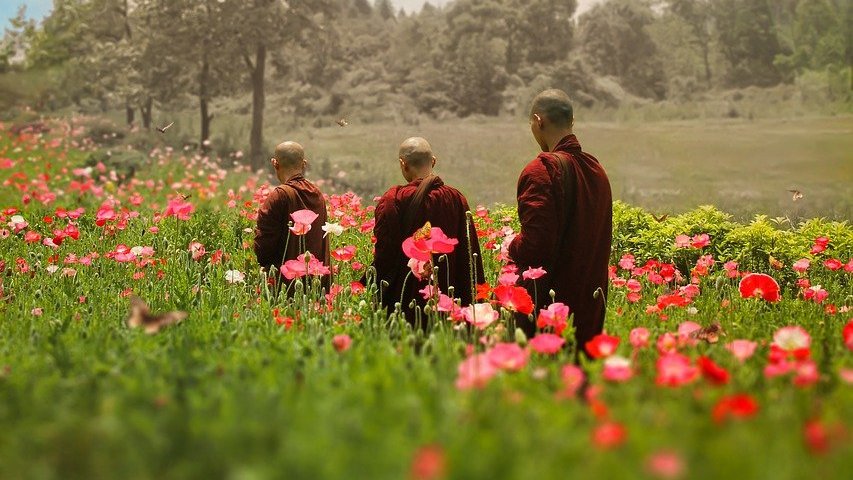
Monastics walking through field of flowers.

On one occasion the Blessed One was dwelling at Sāvatthī in Jeta’s Grove, Anāthapiṇḍika’s Park. Then Princess Sumanā, accompanied by five hundred chariots and five hundred court girls, approached the Blessed One, paid homage to him, and sat down to one side. Princess Sumanā then said to the Blessed One:

“Here, Bhante, there might be two disciples of the Blessed One equal in faith, virtuous behavior, and wisdom, but one is generous while the other is not. With the breakup of the body, after death, they would both be reborn in a good destination, in a heavenly world. When they have become devas, would there be any distinction or difference between them?”

“There would be, Sumanā,” the Blessed One said. “The generous one, having become a deva, would surpass the other in five ways: in celestial life span, celestial beauty, celestial happiness, celestial glory, and celestial authority. The generous one, having become a deva, would surpass the other in these five ways.”

“But, Bhante, if these two pass away from there and again become human beings, would there still be some distinction or difference between them?”

“There would be, Sumanā,” the Blessed One said. “When they again become human beings, the generous one would surpass the other in five ways: in human life span, human beauty, human happiness, human fame, and human authority. When they again become human beings, the generous one would surpass the other in these five ways.”

“But, Bhante, if these two should go forth from the household life into homelessness, would there still be some distinction or difference between them?”

“There would be, Sumanā,” the Blessed One said. “The generous one, having gone forth, would surpass the other in five ways. 1) He would usually use a robe that has been specifically offered to him, seldom one that had not been specifically offered to him. 2) He would usually eat almsfood that has been specifically offered to him, seldom almsfood that had not been specifically offered to him. 3) He would usually use a lodging that had been specifically offered to him, seldom one that had not been specifically offered to him. 4) He would usually use medicines and provisions for the sick that had been specifically offered to him, seldom those that had not been specifically offered to him. 5) His fellow monastics, those with whom he dwells, would usually behave toward him in agreeable ways by bodily, verbal, and mental action, seldom in disagreeable ways. They would usually present him what is agreeable, seldom what is disagreeable. The generous one, having gone forth, would surpass the other in these five ways.”

But, Bhante, if both attain arahantship, would there still be some distinction or difference between them after they have attained arahantship?”

“In this case, Sumanā, I declare, there would be no difference between the liberation of one and the liberation of the other.”

“It’s astounding and amazing, Bhante! Truly, one has good reason to give alms and do meritorious deeds, since they will be helpful if one becomes a deva, again becomes a human being, or goes forth.”

“So it is, Sumanā! So it is, Sumanā! Truly, one has good reason to give alms and do meritorious deeds, since they will be helpful if one becomes a deva, again becomes a human being, or goes forth.”

This is what the Blessed One said. Having said this, the Fortunate One, the Teacher, further said this:

“As the stainless moon
moving through the sphere of space
outshines with its radiance
all the stars in the world,
so one accomplished in virtuous behavior,
a person endowed with faith,
outshines by generosity
all the misers in the world.

“As the hundred-peaked rain cloud,
thundering, wreathed in lightning,
pours down rain upon the earth,
inundating the plains and lowlands,
so the Perfectly Enlightened One’s disciple,
the wise one accomplished in vision,
surpasses the miserly person
in five specific respects:
life span and glory,
beauty and happiness.
Possessed of wealth, after death
he rejoices in heaven.”


Read this translation of Aṅguttara Nikāya 5.31 Sumanasutta: Sumanā by Bhikkhu Bodhi on SuttaCentral.net. Or read a different translation on SuttaCentral.net, SuttaFriends.org or DhammaTalks.org.
Or listen on SC-Voice.net.

SN 22.5 Samādhisutta: Concentration

Abstract circle painting.

Thus have I heard. At Savatthi…. There the Blessed One said this:

“Bhikkhus, develop concentration. A bhikkhu who is concentrated understands things as they really are.

“And what does he understand as it really is? The origin and passing away of form; the origin and passing away of feeling; the origin and passing away of perception; the origin and passing away of volitional formations; the origin and passing away of consciousness.

“And what, bhikkhus, is the origin of form? What is the origin of feeling? What is the origin of perception? What is the origin of volitional formations? What is the origin of consciousness?

“Here, bhikkhus, one seeks delight, one welcomes, one remains holding. And what is it that one seeks delight in, what does one welcome, to what does one remain holding? One seeks delight in form, welcomes it, and remains holding to it.

  • As a consequence of this, delight arises.
  • Delight in form is clinging.
  • With one’s clinging as condition, existence comes to be;
  • with existence as condition, birth;
  • with birth as condition, aging-and-death, sorrow, lamentation, pain, displeasure, and despair come to be.
  • Such is the origin of this whole mass of suffering.

“One seeks delight in feeling … in perception … in volitional formations … in consciousness, welcomes it, and remains holding to it. As a consequence of this, delight arises…. Such is the origin of this whole mass of suffering.

“This, bhikkhus, is the origin of form; this is the origin of feeling; this is the origin of perception; this is the origin of volitional formations; this is the origin of consciousness.

“And what, bhikkhus, is the passing away of form? What is the passing away of feeling? What is the passing away of perception? What is the passing away of volitional formations? What is the passing away of consciousness?

“Here, bhikkhus, one does not seek delight, one does not welcome, one does not remain holding. And what is it that one does not seek delight in? What doesn’t one welcome? To what doesn’t one remain holding? One does not seek delight in form, does not welcome it, does not remain holding to it. As a consequence of this, delight in form ceases. With the cessation of delight comes cessation of clinging; with cessation of clinging, cessation of existence…. Such is the cessation of this whole mass of suffering.

“One does not seek delight in feeling … … in perception … in volitional formations … in consciousness, does not welcome it, does not remain holding to it. As a consequence of this, delight in consciousness ceases…. Such is the cessation of this whole mass of suffering.

“This, bhikkhus, is the passing away of form; this is the passing away of feeling; this is the passing away of perception; this is the passing away of volitional formations; this is the passing away of consciousness.”


Read this translation of Saṁyutta Nikāya 22.5 Samādhisutta: Concentration by Bhikkhu Bodhi on SuttaCentral.net. Or read a different translation on SuttaCentral.net, or DhammaTalks.org.

Or listen on PaliAudio.com, or SC-Voice.net.

MN 12 From… Mahāsīhanādasutta: The Greater Discourse on the Lion’s Roar—Purification

Large white Buddha statue.

“…Sāriputta, there are certain recluses and brahmins whose doctrine and view is this: ‘Purification comes about through food.’ They say: ‘Let us live on kola-fruits,’ and they eat kola-fruits, they eat kola-fruit powder, they drink kola-fruit water, and they make many kinds of kola-fruit concoctions. Now I recall having eaten a single kola-fruit a day. Sāriputta, you may think that the kola-fruit was bigger at that time, yet you should not regard it so: the kola-fruit was then at most the same size as now. Through feeding on a single kola-fruit a day, my body reached a state of extreme emaciation. Because of eating so little my limbs became like the jointed segments of vine stems or bamboo stems. Because of eating so little my backside became like a camel’s hoof. Because of eating so little the projections on my spine stood forth like corded beads. Because of eating so little my ribs jutted out as gaunt as the crazy rafters of an old roof-less barn. Because of eating so little the gleam of my eyes sank far down in their sockets, looking like a gleam of water that has sunk far down in a deep well. Because of eating so little my scalp shrivelled and withered as a green bitter gourd shrivels and withers in the wind and sun. Because of eating so little my belly skin adhered to my backbone; thus if I wanted to touch my belly skin I encountered my backbone, and if I wanted to touch my backbone I encountered my belly skin. Because of eating so little, if I wanted to defecate or urinate, I fell over on my face right there. Because of eating so little, if I tried to ease my body by rubbing my limbs with my hands, the hair, rotted at its roots, fell from my body as I rubbed.

“Sāriputta, there are certain recluses and brahmins whose doctrine and view is this: ‘Purification comes about through food.’ They say: ‘Let us live on beans,’…‘Let us live on sesamum,’…‘Let us live on rice,’ and they eat rice, they eat rice powder, they drink rice water, and they make many kinds of rice concoctions. Now I recall having eaten a single rice grain a day. Sāriputta, you may think that the rice grain was bigger at that time, yet you should not regard it so: the rice grain was then at most the same size as now. Through feeding on a single rice grain a day, my body reached a state of extreme emaciation. Because of eating so little…the hair, rotted at its roots, fell from my body as I rubbed.

Yet, Sāriputta, by such conduct, by such practice, by such performance of austerities, I did not attain any superhuman states, any distinction in knowledge and vision worthy of the noble ones. Why was that? Because I did not attain that noble wisdom which when attained is noble and emancipating and leads the one who practises in accordance with it to the complete destruction of suffering.

“Sāriputta, there are certain recluses and brahmins whose doctrine and view is this: ‘Purification comes about through the round of rebirths.’ But it is not easy to find a realm in the round that I have not already passed through in this long journey, except for the gods of the Pure Abodes; and had I passed through the round as a god in the Pure Abodes, I would never have returned to this world.

“There are certain recluses and brahmins whose doctrine and view is this: ‘Purification comes about through some particular kind of rebirth.’ But it is not easy to find a kind of rebirth that I have not been reborn in already in this long journey, except for the gods of the Pure Abodes…

“There are certain recluses and brahmins whose doctrine and view is this: ‘Purification comes about through some particular abode.’ But it is not easy to find a kind of abode that I have not already dwelt in…except for the gods of the Pure Abodes…

“There are certain recluses and brahmins whose doctrine and view is this: ‘Purification comes about through sacrifice.’ But it is not easy to find a kind of sacrifice that has not already been offered up by me in this long journey, when I was either a head-anointed noble king or a well-to-do brahmin.

“There are certain recluses and brahmins whose doctrine and view is this: ‘Purification comes through fire-worship.’ But it is not easy to find a kind of fire that has not already been worshipped by me in this long journey, when I was either a head-anointed noble king or a well-to-do brahmin.


Read the complete translation of MN 12 Mahāsīhanādasutta: The Greater Discourse on the Lion’s Roar by Bhikkhu Bodhi on SuttaCentral.net. Or read a different translation on SuttaCentral.net by Bhikkhu Sujato, Bhikkhu Suddhāso, or on DhammaTalks.org.