ReadingFaithfully.org icon Facebook icon Bluesky icon Reddit icon Tumblr icon Mastodon icon RSS icon

SN 46.16 Tatiyagilānasutta: Ill (3)

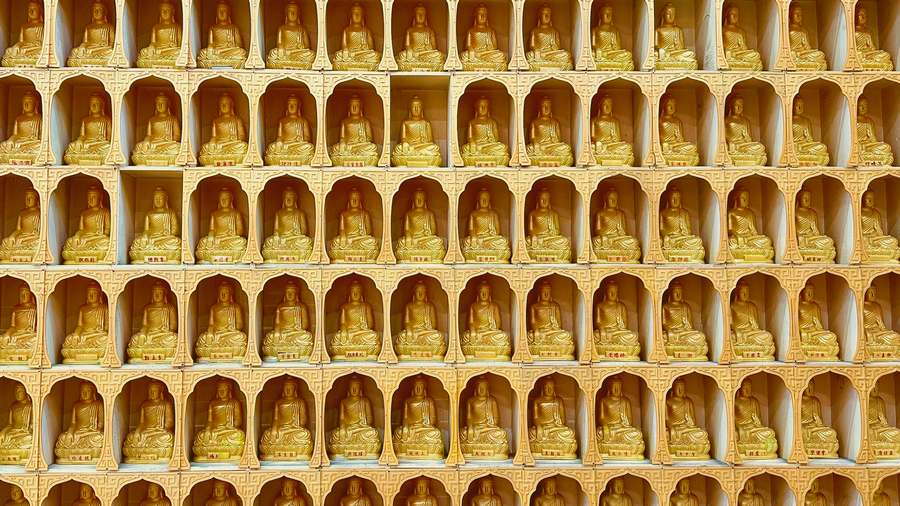
Wall with many small Buddha statues in nooks.

On one occasion the Blessed One was dwelling at Rajagaha in the Bamboo Grove, the Squirrel Sanctuary. Now on that occasion the Blessed One was sick, afflicted, gravely ill. Then the Venerable Mahacunda approached the Blessed One, paid homage to him, and sat down to one side. The Blessed One then said to the Venerable Mahacunda:

“Recite the factors of enlightenment, Cunda.”

“These seven factors of enlightenment, venerable sir, have been rightly expounded by the Blessed One; when developed and cultivated, they lead to direct knowledge, to enlightenment, to Nibbāna. What seven? The enlightenment factor of mindfulness has been rightly expounded by the Blessed One; when developed and cultivated, it leads to direct knowledge, to enlightenment, to Nibbāna…. The enlightenment factor of discrimination of states … The enlightenment factor of energy … The enlightenment factor of rapture … The enlightenment factor of tranquillity … The enlightenment factor of concentration …The enlightenment factor of equanimity has been rightly expounded by the Blessed One; when developed and cultivated, it leads to direct knowledge, to enlightenment, to Nibbāna. These seven factors of enlightenment, venerable sir, have been rightly expounded by the Blessed One; when developed and cultivated, they lead to direct knowledge, to enlightenment, to Nibbāna.”

“Surely, Cunda, they are factors of enlightenment! Surely, Cunda, they are factors of enlightenment!”

This is what the Venerable Mahacunda said. The Teacher approved. And the Blessed One recovered from that illness. In such a way the Blessed One was cured of his illness.


Read this translation of Saṁyutta Nikāya 46.16 Tatiyagilānasutta: Ill (3) by Bhikkhu Bodhi on SuttaCentral.net. Or read a different translation on SuttaCentral.net or AccessToInsight.org. Or listen on SC-Voice.net. Or explore the Pali on DigitalPaliReader.online.

Or read a translation in Deutsch, বাংলা, Español, Bahasa Indonesia, Italiano, 日本語, မြန်မာဘာသာ, Norsk, Português, Русский, සිංහල, Svenska, ไทย, Tiếng Việt, or 汉语. Learn how to find your language.
Ud 8.7 Dvidhapatha Sutta: A Fork in the Path

Heron in flight.

I have heard that on one occasion the Blessed One was journeying along a road in the Kosalan country with Ven. Nāgasamāla as his junior companion. Ven. Nāgasamāla, while going along the road, saw a fork in the path. On seeing it, he said to the Blessed One, “That, lord Blessed One, is the route. We go that way.” When this was said, the Blessed One said, “This, Nāgasamāla, is the route. We go this way.”

A second time… A third time, Ven. Nāgasamāla said to the Blessed One, “That, lord Blessed One, is the route. We go that way.” And for a third time, the Blessed One said, “This, Nāgasamāla, is the route. We go this way.”

Then Ven. Nāgasamāla, placing the Blessed One’s bowl & robes right there on the ground, left, saying, “This, lord Blessed One, is the bowl & robes.”

Then as Ven. Nāgasamāla was going along that route, thieves–jumping out in the middle of the road–pummeled him with their fists & feet, broke his bowl, and ripped his outer robe to shreds.

So Ven. Nāgasamāla–with his bowl broken, his outer robe ripped to shreds–went to the Blessed One and, on arrival, bowed down to him and sat to one side. As he was sitting there he said to the Blessed One, “Just now, lord, as I was going along that route, thieves jumped out in the middle of the road, pummeled me with their fists & feet, broke my bowl, and ripped my outer robe to shreds.”

Then, on realizing the significance of that, the Blessed One on that occasion exclaimed:

When traveling together,
mixed together
with a person who doesn’t know,
an attainer-of-wisdom,
on realizing that the person is evil,
abandons him
as a milk-feeding heron,
a bog.


Read this translation of Udāna 8.7 Dvidhapatha Sutta. A Fork in the Path by Bhikkhu Ṭhanissaro on DhammaTalks.org. Or read a different translation on SuttaCentral.net, or Ancient-Buddhist-Texts.net. Or listen on SC-Voice.net. Or explore the Pali on DigitalPaliReader.online.

Or read a translation in Deutsch, Srpski, Español, Bahasa Indonesia, Italiano, 日本語, မြန်မာဘာသာ, Nederlands, Norsk, Português, Русский, or සිංහල. Learn how to find your language.

Dhp 353 From… Tanhavagga: Craving

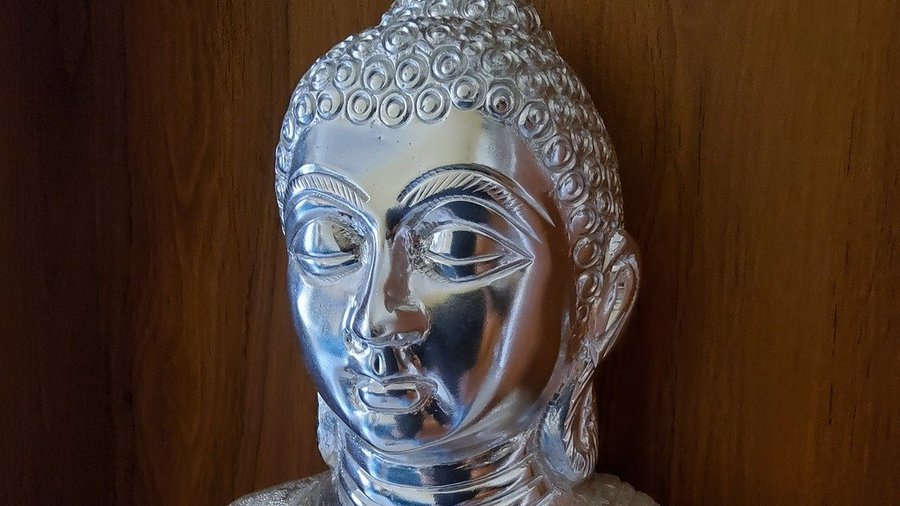
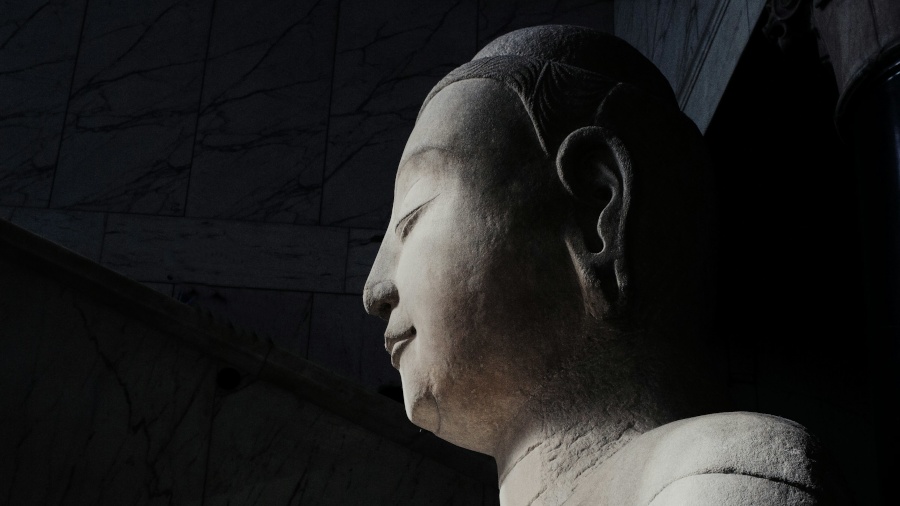
Pail, giant Buddha head in a dark hall.

[Note: This verse was spoken by the Buddha. See also this selection from MN 26.]

A victor am I over all, all have I known. Yet unattached am I to all that is conquered and known. Abandoning all, I am freed through the destruction of craving. Having thus directly comprehended all by myself, whom shall I call my teacher?


Read the complete translation of Dhammapada 334–359 Tanhavagga: Craving by Acharya Buddharakkhita on accesstoinsight.org. Or read a different translation on SuttaCentral.net, SuttaFriends.org, DhammaTalks.org, or Ancient-Buddhist-Texts.net. Or listen on SC-Voice.net. Or explore the Pali on DigitalPaliReader.online.

Or read a translation in Deutsch, Tiếng Việt, Català, Čeština, Español, Français, עִבְֿרִיתּ, Magyar, Italiano, 日本語, Latine, मराठी, မြန်မာဘာသာ, Nederlands, Norsk, Polski, Português, සිංහල, Slovenščina, தமிழ், or 汉语. Learn how to find your language.

SN 35.13 Paṭhamapubbesambodhasutta: Before My Enlightenment (1)

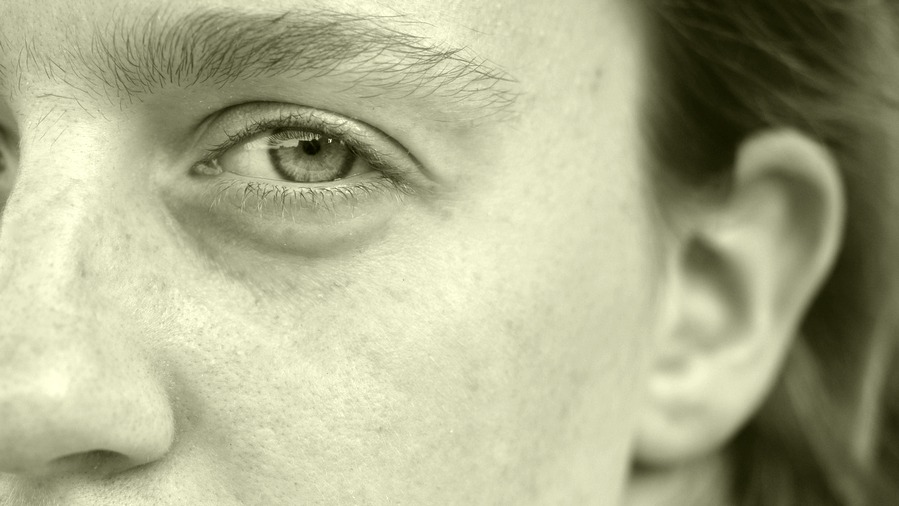
Closeup of eye, ear, nose

At Savatthi. “Bhikkhus, before my enlightenment, while I was still a bodhisatta, not yet fully enlightened, it occurred to me: ‘What is the gratification, what is the danger, what is the escape in the case of the eye? What is the gratification, what is the danger, what is the escape in the case of the ear … the nose … the tongue … the body … the mind?’

“Then, bhikkhus, it occurred to me: ‘The pleasure and joy that arise in dependence on the eye: this is the gratification in the eye. That the eye is impermanent, suffering, and subject to change: this is the danger in the eye. The removal and abandonment of desire and lust for the eye: this is the escape from the eye.

“‘The pleasure and joy that arise in dependence on the ear … the nose … the tongue … the body … the mind: this is the gratification in the mind. That the mind is impermanent, suffering, and subject to change: this is the danger in the mind. The removal and abandonment of desire and lust for the mind: this is the escape from the mind.’

“So long, bhikkhus, as I did not directly know as they really are the gratification, the danger, and the escape in the case of these six internal sense bases, I did not claim to have awakened to the unsurpassed perfect enlightenment in this world with its devas, Mara, and Brahma, in this generation with its ascetics and brahmins, its devas and humans. But when I directly knew all this as it really is, then I claimed to have awakened to the unsurpassed perfect enlightenment in this world with … its devas and humans.

“The knowledge and vision arose in me: ‘Unshakable is my liberation of mind; this is my last birth; now there is no more renewed existence.’”


Read this translation of Saṁyutta Nikāya 35.13 Paṭhamapubbesambodhasutta: Before My Enlightenment (1) by Bhikkhu Bodhi on SuttaCentral.net. Or read a different translation on SuttaCentral.net. Or listen on SC-Voice.net. Or explore the Pali on DigitalPaliReader.online.

Or read a translation in Deutsch, Lietuvių Kalba, বাংলা, Español, Bahasa Indonesia, 日本語, မြန်မာဘာသာ, Norsk, Русский, සිංහල, ไทย, Tiếng Việt, or 汉语. Learn how to find your language.
AN 8.69 Parisāsutta: Assemblies

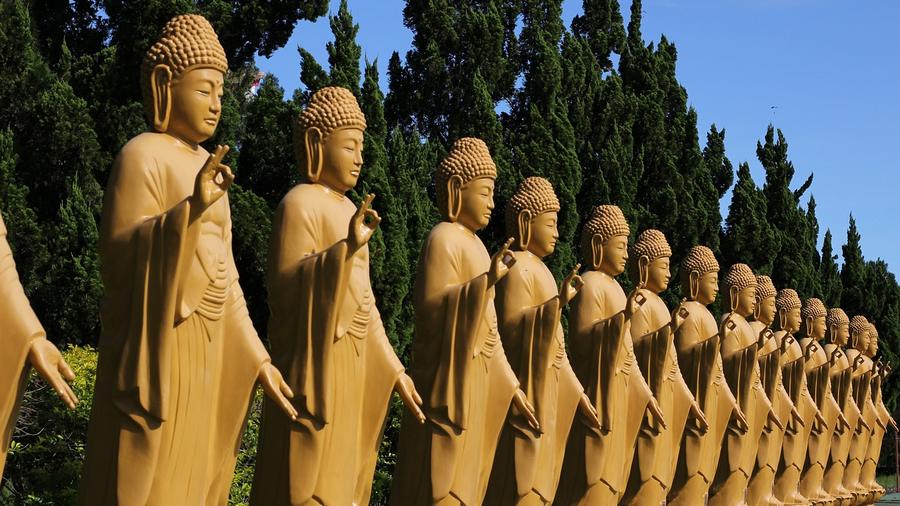
Row of standing Buddha statues.

“Mendicants, there are these eight assemblies. What eight? The assemblies of aristocrats, brahmins, householders, and ascetics. An assembly of the gods under the Four Great Kings. An assembly of the gods under the Thirty-Three. An assembly of Māras. An assembly of Brahmās.

I recall having approached an assembly of hundreds of aristocrats. There I used to sit with them, converse, and engage in discussion. And my appearance and voice became just like theirs. I educated, encouraged, fired up, and inspired them with a Dhamma talk. But when I spoke they didn’t know: ‘Who is this that speaks? Is it a god or a human?’ And when my Dhamma talk was finished I vanished. But when I vanished they didn’t know: ‘Who was that who vanished? Was it a god or a human?’

I recall having approached an assembly of hundreds of brahmins … householders … ascetics … the gods under the Four Great Kings … the gods under the Thirty-Three … Māras … Brahmās. There too I used to sit with them, converse, and engage in discussion. And my appearance and voice became just like theirs. I educated, encouraged, fired up, and inspired them with a Dhamma talk. But when I spoke they didn’t know: ‘Who is this that speaks? Is it a god or a human?’ And when my Dhamma talk was finished I vanished. But when I vanished they didn’t know: ‘Who was that who vanished? Was it a god or a human?’ These are the eight assemblies.”


Read this translation of Aṅguttara Nikāya 8.69 Parisāsutta: Assemblies by Bhikkhu Sujato on SuttaCentral.net. Or listen on SC-Voice.net. Or explore the Pali on DigitalPaliReader.online.

Or read a translation in Deutsch, বাংলা, Bahasa Indonesia, 日本語, မြန်မာဘာသာ, Русский, සිංහල, ไทย, Tiếng Việt, or 汉语. Learn how to find your language.
Ud 5.2 Appāyukasutta: Short-lived

Infant hand holding an adult finger.

So I have heard. At one time the Buddha was staying near Sāvatthī in Jeta’s Grove, Anāthapiṇḍika’s monastery. Then in the late afternoon, Venerable Ānanda came out of retreat and went to the Buddha. He bowed, sat down to one side, and said to him: “It’s incredible, sir, it’s amazing! How short-lived was the Blessed One’s mother! For seven days after the Blessed One was born, his mother passed away and was reborn in the host of Joyful Gods.”

“That’s so true, Ānanda! For the mothers of beings intent of awakening are short-lived. Seven days after the beings intent on awakening are born, their mothers pass away and are reborn in the host of Joyful Gods.”

Then, understanding this matter, on that occasion the Buddha expressed this heartfelt sentiment:

“Whether born or to be born,
all depart, leaving the body behind.
The skillful, understanding that all is lost,
would keenly practice the spiritual life.”


Read this translation of Udāna 5.2 Appāyukasutta: Short-lived by Bhikkhu Sujato on SuttaCentral.net. Or read a different translation on SuttaFriends.org, DhammaTalks.org or Ancient-Buddhist-Texts.net. Or listen on SC-Voice.net. Or explore the Pali on DigitalPaliReader.online.

Or read a translation in Deutsch, Srpski, Español, Bahasa Indonesia, Italiano, 日本語, မြန်မာဘာသာ, Nederlands, Norsk, Português, Русский, or සිංහල. Learn how to find your language.

Thag 15.2 Udāyittheragāthā: Udāyī

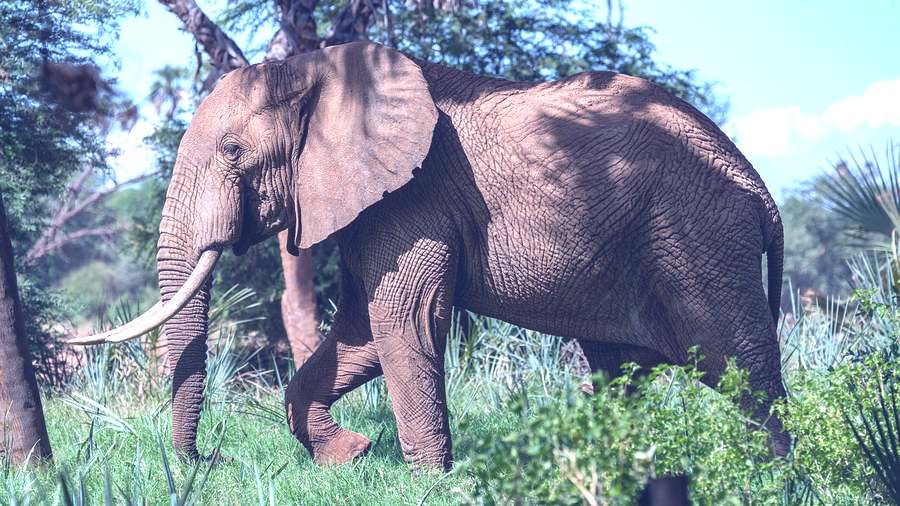
Elephant with tusks.

[Here the Arahant Udāyī praises the Supreme Buddha. Here “giant” is the translation of the word “nāga.”]

Awakened as a human being,
self-tamed and immersed in samādhi,
following the spiritual path,
he loves peace of mind.

Revered by people,
gone beyond all things,
even the gods revere him;
so I’ve heard from the perfected one.

He has transcended all fetters,
and escaped from entanglements.
Delighting to renounce sensual pleasures,
he’s freed like gold from stone.

That giant outshines all,
like the Himalaya beside other mountains.
Of all those named “giant”,
he is truly named, supreme.

I shall extol the giant for you,
for he does nothing monstrous.
Gentleness and harmlessness
are two feet of the giant.

Mindfulness and awareness
are his two other feet.
Faith is the giant’s trunk,
and equanimity his white tusks.

Mindfulness is his neck, his head is wisdom—
investigation and thinking about principles.
His belly is the sacred hearth of the Dhamma,
and his tail is seclusion.

Practicing absorption, enjoying the breath,
he is serene within.
The giant is serene when walking,
the giant is serene when standing,

the giant is serene when lying down,
and when sitting, the giant is serene.
The giant is restrained everywhere:
this is the accomplishment of the giant.

He eats blameless things,
he doesn’t eat blameworthy things.
When he gets food and clothes,
he avoids storing them up.

Having severed all bonds,
fetters large and small,
wherever he goes,
he goes without concern.

A white lotus,
fragrant and delightful,
sprouts in water and grows there,
but the water doesn’t cling to it.

Just so the Buddha is born in the world,
and lives in the world,
but the world doesn’t stick to him,
as water does not stick to the lotus.

A great blazing fire
dies down when the fuel runs out.
And when the coals have gone out
it’s said to be “extinguished”.

This simile is taught by the discerning
to express the meaning clearly.
Great giants will understand
what the giant taught the giant.

Free of greed, free of hate,
free of delusion, undefiled;
the giant, giving up his body,
undefiled, will be fully extinguished.


Read this translation of Theragāthā 15.2 Udānaāyittheragāthā: Udāyī by Bhikkhu Sujato on SuttaCentral.net. Or read a different translation on SuttaFriends.org or DhammaTalks.org. Or listen on SC-Voice.net. Or explore the Pali on DigitalPaliReader.online.

Or read a translation in Deutsch, Bahasa Indonesia, Italiano, 日本語, Norsk, සිංහල, or Tiếng Việt. Learn how to find your language.

SN 47.12 Nālandasutta: Nalanda

Cat looking through a hole in a wall.

On one occasion the Blessed One was dwelling at Nalanda in Pavarika’s Mango Grove. Then the Venerable Sāriputta approached the Blessed One, paid homage to him, sat down to one side, and said to him:

“Venerable sir, I have such confidence in the Blessed One that I believe there has not been nor ever will be nor exists at present another ascetic or brahmin more knowledgeable than the Blessed One with respect to enlightenment.”

“Lofty indeed is this bellowing utterance of yours, Sāriputta, you have roared a definitive, categorical lion’s roar: ‘Venerable sir, I have such confidence in the Blessed One that I believe there has not been nor ever will be nor exists at present another ascetic or brahmin more knowledgeable than the Blessed One with respect to enlightenment.’ Have you now, Sāriputta, encompassed with your mind the minds of all the Arahants, the Perfectly Enlightened Ones, arisen in the past and known thus: ‘Those Blessed Ones were of such virtue, or of such qualities, or of such wisdom, or of such dwellings, or of such liberation’?”

“No, venerable sir.”

“Then, Sāriputta, have you encompassed with your mind the minds of all the Arahants, the Perfectly Enlightened Ones, who will arise in the future and known thus: ‘Those Blessed Ones will be of such virtue, or of such qualities, or of such wisdom, or of such dwellings, or of such liberation’?”

“No, venerable sir.”

“Then, Sāriputta, have you encompassed with your mind my own mind—I being at present the Arahant, the Perfectly Enlightened One—and known thus: ‘The Blessed One is of such virtue, or of such qualities, or of such wisdom, or of such dwellings, or of such liberation’?”

“No, venerable sir.”

“Sāriputta, when you do not have any knowledge encompassing the minds of the Arahants, the Perfectly Enlightened Ones of the past, the future, and the present, why do you utter this lofty, bellowing utterance and roar this definitive, categorical lion’s roar: ‘Venerable sir, I have such confidence in the Blessed One that I believe there has not been nor ever will be nor exists at present another ascetic or brahmin more knowledgeable than the Blessed One with respect to enlightenment’?”

“I do not have, venerable sir, any knowledge encompassing the minds of the Arahants, the Perfectly Enlightened Ones of the past, the future, and the present, but still I have understood this by inference from the Dhamma. Suppose, venerable sir, a king had a frontier city with strong ramparts, walls, and arches, and with a single gate. The gatekeeper posted there would be wise, competent, and intelligent; one who keeps out strangers and admits acquaintances. While he is walking along the path that encircles the city he would not see a cleft or an opening in the walls even big enough for a cat to slip through. He might think: ‘Whatever large creatures enter or leave this city, all enter and leave through this one gate.’

“So too, venerable sir, I have understood this by inference from the Dhamma: Whatever Arahants, Perfectly Enlightened Ones arose in the past, all those Blessed Ones had first abandoned the five hindrances, corruptions of the mind and weakeners of wisdom; and then, with their minds well established in the four establishments of mindfulness, they had developed correctly the seven factors of enlightenment; and thereby they had awakened to the unsurpassed perfect enlightenment. And, venerable sir, whatever Arahants, Perfectly Enlightened Ones will arise in the future, all those Blessed Ones will first abandon the five hindrances, corruptions of the mind and weakeners of wisdom; and then, with their minds well established in the four establishments of mindfulness, they will develop correctly the seven factors of enlightenment; and thereby they will awaken to the unsurpassed perfect enlightenment. And, venerable sir, the Blessed One, who is at present the Arahant, the Perfectly Enlightened One, first abandoned the five hindrances, corruptions of the mind and weakeners of wisdom; and then, with his mind well established in the four establishments of mindfulness, he developed correctly the seven factors of enlightenment; and thereby he has awakened to the unsurpassed perfect enlightenment.”

“Good, good, Sāriputta! Therefore, Sāriputta, you should repeat this Dhamma exposition frequently to the bhikkhus and the bhikkhunis, to the male lay followers and the female lay followers. Even though some foolish people may have perplexity or uncertainty regarding the Tathagata, when they hear this Dhamma exposition their perplexity or uncertainty regarding the Tathagata will be abandoned.”


Read this translation of Saṁyutta Nikāya 47.12 Nālandasutta: Nalanda by Bhikkhu Bodhi on SuttaCentral.net. Or read a different translation on SuttaCentral.net. Or listen on SC-Voice.net. Or explore the Pali on DigitalPaliReader.online.

Or read a translation in Deutsch, বাংলা, Español, Bahasa Indonesia, 日本語, မြန်မာဘာသာ, Norsk, Português, Русский, සිංහල, ไทย, Tiếng Việt, or 汉语. Learn how to find your language.
DN 30 From… Lakkhana Sutta: The Marks of a Great Man

Head of a Buddha statue.

[The Lakkhana Sutta details the the actions the Buddha did to obtained the 32 Marks and their corresponding wholesome qualities.]

“…Monks, in some past lives the Buddha was reborn as a human being. He approached virtuous and knowledgeable people and asked: ‘Sirs, what is wholesome? What is unwholesome? What is blameworthy? What is blameless? What should be cultivated? What should not be cultivated? Doing what leads to my lasting harm and suffering? Doing what leads to my lasting welfare and happiness?’ Due to performing those deeds he was reborn in heaven. When he passed away from there and was reborn here as a human, he obtained this mark: he has smooth skin, so smooth that dust and dirt don’t stick to his body.

Possessing this mark, if this great man continues to live in the palace, he becomes a universal king. And what does he obtain as a king? He has great wisdom. Of those who enjoy worldly pleasures, no one is equal to him or surpasses him in wisdom. That’s what he obtains as a king.

And what does he obtain as the Buddha? He has great wisdom, widespread wisdom, joyful wisdom, fast wisdom, sharp wisdom, and penetrating wisdom. No being is equal to him or surpasses him in wisdom. That’s what he obtains as Buddha.”

That is what the Buddha said. On this it is said:

“In olden days, in past lives,
He was eager to understand things, he asked questions.
He was keen to learn things, he waited on virtuous people,
listening to their explanation with pure intent.

Due to that good kamma of searching for wisdom,
When he was reborn in the human world, his skin was smooth.
At his birth the mark-readers who are experts in mark-reading predicted:
‘He’ll understand even very subtle things of life.

If he doesn’t choose the monk-life,
he’ll rule the earth righteously.
Among those who instruct and who investigate things,
none is equal or better than him.

But if he chooses the monk-life,
and wisely loves that simple life,
Gaining wisdom that’s supreme and unparalleled,
The Supreme One attains enlightenment.…’”


Read the entire translation of Dīgha Nikāya 30 Lakkhana Sutta: The Marks of a Great Man by Ven. Kiribathgoda Gnananda Thero on SuttaFriends.org. Or read a different translation on SuttaCentral.net or SuttaFriends.org. Or listen on PaliAudio.com or SC-Voice.net. Or explore the Pali on DigitalPaliReader.online.

Or read a translation in Deutsch, Srpski, Bengali, Hebrew, हिन्दी, Indonesian, Italiano, 日本語, ಕನ್ನಡ, မြန်မာဘာသာ, Norsk, Português, සිංහල, ไทย, Tiếng Việt, or 汉语. Learn how to find your language.

AN 10.30 Dutiyakosalasutta: Kosala (2)

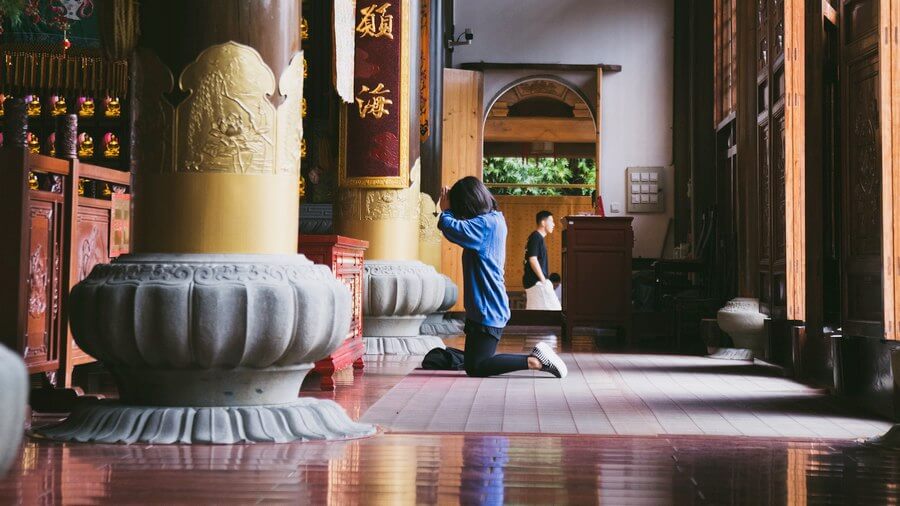
Person worshiping at a shrine.

On one occasion the Blessed One was dwelling at Sāvatthī in Jeta’s Grove, Anāthapiṇḍika’s Park. Now on that occasion King Pasenadi of Kosala had returned from the war front, victorious in battle, his purpose having been achieved. Then King Pasenadi of Kosala set out for the park. He went by carriage as far as the ground was suitable for a carriage, and then he dismounted from his carriage and entered the park on foot. Now on that occasion a number of bhikkhus were walking back and forth in the open air. Then King Pasenadi of Kosala approached those bhikkhus and asked them:

“Bhante, where is the Blessed One, the Arahant, the Perfectly Enlightened One now dwelling? For I wish to see the Blessed One, the Arahant, the Perfectly Enlightened One.”

“Great king, that is his dwelling with the closed door. Approach it quietly. Without hurrying, enter the porch, clear your throat, and tap on the bolt. The Blessed One will open the door for you.”

Then, King Pasenadi of Kosala went quietly up to the dwelling with the closed door. Without hurrying, he entered the porch, cleared his throat, and tapped on the bolt. The Blessed One opened the door.

Then King Pasenadi of Kosala entered the dwelling, prostrated himself with his head at the Blessed One’s feet, and covered the Blessed One’s feet with kisses and caressed them with his hands, pronouncing his name: “Bhante, I am King Pasenadi of Kosala! Bhante, I am King Pasenadi of Kosala!”

“But, great king, what reasons do you have for showing such supreme honor to this body and displaying such an offering of loving-kindness?”

“Bhante, it is out of my gratitude and thankfulness that I show such supreme honor toward the Blessed One and display such an offering of loving-kindness to him.

(1) “For, Bhante, the Blessed One is practicing for the welfare of many people, for the happiness of many people; he has established many people in the noble method, that is, in the way of the good Dhamma, in the way of the wholesome Dhamma. This is one reason I show such supreme honor toward the Blessed One and display such an offering of loving-kindness to him.

(2) “Again, Bhante, the Blessed One is virtuous, of mature behavior, of noble behavior, of wholesome behavior, possessing wholesome behavior. This is another reason I show such supreme honor toward the Blessed One….

(3) “Again, Bhante, for a long time the Blessed One has been a forest-dweller who resorts to remote lodgings in forests and jungle groves. Since that is so, this is another reason I show such supreme honor toward the Blessed One….

(4) “Again, Bhante, the Blessed One is content with any kind of robe, almsfood, lodging, and medicines and provisions for the sick. This is another reason I show such supreme honor toward the Blessed One….

(5) “Again, Bhante, the Blessed One is worthy of gifts, worthy of hospitality, worthy of offerings, worthy of reverential salutation, an unsurpassed field of merit for the world. This is another reason I show such supreme honor toward the Blessed One….

(6) “Again, Bhante, the Blessed One gets to hear at will, without trouble or difficulty, talk concerned with the austere life that leads to the elimination of defilements, that is conducive to opening up the heart, that is, talk on fewness of desires, on contentment, on solitude, on not getting bound up with others, on arousing energy, on virtuous behavior, on concentration, on wisdom, on liberation, on the knowledge and vision of liberation. This is another reason I show such supreme honor toward the Blessed One….

(7) “Again, Bhante, the Blessed One gains at will, without trouble or difficulty, the four jhānas that constitute the higher mind and are pleasant dwellings in this very life. This is another reason I show such supreme honor toward the Blessed One….

(8) “Again, Bhante, the Blessed One recollects his manifold past abodes, that is, one birth, two births, three births, four births, five births, ten births, twenty births, thirty births, forty births, fifty births, a hundred births, a thousand births, a hundred thousand births, many eons of world-dissolution, many eons of world-evolution, many eons of world-dissolution and world-evolution thus: ‘There I was so named, of such a clan, with such an appearance, such was my food, such my experience of pleasure and pain, such my life span; passing away from there, I was reborn elsewhere, and there too I was so named, of such a clan, with such an appearance, such was my food, such my experience of pleasure and pain, such my life span; passing away from there, I was reborn here.’ Thus he recollects his manifold past abodes with their aspects and details. Since that is so, this is another reason I show such supreme honor toward the Blessed One….

(9) “Again, Bhante, with the divine eye, which is purified and surpasses the human, the Blessed One sees beings passing away and being reborn, inferior and superior, beautiful and ugly, fortunate and unfortunate, and he understands how beings fare in accordance with their kamma thus: ‘These beings who engaged in misconduct by body, speech, and mind, who reviled the noble ones, held wrong view, and undertook kamma based on wrong view, with the breakup of the body, after death, have been reborn in the plane of misery, in a bad destination, in the lower world, in hell; but these beings who engaged in good conduct by body, speech, and mind, who did not revile the noble ones, who held right view, and undertook kamma based on right view, with the breakup of the body, after death, have been reborn in a good destination, in the heavenly world.’ Thus with the divine eye, which is purified and surpasses the human, he sees beings passing away and being reborn, inferior and superior, beautiful and ugly, fortunate and unfortunate, and he understands how beings fare in accordance with their kamma. Since that is so, this is another reason I show such supreme honor toward the Blessed One….

(10) “Again, Bhante, with the destruction of the taints, the Blessed One has realized for himself with direct knowledge, in this very life, the taintless liberation of mind, liberation by wisdom, and having entered upon it, he dwells in it. Since that is so, this is another reason I show such supreme honor toward the Blessed One and display such an offering of loving-kindness to him.

“And now, Bhante, we must be going. We are busy and have much to do.”

“You may go, great king, at your own convenience.”

Then King Pasenadi of Kosala rose from his seat, paid homage to the Blessed One, circumambulated him keeping the right side toward him, and departed.


Read this translation of Aṅguttara Nikāya 10.30 Dutiyakosalasutta: Kosala (2) by Bhikkhu Bodhi on SuttaCentral.net. Or read a different translation on SuttaCentral.net. Or listen on SC-Voice.net. Or explore the Pali on DigitalPaliReader.online.

Or read a translation in Deutsch, Bengali, Español, Indonesian, မြန်မာဘာသာ, Português, ру́сский язы́к, සිංහල, ไทย, Tiếng Việt, or 汉语. Learn how to find your language.
MN 12 From… Mahāsīhanādasutta: The Greater Discourse on the Lion’s Roar—Purification

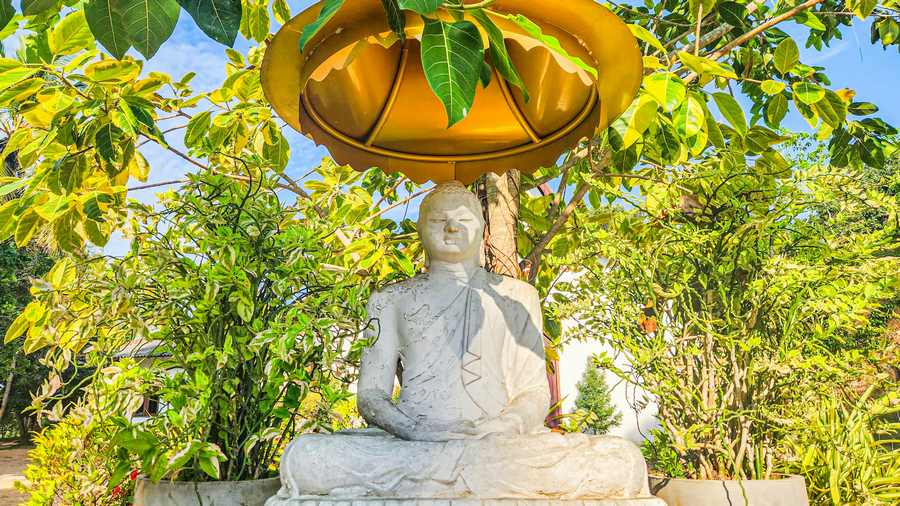
Large white Buddha statue.

“…Sāriputta, there are certain recluses and brahmins whose doctrine and view is this: ‘Purification comes about through food.’ They say: ‘Let us live on kola-fruits,’ and they eat kola-fruits, they eat kola-fruit powder, they drink kola-fruit water, and they make many kinds of kola-fruit concoctions. Now I recall having eaten a single kola-fruit a day. Sāriputta, you may think that the kola-fruit was bigger at that time, yet you should not regard it so: the kola-fruit was then at most the same size as now. Through feeding on a single kola-fruit a day, my body reached a state of extreme emaciation. Because of eating so little my limbs became like the jointed segments of vine stems or bamboo stems. Because of eating so little my backside became like a camel’s hoof. Because of eating so little the projections on my spine stood forth like corded beads. Because of eating so little my ribs jutted out as gaunt as the crazy rafters of an old roof-less barn. Because of eating so little the gleam of my eyes sank far down in their sockets, looking like a gleam of water that has sunk far down in a deep well. Because of eating so little my scalp shrivelled and withered as a green bitter gourd shrivels and withers in the wind and sun. Because of eating so little my belly skin adhered to my backbone; thus if I wanted to touch my belly skin I encountered my backbone, and if I wanted to touch my backbone I encountered my belly skin. Because of eating so little, if I wanted to defecate or urinate, I fell over on my face right there. Because of eating so little, if I tried to ease my body by rubbing my limbs with my hands, the hair, rotted at its roots, fell from my body as I rubbed.

“Sāriputta, there are certain recluses and brahmins whose doctrine and view is this: ‘Purification comes about through food.’ They say: ‘Let us live on beans,’…‘Let us live on sesamum,’…‘Let us live on rice,’ and they eat rice, they eat rice powder, they drink rice water, and they make many kinds of rice concoctions. Now I recall having eaten a single rice grain a day. Sāriputta, you may think that the rice grain was bigger at that time, yet you should not regard it so: the rice grain was then at most the same size as now. Through feeding on a single rice grain a day, my body reached a state of extreme emaciation. Because of eating so little…the hair, rotted at its roots, fell from my body as I rubbed.

Yet, Sāriputta, by such conduct, by such practice, by such performance of austerities, I did not attain any superhuman states, any distinction in knowledge and vision worthy of the noble ones. Why was that? Because I did not attain that noble wisdom which when attained is noble and emancipating and leads the one who practises in accordance with it to the complete destruction of suffering.

“Sāriputta, there are certain recluses and brahmins whose doctrine and view is this: ‘Purification comes about through the round of rebirths.’ But it is not easy to find a realm in the round that I have not already passed through in this long journey, except for the gods of the Pure Abodes; and had I passed through the round as a god in the Pure Abodes, I would never have returned to this world.

“There are certain recluses and brahmins whose doctrine and view is this: ‘Purification comes about through some particular kind of rebirth.’ But it is not easy to find a kind of rebirth that I have not been reborn in already in this long journey, except for the gods of the Pure Abodes…

“There are certain recluses and brahmins whose doctrine and view is this: ‘Purification comes about through some particular abode.’ But it is not easy to find a kind of abode that I have not already dwelt in…except for the gods of the Pure Abodes…

“There are certain recluses and brahmins whose doctrine and view is this: ‘Purification comes about through sacrifice.’ But it is not easy to find a kind of sacrifice that has not already been offered up by me in this long journey, when I was either a head-anointed noble king or a well-to-do brahmin.

“There are certain recluses and brahmins whose doctrine and view is this: ‘Purification comes through fire-worship.’ But it is not easy to find a kind of fire that has not already been worshipped by me in this long journey, when I was either a head-anointed noble king or a well-to-do brahmin.


Read the complete translation of MN 12 Mahāsīhanādasutta: The Greater Discourse on the Lion’s Roar by Bhikkhu Bodhi on SuttaCentral.net. Or read a different translation on SuttaCentral.net by Bhikkhu Sujato, Bhikkhu Suddhāso, or on DhammaTalks.org.