ReadingFaithfully.org icon Facebook icon Bluesky icon Reddit icon Tumblr icon Mastodon icon RSS icon

AN 10.61 Avijjāsutta: Ignorance

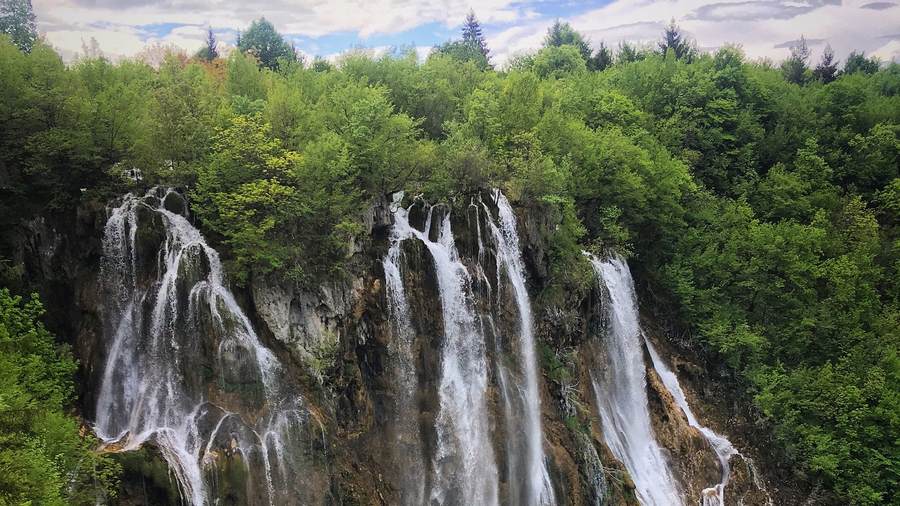
Storm over mountains and ocean.

“Bhikkhus, this is said: ‘A first point of ignorance, bhikkhus, is not seen such that before this there was no ignorance and afterward it came into being.’ Still, ignorance is seen to have a specific condition.

“I say, bhikkhus, that ignorance has a nutriment; it is not without nutriment. And what is the nutriment for ignorance? It should be said: the five hindrances.

The five hindrances, too, I say, have a nutriment; they are not without nutriment. And what is the nutriment for the five hindrances? It should be said: the three kinds of misconduct.

The three kinds of misconduct, too, I say, have a nutriment; they are not without nutriment. And what is the nutriment for the three kinds of misconduct? It should be said: non-restraint of the sense faculties.

Non-restraint of the sense faculties, too, I say, has a nutriment; it is not without nutriment. And what is the nutriment for non-restraint of the sense faculties? It should be said: lack of mindfulness and clear comprehension.

Lack of mindfulness and clear comprehension, too, I say, has a nutriment; it is not without nutriment. And what is the nutriment for lack of mindfulness and clear comprehension? It should be said: careless attention.

Careless attention, too, I say, has a nutriment; it is not without nutriment. And what is the nutriment for careless attention? It should be said: lack of faith.

Lack of faith, too, I say, has a nutriment; it is not without nutriment. And what is the nutriment for lack of faith? It should be said: not hearing the good Dhamma.

Not hearing the good Dhamma, too, I say, has a nutriment; it is not without nutriment. And what is the nutriment for not hearing the good Dhamma? It should be said: not associating with good persons.

“Thus not associating with good persons, becoming full, fills up not hearing the good Dhamma. Not hearing the good Dhamma, becoming full, fills up lack of faith. Lack of faith, becoming full, fills up careless attention. Careless attention, becoming full, fills up lack of mindfulness and clear comprehension. Lack of mindfulness and clear comprehension, becoming full, fills up non-restraint of the sense faculties. Non-restraint of the sense faculties, becoming full, fills up the three kinds of misconduct. The three kinds of misconduct, becoming full, fill up the five hindrances. The five hindrances, becoming full, fill up ignorance. Thus there is nutriment for ignorance, and in this way it becomes full.

“Just as, when it is raining and the rain pours down in thick droplets on a mountaintop, the water flows down along the slope and fills the clefts, gullies, and creeks; these, becoming full, fill up the pools; these, becoming full, fill up the lakes; these, becoming full, fill up the streams; these, becoming full, fill up the rivers; and these, becoming full, fill up the great ocean; thus there is nutriment for the great ocean, and in this way it becomes full. So too, not associating with good persons, becoming full, fills up not hearing the good Dhamma…. The five hindrances, becoming full, fill up ignorance. Thus there is nutriment for ignorance, and in this way it becomes full.

“I say, bhikkhus, that (1) true knowledge and liberation have a nutriment; they are not without nutriment. And what is the nutriment for true knowledge and liberation? It should be said:

(2) the seven factors of enlightenment. The seven factors of enlightenment, too, I say, have a nutriment; they are not without nutriment. And what is the nutriment for the seven factors of enlightenment? It should be said:

(3) the four establishments of mindfulness. The four establishments of mindfulness, too, I say, have a nutriment; they are not without nutriment. And what is the nutriment for the four establishments of mindfulness? It should be said:

(4) the three kinds of good conduct. The three kinds of good conduct, too, I say, have a nutriment; they are not without nutriment. And what is the nutriment for the three kinds of good conduct? It should be said:

(5) restraint of the sense faculties. Restraint of the sense faculties, too, I say, has a nutriment; it is not without nutriment. And what is the nutriment for restraint of the sense faculties? It should be said:

(6) mindfulness and clear comprehension. Mindfulness and clear comprehension, too, I say, have a nutriment; they are not without nutriment. And what is the nutriment for mindfulness and clear comprehension? It should be said:

(7) careful attention. Careful attention, too, I say, has a nutriment; it is not without nutriment. And what is the nutriment for careful attention? It should be said:

(8) faith. Faith, too, I say, has a nutriment; it is not without nutriment. And what is the nutriment for faith? It should be said:

(9) hearing the good Dhamma. Hearing the good Dhamma, too, I say, has a nutriment; it is not without nutriment. And what is the nutriment for hearing the good Dhamma? It should be said:

(10) associating with good persons.

“Thus associating with good persons, becoming full, fills up hearing the good Dhamma. Hearing the good Dhamma, becoming full, fills up faith. Faith, becoming full, fills up careful attention. Careful attention, becoming full, fills up mindfulness and clear comprehension. Mindfulness and clear comprehension, becoming full, fill up restraint of the sense faculties. Restraint of the sense faculties, becoming full, fills up the three kinds of good conduct. The three kinds of good conduct, becoming full, fill up the four establishments of mindfulness. The four establishments of mindfulness, becoming full, fill up the seven factors of enlightenment. The seven factors of enlightenment, becoming full, fill up true knowledge and liberation. Thus there is nutriment for true knowledge and liberation, and in this way they become full.

“Just as, when it is raining and the rain pours down in thick droplets on a mountaintop, the water flows down along the slope and fills the clefts, gullies, and creeks; these, becoming full, fill up the pools; these, becoming full, fill up the lakes; these, becoming full, fill up the streams; these, becoming full, fill up the rivers; and these, becoming full, fill up the great ocean; thus there is nutriment for the great ocean, and in this way it becomes full. So too, associating with good persons, becoming full, fills up hearing the good Dhamma…. The seven factors of enlightenment, becoming full, fill up true knowledge and liberation. Thus there is nutriment for true knowledge and liberation, and in this way they become full.”


Read this translation of Aṅguttara Nikāya 10.61 Avijjāsutta: Ignorance by Bhikkhu Bodhi on SuttaCentral.net. Or read a different translation on SuttaCentral.net or DhammaTalks.org. Or listen on SC-Voice.net. Or explore the Pali on DigitalPaliReader.online.

Or read a translation in Deutsch, Lietuvių Kalba, বাংলা, Español, Bahasa Indonesia, 日本語, မြန်မာဘာသာ, Português, Русский, සිංහල, ไทย, Tiếng Việt, or 汉语. Learn how to find your language.

AN 10.11 Senāsanasutta: Lodging

Wooden hut on a hillside.

“Bhikkhus, when a bhikkhu who possesses five factors resorts to and uses a lodging that possesses five factors, in no long time, with the destruction of the taints, he might realize for himself with direct knowledge, in this very life, the taintless liberation of mind, liberation by wisdom, and having entered upon it, dwell in it.

“And how, bhikkhus, does a bhikkhu possess five factors?

(1) “Here, a bhikkhu is endowed with faith. He has faith in the enlightenment of the Tathāgata thus: ‘The Blessed One is an arahant, perfectly enlightened, accomplished in true knowledge and conduct, fortunate, knower of the world, unsurpassed trainer of persons to be tamed, teacher of devas and humans, the Enlightened One, the Blessed One.’

(2) “He is seldom ill or afflicted, possessing an even digestion that is neither too cool nor too hot but moderate and suitable for striving.

(3) “He is honest and open, one who reveals himself as he really is to the Teacher and his wise fellow monks.

(4) “He has aroused energy for abandoning unwholesome qualities and acquiring wholesome qualities; he is strong, firm in exertion, not casting off the duty of cultivating wholesome qualities.

(5) “He is wise; he possesses the wisdom that discerns arising and passing away, which is noble and penetrative and leads to the complete destruction of suffering.

“It is in this way that a bhikkhu possesses five factors.

“And how does a lodging possess five factors?

(6) “Here, the lodging is neither too far from a place for alms nor too close, and it possesses a means for going and returning.

(7) “During the day it is not disturbed by people and at night it is quiet and still.

(8) “There is little contact with flies, mosquitoes, wind, the burning sun, and serpents.

(9) “One dwelling in that lodging can easily obtain robes, almsfood, lodging, and medicines and provisions for the sick.

(10) “In that lodging elder bhikkhus are dwelling who are learned, heirs to the heritage, experts on the Dhamma, experts on the discipline, experts on the outlines. He approaches them from time to time and inquires: ‘How is this, Bhante? What is the meaning of this?’ Those venerable ones then disclose to him what has not been disclosed, clear up what is obscure, and dispel his perplexity about numerous perplexing points.

“It is in this way that a lodging possesses five factors.

“When a bhikkhu who possesses these five factors resorts to and uses a lodging that possesses these five factors, in no long time, with the destruction of the taints, he might realize for himself with direct knowledge, in this very life, the taintless liberation of mind, liberation by wisdom, and having entered upon it, dwell in it.”


Read this translation of Aṅguttara Nikāya 10.11 Senāsanasutta: Lodging by Bhikkhu Bodhi on SuttaCentral.net. Or read a different translation on SuttaCentral.net. Or listen on SC-Voice.net. Or explore the Pali on DigitalPaliReader.online.

Or read a translation in Deutsch, Français, বাংলা, Español, Bahasa Indonesia, 日本語, မြန်မာဘာသာ, Português, Русский, සිංහල, ไทย, Tiếng Việt, or 汉语. Learn how to find your language.

AN 5.38 Saddhasutta: Faith

Birds flying towards tree in fog.

“Bhikkhus, these five benefits come to a clansman endowed with faith. What five? (1) When the good persons in the world show compassion, they first show compassion to the person with faith, not so to the person without faith. (2) When they approach anyone, they first approach the person with faith, not so the person without faith. (3) When they receive alms, they first receive alms from the person with faith, not so from the person without faith. (4) When they teach the Dhamma, they first teach the Dhamma to the person with faith, not so to the person without faith. (5) With the breakup of the body, after death, a person with faith is reborn in a good destination, in a heavenly world. These are the five benefits that come to a clansman who has faith.

“Just as at a crossroads on level ground, a great banyan tree becomes the resort for birds all around, so the clansman endowed with faith becomes the resort for many people: for bhikkhus, bhikkhunīs, male lay followers, and female lay followers.”

A large tree with a mighty trunk,
branches, leaves, and fruit,
firm roots, and bearing fruit,
is a support for many birds.
Having flown across the sky,
the birds resort to this delightful base:
those in need of shade partake of its shade;
those needing fruit enjoy its fruit.

Just so, when a person is virtuous,
endowed with faith,
of humble manner, compliant,
gentle, welcoming, soft,
those in the world who are fields of merit—
devoid of lust and hatred,
devoid of delusion, taintless—
resort to such a person.

They teach him the Dhamma
that dispels all suffering,
having understood which
the taintless one here attains nibbāna.


Read this translation of Aṅguttara Nikāya 5.38 Saddhasutta: Faith by Bhikkhu Bodhi on SuttaCentral.net. Or read a different translation on SuttaCentral.net or DhammaTalks.org. Or listen on SC-Voice.net. Or explore the Pali on DigitalPaliReader.online.

Or read a translation in Deutsch, বাংলা, Español, Français, Magyar, Bahasa Indonesia, Italiano, 日本語, မြန်မာဘာသာ, Русский, සිංහල, ไทย, Tiếng Việt, or 汉语. Learn how to find your language.

SN 1.36 Saddhāsutta: Faith

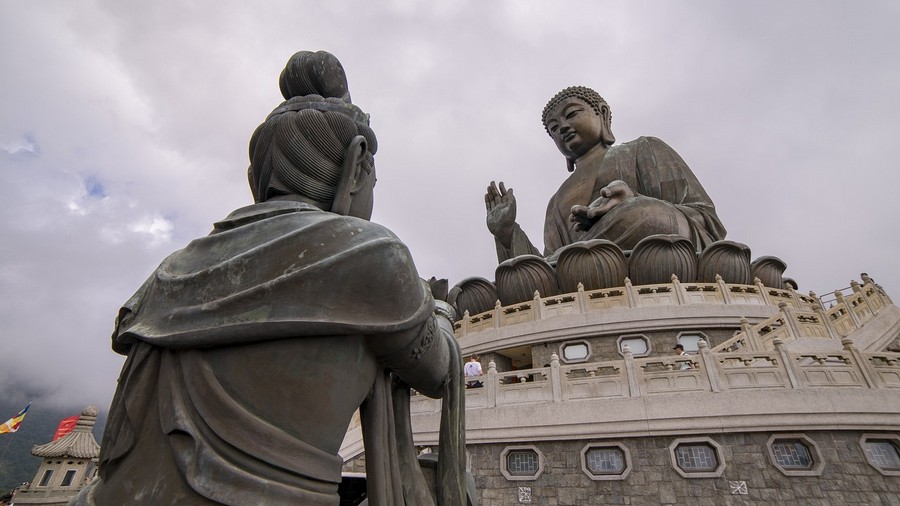
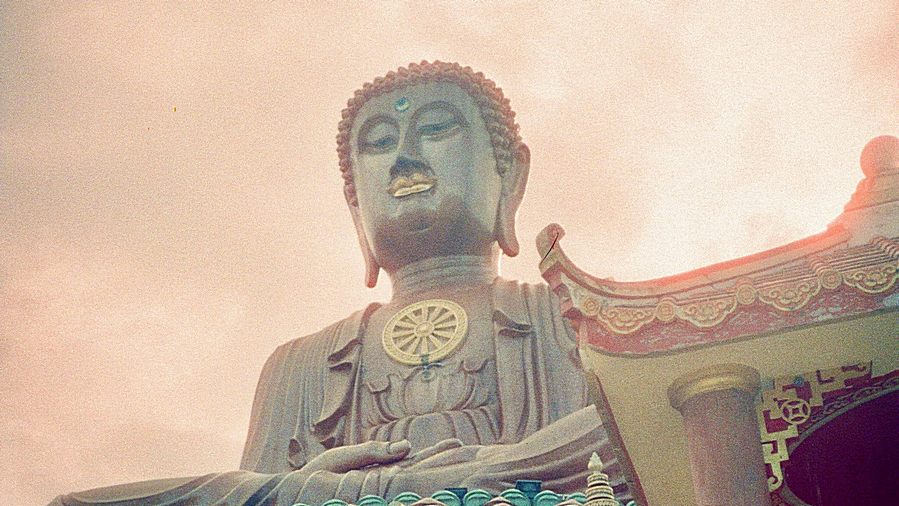
Giant Buddha statue.

On one occasion the Blessed One was dwelling at Savatthi in Jeta’s Grove, Anathapiṇḍika’s Park. Then, when the night had advanced, a number of devatās belonging to the Satullapa host, of stunning beauty, illuminating the entire Jeta’s Grove, approached the Blessed One. Having approached, they paid homage to the Blessed One and stood to one side.

Then one devatā, standing to one side, recited this verse in the presence of the Blessed One:

“Faith is a person’s partner;
If lack of faith does not persist,
Fame and renown thereby come to him,
And he goes to heaven on leaving the body.”

Then another devatā recited these verses in the presence of the Blessed One:

“One should discard anger, cast off conceit,
Transcend all the fetters.
No ties torment one who has nothing,
Who does not adhere to name-and-form.”

Another devatā:

“Foolish people devoid of wisdom
Devote themselves to negligence.
But the wise man guards diligence
As his foremost treasure.

“Do not yield to negligence,
Don’t be intimate with sensual delight.
For the diligent ones, meditating,
Attain supreme happiness.”


Read this translation of Saṁyutta Nikāya 1.36 Saddhāsutta: Faith by Bhikkhu Bodhi on SuttaCentral.net. Or read a different translation on SuttaCentral.net or DhammaTalks.org. Or listen on PaliAudio.com or SC-Voice.net. Or explore the Pali on DigitalPaliReader.online.

Or read a translation in Deutsch, Português, Русский, বাংলা, Català, Español, Bahasa Indonesia, Italiano, 日本語, မြန်မာဘာသာ, Norsk, සිංහල, ไทย, Tiếng Việt, or 汉语. Learn how to find your language.

SN 4.25 Māradhītusutta: Mara’s Daughters

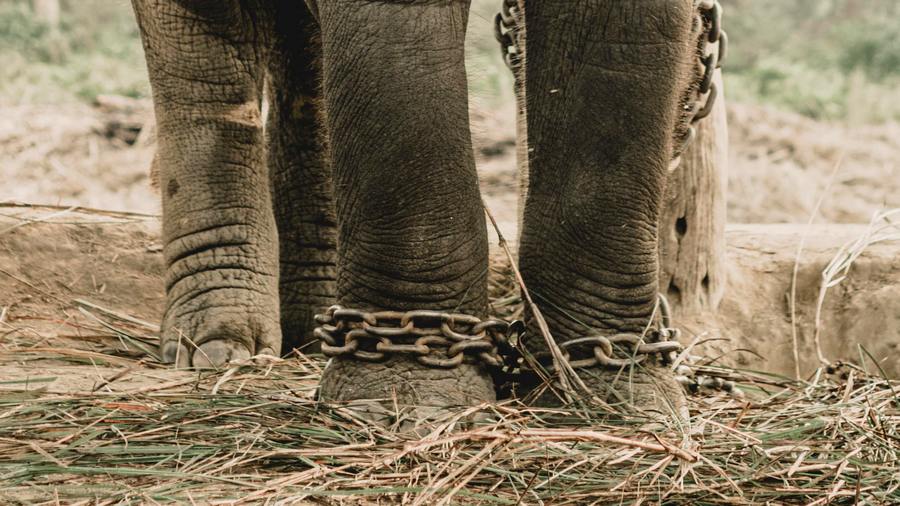
Legs of elephant in chains.

[Note: This sutta appears to be a continuation from here.]

Then Mara the Evil One, having spoken these verses of disappointment in the presence of the Blessed One, went away from that spot and sat down cross-legged on the ground not far from the Blessed One, silent, dismayed, with his shoulders drooping, downcast, brooding, unable to speak, scratching the ground with a stick.

Then Mara’s daughters—Taṇha, Arati, and Raga—approached Mara the Evil One and addressed him in verse:

“Why are you despondent, father?
Who’s the man for whom you grieve?
We’ll catch him with the snare of lust
As they catch the forest elephant.
We’ll bind him tightly and bring him back,
And he’ll be under your control.”

Mara:

“The Arahant, the Fortunate One in the world,
Is not easily drawn by means of lust.
He has gone beyond Mara’s realm:
Therefore I sorrow so bitterly.”

Then Mara’s daughters—Taṇha, Arati, and Raga—approached the Blessed One and said to him: “We serve at your feet, ascetic.” But the Blessed One paid no attention, as he was liberated in the unsurpassed extinction of acquisitions.

Then Mara’s daughters—Taṇha, Arati, and Raga—went off to the side and took counsel: “Men’s tastes are diverse. Suppose we each manifest ourselves in the form of a hundred maidens.” Then Mara’s three daughters, each manifesting herself in the form of a hundred maidens, approached the Blessed One and said to him: “We serve at your feet, ascetic.” But the Blessed One paid no attention, as he was liberated in the unsurpassed extinction of acquisitions.

Then Mara’s daughters went off to the side and again took counsel: “Men’s tastes are diverse. Suppose we each manifest ourselves in the form of a hundred women who have never given birth.” Then Mara’s three daughters, each manifesting herself in the form of a hundred women who have never given birth … in the form of a hundred women who have given birth once … … in the form of a hundred women who have given birth twice … in the form of a hundred women of middle age … in the form of a hundred old women, approached the Blessed One and said to him: “We serve at your feet, ascetic.” But the Blessed One paid no attention, as he was liberated in the unsurpassed extinction of acquisitions.

Then Mara’s daughters—Taṇha, Arati, and Raga—went off to the side and said: “What our father told us is true:

“‘The Arahant, the Fortunate One in the world …
Therefore I sorrow so bitterly.’

“If we had assailed with such tactics any ascetic or brahmin who was not devoid of lust, either his heart would have burst, or he would have vomited hot blood from his mouth, or he would have gone mad or become mentally deranged; or else he would have dried up and withered away and become shrivelled, just as a green reed that has been mowed down would dry up and wither away and become shrivelled.”

Then Mara’s daughters—Taṇha, Arati, and Raga—approached the Blessed One and stood to one side. Standing to one side, Mara’s daughter Taṇha addressed the Blessed One in verse:

“Is it because you are sunk in sorrow
That you meditate in the woods?
Because you’ve lost wealth or pine for it,
Or committed some crime in the village?
Why don’t you make friends with people?
Why don’t you form any intimate ties?”

The Blessed One:

“Having conquered the army of the pleasant and agreeable,
Meditating alone, I discovered bliss,
The attainment of the goal, the peace of the heart.
Therefore I don’t make friends with people,
Nor will I form any intimate ties.”

Then Mara’s daughter Arati addressed the Blessed One in verse:

“How does a bhikkhu here often dwell
That, five floods crossed, he here has crossed the sixth?
How does he meditate so sensual perceptions
Are kept at bay and fail to grip him?”

The Blessed One:

“Tranquil in body, in mind well liberated,
Not generating, mindful, homeless,
Knowing Dhamma, meditating thought-free,
He does not erupt, or drift, or stiffen.

“When a bhikkhu here often dwells thus,
With five floods crossed, he here has crossed the sixth.
When he meditates thus, sensual perceptions
Are kept at bay and fail to grip him.”

Then Mara’s daughter Raga addressed the Blessed One in verse:

“He has cut off craving, faring with his group and order;
Surely many other beings will cross.
Alas, this homeless one will snatch many people
And lead them away beyond the King of Death.”

The Blessed One:

“Truly the Tathagatas, the great heroes,
Lead by means of the true Dhamma.
When they are leading by means of the Dhamma,
What envy can there be in those who understand?”

Then Mara’s daughters—Taṇha, Arati, and Raga—approached Mara the Evil One. Mara saw them coming in the distance and addressed them in verses:

“Fools! You tried to batter a mountain
With the stalks of lotus flowers,
To dig up a mountain with your nails,
To chew iron with your teeth.

“As if, having lifted a rock with your head,
You sought a foothold in the abyss;
As if you struck a stump with your breast,
You part from Gotama disappointed.”

They had come to him glittering with beauty—
Taṇha, Arati, and Raga—
But the Teacher swept them away right there
As the wind, a fallen cotton tuft.


Read this translation of Saṁyutta Nikāya 4.25 Māradhītusutta: Mara’s Daughters by Bhikkhu Bodhi on SuttaCentral.net. Or read a different translation on SuttaCentral.net or DhammaTalks.org. Or listen on PaliAudio.com or SC-Voice.net. Or explore the Pali on DigitalPaliReader.online.

Or read a translation in Deutsch, বাংলা, Català, Español, Bahasa Indonesia, Italiano, 日本語, မြန်မာဘာသာ, Norsk, Português, Русский, සිංහල, ไทย, Tiếng Việt, or 汉语. Learn how to find your language.

SN 4.18 Piṇḍasutta: Alms

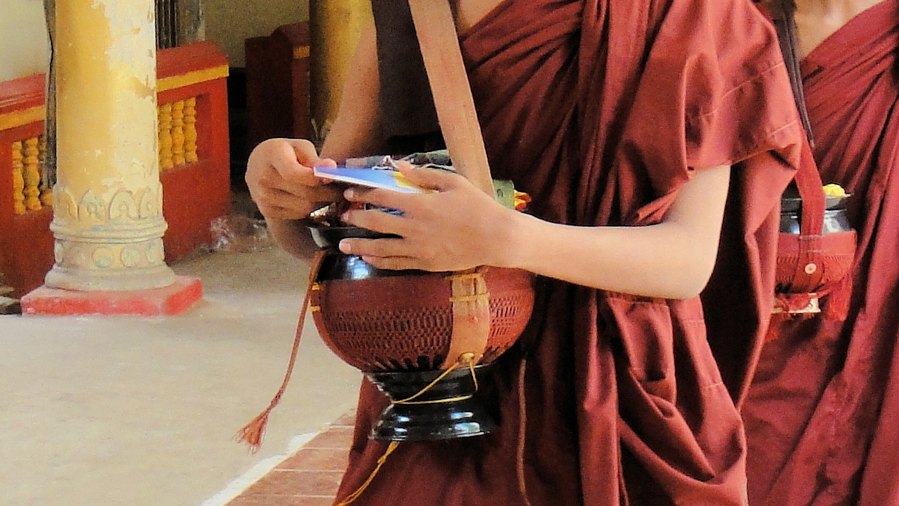
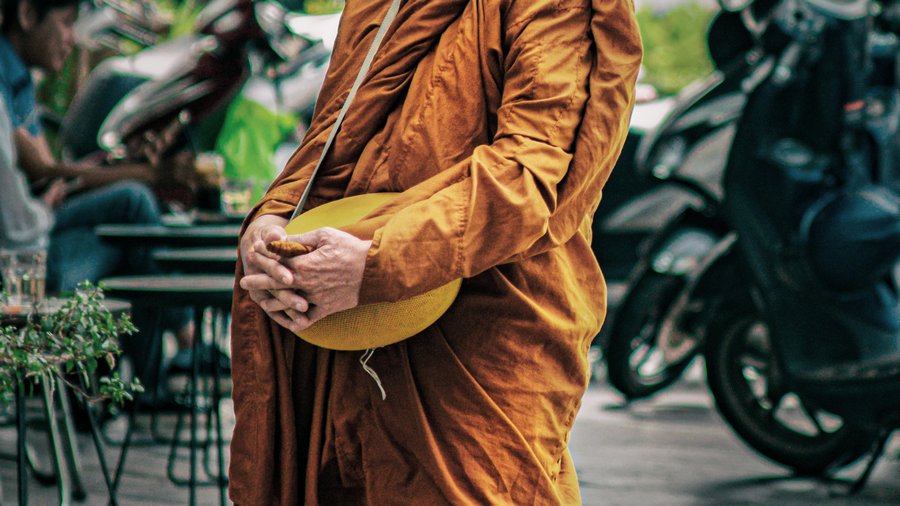
Monk holding alms bowl.

On one occasion the Blessed One was dwelling among the Magadhans at the brahmin village of Pañcasala. Now on that occasion the gift-festival of the young people was being held at the brahmin village of Pañcasala. Then, in the morning, the Blessed One dressed and, taking bowl and robe, entered Pañcasala for alms. Now on that occasion Mara the Evil One had taken possession of the brahmin householders of Pañcasala, inciting in them the thought, “Don’t let the ascetic Gotama get alms.”

Then the Blessed One left Pañcasala with his bowl just as cleanly washed as it was when he entered it for alms. Then Mara the Evil One approached the Blessed One and said to him: “Maybe you got alms, ascetic?”

“Was it you, Evil One, who saw to it that I didn’t get alms?”

“Then, venerable sir, let the Blessed One enter Pañcasala a second time for alms. I will see to it that the Blessed One gets alms.”

The Blessed One:

“You have produced demerit, Mara,
Having assailed the Tathagata.
Do you really think, O Evil One,
‘My evil does not ripen’?

“Happily indeed we live,
We who own nothing at all.
We shall dwell feeding on rapture
Like the devas of Streaming Radiance.”

Then Mara the Evil One … disappeared right there.


Read this translation of Saṁyutta Nikāya 4.18 Piṇḍasutta: Alms by Bhikkhu Bodhi on SuttaCentral.net. Or read a different translation on SuttaCentral.net or DhammaTalks.org. Or listen on PaliAudio.com or SC-Voice.net. Or explore the Pali on DigitalPaliReader.online.

Or read a translation in Deutsch, বাংলা, Català, Español, Bahasa Indonesia, Italiano, 日本語, မြန်မာဘာသာ, Norsk, Русский, සිංහල, ไทย, Tiếng Việt, or 汉语. Learn how to find your language.

SN 35.230 Bāḷisikopamasutta: The Fisherman Simile

Person in fishing boat.

“Bhikkhus, suppose a fisherman would cast a baited hook into a deep lake, and a fish on the lookout for food would swallow it. That fish who has thus swallowed the fisherman’s hook would meet with calamity and disaster, and the fisherman could do with it as he wishes. So too, bhikkhus, there are these six hooks in the world for the calamity of beings, for the slaughter of living beings.

“There are, bhikkhus, forms cognizable by the eye that are desirable, lovely, agreeable, pleasing, sensually enticing, tantalizing. If a bhikkhu seeks delight in them, welcomes them, and remains holding to them, he is called a bhikkhu who has swallowed Mara’s hook. He has met with calamity and disaster, and the Evil One can do with him as he wishes.

“There are, bhikkhus, sounds cognizable by the ear … mental phenomena cognizable by the mind that are desirable … tantalizing. If a bhikkhu seeks delight in them … the Evil One can do with him as he wishes.

“There are, bhikkhus, forms cognizable by the eye that are desirable, lovely, agreeable, pleasing, sensually enticing, tantalizing. If a bhikkhu does not seek delight in them, does not welcome them, and does not remain holding to them, he is called a bhikkhu who has not swallowed Mara’s hook, who has broken the hook, demolished the hook. He has not met with calamity and disaster, and the Evil One cannot do with him as he wishes.

“There are, bhikkhus, sounds cognizable by the ear … mental phenomena cognizable by the mind that are desirable … tantalizing. If a bhikkhu does not seek delight in them … the Evil One cannot do with him as he wishes.”


Read this translation of Saṁyutta Nikāya 35.230 Bāḷisikopamasutta: The Fisherman Simile by Bhikkhu Bodhi on SuttaCentral.net. Or read a different translation on SuttaCentral.net. Or listen on SC-Voice.net. Or explore the Pali on DigitalPaliReader.online.

Or read a translation in Deutsch, বাংলা, Español, Bahasa Indonesia, 日本語, မြန်မာဘာသာ, Norsk, Português, Русский, සිංහල, ไทย, Tiếng Việt, or 汉语. Learn how to find your language.

SN 5.6 Cālāsutta: Cala

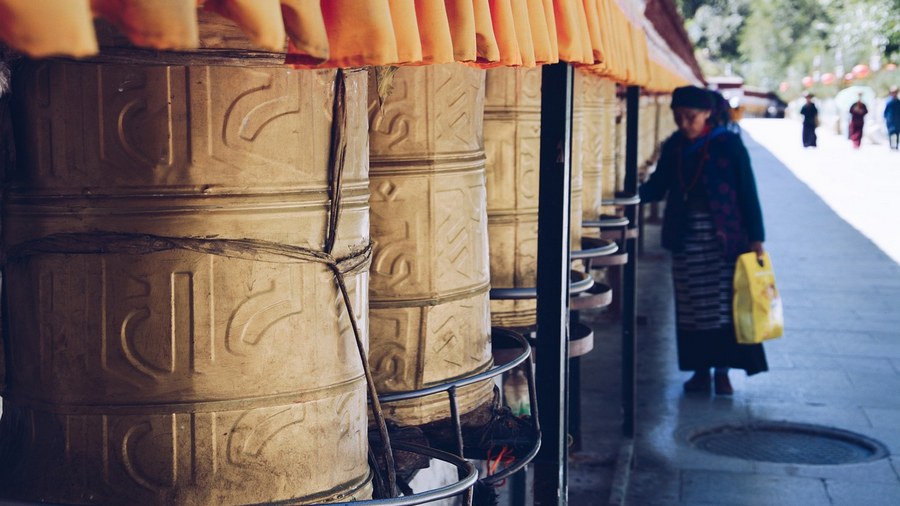
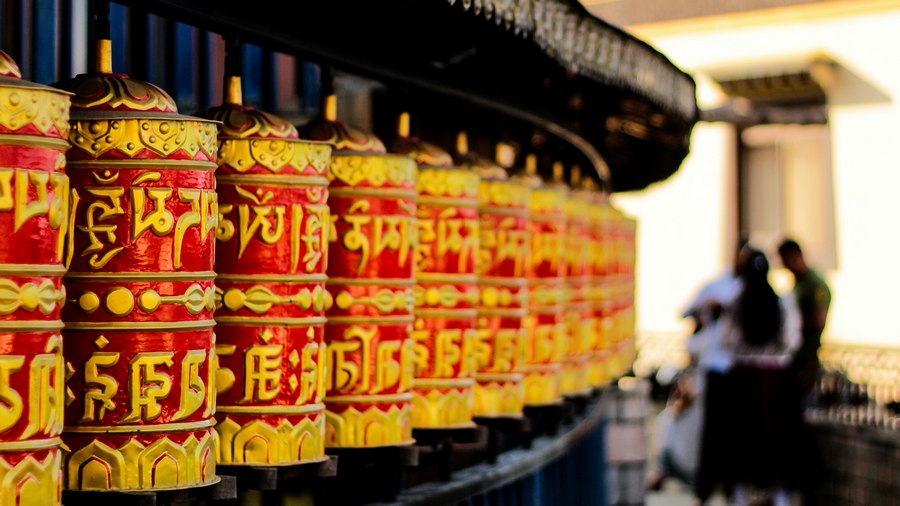
Row of prayer wheels.

At Savatthi. Then, in the morning, the bhikkhuni Cala dressed … she sat down at the foot of a tree for the day’s abiding.

Then Mara the Evil One approached the bhikkhuni Cala and said to her: “What don’t you approve of, bhikkhuni?”

“I don’t approve of birth, friend.”

“Why don’t you approve of birth?
Once born, one enjoys sensual pleasures.
Who now has persuaded you of this:
‘Bhikkhuni, don’t approve of birth’?”

The bhikkhuni Cala:

“For one who is born there is death;
Once born, one encounters sufferings—
Bondage, murder, affliction—
Hence one shouldn’t approve of birth.

“The Buddha has taught the Dhamma,
The transcendence of birth;
For the abandoning of all suffering
He has settled me in the truth.

“As to those beings who fare amidst form,
And those who abide in the formless—
Not having understood cessation,
They come again to renewed existence.”

Then Mara the Evil One, realizing, “The bhikkhuni Cala knows me,” sad and disappointed, disappeared right there.


Read this translation of Saṁyutta Nikāya 5.6 Cālāsutta: Cala by Bhikkhu Bodhi on SuttaCentral.net. Or read a different translation on SuttaCentral.net, DhammaTalks.org or Ancient-Buddhist-Texts.net. Or listen on PaliAudio.com or SC-Voice.net. Or explore the Pali on DigitalPaliReader.online.

Or read a translation in Deutsch, বাংলা, Català, Español, Français, Magyar, Bahasa Indonesia, Italiano, 日本語, မြန်မာဘာသာ, Norsk, Português, Русский, සිංහල, ไทย, Tiếng Việt, or 汉语. Learn how to find your language.

SN 4.1 Tapokammasutta: Austere Practice

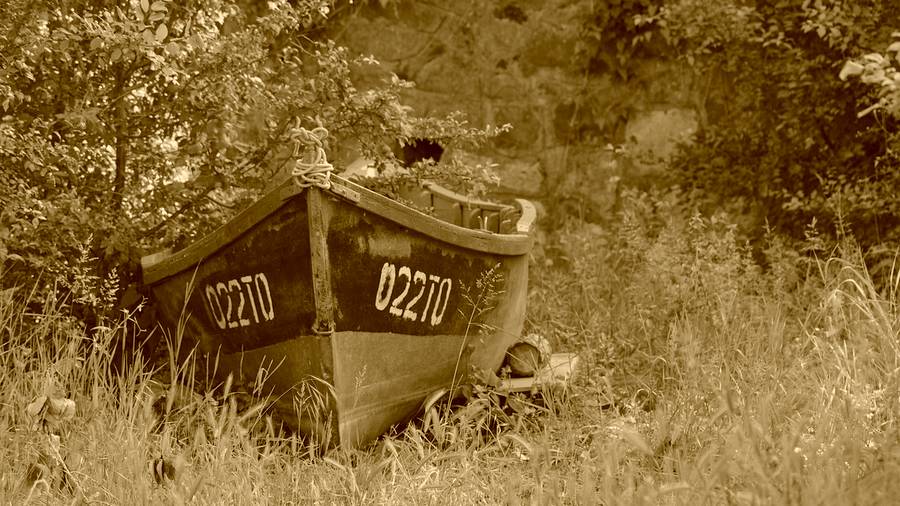
Boat on dry land.

Thus have I heard. On one occasion the Blessed One was dwelling at Uruvela on the bank of the river Nerañjara at the foot of the Goatherd’s Banyan Tree just after he had become fully enlightened. Then, while the Blessed One was alone in seclusion, a reflection arose in his mind thus: “I am indeed freed from that gruelling asceticism! It is good indeed that I am freed from that useless gruelling asceticism! It is good that, steady and mindful, I have attained enlightenment!”

Then Mara the Evil One, having known with his own mind the reflection in the Blessed One’s mind, approached the Blessed One and addressed him in verse:

“Having deviated from the austere practice
By which men purify themselves,
Being impure, you think you’re pure:
You have missed the path to purity.”

Then the Blessed One, having understood, “This is Mara the Evil One,” replied to him in verses:

“Having known as useless any austerity
Aimed at the immortal state,
That all such penances are futile
Like oars and rudder on dry land,

By developing the path to enlightenment—
Virtue, concentration, and wisdom—
I have attained supreme purity:
You’re defeated, End-maker!”

Then Mara the Evil One, realizing, “The Blessed One knows me, the Fortunate One knows me,” sad and disappointed, disappeared right there.


Read this translation of Saṁyutta Nikāya 4.1 Tapokammasutta: Austere Practice by Bhikkhu Bodhi on SuttaCentral.net. Or read a different translation on SuttaCentral.net or DhammaTalks.org. Or listen on PaliAudio.com or SC-Voice.net. Or explore the Pali on DigitalPaliReader.online.

Or read a translation in Deutsch, বাংলা, Català, Español, Bahasa Indonesia, Italiano, 日本語, မြန်မာဘာသာ, Norsk, Português, Русский, සිංහල, ไทย, Tiếng Việt, or 汉语. Learn how to find your language.

SN 5.10 Vajirāsutta: Vajira

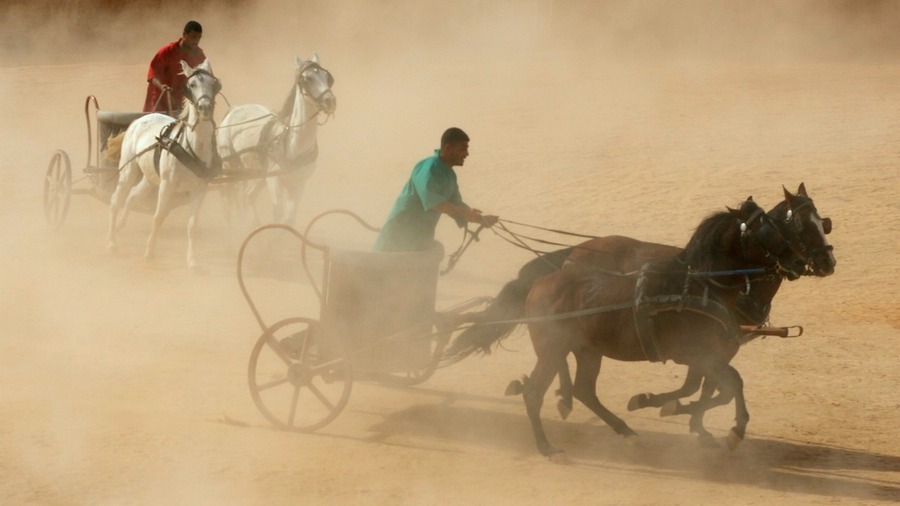
Two chariot teams.

At Savatthi. Then, in the morning, the bhikkhuni Vajira dressed and, taking bowl and robe, entered Savatthi for alms. When she had walked for alms in Savatthi and had returned from her alms round, after her meal she went to the Blind Men’s Grove for the day’s abiding. Having plunged into the Blind Men’s Grove, she sat down at the foot of a tree for the day’s abiding.

Then Mara the Evil One, desiring to arouse fear, trepidation, and terror in the bhikkhuni Vajira, desiring to make her fall away from concentration, approached her and addressed her in verse:

“By whom has this being been created?
Where is the maker of the being?
Where has the being arisen?
Where does the being cease?”

Then it occurred to the bhikkhuni Vajira: “Now who is this that recited the verse—a human being or a nonhuman being?” Then it occurred to her: “This is Mara the Evil One, who has recited the verse desiring to arouse fear, trepidation, and terror in me, desiring to make me fall away from concentration.”

Then the bhikkhuni Vajira, having understood, “This is Mara the Evil One,” replied to him in verses:

“Why now do you assume ‘a being’?
Mara, is that your speculative view?
This is a heap of sheer formations:
Here no being is found.

“Just as, with an assemblage of parts,
The word ‘chariot’ is used,
So, when the aggregates exist,
There is the convention ‘a being.’

“It’s only suffering that comes to be,
Suffering that stands and falls away.
Nothing but suffering comes to be,
Nothing but suffering ceases.”

Then Mara the Evil One, realizing, “The bhikkhuni Vajira knows me,” sad and disappointed, disappeared right there.


Read this translation of Saṁyutta Nikāya 5.10 Vajirāsutta: Vajira by Bhikkhu Bodhi on SuttaCentral.net. Or read a different translation on SuttaCentral.net, DhammaTalks.org or Ancient-Buddhist-Texts.net. Or listen on PaliAudio.com or SC-Voice.net. Or explore the Pali on DigitalPaliReader.online.

Or read a translation in Deutsch, বাংলা, Català, Español, Français, Magyar, Bahasa Indonesia, Italiano, 日本語, မြန်မာဘာသာ, Norsk, Português, Русский, සිංහල, ไทย, Tiếng Việt, or 汉语. Learn how to find your language.

SN 4.12 Kinnusīhasutta: Lion

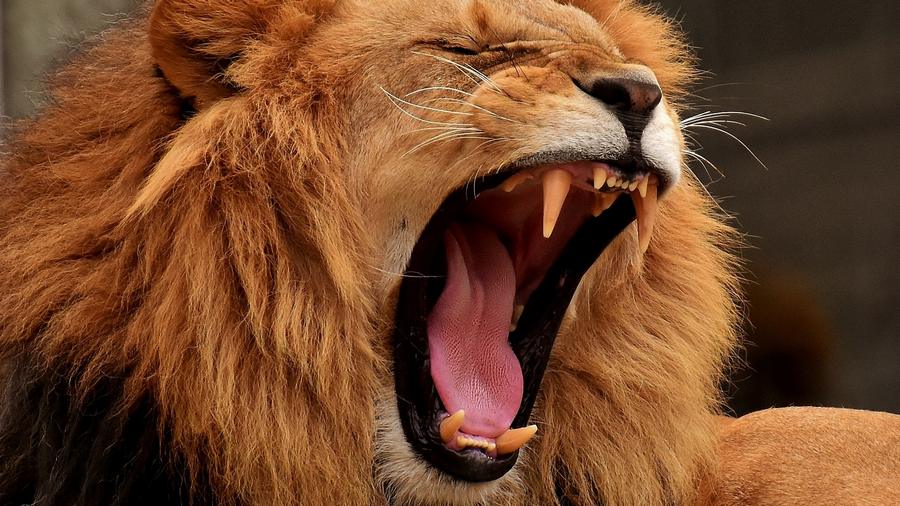
Lion roaring.

On one occasion the Blessed One was dwelling at Savatthi in Jeta’s Grove, Anathapiṇḍika’s Park. Now on that occasion the Blessed One was teaching the Dhamma while surrounded by a large assembly.

Then it occurred to Mara the Evil One: “This ascetic Gotama is teaching the Dhamma while surrounded by a large assembly. Let me approach the ascetic Gotama in order to confound them.”

Then Mara the Evil One approached the Blessed One and addressed him in verse:

“Why now do you roar like a lion,
Confident in the assembly?
For there is one who’s a match for you,
So why think yourself the victor?”

The Blessed One:

“The great heroes roar their lion’s roar
Confident in the assemblies—
The Tathagatas endowed with the powers
Have crossed over attachment to the world.”

Then Mara the Evil One … disappeared right there.


Read this translation of Saṁyutta Nikāya 4.12 Kinnusīhasutta: Lion by Bhikkhu Bodhi on SuttaCentral.net. Or read a different translation on SuttaCentral.net. Or listen on PaliAudio.com or SC-Voice.net. Or explore the Pali on DigitalPaliReader.online.

Or read a translation in Deutsch, বাংলা, Català, Español, Bahasa Indonesia, Italiano, 日本語, မြန်မာဘာသာ, Norsk, Русский, සිංහල, ไทย, Tiếng Việt, or 汉语. Learn how to find your language.

SN 5.1 Āḷavikāsutta: Aḷavika

Ax and chopping block.

Thus have I heard. On one occasion the Blessed One was dwelling at Savatthi in Jeta’s Grove, Anathapiṇḍika’s Park.

Then, in the morning, the bhikkhuni Aḷavika dressed and, taking bowl and robe, entered Savatthi for alms. When she had walked for alms in Savatthi and had returned from her alms round, after her meal she went to the Blind Men’s Grove seeking seclusion.

Then Mara the Evil One, desiring to arouse fear, trepidation, and terror in the bhikkhuni Aḷavika, desiring to make her fall away from seclusion, approached her and addressed her in verse:

“There is no escape in the world,
So what will you do with seclusion?
Enjoy the delights of sensual pleasure:
Don’t be remorseful later!”

Then it occurred to the bhikkhuni Aḷavika: “Now who is it that recited the verse—a human being or a nonhuman being?” Then it occurred to her: “This is Mara the Evil One, who has recited the verse desiring to arouse fear, trepidation, and terror in me, desiring to make me fall away from seclusion.”

Then the bhikkhuni Aḷavika, having understood, “This is Mara the Evil One,” replied to him in verses:

“There is an escape in the world
Which I have closely touched with wisdom.
O Evil One, kinsman of the negligent,
You do not know that state.

“Sensual pleasures are like swords and stakes;
The aggregates like their chopping block.
What you call sensual delight
Has become for me nondelight.”

Then Mara the Evil One, realizing, “The bhikkhuni Aḷavika knows me,” sad and disappointed, disappeared right there.


Read this translation of Saṁyutta Nikāya 5.1 Āḷavikāsutta: Aḷavika by Bhikkhu Bodhi on SuttaCentral.net. Or read a different translation on SuttaCentral.net, DhammaTalks.org or Ancient-Buddhist-Texts.net. Or listen on PaliAudio.com or SC-Voice.net. Or explore the Pali on DigitalPaliReader.online.

Or read a translation in Deutsch, Português, বাংলা, Català, Español, Magyar, Bahasa Indonesia, Italiano, 日本語, မြန်မာဘာသာ, Norsk, Русский, සිංහල, ไทย, Tiếng Việt, or 汉语. Learn how to find your language.

SN 4.16 Pattasutta: Almsbowls

Black ox.

At Savatthi. Now on that occasion the Blessed One was instructing, exhorting, inspiring, and gladdening the bhikkhus with a Dhamma talk concerning the five aggregates subject to clinging. And those bhikkhus were listening to the Dhamma with eager ears, attending to it as a matter of vital concern, applying their whole minds to it.

Then it occurred to Mara the Evil One: “This ascetic Gotama is instructing, exhorting, inspiring, and gladdening the bhikkhus … who are applying their whole minds to it. Let me approach the ascetic Gotama in order to confound them.”

Now on that occasion a number of almsbowls had been put out in the open. Then Mara the Evil One manifested himself in the form of an ox and approached those almsbowls. Then one bhikkhu said to another: “Bhikkhu, bhikkhu! That ox may break the almsbowls.” When this was said, the Blessed One said to that bhikkhu: “That is not an ox, bhikkhu. That is Mara the Evil One, who has come here in order to confound you.”

Then the Blessed One, having understood, “This is Mara the Evil One,” addressed Mara the Evil One in verses:

“Form, feeling, and perception,
Consciousness, and formations—
‘I am not this, this isn’t mine,’
Thus one is detached from it.

“Though they seek him everywhere,
Mara and his army do not find him:
The one thus detached, secure,
Who has gone beyond all ’fetters.”

Then Mara the Evil One … disappeared right there.


Read this translation of Saṁyutta Nikāya 4.16 Pattasutta: Almsbowls by Bhikkhu Bodhi on SuttaCentral.net. Or read a different translation on SuttaCentral.net. Or listen on PaliAudio.com or SC-Voice.net. Or explore the Pali on DigitalPaliReader.online.

Or read a translation in Deutsch, বাংলা, Català, Español, Bahasa Indonesia, Italiano, 日本語, မြန်မာဘာသာ, Norsk, Português, Русский, සිංහල, ไทย, Tiếng Việt, or 汉语. Learn how to find your language.

SN 5.5 Uppalavaṇṇāsutta: Uppalavaṇṇa

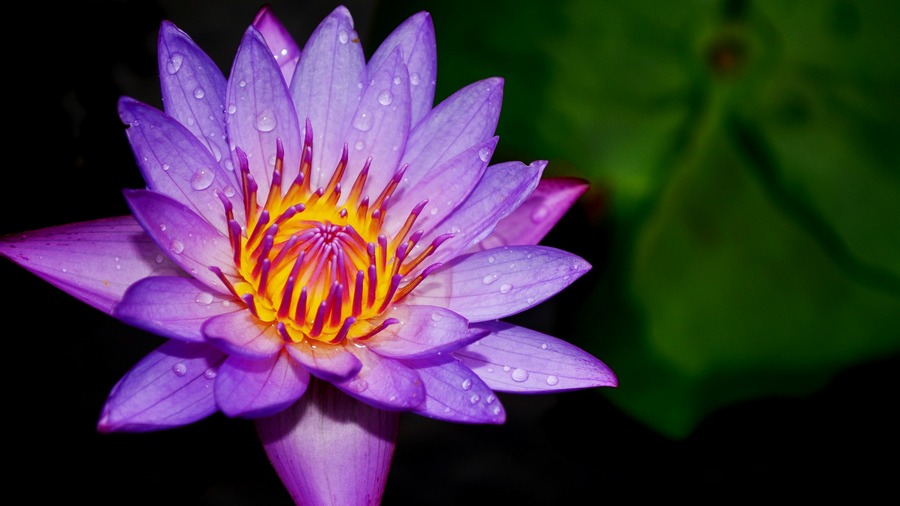
Blue water lilly.

At Savatthi. Then, in the morning, the bhikkhuni Uppalavaṇṇa dressed … she stood at the foot of a sal tree in full flower.

Then Mara the Evil One, desiring to arouse fear, trepidation, and terror in the bhikkhuni Uppalavaṇṇa, desiring to make her fall away from concentration, approached her and addressed her in verse:

“Having gone to a sal tree with flowering top,
You stand at its foot all alone, bhikkhuni.
There is none whose beauty rivals yours:
Foolish girl, aren’t you afraid of rogues?”

Then it occurred to the bhikkhuni Uppalavaṇṇa: “Now who is this…? This is Mara the Evil One … desiring to make me fall away from concentration.”

Then the bhikkhuni Uppalavaṇṇa, having understood, “This is Mara the Evil One,” replied to him in verses:

“Though a hundred thousand rogues
Just like you might come here,
I stir not a hair, I feel no terror;
Even alone, Mara, I don’t fear you.

“I can make myself disappear
Or I can enter inside your belly.
I can stand between your eyebrows
Yet you won’t catch a glimpse of me.

“I am the master of my mind,
The bases of power are well developed;
I am freed from all bondage,
Therefore I don’t fear you, friend.”

Then Mara the Evil One, realizing, “The bhikkhuni Uppalavaṇṇa knows me,” sad and disappointed, disappeared right there.


Note: Arahant Uppalavaṇṇā was one of the two chief bhikkhuni disciples and foremost having psychic powers.

Read this translation of Saṁyutta Nikāya 5.5 Uppalavaṇṇāsutta: Uppalavaṇṇa by Bhikkhu Bodhi on SuttaCentral.net. Or read a different translation on SuttaCentral.net, DhammaTalks.org or Ancient-Buddhist-Texts.net. Or listen on PaliAudio.com or SC-Voice.net. Or explore the Pali on DigitalPaliReader.online.

Or read a translation in Deutsch, বাংলা, Català, Español, Magyar, Bahasa Indonesia, Italiano, 日本語, မြန်မာဘာသာ, Norsk, Português, Русский, සිංහල, ไทย, Tiếng Việt, or 汉语. Learn how to find your language.

MN 19 Dvedhāvitakkasutta: Two Kinds of Thought

Deer in the forest.

“…Suppose, bhikkhus, that in a wooded range there was a great low-lying marsh near which a large herd of deer lived. Then a man appeared desiring their ruin, harm, and bondage, and he closed off the safe and good path to be traveled joyfully, and he opened up a false path, and he put out a decoy and set up a dummy so that the large herd of deer might later come upon calamity, disaster, and loss. But another man came desiring their good, welfare, and protection, and he reopened the safe and good path that led to their happiness, and he closed off the false path, and he removed the decoy and destroyed the dummy, so that the large herd of deer might later come to growth, increase, and fulfilment.

“Bhikkhus, I have given this simile in order to convey a meaning. This is the meaning: ‘The great low-lying marsh’ is a term for sensual pleasures. ‘The large herd of deer’ is a term for beings. ‘The man desiring their ruin, harm, and bondage’ is a term for Māra the Evil One. ‘The false path’ is a term for the wrong eightfold path, that is: wrong view, wrong intention, wrong speech, wrong action, wrong livelihood, wrong effort, wrong mindfulness, and wrong concentration. ‘The decoy’ is a term for delight and lust. ‘The dummy’ is a term for ignorance. ‘The man desiring their good, welfare, and protection’ is a term for the Tathāgata, accomplished and fully enlightened. ‘The safe and good path to be traveled joyfully’ is a term for the Noble Eightfold Path, that is: right view, right intention, right speech, right action, right livelihood, right effort, right mindfulness, and right concentration.

“So, bhikkhus, the safe and good path to be traveled joyfully has been reopened by me, the wrong path has been closed off, the decoy removed, the dummy destroyed.

“What should be done for his disciples out of compassion by a teacher who seeks their welfare and has compassion for them, that I have done for you, bhikkhus. There are these roots of trees, these empty huts. Meditate, bhikkhus, do not delay or else you will regret it later. This is our instruction to you.”

That is what the Blessed One said. The bhikkhus were satisfied and delighted in the Blessed One’s words.


Read this translation of Majjhima Nikāya 19 Dvedhāvitakkasutta: Two Kinds of Thought by Bhikkhu Bodhi on SuttaCentral.net. Or read a different translation on SuttaCentral.net or DhammaTalks.org. Or listen on PaliAudio.com or SC-Voice.net. Or explore the Pali on DigitalPaliReader.online.

Or read a translation in Deutsch, Lietuvių Kalba, Русский, বাংলা, Čeština, Español, Suomi, Français, हिन्दी, Magyar, Bahasa Indonesia, Italiano, 日本語, 한국어/조선말, မြန်မာဘာသာ, Nederlands, Norsk, Português, Română, සිංහල, Slovenščina, Srpski, ไทย, Tiếng Việt, or 汉语. Learn how to find your language.

SN 5.7 Upacālāsutta: Upacala

Fire ball.

At Savatthi. Then, in the morning, the bhikkhuni Upacala dressed … she sat down at the foot of a tree for the day’s abiding.

Then Mara the Evil One approached the bhikkhuni Upacala and said to her: “Where do you wish to be reborn, bhikkhuni?”

“I do not wish to be reborn anywhere, friend.”

“There are Tavatiṁsa and Yama devas,
And devatās of the Tusita realm,
Devas who take delight in creating,
And devas who exercise control.
Direct your mind there to those realms
And you’ll experience delight.”

The bhikkhuni Upacala:

“There are Tavatiṁsa and Yama devas,
And devatās of the Tusita realm,
Devas who take delight in creating,
And devas who exercise control.
They are still bound by sensual bondage,
They come again under Mara’s control.

“All the world is on fire,
All the world is burning,
All the world is ablaze,
All the world is quaking.

“That which does not quake or blaze,
That to which worldlings do not resort,
Where there is no place for Mara:
That is where my mind delights.”

Then Mara the Evil One, realizing, “The bhikkhuni Upacala knows me, sad and disappointed, disappeared right there.


Read this translation of Saṁyutta Nikāya 5.7 Upacālāsutta: Upacala by Bhikkhu Bodhi on SuttaCentral.net. Or read a different translation on SuttaCentral.net, DhammaTalks.org or Ancient-Buddhist-Texts.net. Or listen on PaliAudio.com or SC-Voice.net. Or explore the Pali on DigitalPaliReader.online.

Or read a translation in Deutsch, বাংলা, Català, Español, Magyar, Bahasa Indonesia, Italiano, 日本語, မြန်မာဘာသာ, Norsk, Português, Русский, සිංහල, Svenska, ไทย, Tiếng Việt, or 汉语. Learn how to find your language.

SN 4.8 Nandatisutta: He Delights

Baby held by parents.

Thus have I heard. On one occasion the Blessed One was dwelling at Savatthi in Jeta’s Grove, Anathapiṇḍika’s Park.

Then Mara the Evil One approached the Blessed One and recited this verse in the presence of the Blessed One:

“One who has sons delights in sons,
One with cattle delights in cattle.
Acquisitions truly are a man’s delight;
Without acquisitions one does not delight.”

The Blessed One:

“One who has sons sorrows over sons,
One with cattle sorrows over cattle.
Acquisitions truly are a man’s sorrow;
Without acquisitions one does not sorrow.”

Then Mara the Evil One … disappeared right there.


Read this translation of Saṁyutta Nikāya 4.8 Nandatisutta: He Delights by Bhikkhu Bodhi on SuttaCentral.net. Or read a different translation on SuttaCentral.net or DhammaTalks.org. Or listen on PaliAudio.com or SC-Voice.net. Or explore the Pali on DigitalPaliReader.online.

Or read a translation in Deutsch, বাংলা, Català, Español, Français, Bahasa Indonesia, Italiano, 日本語, မြန်မာဘာသာ, Norsk, Русский, සිංහල, ไทย, Tiếng Việt, or 汉语. Learn how to find your language.

SN 5.4 Vijayāsutta: Vijaya

Headstone in a cemetery.

At Savatthi. Then, in the morning, the bhikkhuni Vijaya dressed … she sat down at the foot of a tree for the day’s abiding.

Then Mara the Evil One, desiring to arouse fear, trepidation, and terror in the bhikkhuni Vijaya, desiring to make her fall away from concentration, approached her and addressed her in verse:

“You are so young and beautiful,
And I too am a youth in my prime.
Come, noble lady, let us rejoice
With the music of a fivefold ensemble.”

Then it occurred to the bhikkhuni Vijaya: “Now who is this…? This is Mara the Evil One … desiring to make me fall away from concentration.”

Then the bhikkhuni Vijaya, having understood, “This is Mara the Evil One,” replied to him in verses:

“Forms, sounds, tastes, odours,
And delightful tactile objects—
I offer them right back to you,
For I, O Mara, do not need them.

“I am repelled and humiliated
By this foul, putrid body,
Subject to break up, fragile:
I’ve uprooted sensual craving.

“As to those beings who fare amidst form,
And those who abide in the formless,
And those peaceful attainments too:
Everywhere darkness has been destroyed.”

Then Mara the Evil One, realizing “The bhikkhuni Vijaya knows me,” sad and disappointed, disappeared right there.


Read this translation of Saṁyutta Nikāya 5.4 Vijayāsutta: Vijaya by Bhikkhu Bodhi on SuttaCentral.net. Or read a different translation on SuttaCentral.net, DhammaTalks.org or Ancient-Buddhist-Texts.net. Or listen on PaliAudio.com or SC-Voice.net. Or explore the Pali on DigitalPaliReader.online.

Or read a translation in Deutsch, বাংলা, Català, Español, Magyar, Bahasa Indonesia, Italiano, 日本語, မြန်မာဘာသာ, Norsk, Português, Русский, සිංහල, ไทย, Tiếng Việt, or 汉语. Learn how to find your language.

AN 4.15 Paññattisutta: Proclamations

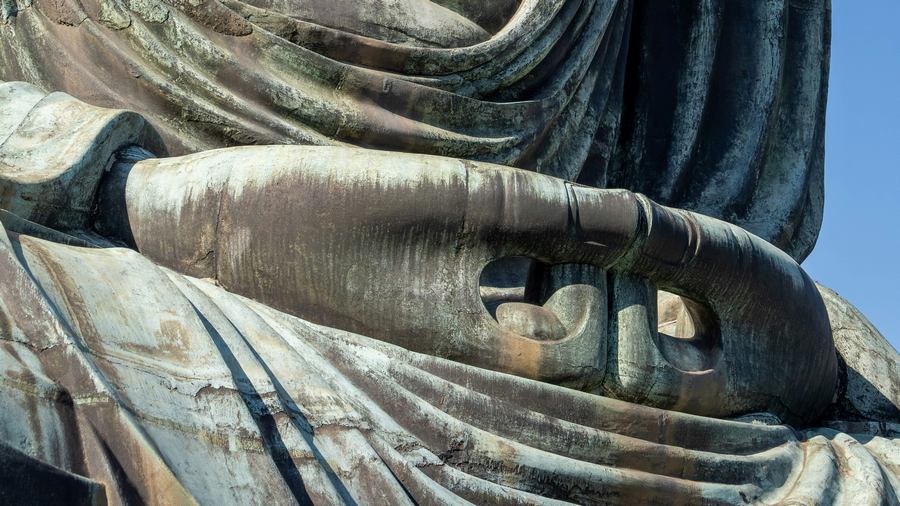
Two Buddha statues.

“Bhikkhus, there are these four proclamations of the foremost. What four?

(1) “The foremost of those with bodies is Rāhu, lord of the asuras. (2) The foremost of those who enjoy sensual pleasures is King Mandhātā. (3) The foremost of those who exercise authority is Māra the Evil One. (4) In this world with its devas, Māra, and Brahmā, among this population with its ascetics and brahmins, its devas and humans, the Tathāgata, the Arahant, the Perfectly Enlightened One is declared foremost. These are the four proclamations of those who are foremost.”

Rāhu is the foremost of those with bodies,
Mandhātā, of those enjoying sense pleasures;
Māra is the foremost of rulers,
blazing with power and glory.

In this world together with its devas
above, across, and below,
as far as the world extends,
the Buddha is declared foremost.


Read this translation of Aṅguttara Nikāya 4.15 Paññattisutta: Proclamations by Bhikkhu Bodhi on SuttaCentral.net. Or read a different translation on SuttaCentral.net. Or listen on PaliAudio.com or SC-Voice.net. Or explore the Pali on DigitalPaliReader.online.

Or read a translation in Deutsch, বাংলা, Español, Bahasa Indonesia, 日本語, မြန်မာဘာသာ, Русский, සිංහල, ไทย, Tiếng Việt, or 汉语. Learn how to find your language.

SN 5.2 Somāsutta: Soma

Dark forest in fog.

At Savatthi. Then, in the morning, the bhikkhuni Soma dressed and, taking bowl and robe, entered Savatthi for alms. When she had walked for alms in Savatthi and had returned from her alms round, after her meal she went to the Blind Men’s Grove for the day’s abiding. Having plunged into the Blind Men’s Grove, she sat down at the foot of a tree for the day’s abiding.

Then Mara the Evil One, desiring to arouse fear, trepidation, and terror in the bhikkhuni Soma, desiring to make her fall away from concentration, approached her and addressed her in verse:

“That state so hard to achieve
Which is to be attained by the seers,
Can’t be attained by a woman
With her two-fingered wisdom.”

Then it occurred to the bhikkhuni Soma: “Now who is this that recited the verse—a human being or a nonhuman being?” Then it occurred to her: “This is Mara the Evil One, who has recited the verse desiring to arouse fear, trepidation, and terror in me, desiring to make me fall away from concentration.”

Then the bhikkhuni Soma, having understood, “This is Mara the Evil One,” replied to him in verses:

“What does womanhood matter at all
When the mind is concentrated well,
When knowledge flows on steadily
As one sees correctly into Dhamma.

“One to whom it might occur,
‘I’m a woman’ or ‘I’m a man’
Or ‘I’m anything at all’—
Is fit for Mara to address.”

Then Mara the Evil One, realizing, “The bhikkhuni Soma knows me,” sad and disappointed, disappeared right there.


Read this translation of Saṁyutta Nikāya 5.2 Somāsutta: Soma by Bhikkhu Bodhi on SuttaCentral.net. Or read a different translation on SuttaCentral.net, DhammaTalks.org or Ancient-Buddhist-Texts.net. Or listen on PaliAudio.com or SC-Voice.net. Or explore the Pali on DigitalPaliReader.online.

Or read a translation in Deutsch, বাংলা, Català, Español, Magyar, Bahasa Indonesia, Italiano, 日本語, မြန်မာဘာသာ, Norsk, Português, Русский, සිංහල, Svenska, ไทย, Tiếng Việt, or 汉语. Learn how to find your language.

SN 4.7 Supatisutta: Sleep

Dog sleeping in a temple with monastics in the background.

On one occasion the Blessed One was dwelling at Rajagaha in the Bamboo Grove, the Squirrel Sanctuary. Then, when the night was fading, the Blessed One, having spent much of the night walking back and forth in the open, washed his feet, entered his dwelling, and lay down on his right side in the lion’s posture, with one leg overlapping the other, mindful and clearly comprehending, having attended to the idea of rising.

Then Mara the Evil One approached the Blessed One and addressed him in verse:

“What, you sleep? Why do you sleep?
What’s this, you sleep like a wretch?
Thinking ‘The hut’s empty’ you sleep:
What’s this, you sleep when the sun has risen?”

The Blessed One:

“Within him craving no longer lurks,
Entangling and binding, to lead him anywhere;
With the destruction of all acquisitions
The Awakened One sleeps:
Why should this concern you, Mara?”

Then Mara the Evil One … disappeared right there.


Read this translation of Saṁyutta Nikāya 4.7 Supatisutta: Sleep by Bhikkhu Bodhi on SuttaCentral.net.Or read a different translation on SuttaCentral.net. Or listen on PaliAudio.com or SC-Voice.net. Or explore the Pali on DigitalPaliReader.online.

Or read a translation in Deutsch, বাংলা, Català, Español, Bahasa Indonesia, Italiano, 日本語, မြန်မာဘာသာ, Norsk, Русский, සිංහල, ไทย, Tiếng Việt, or 汉语. Learn how to find your language.

SN 36.21 Sīvakasutta: Sivaka

Person blowing nose.

On one occasion the Blessed One was dwelling at Rajagaha in the Bamboo Grove, the Squirrel Sanctuary. Then the wanderer Moḷiyasīvaka approached the Blessed One and exchanged greetings with him. When they had concluded their greetings and cordial talk, he sat down to one side and said to the Blessed One:

“Master Gotama, there are some ascetics and brahmins who hold such a doctrine and view as this: ‘Whatever a person experiences, whether it be pleasant or painful or neither-painful-nor-pleasant, all that is caused by what was done in the past.’ What does Master Gotama say about this?”

“Some feelings, Sīvaka, arise here originating from bile disorders: that some feelings arise here originating from bile disorders one can know for oneself, and that is considered to be true in the world. Now when those ascetics and brahmins hold such a doctrine and view as this, ‘Whatever a person experiences, whether it be pleasant or painful or neither-painful-nor-pleasant, all that is caused by what was done in the past,’ they overshoot what one knows by oneself and they overshoot what is considered to be true in the world. Therefore I say that this is wrong on the part of those ascetics and brahmins.

“Some feelings, Sīvaka, arise here originating from phlegm disorders … originating from wind disorders … originating from an imbalance of the three … produced by change of climate … produced by careless behaviour … caused by assault … produced as the result of kamma: that some feelings arise here produced as the result of kamma one can know for oneself, and that is considered to be true in the world. Now when those ascetics and brahmins hold such a doctrine and view as this, ‘Whatever a person experiences, whether it be pleasant or painful or neither-painful-nor-pleasant, all that is caused by what was done in the past,’ they overshoot what one knows by oneself and they overshoot what is considered to be true in the world. Therefore I say that this is wrong on the part of those ascetics and brahmins.”

When this was said, the wanderer Moḷiyasīvaka said to the Blessed One: “Magnificent, Master Gotama! Magnificent, Master Gotama!… From today let Master Gotama remember me as a lay follower who has gone for refuge for life.”

Bile, phlegm, and also wind,
Imbalance and climate too,
Carelessness and assault,
With kamma result as the eighth.


Read this translation of Saṁyutta Nikāya 36.21 Sīvakasutta: Sivaka by Bhikkhu Bodhi on SuttaCentral.net. Or read a different translation on SuttaCentral.net, DhammaTalks.org or AccessToInsight.org. Or listen on SC-Voice.net. Or explore the Pali on DigitalPaliReader.online.

Or read a translation in Deutsch, বাংলা, Bahasa Indonesia, 日本語, မြန်မာဘာသာ, Norsk, Português, Русский, සිංහල, ไทย, Tiếng Việt, or 汉语. Learn how to find your language.

AN 5.57 From… Abhiṇhapaccavekkhitabbaṭhāna sutta: Themes—Owners of Actions

Pagodas in Burma at sunset.

…(5) “And for the sake of what benefit should a woman or a man, a householder or one gone forth, often reflect thus: ‘I am the owner of my kamma, the heir of my kamma; I have kamma as my origin, kamma as my relative, kamma as my resort; I will be the heir of whatever kamma, good or bad, that I do’? People engage in misconduct by body, speech, and mind. But when one often reflects upon this theme, such misconduct is either completely abandoned or diminished. It is for the sake of this benefit that a woman or a man, a householder or one gone forth, should often reflect thus: ‘I am the owner of my kamma, the heir of my kamma; I have kamma as my origin, kamma as my relative, kamma as my resort; I will be the heir of whatever kamma, good or bad, that I do.’…

…“This noble disciple reflects thus: ‘I am not the only one who is the owner of one’s kamma, the heir of one’s kamma; who has kamma as one’s origin, kamma as one’s relative, kamma as one’s resort; who will be the heir of whatever kamma, good or bad, that one does. All beings that come and go, that pass away and undergo rebirth, are owners of their kamma, heirs of their kamma; all have kamma as their origin, kamma as their relative, kamma as their resort; all will be heirs of whatever kamma, good or bad, that they do.’ As he often reflects on this theme, the path is generated. He pursues this path, develops it, and cultivates it. As he does so, the fetters are entirely abandoned and the underlying tendencies are uprooted.…


Read the entire translation of Aṅguttara Nikāya 5.57 Abhiṇhapaccavekkhitabbaṭhāna sutta: Themes by Bhikkhu Bodhi on SuttaCentral.net. Or read a different translation on SuttaCentral.net or DhammaTalks.org. Or listen on SC-Voice.net. Or explore the Pali on DigitalPaliReader.online.

Or read a translation in Deutsch, Lietuvių Kalba, বাংলা, Español, Français, Magyar, Bahasa Indonesia, Italiano, 日本語, မြန်မာဘာသာ, Português, Русский, සිංහල, Svenska, ไทย, Tiếng Việt, or 汉语. Learn how to find your language.

SN 16.2 Anottappīsutta: Unafraid of Wrongdoing

Lotus flower.

Thus have I heard. On one occasion the Venerable Mahakassapa and the Venerable Sāriputta were dwelling at Baraṇasī in the Deer Park at Isipatana. Then, in the evening, the Venerable Sāriputta emerged from seclusion and approached the Venerable Mahakassapa. He exchanged greetings with the Venerable Mahakassapa and, when they had concluded their greetings and cordial talk, he sat down to one side and said to him:

“Friend, it is said that one who is not ardent and who is unafraid of wrongdoing is incapable of enlightenment, incapable of Nibbāna, incapable of achieving the unsurpassed security from bondage; but one who is ardent and afraid of wrongdoing is capable of enlightenment, capable of Nibbāna, capable of achieving the unsurpassed security from bondage. In what way is this so, friend?”

“Here, friend, a bhikkhu does not arouse ardour by thinking: ‘If unarisen evil unwholesome states arise in me, this may lead to my harm’; nor by thinking: ‘If evil unwholesome states that have arisen in me are not abandoned, this may lead to my harm’; nor by thinking: ‘If unarisen wholesome states do not arise in me, this may lead to my harm’; nor by thinking: ‘If wholesome states that have arisen in me cease, this may lead to my harm.’ Thus he is not ardent.

“And how, friend, is he unafraid of wrongdoing? Here, friend, a bhikkhu does not become afraid at the thought: ‘If unarisen evil unwholesome states arise in me, this may lead to my harm’ … nor at the thought: ‘If wholesome states that have arisen in me cease, this may lead to my harm.’ Thus he is unafraid of wrongdoing.

“It is in this way, friend, that one who is not ardent and who is unafraid of wrongdoing is incapable of enlightenment, incapable of Nibbāna, incapable of achieving the unsurpassed security from bondage.

“And how, friend, is one ardent? Here, friend, a bhikkhu arouses ardour by thinking: ‘If unarisen evil unwholesome states arise in me, this may lead to my harm’ … and by thinking: ‘If wholesome states that have arisen in me cease, this may lead to my harm.’ Thus he is ardent.

“And how, friend, is he afraid of wrongdoing? Here, friend, a bhikkhu becomes afraid at the thought: ‘If unarisen evil unwholesome states arise in me, this may lead to my harm’; … and at the thought: ‘If wholesome states that have arisen in me cease, this may lead to my harm.’ Thus he is afraid of wrongdoing.

It is in this way, friend, that one who is ardent and afraid of wrongdoing is capable of enlightenment, capable of Nibbāna, capable of achieving the unsurpassed security from bondage.


Read this translation of Saṁyutta Nikāya 16.2 Anottappīsutta: Unafraid of Wrongdoing by Bhikkhu Bodhi on SuttaCentral.net. Or read a different translation on SuttaCentral.net or DhammaTalks.org. Or listen on PaliAudio.com or SC-Voice.net. Or explore the Pali on DigitalPaliReader.online.

Or read a translation in Deutsch, বাংলা, Español, Bahasa Indonesia, Italiano, 日本語, မြန်မာဘာသာ, Norsk, Português, Русский, සිංහල, ไทย, Tiếng Việt, or 汉语. Learn how to find your language.

SN 35.146 Kammanirodhasutta: Kamma

Oil lamps in the dark.

“Bhikkhus, I will teach you new and old kamma, the cessation of kamma, and the way leading to the cessation of kamma. Listen to that and attend closely, I will speak….

“And what, bhikkhus, is old kamma? The eye is old kamma, to be seen as generated and fashioned by volition, as something to be felt. The ear is old kamma … The mind is old kamma, to be seen as generated and fashioned by volition, as something to be felt. This is called old kamma.

“And what, bhikkhus is new kamma? Whatever action one does now by body, speech, or mind. This is called new kamma.

“And what, bhikkhus, is the cessation of kamma? When one reaches liberation through the cessation of bodily action, verbal action, and mental action, this is called the cessation of kamma.

“And what, bhikkhus, is the way leading to the cessation of kamma? It is this Noble Eightfold Path; that is, right view, right intention, right speech, right action, right livelihood, right effort, right mindfulness, right concentration.

“Thus, bhikkhus, I have taught old kamma, I have taught new kamma, I have taught the cessation of kamma, I have taught the way leading to the cessation of kamma. Whatever should be done, bhikkhus, by a compassionate teacher out of compassion for his disciples, desiring their welfare, that I have done for you. These are the feet of trees, bhikkhus, these are empty huts. Meditate, bhikkhus, do not be negligent, lest you regret it later. This is our instruction to you.”


Read this translation of Saṁyutta Nikāya 35.146 Kammanirodhasutta: Kamma by Bhikkhu Bodhi on SuttaCentral.net. Or read a different translation on SuttaCentral.net. Or listen on SC-Voice.net. Or explore the Pali on DigitalPaliReader.online.

Or read a translation in Deutsch, বাংলা, Bahasa Indonesia, 日本語, မြန်မာဘာသာ, Norsk, Português, Русский, සිංහල, ไทย, Tiếng Việt, or 汉语. Learn how to find your language.

AN 8.40 Duccaritavipākasutta: Conducive

Hands holding mala beads.

(1) “Bhikkhus, the destruction of life, repeatedly pursued, developed, and cultivated, is conducive to hell, to the animal realm, and to the sphere of afflicted spirits; for one reborn as a human being the destruction of life at minimum conduces to a short life span.

(2) “Taking what is not given, repeatedly pursued, developed, and cultivated, is conducive to hell, to the animal realm, and to the sphere of afflicted spirits; for one reborn as a human being taking what is not given at minimum conduces to loss of wealth.

(3) “Sexual misconduct, repeatedly pursued, developed, and cultivated, is conducive to hell, to the animal realm, and to the sphere of afflicted spirits; for one reborn as a human being sexual misconduct at minimum conduces to enmity and rivalry.

(4) “False speech, repeatedly pursued, developed, and cultivated, is conducive to hell, to the animal realm, and to the sphere of afflicted spirits; for one reborn as a human being false speech at minimum conduces to false accusations.

(5) “Divisive speech, repeatedly pursued, developed, and cultivated, is conducive to hell, to the animal realm, and to the sphere of afflicted spirits; for one reborn as a human being divisive speech at minimum conduces to being divided from one’s friends.

(6) “Harsh speech, repeatedly pursued, developed, and cultivated, is conducive to hell, to the animal realm, and to the sphere of afflicted spirits; for one reborn as a human being harsh speech at minimum conduces to disagreeable sounds.

(7) “Idle chatter, repeatedly pursued, developed, and cultivated, is conducive to hell, to the animal realm, and to the sphere of afflicted spirits; for one reborn as a human being idle chatter at minimum conduces to others distrusting one’s words.

(8) “Drinking liquor and wine, repeatedly pursued, developed, and cultivated, is conducive to hell, to the animal realm, and to the sphere of afflicted spirits; for one reborn as a human being drinking liquor and wine at minimum conduces to madness.”


Read this translation of Aṅguttara Nikāya 8.40 Duccaritavipākasutta: Conducive by Bhikkhu Bodhi on SuttaCentral.net. Or read a different translation on SuttaCentral.net, SuttaFriends.org or DhammaTalks.org. Or listen on SC-Voice.net. Or explore the Pali on DigitalPaliReader.online.

Or read a translation in Deutsch, বাংলা, Español, Bahasa Indonesia, Italiano, 日本語, မြန်မာဘာသာ, Português, Русский, සිංහල, Svenska, ไทย, Tiếng Việt, or 汉语. Learn how to find your language.

MN 36 From… Mahāsaccakasutta: The Greater Discourse to Saccaka

Stone carving of torso of Bodhisatta while engaged in ascetic practices.

[Note: The events in this selection take place while the Bodhisatta was striving unsuccessfully for enlightenment.]

“I thought: ‘Suppose I practise entirely cutting off food.’ Then deities came to me and said: ‘Good sir, do not practise entirely cutting off food. If you do so, we shall infuse heavenly food into the pores of your skin and you will live on that.’ I considered: ‘If I claim to be completely fasting while these deities infuse heavenly food into the pores of my skin and I live on that, then I shall be lying.’ So I dismissed those deities, saying: ‘There is no need.’

“I thought: ‘Suppose I take very little food, a handful each time, whether of bean soup or lentil soup or vetch soup or pea soup.’ So I took very little food, a handful each time, whether of bean soup or lentil soup or vetch soup or pea soup. While I did so, my body reached a state of extreme emaciation. Because of eating so little my limbs became like the jointed segments of vine stems or bamboo stems. Because of eating so little my backside became like a camel’s hoof. Because of eating so little the projections on my spine stood forth like corded beads. Because of eating so little my ribs jutted out as gaunt as the crazy rafters of an old roofless barn. Because of eating so little the gleam of my eyes sank far down in their sockets, looking like the gleam of water that has sunk far down in a deep well. Because of eating so little my scalp shrivelled and withered as a green bitter gourd shrivels and withers in the wind and sun. Because of eating so little my belly skin adhered to my backbone; thus if I touched my belly skin I encountered my backbone and if I touched my backbone I encountered my belly skin. Because of eating so little, if I defecated or urinated, I fell over on my face there. Because of eating so little, if I tried to ease my body by rubbing my limbs with my hands, the hair, rotted at its roots, fell from my body as I rubbed.

“Now when people saw me, some said: ‘The recluse Gotama is black.’ Other people said: ‘The recluse Gotama is not black, he is brown.’ Other people said: ‘The recluse Gotama is neither black nor brown, he is golden-skinned.’ So much had the clear, bright colour of my skin deteriorated through eating so little.

“I thought: ‘Whatever recluses or brahmins in the past have experienced painful, racking, piercing feelings due to exertion, this is the utmost, there is none beyond this. And whatever recluses and brahmins in the future will experience painful, racking, piercing feelings due to exertion, this is the utmost, there is none beyond this. And whatever recluses and brahmins at present experience painful, racking, piercing feelings due to exertion, this is the utmost, there is none beyond this. But by this racking practice of austerities I have not attained any superhuman states, any distinction in knowledge and vision worthy of the noble ones. Could there be another path to enlightenment?’

“I considered: ‘I recall that when my father the Sakyan was occupied, while I was sitting in the cool shade of a rose-apple tree, quite secluded from sensual pleasures, secluded from unwholesome states, I entered upon and abided in the first jhāna, which is accompanied by applied and sustained thought, with rapture and pleasure born of seclusion. Could that be the path to enlightenment?’ Then, following on that memory, came the realisation: ‘That is indeed the path to enlightenment.’

“I thought: ‘Why am I afraid of that pleasure that has nothing to do with sensual pleasures and unwholesome states?’ I thought: ‘I am not afraid of that pleasure since it has nothing to do with sensual pleasures and unwholesome states.’

“I considered: ‘It is not easy to attain that pleasure with a body so excessively emaciated. Suppose I ate some solid food—some boiled rice and porridge.’ And I ate some solid food—some boiled rice and porridge. Now at that time five bhikkhus were waiting upon me, thinking: ‘If our recluse Gotama achieves some higher state, he will inform us.’ But when I ate the boiled rice and porridge, the five bhikkhus were disgusted and left me, thinking: ‘The recluse Gotama now lives luxuriously; he has given up his striving and reverted to luxury.’…


Read the entire translation of Majjhima Nikāya 36 Mahāsaccakasutta: The Greater Discourse to Saccaka by Bhikkhu Bodhi on SuttaCentral.net. Or read a different translation on SuttaCentral.net or DhammaTalks.org. Or listen on PaliAudio.com or SC-Voice.net. Or explore the Pali on DigitalPaliReader.online.

Or read a translation in Deutsch, Русский, বাংলা, Català, Čeština, Español, Français, हिन्दी, Magyar, Bahasa Indonesia, Italiano, 日本語, 한국어/조선말, မြန်မာဘာသာ, Norsk, Português, සිංහල, Slovenščina, Srpski, ไทย, Tiếng Việt, or 汉语. Learn how to find your language.

SN 22.94 Pupphasutta: Flowers

Single water lilly rising up from the water.

At Savatthi. “Bhikkhus, I do not dispute with the world; rather, it is the world that disputes with me. A proponent of the Dhamma does not dispute with anyone in the world. Of that which the wise in the world agree upon as not existing, I too say that it does not exist. And of that which the wise in the world agree upon as existing, I too say that it exists.

“And what is it, bhikkhus, that the wise in the world agree upon as not existing, of which I too say that it does not exist? Form that is permanent, stable, eternal, not subject to change: this the wise in the world agree upon as not existing, and I too say that it does not exist. Feeling … Perception … Volitional formations … Consciousness that is permanent, stable, eternal, not subject to change: this the wise in the world agree upon as not existing, and I too say that it does not exist.

“That, bhikkhus, is what the wise in the world agree upon as not existing, of which I too say that it does not exist.

“And what is it, bhikkhus, that the wise in the world agree upon as existing, of which I too say that it exists? Form that is impermanent, suffering, and subject to change: this the wise in the world agree upon as existing, and I too say that it exists. Feeling … Perception … Volitional formations … Consciousness that is impermanent, suffering, and subject to change: this the wise in the world agree upon as existing, and I too say that it exists.

“That, bhikkhus, is what the wise in the world agree upon as existing, of which I too say that it exists.

“There is, bhikkhus, a world-phenomenon in the world to which the Tathagata has awakened and broken through. Having done so, he explains it, teaches it, proclaims it, establishes it, discloses it, analyses it, elucidates it.

“And what is that world-phenomenon in the world to which the Tathagata has awakened and broken through? Form, bhikkhus, is a world-phenomenon in the world to which the Tathagata has awakened and broken through. Having done so, he explains it, teaches it, proclaims it, establishes it, discloses it, analyses it, elucidates it. When it is being thus explained … … and elucidated by the Tathagata, if anyone does not know and see, how can I do anything with that foolish worldling, blind and sightless, who does not know and does not see?

“Feeling … Perception … Volitional formations … Consciousness is a world-phenomenon in the world to which the Tathagata has awakened and broken through. Having done so, he explains it, teaches it, proclaims it, establishes it, discloses it, analyses it, elucidates it. When it is being thus explained … and elucidated by the Tathagata, if anyone does not know and see, how can I do anything with that foolish worldling, blind and sightless, who does not know and does not see?

“Bhikkhus, just as a blue, red, or white lotus is born in the water and grows up in the water, but having risen up above the water, it stands unsullied by the water, so too the Tathagata was born in the world and grew up in the world, but having overcome the world, he dwells unsullied by the world.”


Read this translation of Saṁyutta Nikāya 22.94 Pupphasutta: Flowers by Bhikkhu Bodhi on SuttaCentral.net. Or read a different translation on SuttaCentral.net or DhammaTalks.org. Or listen on SC-Voice.net. Or explore the Pali on DigitalPaliReader.online.

Or read a translation in Deutsch, বাংলা, Español, Bahasa Indonesia, 日本語, မြန်မာဘာသာ, Norsk, Português, Русский, සිංහල, ไทย, Tiếng Việt, or 汉语. Learn how to find your language.

AN 4.22 Dutiyauruvelasutta: Uruvelā (2)

Monk tending a fire.

“Bhikkhus, on one occasion I was dwelling at Uruvelā, by the goatherds’ banyan tree on the bank of the Neranjarā River, just after I had attained full enlightenment. Then a number of brahmins, old, aged, burdened with years, advanced in life, come to the last stage, approached me and exchanged greetings with me. When they had concluded their greetings and cordial talk, they sat down to one side and said to me:

“‘We have heard, Master Gotama: “The ascetic Gotama does not pay homage to brahmins who are old, aged, burdened with years, advanced in life, come to the last stage; nor does he stand up for them or offer them a seat.” This is indeed true, for Master Gotama does not pay homage to brahmins who are old, aged, burdened with years, advanced in life, come to the last stage; nor does he stand up for them or offer them a seat. This is not proper, Master Gotama.’

“It then occurred to me: These venerable ones do not know what an elder is or what the qualities that make one an elder are. Even though someone is old—eighty, ninety, or a hundred years from birth—if he speaks at an improper time, speaks falsely, speaks what is unbeneficial, speaks contrary to the Dhamma and the discipline, if at an improper time he speaks words that are worthless, unreasonable, rambling, and unbeneficial, then he is reckoned as a foolish childish elder.

“But even though someone is young, a youth with black hair, endowed with the blessing of youth, in the prime of life, if he speaks at a proper time, speaks what is truthful, speaks what is beneficial, speaks on the Dhamma and the discipline, and if at a proper time he speaks words that are worth recording, reasonable, succinct, and beneficial, then he is reckoned as a wise elder.

“There are, bhikkhus, these four qualities that make one an elder. What four?

(1) “Here, a bhikkhu is virtuous; he dwells restrained by the Pātimokkha, possessed of good conduct and resort, seeing danger in minute faults. Having undertaken the training rules, he trains in them.

(2) “He has learned much, remembers what he has learned, and accumulates what he has learned. Those teachings that are good in the beginning, good in the middle, and good in the end, with the right meaning and phrasing, which proclaim the perfectly complete and pure spiritual life—such teachings as these he has learned much of, retained in mind, recited verbally, investigated with the mind, and penetrated well by view.

(3) “He is one who gains at will, without trouble or difficulty, the four jhānas that constitute the higher mind and are pleasant dwellings in this very life.

(4) “With the destruction of the taints, he has realized for himself with direct knowledge, in this very life, the taintless liberation of mind, liberation by wisdom, and having entered upon it, he dwells in it.

“These are the four qualities that make one an elder.”

The dullard with a restless mind
who speaks much chatter,
his thoughts unsettled,
delighting in a bad teaching,
holding bad views, disrespectful,
is far from an elder’s stature.

But one accomplished in virtue,
learned and discerning,
self-controlled in the factors of firmness,
who clearly sees the meaning with wisdom;
gone beyond all phenomena,
not barren, discerning;

who has abandoned birth and death,
consummate in the spiritual life,
in whom there are no taints—
he is the one I call an elder.
With the destruction of the taints
a bhikkhu is called an elder.


Read this translation of Aṅguttara Nikāya 4.22 Dutiyauruvelasutta: Uruvelā (2) by Bhikkhu Bodhi on SuttaCentral.net. Or read a different translation on SuttaCentral.net. Or listen on PaliAudio.com or SC-Voice.net. Or explore the Pali on DigitalPaliReader.online.

Or read a translation in Čeština, Deutsch, বাংলা, Español, Français, Bahasa Indonesia, 日本語, မြန်မာဘာသာ, Português, Русский, සිංහල, ไทย, Tiếng Việt, or 汉语. Learn how to find your language.

SN 47.31 Ananussutasutta: Unheard Before

Buddha statue with sun setting behind.

At Savatthi. “‘This is the contemplation of the body in the body’—thus, bhikkhus, in regard to things unheard before, there arose in me vision, knowledge, wisdom, true knowledge, and light.

“‘That contemplation of the body in the body is to be developed’ … ‘That contemplation of the body in the body has been developed’—thus, bhikkhus, in regard to things unheard before, there arose in me vision, knowledge, wisdom, true knowledge, and light.

“‘This is the contemplation of feelings in feelings’ …

“‘This is the contemplation of mind in mind’ …

“‘This is the contemplation of phenomena in phenomena’—thus, bhikkhus, in regard to things unheard before, there arose in me vision, knowledge, wisdom, true knowledge, and light.

“‘That contemplation of phenomena in phenomena is to be developed’ … ‘That contemplation of phenomena in phenomena has been developed’—thus, bhikkhus, in regard to things unheard before, there arose in me vision, knowledge, wisdom, true knowledge, and light.”


Read this translation of Saṁyutta Nikāya 47.31 Ananussutasutta: Unheard Before by Bhikkhu Bodhi on SuttaCentral.net. Or read a different translation on SuttaCentral.net. Or listen on SC-Voice.net. Or explore the Pali on DigitalPaliReader.online.

Or read a translation in Deutsch, বাংলা, Español, Bahasa Indonesia, 日本語, မြန်မာဘာသာ, Norsk, Русский, සිංහල, ไทย, Tiếng Việt, or 汉语. Learn how to find your language.

AN 5.7 Kāmasutta: Sensual Pleasures

Baby's hand holding leaf.

“Bhikkhus, beings for the most part are captivated by sensual pleasures. When a clansman has forsaken the sickle and carrying-pole and gone forth from the household life into homelessness, he can be described as a clansman who has gone forth out of faith. For what reason? Sensual pleasures, whether of this or that kind, can be obtained by a youth. Inferior sensual pleasures, middling sensual pleasures, and superior sensual pleasures are all reckoned simply as sensual pleasures.

“Suppose a young infant boy, ignorant, lying on his back, were to put a stick or pebble in his mouth because of his nurse’s heedlessness. His nurse would quickly attend to him and try to take it out. If she could not quickly take it out, she would brace the boy’s head with her left hand and, hooking a finger of her right hand, she would take it out even if she had to draw blood. For what reason? There would be some distress for the boy—this I don’t deny—but the nurse has to do so for his good and welfare, out of compassion for him. However, when the boy has grown up and has enough sense, the nurse would be unconcerned about him, thinking: ‘The boy can now look after himself. He won’t be heedless.’

“So too, so long as a bhikkhu is still not accomplished in faith in cultivating wholesome qualities, in a sense of shame in cultivating wholesome qualities, in moral dread in cultivating wholesome qualities, in energy in cultivating wholesome qualities, and in wisdom in cultivating wholesome qualities, I must still look after him. But when that bhikkhu is accomplished in faith in cultivating wholesome qualities … accomplished in wisdom in cultivating wholesome qualities, then I am unconcerned about him, thinking: ‘The bhikkhu can now look after himself. He won’t be heedless.’”


Read this translation of Aṅguttara Nikāya 5.7 Kāmasutta: Sensual Pleasures by Bhikkhu Bodhi on SuttaCentral.net. Or read a different translation on SuttaCentral.net or DhammaTalks.org. Or listen on PaliAudio.com or SC-Voice.net. Or explore the Pali on DigitalPaliReader.online.

Or read a translation in Deutsch, বাংলা, Français, Bahasa Indonesia, 日本語, မြန်မာဘာသာ, Русский, සිංහල, ไทย, Tiếng Việt, or 汉语. Learn how to find your language.