ReadingFaithfully.org icon Facebook icon Bluesky icon Reddit icon Tumblr icon Mastodon icon RSS icon

Below are suttas that have been sent in the past, starting with the most recent. To see the suttas published in a specific month, try using the Archive page.

Dhp 217 From … Piya Vagga: The Dear

Crowd of lay people taking photos of Buddhist monastics.

People hold dear him who embodies virtue and insight,
who is principled, has realized the truth,
and who himself does what he ought to be doing.


Read the entire translation of Dhammapada chapter 16 Piya Vagga: The Dear (209-220) by Ven. Acharya Buddharakkhita on AccessToInsight.org. Or read a different translation on SuttaCentral.net, SuttaFriends.org, DhammaTalks.org, or Ancient-Buddhist-Texts.net. Or listen on Or explore the Pali on DigitalPaliReader.online.

Or read a translation in Deutsch, Tiếng Việt, Català, Čeština, Español, Français, עִבְֿרִיתּ, Magyar, Italiano, 日本語, Latine, मराठी, မြန်မာဘာသာ, Nederlands, Norsk, Polski, Português, සිංහල, Slovenščina, தமிழ், or 汉语. Learn how to find your language.


AN 3.118 Apaṇṇakasutta: Unfailing Dice

Five dice, all showing sixes.

“Mendicants, there are three failures. What three? Failure in ethics, mind, and view.

And what is failure in ethics? It’s when someone kills living creatures, steals, commits sexual misconduct, and uses speech that’s false, divisive, harsh, or nonsensical. This is called ‘failure in ethics’.

And what is failure in mind? It’s when someone is covetous and malicious. This is called ‘failure in mind’.

And what is failure in view? It’s when someone has wrong view, a distorted perspective, such as: ‘There’s no meaning in giving, sacrifice, or offerings. There’s no fruit or result of good and bad deeds. There’s no afterlife. There’s no such thing as mother and father, or beings that are reborn spontaneously. And there’s no ascetic or brahmin who is rightly comported and rightly practiced, and who describes the afterlife after realizing it with their own insight.’ This is called ‘failure in view’. Some sentient beings, when their body breaks up, after death, are reborn in a place of loss, a bad place, the underworld, hell because of failure in ethics, mind, or view. It’s like throwing unfailing dice: they always fall the right side up. In the same way, some sentient beings, when their body breaks up, after death, are reborn in a place of loss, a bad place, the underworld, hell because of failure in ethics, mind, or view.

These are the three failures.

There are three accomplishments. What three? Accomplishment in ethics, mind, and view.

And what is accomplishment in ethics? It’s when someone doesn’t kill living creatures, steal, commit sexual misconduct, or use speech that’s false, divisive, harsh, or nonsensical. This is called accomplishment in ethics.

And what is accomplishment in mind? It’s when someone is content and kind-hearted. This is called accomplishment in mind.

And what is accomplishment in view? It’s when someone has right view, an undistorted perspective, such as: ‘There is meaning in giving, sacrifice, and offerings. There are fruits and results of good and bad deeds. There is an afterlife. There are such things as mother and father, and beings that are reborn spontaneously. And there are ascetics and brahmins who are rightly comported and rightly practiced, and who describe the afterlife after realizing it with their own insight.’ This is called accomplishment in view. Some sentient beings, when their body breaks up, after death, are reborn in a good place, a heavenly realm because of accomplishment in ethics, mind, or view. It’s like throwing unfailing dice: they always fall the right side up. In the same way, some sentient beings, when their body breaks up, after death, are reborn in a good place, a heavenly realm because of accomplishment in ethics, mind, or view.

These are the three accomplishments.”


Read this translation of Aṅguttara Nikāya 3.118 Apaṇṇakasutta: Unfailing Dice by Bhikkhu Sujato on SuttaCentral.net. Or listen on PaliAudio.com or SC-Voice.net. Or explore the Pali on DigitalPaliReader.online.

Or read a translation in Deutsch, বাংলা, Español, Bahasa Indonesia, 日本語, မြန်မာဘာသာ, Русский, සිංහල, ไทย, Tiếng Việt, or 汉语. Learn how to find your language.


SN 46.1 Himavantasutta: The Himalayas

Carved naga statue looking down over a valley.

[Note: Nāgas are powerful non-human beings that resemble large snakes or dragons.]

At Savatthī. “Bhikkhus, based upon the Himalayas, the king of mountains, the nagas nurture their bodies and acquire strength. When they have nurtured their bodies and acquired strength, they then enter the pools. From the pools they enter the lakes, then the streams, then the rivers, and finally they enter the ocean. There they achieve greatness and expansiveness of body. So too, bhikkhus, based upon virtue, established upon virtue, a bhikkhu develops and cultivates the seven factors of enlightenment, and thereby he achieves greatness and expansiveness in wholesome states.

“And how does a bhikkhu, based upon virtue, established upon virtue, develop the seven factors of enlightenment? Here, bhikkhus, a bhikkhu develops the enlightenment factor of mindfulness, which is based upon seclusion, dispassion, and cessation, maturing in release. He develops the enlightenment factor of discrimination of states … the enlightenment factor of energy … the enlightenment factor of rapture … the enlightenment factor of tranquillity … the enlightenment factor of concentration … the enlightenment factor of equanimity, which is based upon seclusion, dispassion, and cessation, maturing in release. It is in this way, bhikkhus, that a bhikkhu, based upon virtue, established upon virtue, develops the seven factors of enlightenment, and thereby achieves greatness and expansiveness in wholesome states.”


Read this translation of Saṁyutta Nikāya 46.1 Himavantasutta: The Himalayas by Bhikkhu Bodhi on SuttaCentral.net. Or read a different translation on SuttaCentral.net or DhammaTalks.org. Or listen on SC-Voice.net. Or explore the Pali on DigitalPaliReader.online.

Or read a translation in Deutsch, Lietuvių Kalba, বাংলা, Bahasa Indonesia, Italiano, 日本語, မြန်မာဘာသာ, Norsk, Português, Русский, සිංහල, ไทย, Tiếng Việt, or 汉语. Learn how to find your language.


AN 7.60 Sattadhammasutta: Seven Qualities

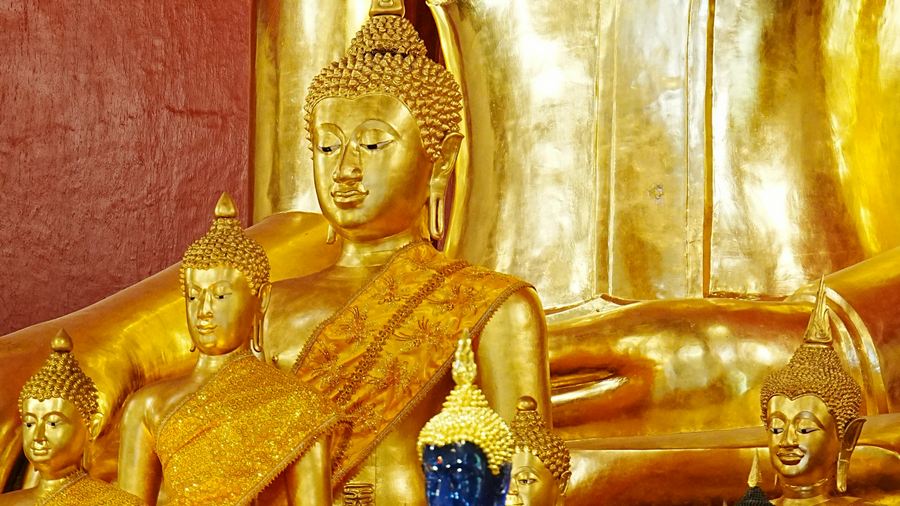
Small statues of Buddhist monastics covered in gold leaf.

“Mendicants, a mendicant with seven qualities soon realizes the supreme culmination of the spiritual path in this very life. They live having achieved with their own insight the goal for which gentlemen rightly go forth from the lay life to homelessness. What seven? It’s when a mendicant is faithful, ethical, learned, secluded, energetic, mindful, and wise. A mendicant with these seven qualities soon realizes the supreme culmination of the spiritual path in this very life. They live having achieved with their own insight the goal for which gentlemen rightly go forth from the lay life to homelessness.”


Read this translation of Aṅguttara Nikāya 7.60 Sattadhammasutta: Seven Qualities by Bhikkhu Sujato on SuttaCentral.net. Or read a different translation on AccessToInsight.org. Or listen on SC-Voice.net. Or explore the Pali on DigitalPaliReader.online.

Or read a translation in Deutsch, বাংলা, Bahasa Indonesia, Italiano, 日本語, မြန်မာဘာသာ, Português, Русский, සිංහල, Svenska, ไทย, Tiếng Việt, or 汉语. Learn how to find your language.


AN 4.12 Sīlasutta: Virtuous Behavior

Buddhist monastic walking down an open corridor in a temple.

“Bhikkhus, dwell observant of virtuous behavior, observant of the Pātimokkha. Dwell restrained by the Pātimokkha, possessed of good conduct and resort, seeing danger in minute faults. Having undertaken them, train in the training rules. When you have done so, what further should be done?

(1) “Bhikkhus, if a bhikkhu has gotten rid of longing and ill will while walking; if he has abandoned dullness and drowsiness, restlessness and remorse, and doubt; if his energy is aroused without slackening; if his mindfulness is established and unmuddled; if his body is tranquil and undisturbed; if his mind is concentrated and one-pointed, then that bhikkhu is said to be ardent and to dread wrongdoing; he is constantly and continuously energetic and resolute while walking.

(2) “If a bhikkhu has gotten rid of longing and ill will while standing … (3) If a bhikkhu has gotten rid of longing and ill will while sitting … … (4) If a bhikkhu has gotten rid of longing and ill will while wakefully lying down; if he has abandoned dullness and drowsiness, restlessness and remorse, and doubt; if his energy is aroused without slackening; if his mindfulness is established and unmuddled; if his body is tranquil and undisturbed; if his mind is concentrated and one-pointed, then that bhikkhu is said to be ardent and to dread wrongdoing; he is constantly and continuously energetic and resolute while wakefully lying down.”

Controlled in walking, controlled in standing,
controlled in sitting and in lying down;
controlled, a bhikkhu draws in the limbs,
and controlled, he stretches them out.

Above, across, and below,
as far as the world extends,
he is one who scrutinizes the arising and vanishing
of such phenomena as the aggregates.

Training in what is conducive
to serenity of mind, always mindful,
they call such a bhikkhu
one constantly resolute.


Read this translation of Aṅguttara Nikāya 4.12 Sīlasutta: Virtuous Behavior by Bhikkhu Bodhi on SuttaCentral.net. Or read a different translation on SuttaCentral.net. Or listen on PaliAudio.com or SC-Voice.net. Or explore the Pali on DigitalPaliReader.online.

Or read a translation in Čeština, Deutsch, বাংলা, Français, Bahasa Indonesia, 日本語, မြန်မာဘာသာ, Português, Русский, සිංහල, ไทย, Tiếng Việt, or 汉语. Learn how to find your language.


Ud 8.6 Pāṭaligāmiyasutta: The Layfolk of Pāṭali Village

Buddhist alms bowls.

[NOTE: The first half of this sutta is most relevant to this month’s topic, but the entire sutta is included for those who have time to read.]

So I have heard. At one time the Buddha was wandering in the land of the Magadhans together with a large Saṅgha of mendicants when he arrived at the village of Pāṭali. The lay followers of Pāṭali Village heard that he had arrived. So they went to see him, bowed, sat down to one side, and said to him, “Sir, please consent to come to our guest house.” The Buddha consented with silence.

Then, knowing that the Buddha had consented, the lay followers of Pāṭali Village got up from their seat, bowed, and respectfully circled the Buddha, keeping him on their right. Then they went to the guest house, where they spread carpets all over, prepared seats, set up a water jar, and placed an oil lamp. Then they went back to the Buddha, bowed, stood to one side, and told him of their preparations, saying: “Please, sir, come at your convenience.”

In the morning, the Buddha robed up and, taking his bowl and robe, went to the guest house together with the Saṅgha of mendicants. Having washed his feet he entered the guest house and sat against the central column facing east. The Saṅgha of mendicants also washed their feet, entered the guest house, and sat against the west wall facing east, with the Buddha right in front of them. The lay followers of Pāṭali Village also washed their feet, entered the guest house, and sat against the east wall facing west, with the Buddha right in front of them. Then the Buddha addressed them:

“Householders, there are these five drawbacks for an unethical person because of their failure in ethics. What five? Firstly, an unethical person loses substantial wealth on account of negligence. This is the first drawback.

Furthermore, an unethical person gets a bad reputation. This is the second drawback.

Furthermore, an unethical person enters any kind of assembly timid and embarrassed, whether it’s an assembly of aristocrats, brahmins, householders, or ascetics. This is the third drawback.

Furthermore, an unethical person feels lost when they die. This is the fourth drawback.

Furthermore, an unethical person, when their body breaks up, after death, is reborn in a place of loss, a bad place, the underworld, hell. This is the fifth drawback. These are the five drawbacks for an unethical person because of their failure in ethics.

There are these five benefits for an ethical person because of their accomplishment in ethics. What five? Firstly, an ethical person gains substantial wealth on account of diligence. This is the first benefit.

Furthermore, an ethical person gets a good reputation. This is the second benefit.

Furthermore, an ethical person enters any kind of assembly bold and self-assured, whether it’s an assembly of aristocrats, brahmins, householders, or ascetics. This is the third benefit.

Furthermore, an ethical person dies not feeling lost. This is the fourth benefit.

Furthermore, when an ethical person’s body breaks up, after death, they’re reborn in a good place, a heavenly realm. This is the fifth benefit. These are the five benefits for an ethical person because of their accomplishment in ethics.”

The Buddha spent much of the night educating, encouraging, firing up, and inspiring the lay followers of Pāṭali Village with a Dhamma talk. Then he dismissed them, “The night is getting late, householders. Please go at your convenience.” And then the lay followers of Pāṭali Village approved and agreed with what the Buddha said. They got up from their seat, bowed, and respectfully circled the Buddha, keeping him on their right, before leaving. Soon after they left the Buddha entered a private cubicle.

Now at that time the Magadhan ministers Sunidha and Vassakāra were building a citadel at Pāṭali Village to keep the Vajjis out. At that time thousands of deities were taking possession of building sites in Pāṭali Village. Illustrious rulers or royal ministers inclined to build houses at sites possessed by illustrious deities. Middling rulers or royal ministers inclined to build houses at sites possessed by middling deities. Lesser rulers or royal ministers inclined to build houses at sites possessed by lesser deities.

With clairvoyance that is purified and superhuman, the Buddha saw those deities taking possession of building sites in Pāṭali Village, and the people building houses in accord with the station of the deities. The Buddha rose at the crack of dawn and addressed Ānanda,

“Ānanda, who is building a citadel at Pāṭali Village?” “Sir, the Magadhan ministers Sunidha and Vassakāra are building a citadel to keep the Vajjis out.” “It’s as if they were building the citadel in consultation with the gods of the Thirty-Three. With clairvoyance that is purified and superhuman, I saw those deities taking possession of building sites. Illustrious rulers or royal ministers inclined to build houses at sites possessed by illustrious deities. Middling rulers or royal ministers inclined to build houses at sites possessed by middling deities. Lesser rulers or royal ministers inclined to build houses at sites possessed by lesser deities. As far as the civilized region extends, as far as the trading zone extends, this will be the chief city: the Pāṭaliputta trade center. But Pāṭaliputta will face three threats: from fire, flood, and dissension.”

Then the Magadhan ministers Sunidha and Vassakāra approached the Buddha, and exchanged greetings with him. When the greetings and polite conversation were over, they stood to one side and said, “Would Master Gotama together with the mendicant Saṅgha please accept today’s meal from me?”

Then, knowing that the Buddha had consented, they went to their own guest house, where they had delicious fresh and cooked foods prepared. Then they had the Buddha informed of the time, saying, “It’s time, Master Gotama, the meal is ready.”

Then the Buddha robed up in the morning and, taking his bowl and robe, went to their guest house together with the mendicant Saṅgha, where he sat on the seat spread out. Then Sunidha and Vassakāra served and satisfied the mendicant Saṅgha headed by the Buddha with their own hands with delicious fresh and cooked foods.

When the Buddha had eaten and washed his hand and bowl, Sunidha and Vassakāra took a low seat and sat to one side. The Buddha expressed his appreciation with these verses:

“In the place he makes his dwelling,
having fed the astute
and the virtuous here,
the restrained spiritual practitioners,

he should dedicate an offering
to the deities there.
Venerated, they venerate him;
honored, they honor him.

After that they have compassion for him,
like a mother for the child at her breast.
A man beloved of the deities
always sees nice things.”

When the Buddha had expressed his appreciation to Sunidha and Vassakāra with these verses, he got up from his seat and left.

Sunidha and Vassakāra followed behind the Buddha, thinking, “The gate through which the ascetic Gotama departs today shall be named the Gotama Gate. The ford at which he crosses the Ganges River shall be named the Gotama Ford.”

Then the gate through which the Buddha departed was named the Gotama Gate. Then the Buddha came to the Ganges River. Now at that time the Ganges was full to the brim so a crow could drink from it. Wanting to cross from the near to the far shore, some people were seeking a boat, some a dinghy, while some were tying up a raft. But, as easily as a strong person would extend or contract their arm, the Buddha, together with the mendicant Saṅgha, vanished from the near shore and landed on the far shore.

He saw all those people wanting to cross over.

Then, understanding this matter, on that occasion the Buddha expressed this heartfelt sentiment:

“Those who cross a deluge or stream
have built a bridge and left the marshes behind.
While some people are still tying a raft,
intelligent people have crossed over.”


Read this translation of Udāna 8.6 Pāṭaligāmiyasutta: The Layfolk of Pāṭali Village by Bhikkhu Sujato on SuttaCentral.net. Or read a different translation on DhammaTalks.org or Ancient-Buddhist-Texts.net. Or listen on SC-Voice.net. Or explore the Pali on DigitalPaliReader.online.

Or read a translation in Deutsch, Srpski, Español, Bahasa Indonesia, Italiano, 日本語, မြန်မာဘာသာ, Nederlands, Norsk, Português, Русский, or සිංහල. Learn how to find your language.


AN 8.81 Satisampajaññasutta: Mindfulness and Situational Awareness

Hands of a statue in meditation.

“Mendicants, when there is no mindfulness and situational awareness, one who lacks mindfulness and situational awareness has destroyed a vital condition for conscience and prudence. When there is no conscience and prudence, one who lacks conscience and prudence has destroyed a vital condition for sense restraint. When there is no sense restraint, one who lacks sense restraint has destroyed a vital condition for ethical conduct. When there is no ethical conduct, one who lacks ethics has destroyed a vital condition for right immersion. When there is no right immersion, one who lacks right immersion has destroyed a vital condition for true knowledge and vision. When there is no true knowledge and vision, one who lacks true knowledge and vision has destroyed a vital condition for disillusionment and dispassion. When there is no disillusionment and dispassion, one who lacks disillusionment and dispassion has destroyed a vital condition for knowledge and vision of freedom.

Suppose there was a tree that lacked branches and foliage. Its shoots, bark, softwood, and heartwood would not grow to fullness.

In the same way, when there is no mindfulness and situational awareness, one who lacks mindfulness and situational awareness has destroyed a vital condition for conscience and prudence. When there is no conscience and prudence … One who lacks disillusionment and dispassion has destroyed a vital condition for knowledge and vision of freedom.

When there is mindfulness and situational awareness, one who has fulfilled mindfulness and situational awareness has fulfilled a vital condition for conscience and prudence. When there is conscience and prudence, a person who has fulfilled conscience and prudence has fulfilled a vital condition for sense restraint. When there is sense restraint, one who has sense restraint has fulfilled a vital condition for ethical conduct. When there is ethical conduct, one who has fulfilled ethical conduct has fulfilled a vital condition for right immersion. When there is right immersion, one who has fulfilled right immersion has fulfilled a vital condition for true knowledge and vision. When there is true knowledge and vision, one who has fulfilled true knowledge and vision has fulfilled a vital condition for disillusionment and dispassion. When there is disillusionment and dispassion, one who has fulfilled disillusionment and dispassion has fulfilled a vital condition for knowledge and vision of freedom.

Suppose there was a tree that was complete with branches and foliage. Its shoots, bark, softwood, and heartwood would grow to fullness.

In the same way, when there is mindfulness and situational awareness, one who has fulfilled mindfulness and situational awareness has fulfilled a vital condition for conscience and prudence. When there is conscience and prudence … One who has fulfilled disillusionment and dispassion has fulfilled a vital condition for knowledge and vision of freedom.”


Read this translation of Aṅguttara Nikāya 8.81 Satisampajaññasutta: Mindfulness and Situational Awareness by Bhikkhu Sujato on SuttaCentral.net. Or listen on SC-Voice.net. Or explore the Pali on DigitalPaliReader.online.

Or read a translation in Deutsch, বাংলা, Español, Bahasa Indonesia, 日本語, မြန်မာဘာသာ, Português, Русский, සිංහල, ไทย, Tiếng Việt, or 汉语. Learn how to find your language.


Dhp 54–56 From… Pupphavagga: Blossoms

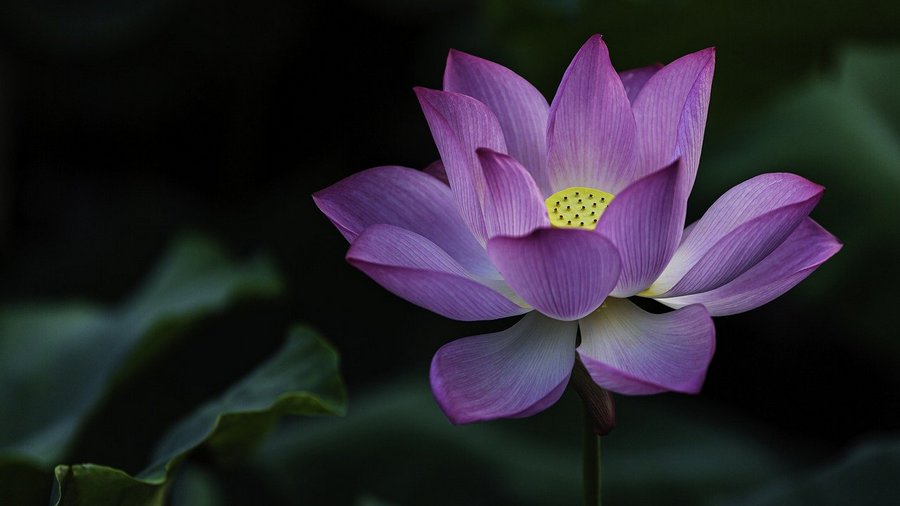
Lotus flower

No flower’s scent
goes against the wind–
     not sandalwood,
          jasmine,
          tagara.

But the scent of the good
does go against the wind.
The person of integrity
wafts a scent
in every direction.

Sandalwood, tagara,
lotus, & jasmine:
     among these scents,
     the scent of virtue
     is unsurpassed.

Next to nothing, this scent
–sandalwood, tagara–
while the scent of virtuous conduct
wafts to the devas,
     supreme.


Read the entire translation of Dhammapada IV . Blossoms by Bhikkhu Ṭhanissaro on DhammaTalks.org. Or read a different translation on SuttaCentral.net, SuttaFriends.org, Ancient-Buddhist-Texts.net or AccessToInsight.org. Or listen on SC-Voice.net. Or explore the Pali on DigitalPaliReader.online.

Or read a translation in Deutsch, Tiếng Việt, Català, Čeština, Español, Français, עִבְֿרִיתּ, Magyar, Italiano, 日本語, Latine, मराठी, မြန်မာဘာသာ, Nederlands, Norsk, Polski, Português, සිංහල, Slovenščina, தமிழ், or 汉语. Learn how to find your language.


AN 10.34 Upasampadāsutta: Full Ordination

Monk shaving someone's head.

“Bhante, how many qualities should a bhikkhu possess to give full ordination?”

“A bhikkhu who possesses ten qualities, Upāli, may give full ordination. What ten?

(1) Here, a bhikkhu is virtuous; he dwells restrained by the Pātimokkha, possessed of good conduct and resort, seeing danger in minute faults. Having undertaken the training rules, he trains in them.

(2) He has learned much, remembers what he has learned, and accumulates what he has learned. Those teachings that are good in the beginning, good in the middle, and good in the end, with the right meaning and phrasing, which proclaim the perfectly complete and pure spiritual life—such teachings as these he has learned much of, retained in mind, recited verbally, investigated mentally, and penetrated well by view.

(3) Both Pātimokkhas have been well transmitted to him in detail, well analyzed, well mastered, well determined in terms of the rules and their detailed explication.

(4) He is able to look after a patient or to get someone else to look after him.

(5) He is able to eliminate one’s dissatisfaction or to get someone else to eliminate it.

(6) He is able to use the Dhamma to dispel regrets that might arise in his pupils.

(7) He is able to dissuade them, by way of the Dhamma, from erroneous views that have arisen.

(8) He is able to encourage them in the higher virtuous behavior.

(9) He is able to encourage them in the higher mind.

(10) He is able to encourage them in the higher wisdom. A bhikkhu who possesses these ten qualities may give full ordination.”


Read this translation of Aṅguttara Nikāya 10.34 Upasampadāsutta: Full Ordination by Bhikkhu Bodhi on SuttaCentral.net. Or read a different translation on SuttaCentral.net. Or listen on SC-Voice.net. Or explore the Pali on DigitalPaliReader.online.

Or read a translation in Deutsch, বাংলা, Bahasa Indonesia, 日本語, မြန်မာဘာသာ, Русский, සිංහල, ไทย, Tiếng Việt, or 汉语. Learn how to find your language.


AN 6.10 From… Mahānāmasutta: With Mahānāma

Giant gold Buddha statue against a slate gray sky.

…Furthermore, a noble disciple recollects their own ethical conduct, which is unbroken, impeccable, spotless, and unmarred, liberating, praised by sensible people, not mistaken, and leading to immersion. When a noble disciple recollects their ethical conduct their mind is not full of greed, hate, and delusion. At that time their mind is unswerving, based on the Realized One. A noble disciple whose mind is unswerving finds inspiration in the meaning and the teaching, and finds joy connected with the teaching. When they’re joyful, rapture springs up. When the mind is full of rapture, the body becomes tranquil. When the body is tranquil, they feel bliss. And when they’re blissful, the mind becomes immersed in samādhi. This is called a noble disciple who lives in balance among people who are unbalanced, and lives untroubled among people who are troubled. They’ve entered the stream of the teaching and develop the recollection of ethics.…


Read the entire translation of Aṅguttara Nikāya 6.10 Mahānāmasutta: With Mahānāma by Bhikkhu Sujato on SuttaCentral.net. Or listen on SC-Voice.net. Or explore the Pali on DigitalPaliReader.online.

Or read a translation in Deutsch, Lietuvių Kalba, বাংলা, Español, Bahasa Indonesia, 日本語, မြန်မာဘာသာ, Português, Русский, සිංහල, ไทย, Tiếng Việt, or 汉语. Learn how to find your language.


Iti 97 Kalyāṇasīlasutta: Good Morals

Monk walking for alms along a beach.

This was said by the Buddha, the Perfected One: that is what I heard.

“Mendicants, in this teaching and training a mendicant of good morals, good practice, and good wisdom is called consummate, accomplished, a supreme person.

And how does a mendicant have good morals? It’s when a mendicant is ethical, restrained in the monastic code, conducting themselves well and seeking alms in suitable places. Seeing danger in the slightest fault, they keep the rules they’ve undertaken. That’s how a mendicant has good morals. Such is one of good morality.

And how does one have good practice? It’s when a mendicant meditates pursuing the development of the seven qualities that lead to awakening. That’s how a mendicant has good practice. Such is one of good morality and good practice.

And how does one have good wisdom? It’s when a mendicant realizes the undefiled freedom of heart and freedom by wisdom in this very life. And they live having realized it with their own insight due to the ending of defilements. That’s how a mendicant has good wisdom;

Such is one of good morals, good practice, and good wisdom, who in this teaching and training is called consummate, accomplished, a supreme person.”

The Buddha spoke this matter. On this it is said:

“Who does nothing wrong
by body, speech or mind,
is said to be one good morals,
a conscientious mendicant.

Who has well developed the seven
factors that lead to awakening
is said to be one good practice,
a humble mendicant.

Who understands for themselves
the end of suffering in this life
is said to be one good wisdom,
an undefiled mendicant.

One accomplished in these three things,
untroubled, with doubts cut off,
unattached to anything in the world,
has given up everything, they say.”

This too is a matter that was spoken by the Blessed One: that is what I heard.


Read this translation of Itivuttaka 97 Kalyāṇasīlasutta: Good Morals by Bhikkhu Sujato on SuttaCentral.net. Or read a different translation on SuttaCentral.net, SuttaFriends.org or DhammaTalks.org. Or listen on SC-Voice.net. Or explore the Pali on DigitalPaliReader.online.

Or read a translation in Deutsch, Català, Čeština, Español, Français, Italiano, 日本語, မြန်မာဘာသာ, Nederlands, Norsk, Português, Русский, සිංහල, or Srpski. Learn how to find your language.


SN 47.15 Bāhiyasutta: Bahiya

Old Buddha statue in ruins.

At Savatthi. Then the Venerable Bahiya approached the Blessed One, paid homage to him, sat down to one side, and said to him:

“Venerable sir, it would be good if the Blessed One would teach me the Dhamma in brief, so that, having heard the Dhamma from the Blessed One, I might dwell alone, withdrawn, diligent, ardent, and resolute.”

“Well then, Bahiya, purify the very starting point of wholesome states. And what is the starting point of wholesome states? Virtue that is well purified and view that is straight. Then, Bahiya, when your virtue is well purified and your view is straight, based upon virtue, established upon virtue, you should develop the four establishments of mindfulness.

“What four? Here, Bahiya, dwell contemplating the body in the body, ardent, clearly comprehending, mindful, having removed covetousness and displeasure in regard to the world. Dwell contemplating feelings in feelings … mind in mind … phenomena in phenomena, ardent, clearly comprehending, mindful, having removed covetousness and displeasure in regard to the world.

“When, Bahiya, based upon virtue, established upon virtue, you develop these four establishments of mindfulness in such a way, then whether night or day comes, you may expect only growth in wholesome states, not decline.”

Then the Venerable Bahiya, having delighted and rejoiced in the Blessed One’s words, rose from his seat, and, after paying homage to the Blessed One, keeping him on his right, he departed. Then, dwelling alone, withdrawn, diligent, ardent, and resolute, the Venerable Bahiya, by realizing it for himself with direct knowledge, in this very life entered and dwelt in that unsurpassed goal of the holy life for the sake of which clansmen rightly go forth from the household life into homelessness. He directly knew: “Destroyed is birth, the holy life has been lived, what had to be done has been done, there is no more for this state of being.” And the Venerable Bahiya became one of the arahants.


Read this translation of Saṁyutta Nikāya 47.15 Bāhiyasutta: Bahiya by Bhikkhu Bodhi on SuttaCentral.net. Or read a different translation on SuttaCentral.net. Or listen on SC-Voice.net. Or explore the Pali on DigitalPaliReader.online.

Or read a translation in Deutsch, বাংলা, Español, Bahasa Indonesia, 日本語, မြန်မာဘာသာ, Norsk, Português, Русский, සිංහල, ไทย, Tiếng Việt, or 汉语. Learn how to find your language.


AN 7.6 Vitthatadhanasutta: Wealth in Detail

Old person's hands holding coins.

“Mendicants, there are these seven kinds of wealth. What seven? The wealth of faith, ethics, conscience, prudence, learning, generosity, and wisdom.

And what is the wealth of faith? It’s when a noble disciple has faith in the Realized One’s awakening … This is called the wealth of faith.

And what is the wealth of ethical conduct? It’s when a noble disciple doesn’t kill living creatures, steal, commit sexual misconduct, use speech that’s false, divisive, harsh, or nonsensical, or consume alcoholic drinks that cause negligence. This is called the wealth of ethical conduct.

And what is the wealth of conscience? It’s when a noble disciple has a conscience. They’re conscientious about bad conduct by way of body, speech, and mind, and conscientious about having any bad, unskillful qualities. This is called the wealth of conscience.

And what is the wealth of prudence? It’s when a noble disciple is prudent. They’re prudent when it comes to bad conduct by way of body, speech, and mind, and prudent when it comes to the acquiring of any bad, unskillful qualities. This is called the wealth of prudence.

And what is the wealth of learning? It’s when a noble disciple is very learned, remembering and keeping what they’ve learned. These teachings are good in the beginning, good in the middle, and good in the end, meaningful and well-phrased, describing a spiritual practice that’s entirely full and pure. They are very learned in such teachings, remembering them, reciting them, mentally scrutinizing them, and comprehending them theoretically. This is called the wealth of learning.

And what is the wealth of generosity? It’s when a noble disciple lives at home rid of the stain of stinginess, freely generous, open-handed, loving to let go, committed to charity, loving to give and to share. This is called the wealth of generosity.

And what is the wealth of wisdom? It’s when a noble disciple is wise. They have the wisdom of arising and passing away which is noble, penetrative, and leads to the complete ending of suffering. This is called the wealth of wisdom.

These are the seven kinds of wealth.

Faith and ethical conduct are kinds of wealth,
as are conscience and prudence,
learning and generosity,
and wisdom is the seventh kind of wealth.

When a woman or man
has these kinds of wealth,
they’re said to be prosperous,
their life is not in vain.

So let the wise devote themselves
to faith, ethical behavior,
confidence, and insight into the teaching,
remembering the instructions of the Buddhas.”


Read this translation of Aṅguttara Nikāya 7.6 Vitthatadhanasutta: Wealth in Detail by Bhikkhu Sujato on SuttaCentral.net. Or read a different translation on DhammaTalks.org. Or listen on SC-Voice.net. Or explore the Pali on DigitalPaliReader.online.

Or read a translation in Deutsch, বাংলা, Español, Français, Magyar, Bahasa Indonesia, Italiano, 日本語, မြန်မာဘာသာ, Nederlands, Português, Русский, සිංහල, ไทย, Tiếng Việt, or 汉语. Learn how to find your language.


AN 10.73 Iṭṭhadhammasutta: Likable

Several stupas built atop a cliff face.

“Mendicants, these ten likable, desirable, and agreeable things are rare in the world. What ten? Wealth, beauty, health, ethical conduct, the spiritual life, friends, learning, wisdom, good qualities, and heaven are likable, desirable, and agreeable things that are rare in the world.

Ten things hinder the ten likable, desirable, and agreeable things that are rare in the world. Sloth and lack of initiative hinder wealth. Lack of adornment and decoration hinder beauty. Unsuitable activity hinders health. Bad friendship hinders ethical conduct. Lack of sense restraint hinders the spiritual life. Dishonesty hinders friends. Not reciting hinders learning. Not wanting to listen and ask questions hinders wisdom. Lack of commitment and reviewing hinder good qualities. Wrong practice hinders heaven. These ten things hinder the ten likable, desirable, and agreeable things that are rare in the world.

Ten things nourish the ten likable, desirable, and agreeable things that are rare in the world. Application and initiative nourish wealth. Adornment and decoration nourish beauty. Suitable activity nourishes health. Good friendship nourishes ethical conduct. Sense restraint nourishes the spiritual life. Honesty nourishes friends. Reciting nourishes learning. Eagerness to listen and ask questions nourishes wisdom. Commitment and reviewing nourish good qualities. Right practice nourishes heaven. These ten things nourish the ten likable, desirable, and agreeable things that are rare in the world.”


Read this translation of Aṅguttara Nikāya 10.73 Iṭṭhadhammasutta: Likable by Bhikkhu Sujato on SuttaCentral.net. Or read a different translation on DhammaTalks.org. Or listen on SC-Voice.net. Or explore the Pali on DigitalPaliReader.online.

Or read a translation in Deutsch, বাংলা, Español, Bahasa Indonesia, 日本語, မြန်မာဘာသာ, Русский, සිංහල, ไทย, Tiếng Việt, or 汉语. Learn how to find your language.


MN 142 From… Dakkhiṇāvibhaṅga Sutta: The Analysis of Giving—Gifts to an Individual

Someone feeding prairie dogs.

[NOTE: In the part of the sutta after this the Buddha goes on to explain that a gift to a saṅgha is always greater than a gift to an individual]

“…Now, Ānanda, gifts to the following individuals may be expected to yield the following returns. 

“Giving a gift to an animal, yields a return a hundred times over. 

“Giving a gift to an unvirtuous ordinary person, yields a return a thousand times over

“Giving a gift to a virtuous ordinary person, yields a return a hundred thousand times over (100,000). 

“Giving a gift to an outsider free of desire for sense pleasures, yields a return a trillion times over (1,000,000,000,000). 

“But giving a gift to someone practicing to realize the fruit of stream-entry yields incalculable, immeasurable returns. How much more so giving a gift to a stream-enterer? How much more so giving a gift to someone practicing to realize the fruit of once-return? How much more so giving a gift to a once-returner? How much more so giving a gift to someone practicing to realize the fruit of non-return? How much more so giving a gift to a non-returner? How much more so giving a gift to someone practicing to realize the fruit of arahantship? How much more so giving a gift to an arahant? How much more so giving a gift to a Private Buddha? 

“How much more so giving a gift to the Supreme Buddha?…”


Read the entire translation of Majjhima Nikāya 142 Dakkhiṇāvibhaṅga Sutta: The Analysis of Giving by Ven. Kiribathgoda Gnananda Thero on SuttaFriends.org. Or read a different translation on SuttaCentral.net, or Ancient-Buddhist-Texts.net. Or listen on PaliAudio.com or SC-Voice.net. Or explore the Pali on DigitalPaliReader.online.

Or read a translation in বাংলা, Deutsch, Español, Français, हिन्दी, Bahasa Indonesia, Italiano, 日本語, မြန်မာဘာသာ, Norsk, Português, Русский, සිංහල, Slovenščina, ไทย, Tiếng Việt, or 汉语. Learn how to find your language.


SN 45.149 Balasutta: Strenuous

Worker lays out wet bricks on the ground.

At Savatthī. “Bhikkhus, just as whatever strenuous deeds are done, are all done based upon the earth, established upon the earth, so too, based upon virtue, established upon virtue, a bhikkhu develops and cultivates the Noble Eightfold Path.

“And how, bhikkhus, does a bhikkhu, based upon virtue, established upon virtue, develop and cultivate the Noble Eightfold Path? Here, bhikkhus, a bhikkhu develops right view … right concentration, which is based upon seclusion, dispassion, and cessation, maturing in release. It is in this way, bhikkhus, that a bhikkhu, based upon virtue, established upon virtue, develops and cultivates the Noble Eightfold Path.”


Read this translation of Saṁyutta Nikāya 45.149 Balasutta: Strenuous by Bhikkhu Bodhi on SuttaCentral.net. Or read a different translation on SuttaCentral.net. Or listen on SC-Voice.net. Or explore the Pali on DigitalPaliReader.online.

Or read a translation in Deutsch, বাংলা, Español, Bahasa Indonesia, 日本語, မြန်မာဘာသာ, Norsk, Русский, සිංහල, ไทย, Tiếng Việt, or 汉语. Learn how to find your language.


SN 11.18 Gahaṭṭhavandanāsutta: Who Sakka Worships

Statue of a person worshiping

At Sāvatthī.

“Once upon a time, mendicants, Sakka, lord of gods, addressed his charioteer Mātali, ‘My dear Mātali, harness the chariot with its team of a thousand thoroughbreds. We will go to a park and see the scenery.’

‘Yes, lord,’ replied Mātali. He harnessed the chariot and informed Sakka, ‘Good sir, the chariot with its team of a thousand thoroughbreds has been harnessed. Please go at your convenience.’

Then Sakka descended from the Palace of Victory, raised his joined palms, and revered the different quarters.

So Mātali the charioteer addressed Sakka in verse:

‘Those proficient in the three Vedas worship you,
as do all the aristocrats on earth,
the Four Great Kings,
and the glorious Thirty.
So what’s the name of the spirit
that you worship, Sakka?’

‘Those proficient in the three Vedas worship me,
as do all the aristocrats on earth,
the Four Great Kings,
and the glorious Thirty.

But I revere those accomplished in ethics,
who have long trained in immersion,
who have rightly gone forth
committed to the spiritual life.

I also worship those householders,
the ethical lay followers
who make merit, Mātali,
supporting a partner in a principled manner.’

‘Those who you worship
seem to be the best in the world, Sakka.
I too will worship
those who you worship, Sakka.’

After saying this, Maghavā the chief,
king of gods, Sujā’s husband,
having worshipped the quarters
climbed into his chariot.”


Read this translation of Saṁyutta Nikāya 11.18 Gahaṭṭhavandanāsutta: Who Sakka Worships by Bhikkhu Sujato on SuttaCentral.net. Or read a different translation on SuttaCentral.net or SuttaFriends.org. Or listen on PaliAudio.com or SC-Voice.net. Or explore the Pali on DigitalPaliReader.online.

Or read a translation in Deutsch, বাংলা, Bahasa Indonesia, 日本語, မြန်မာဘာသာ, Norsk, Português, Русский, සිංහල, ไทย, Tiếng Việt, or 汉语. Learn how to find your language.


Vv 1.11 Patibbatā Sutta: Honest Wife Mansion

Carved window screens with peacocks.

Moggallana Bhante:

Dear Devata, your mansion is very beautiful. It is decorated with all kinds of flowers. Divine herons, peacocks, geese, and sweet-voiced cuckoos fly around the mansion. Pretty gods and goddesses are always dancing and singing to entertain you.

Devata, you are very mighty, possessing many kinds of psychic powers. Tell me Devata, what kind of meritorious action did you do when you were in the human world to have gained this beauty that shines in all directions, and to have earned all these wonderful things?

That devata, delighted at being questioned by Arahant Moggallana, gladly explained what she had done that resulted in such great happiness.

Devata:

In my previous life, I was a woman in the human world. I was a very honest and faithful wife. I never had a desire for someone else’s husband. I protected my husband like a mother protects her only child. There were times that I got angry, but I never spoke harshly to him.

I never told lies; lying was not a part of my life. I delighted in giving and sharing. I practiced generosity with a happy mind. I offered food and drink with respect.

Because of these meritorious deeds, I have been born as a very beautiful devata and enjoy all the wonderful things that delight my heart.

Great Bhante, these are the meritorious deeds I did to have such a beautiful body that shines in all directions.


Read this translation of Vimānavatthu 1.11 Patibbatā Sutta: Honest Wife Mansion by Ven. Kiribathgoda Gnananda Thero on SuttaFriends.org. Or listen on SC-Voice.net. Or explore the Pali on DigitalPaliReader.online.

Or read a translation in Deutsch, 日本語, Русский, සිංහල, or Tiếng Việt. Learn how to find your language.

You can find the entire translation of the Vimanavatthu: Stories of Heavenly Mansions available on SuttaFriends.org.


MN 53 From… Sekhasutta: A Trainee

Small clay Buddha statue

…And how is a noble disciple accomplished in ethics? It’s when a noble disciple is ethical, restrained in the monastic code, conducting themselves well and seeking alms in suitable places. Seeing danger in the slightest fault, they keep the rules they’ve undertaken. That’s how a noble disciple is ethical.…


Read the entire translation of Majjhima Nikāya 53 Sekhasutta: A Trainee by Bhikkhu Sujato on SuttaCentral.net. Or read a different translation on DhammaTalks.org. Or listen on PaliAudio.com or SC-Voice.net. Or explore the Pali on DigitalPaliReader.online.

Or read a translation in Русский, বাংলা, Čeština, Deutsch, Español, Français, עִבְֿרִיתּ, हिन्दी, Bahasa Indonesia, Italiano, 日本語, မြန်မာဘာသာ, Norsk, Português, සිංහල, Slovenščina, Srpski, ไทย, Tiếng Việt, or 汉语. Learn how to find your language.


AN 8.39 Abhisanda Sutta: Bonanzas

Person holding a brightly wrapped gift.

“Monks, there are these eight bonanzas of merit, rewards of skillfulness, nourishments of happiness, celestial, resulting in happiness, leading to heaven, leading to what is desirable, pleasurable, & appealing, to welfare & happiness. Which eight?

“There is the case where a disciple of the noble ones has gone to the Buddha for refuge. This is the first bonanza of merit, bonanza of skillfulness, nourishment of happiness, celestial, resulting in happiness, leading to heaven, leading to what is desirable, pleasurable, & appealing; to welfare & to happiness.

“And further, the disciple of the noble ones has gone to the Dhamma for refuge. This is the second bonanza of merit.…

“And further, the disciple of the noble ones has gone to the Saṅgha for refuge. This is the third bonanza of merit.…

“Now, there are these five gifts, five great gifts—original, long-standing, traditional, ancient, unadulterated, unadulterated from the beginning—that are not open to suspicion, will never be open to suspicion, and are unfaulted by knowledgeable contemplatives & brahmans. Which five?

“There is the case where a disciple of the noble ones, abandoning the taking of life, abstains from taking life. In doing so, he gives freedom from danger, freedom from animosity, freedom from oppression to limitless numbers of beings. In giving freedom from danger, freedom from animosity, freedom from oppression to limitless numbers of beings, he gains a share in limitless freedom from danger, freedom from animosity, and freedom from oppression. This is the first gift, the first great gift—original, long-standing, traditional, ancient, unadulterated, unadulterated from the beginning—that is not open to suspicion, will never be open to suspicion, and is unfaulted by knowledgeable contemplatives & brahmans. And this is the fourth bonanza of merit.…

“And further, abandoning taking what is not given [stealing], the disciple of the noble ones abstains from taking what is not given. In doing so, he gives freedom from danger, freedom from animosity, freedom from oppression to limitless numbers of beings. In giving freedom from danger, freedom from animosity, freedom from oppression to limitless numbers of beings, he gains a share in limitless freedom from danger, freedom from animosity, and freedom from oppression. This is the second gift, the second great gift… and this is the fifth bonanza of merit.…

“And further, abandoning sexual misconduct, the disciple of the noble ones abstains from sexual misconduct. In doing so, he gives freedom from danger, freedom from animosity, freedom from oppression to limitless numbers of beings. In giving freedom from danger, freedom from animosity, freedom from oppression to limitless numbers of beings, he gains a share in limitless freedom from danger, freedom from animosity, and freedom from oppression. This is the third gift, the third great gift… and this is the sixth bonanza of merit.…

“And further, abandoning the telling of lie, the disciple of the noble ones abstains from telling lies. In doing so, he gives freedom from danger, freedom from animosity, freedom from oppression to limitless numbers of beings. In giving freedom from danger, freedom from animosity, freedom from oppression to limitless numbers of beings, he gains a share in limitless freedom from danger, freedom from animosity, and freedom from oppression. This is the fourth gift, the fourth great gift… and this is the seventh bonanza of merit.…

“And further, abandoning the use of intoxicants, the disciple of the noble ones abstains from taking intoxicants. In doing so, he gives freedom from danger, freedom from animosity, freedom from oppression to limitless numbers of beings. In giving freedom from danger, freedom from animosity, freedom from oppression to limitless numbers of beings, he gains a share in limitless freedom from danger, freedom from animosity, and freedom from oppression. This is the fifth gift, the fifth great gift—original, long-standing, traditional, ancient, unadulterated, unadulterated from the beginning—that is not open to suspicion, will never be open to suspicion, and is unfaulted by knowledgeable contemplatives & brahmans. And this is the eighth bonanza of merit, bonanza of skillfulness, nourishment of happiness, celestial, resulting in happiness, leading to heaven, leading to what is desirable, pleasurable, & appealing; to welfare & to happiness.”


Read this translation of Aṅguttara Nikāya 8.39 Abhisanda Sutta. Bonanzas by Bhikkhu Ṭhanissaro on DhammaTalks.org. Or read a different translation on SuttaCentral.net. Or listen on SC-Voice.net. Or explore the Pali on DigitalPaliReader.online.

Or read a translation in Deutsch, Polski, বাংলা, Español, Français, Magyar, Bahasa Indonesia, Italiano, 日本語, မြန်မာဘာသာ, Norsk, Português, Русский, සිංහල, Slovenščina, ไทย, Tiếng Việt, or 汉语. Learn how to find your language.


AN 5.168 Sīlasutta: Ethics

Giant oak tree with sun shining through.

[Note: “Right immersion” is the translation of sammāsamādhi, or right concentration.]

There Venerable Sāriputta addressed the mendicants:

“Reverends, an unethical person, who lacks ethics, has destroyed a vital condition for right immersion. When there is no right immersion, one who lacks right immersion has destroyed a vital condition for true knowledge and vision. When there is no true knowledge and vision, one who lacks true knowledge and vision has destroyed a vital condition for disillusionment and dispassion. When there is no disillusionment and dispassion, one who lacks disillusionment and dispassion has destroyed a vital condition for knowledge and vision of freedom.

Suppose there was a tree that lacked branches and foliage. Its shoots, bark, softwood, and heartwood would not grow to fullness.

In the same way, an unethical person, who lacks ethics, has destroyed a vital condition for right immersion. When there is no right immersion, one who lacks right immersion has destroyed a vital condition for true knowledge and vision. When there is no true knowledge and vision, one who lacks true knowledge and vision has destroyed a vital condition for disillusionment and dispassion. When there is no disillusionment and dispassion, one who lacks disillusionment and dispassion has destroyed a vital condition for knowledge and vision of freedom.

An ethical person, who has fulfilled ethics, has fulfilled a vital condition for right immersion. When there is right immersion, one who has fulfilled right immersion has fulfilled a vital condition for true knowledge and vision. When there is true knowledge and vision, one who has fulfilled true knowledge and vision has fulfilled a vital condition for disillusionment and dispassion. When there is disillusionment and dispassion, one who has fulfilled disillusionment and dispassion has fulfilled a vital condition for knowledge and vision of freedom.

Suppose there was a tree that was complete with branches and foliage. Its shoots, bark, softwood, and heartwood would grow to fullness. In the same way, an ethical person, who has fulfilled ethics, has fulfilled a vital condition for right immersion.

When there is right immersion, one who has fulfilled right immersion has fulfilled a vital condition for true knowledge and vision. When there is true knowledge and vision, one who has fulfilled true knowledge and vision has fulfilled a vital condition for disillusionment and dispassion. When there is disillusionment and dispassion, one who has fulfilled disillusionment and dispassion has fulfilled a vital condition for knowledge and vision of freedom.”


Read this translation of Aṅguttara Nikāya 5.168 Sīlasutta: Ethics by Bhikkhu Sujato on SuttaCentral.net. Or listen on SC-Voice.net. Or explore the Pali on DigitalPaliReader.online.

Or read a translation in Deutsch, বাংলা, Bahasa Indonesia, 日本語, မြန်မာဘာသာ, Русский, සිංහල, ไทย, Tiếng Việt, or 汉语. Learn how to find your language.


Thag 12.1 Sīlavattheragāthā: Sīlava

Massive bridge over great expanse of water.

One should train just in ethical conduct,
for in this world, when ethical conduct is
cultivated and well-trained,
it provides all success.

Wishing for three kinds of happiness—
praise, prosperity,
and to delight in heaven after passing away—
the wise would take care of their ethics.

The well-behaved have many friends,
because of their self-restraint.
But one lacking ethics, of bad conduct,
drives away their friends.

A person whose ethics are bad has
ill-repute and infamy.
A person whose conduct is ethical always has
a good reputation, fame, and praise.

Ethical conduct is the starting point and foundation;
the mother at the head
of all good things:
that’s why you should purify your ethics.

Ethics provide a boundary and a restraint,
an enjoyment for the mind;
the ford where all the Buddhas cross over:
that’s why you should purify your ethics.

Ethics are the matchless power;
ethics are the ultimate weapon;
ethics are the best ornament;
ethics are a marvelous coat of armor.

Ethics are a mighty bridge;
ethics are the unsurpassed scent;
ethics are the best perfume,
that float from place to place.

Ethics are the best provision;
ethics are the unsurpassed supply for a journey;
ethics are the best vehicle
that take you from place to place.

In this life they’re criticized;
after departing they grieve in a lower realm;
a fool is unhappy everywhere,
because they are unsteady in ethics.

In this life they’re renowned;
after departing they’re happy in heaven;
a wise one is happy everywhere,
because they are steady in ethics.

Ethical conduct is best in this life,
but one with wisdom is supreme.
Someone with both virtue and wisdom
is victorious among men and gods.


Read this translation of Theragāthā 12.1 Sīlavattheragāthā: Sīlava Sīlavattheragāthā by Bhikkhu Sujato on SuttaCentral.net. Or read a different translation on SuttaCentral.net, SuttaFriends.org or DhammaTalks.org. Or listen on SC-Voice.net. Or explore the Pali on DigitalPaliReader.online.

Or read a translation in Deutsch, Bahasa Indonesia, 日本語, Norsk, සිංහල, or Tiếng Việt. Learn how to find your language.


Dhp 383–423 From… Brāhmaṇavagga:Brahmins—Part 2

White staircase in Thai temple flanked by statues of gods.

Deep in wisdom, intelligent,
expert in what is the path and what is not the path;
arrived at the highest goal:
that’s who I call a brahmin.

Mixing with neither
householders nor the homeless,
a migrant with no shelter, few in wishes:
that’s who I call a brahmin.

They’ve laid aside violence
against creatures firm and frail;
not killing or making others kill:
that’s who I call a brahmin.

Not fighting among those who fight,
extinguished among those who are armed,
not taking among those who take:
that’s who I call a brahmin.

They’ve discarded greed and hate,
along with conceit and contempt,
like a mustard seed off the point of a pin:
that’s who I call a brahmin.

The words they utter
are sweet, informative, and true,
and don’t offend anyone:
that’s who I call a brahmin.

They don’t steal anything in the world,
long or short,
fine or coarse, beautiful or ugly:
that’s who I call a brahmin.

They have no hope
in this world or the next.
with no need for hope, detached:
that’s who I call a brahmin.

They have no clinging,
knowledge has freed them of indecision,
they’ve plunged into freedom from death:
that’s who I call a brahmin.

They’ve escaped clinging
to both good and bad deeds;
sorrowless, stainless, pure:
that’s who I call a brahmin.

Pure as the spotless moon,
clear and undisturbed,
they’ve ended delight and future lives:
that’s who I call a brahmin.

They’ve got past this grueling swamp
of delusion, transmigration.
Meditating in stillness, free of indecision,
they have crossed over to the far shore.
They’re extinguished by not grasping:
that’s who I call a brahmin.

They’ve given up sensual stimulations,
and have gone forth from lay life;
they’ve ended rebirth in the sensual realm:
that’s who I call a brahmin.

They’ve given up craving,
and have gone forth from lay life;
they’ve ended craving to be reborn:
that’s who I call a brahmin.

They’ve given up craving,
and have gone forth from lay life;
they’ve ended craving to be reborn:
that’s who I call a brahmin.

They’ve thrown off the human yoke,
and slipped out of the heavenly yoke;
unyoked from all yokes:
that’s who I call a brahmin.

Giving up discontent and desire,
they’re cooled and free of attachments;
a hero, master of the whole world:
that’s who I call a brahmin.

They know the passing away
and rebirth of all beings;
unattached, holy, awakened:
that’s who I call a brahmin.

Gods, centaurs, and humans
don’t know their destiny;
the perfected ones with defilements ended:
that’s who I call a brahmin.

They have nothing before or after,
or even in between.
Having nothing, taking nothing:
that’s who I call a brahmin.

Leader of the herd, excellent hero,
great seer and victor;
unstirred, washed, awakened:
that’s who I call a brahmin.

They know their past lives,
seeing heaven and places of loss,
and have attained the end of rebirth;
that sage who has perfect insight,
at the summit of spiritual perfection:
that’s who I call a brahmin.


Read the entire translation of Dhammapada 383–423 Brāhmaṇavagga: Brahmins by Bhikkhu Sujato on SuttaCentral.net. Or read a different translation on SuttaFriends.org, DhammaTalks.org, Ancient-Buddhist-Texts.net or AccessToInsight.org. Or explore the Pali on DigitalPaliReader.online.

Or read a translation in Deutsch, Tiếng Việt, Català, Čeština, Español, Français, עִבְֿרִיתּ, Magyar, Italiano, 日本語, Latine, मराठी, မြန်မာဘာသာ, Nederlands, Norsk, Polski, Português, සිංහල, Slovenščina, தமிழ், or 汉语. Learn how to find your language.


Dhp 383–423 From… Brāhmaṇavagga: Brahmins—Part 1

Water drops on a lotus leaf.

Strive and cut the stream!
Dispel sensual pleasures, brahmin.
Knowing the ending of conditions,
know the uncreated, brahmin.

When a brahmin
has gone beyond two things,
then they consciously
make an end of all fetters.

One for whom there is no crossing over
or crossing back, or crossing over and back;
stress-free, detached,
that’s who I call a brahmin.

Absorbed, rid of hopes,
their task completed, without defilements,
arrived at the highest goal:
that’s who I call a brahmin.

The sun blazes by day,
the moon glows at night,
the aristocrat shines in armor,
and the brahmin shines in absorption.
But all day and all night,
the Buddha shines with glory.

A brahmin’s so-calledsince they’ve banished evil,
an ascetic’s so-calledsince they live a serene life.
One who has renounced all stains
is said to be a “renunciant”.

One should never strike a brahmin,
nor should a brahmin retaliate.
Woe to the one who hurts a brahmin,
and woe for the one who retaliates.

Nothing is better for a brahmin
than to hold their mind back from attachment.
As cruelty in the mind gradually subsides,
suffering also subsides.

Who does nothing wrong
by body, speech or mind,
restrained in these three respects,
that’s who I call a brahmin.

You should graciously honor
the one from whom you learn the Dhamma
taught by the awakened Buddha,
as a brahmin honors the sacred flame.

Not by matted hair or family,
or birth is one a brahmin.
Those who have truth and principle:
they are pure, they are brahmins.

Why the matted hair, you fool,
and why the skin of deer?
The tangle is inside you,
yet you polish up your outsides.

A person who wears robes of rags,
lean, their limbs showing veins,
meditating alone in the forest,
that’s who I call a brahmin.

I don’t call someone a brahmin
after the mother or womb they came from.
If they still have attachments,
they’re just someone who says “sir”.
Having nothing, taking nothing:
that’s who I call a brahmin.

Having cut off all fetters
they have no anxiety.
They’ve slipped their chains and are detached:
that’s who I call a brahmin.

They’ve cut the strap and harness,
the reins and bridle too,
with cross-bar lifted, they’re awakened:
that’s who I call a brahmin.

Abuse, killing, caging:
they endure these without anger.
Patience is their powerful army:
that’s who I call a brahmin.

Not irritable or stuck up,
dutiful in precepts and observances,
tamed, bearing their final body:
that’s who I call a brahmin.

Like water from a lotus leaf,
like a mustard seed off a pin-point,
sensual pleasures slip off them:
that’s who I call a brahmin.

They understand for themselves
the end of suffering in this life;
with burden put down, detached:
that’s who I call a brahmin.


Read the entire translation of Dhammapada 383–423 Brāhmaṇavagga: Brahmins by Bhikkhu Sujato on SuttaCentral.net. Or read a different translation on SuttaFriends.org, DhammaTalks.org, Ancient-Buddhist-Texts.net or AccessToInsight.org. Or explore the Pali on DigitalPaliReader.online.

Or read a translation in Deutsch, Tiếng Việt, Català, Čeština, Español, Français, עִבְֿרִיתּ, Magyar, Italiano, 日本語, Latine, मराठी, မြန်မာဘာသာ, Nederlands, Norsk, Polski, Português, සිංහල, Slovenščina, தமிழ், or 汉语. Learn how to find your language.


Dhp 360–382 Bhikkhuvagga: The Monk—Part 2

Closeup of hands of a Buddha statue in meditation.
  1. Meditate, O monk! Do not be heedless. Let not your mind whirl on sensual pleasures. Heedless, do not swallow a red-hot iron ball, lest you cry when burning, “O this is painful!”
  2. There is no meditative concentration for him who lacks insight, and no insight for him who lacks meditative concentration. He in whom are found both meditative concentration and insight, indeed, is close to Nibbana.
  3. The monk who has retired to a solitary abode and calmed his mind, who comprehends the Dhamma with insight, in him there arises a delight that transcends all human delights.
  4. Whenever he sees with insight the rise and fall of the aggregates, he is full of joy and happiness. To the discerning one this reflects the Deathless. [25]
  5. Control of the senses, contentment, restraint according to the code of monastic discipline — these form the basis of holy life here for the wise monk.
  6. Let him associate with friends who are noble, energetic, and pure in life, let him be cordial and refined in conduct. Thus, full of joy, he will make an end of suffering.
  7. Just as the jasmine creeper sheds its withered flowers, even so, O monks, should you totally shed lust and hatred!
  8. The monk who is calm in body, calm in speech, calm in thought, well-composed and who has spewn out worldliness — he, truly, is called serene.
  9. By oneself one must censure oneself and scrutinize oneself. The self-guarded and mindful monk will always live in happiness.
  10. One is one’s own protector, one is one’s own refuge. Therefore, one should control oneself, even as a trader controls a noble steed.
  11. Full of joy, full of faith in the Teaching of the Buddha, the monk attains the Peaceful State, the bliss of cessation of conditioned things.
  12. That monk who while young devotes himself to the Teaching of the Buddha illumines this world like the moon freed from clouds.

Read the complete translation of Dhp 360–382 Bhikkhuvagga: The Monk by Acharya Buddharakkhita on accesstoinsight.org. Read the complete translation of Dhp 360–382 Bhikkhuvagga: The Monk by Acharya Buddharakkhita on accesstoinsight.org. Or read a different translation on SuttaCentral.net, SuttaFriends.org, DhammaTalks.org, or Ancient-Buddhist-Texts.net. Or explore the Pali on DigitalPaliReader.online.

Or read a translation in Deutsch, Tiếng Việt, Català, Čeština, Español, Français, עִבְֿרִיתּ, Magyar, Italiano, 日本語, Latine, मराठी, မြန်မာဘာသာ, Nederlands, Norsk, Polski, Português, සිංහල, Slovenščina, தமிழ், or 汉语. Learn how to find your language.


Dhp 360–382 Bhikkhuvagga: The Monk—Part 1

Monk walking on the beach, followed by some dogs.
  1. Good is restraint over the eye; good is restraint over the ear; good is restraint over the nose; good is restraint over the tongue.
  2. Good is restraint in the body; good is restraint in speech; good is restraint in thought. Restraint everywhere is good. The monk restrained in every way is freed from all suffering.
  3. He who has control over his hands, feet and tongue; who is fully controlled, delights in inward development, is absorbed in meditation, keeps to himself and is contented — him do people call a monk.
  4. That monk who has control over his tongue, is moderate in speech, unassuming and who explains the Teaching in both letter and spirit — whatever he says is pleasing.
  5. The monk who abides in the Dhamma, delights in the Dhamma, meditates on the Dhamma, and bears the Dhamma well in mind — he does not fall away from the sublime Dhamma.
  6. One should not despise what one has received, nor envy the gains of others. The monk who envies the gains of others does not attain to meditative absorption.
  7. A monk who does not despise what he has received, even though it be little, who is pure in livelihood and unremitting in effort — him even the gods praise.
  8. He who has no attachment whatsoever for the mind and body, who does not grieve for what he has not — he is truly called a monk.
  9. The monk who abides in universal love and is deeply devoted to the Teaching of the Buddha attains the peace of Nibbana, the bliss of the cessation of all conditioned things.
  10. Empty this boat, O monk! Emptied, it will sail lightly. Rid of lust and hatred, you shall reach Nibbana.
  11. Cut off the five, abandon the five, and cultivate the five. The monk who has overcome the five bonds is called one who has crossed the flood.

Read the complete translation of Dhp 360–382 Bhikkhuvagga: The Monk by Acharya Buddharakkhita on accesstoinsight.org. Or read a different translation on SuttaCentral.net, SuttaFriends.org, DhammaTalks.org, or Ancient-Buddhist-Texts.net. Or explore the Pali on DigitalPaliReader.online.

Or read a translation in Deutsch, Tiếng Việt, Català, Čeština, Español, Français, עִבְֿרִיתּ, Magyar, Italiano, 日本語, Latine, मराठी, မြန်မာဘာသာ, Nederlands, Norsk, Polski, Português, සිංහල, Slovenščina, தமிழ், or 汉语. Learn how to find your language.


Dhp 334-359 Taṇhā Vagga: Craving—Part 2

Golden Buddha statue surrounded by golden monks.

347. Those who are obsessed with passion and have fallen into the flood of craving, are like a spider, caught in its own web. This, too, the wise cut off. In order to abandon all suffering, without any longing for sense pleasures, wise people become monks and nuns.

348. Let go of regret over the past, let go of dreaming over the future, and let go of clinging to the present. Go beyond existence. With the mind liberated in every way, do not come again and again to the world of birth and old age.

349. Some people are occupied with sensual thoughts. With a mind of strong lust, they focus on what is pleasant. In them, craving grows more and more. Indeed, they strengthen their bond of craving.

350. He who delights in subduing lustful thoughts, who meditates on the impurities of the body and is constantly mindful—it is he who will make an end of craving and will cut Māra’s bond.

351. The monk who has reached the end goal, Nibbāna, is fearless, free from craving, taintless, and has plucked out the spikes called existence—for him, this is the last body.

352. The monk who is free from craving and attachment, is skilled in teaching the true meanings of the Dhamma, and knows the meaning of words and phrases,—he, indeed, is the bearer of his final body. He is truly called the profoundly wise one, the great man.

353. I have conquered all unwholesome things. I have realized everything. I am stained by nothing. Abandoning all, I am freed through the destruction of craving. Having thus, directly realized all by myself, whom shall I call my teacher?

354. The gift of Dhamma surpasses all gifts. The taste of Dhamma surpasses all taste. The delight in Dhamma surpasses all delights. The destruction of cravings conquers all suffering.

355. Wealth destroys those who lack in wisdom, but, those who seek Nibbāna are not destroyed like that. The foolish person is destroyed by his own craving for wealth, as if he had made someone destroy him.

356. Weeds are the ruin of fields; passion is the ruin of people. Therefore, what is offered to those free of passion bears great fruit.

357. Weeds are the ruin of fields; hatred is the ruin of people. Therefore, what is offered to those free of hatred bears great fruit.

358. Weeds are the ruin of fields; delusion is the ruin of people. Therefore, what is offered to those free of delusion bears great fruit.

359. Weeds are the ruin of fields; desire is the ruin of people. Therefore, what is offered to those free of desire bears great fruit.


Read the entire translation of Dhammapada 24 Taṇhā Vagga: Craving (334-359) by Ven. Kiribathgoda Gnananda Thero on SuttaFriends.org. Or read a different translation on SuttaCentral.net, DhammaTalks.org, Ancient-Buddhist-Texts.net or AccessToInsight.org. Or explore the Pali on DigitalPaliReader.online.

Or read a translation in Deutsch, Tiếng Việt, Català, Čeština, Español, Français, עִבְֿרִיתּ, Magyar, Italiano, 日本語, Latine, मराठी, မြန်မာဘာသာ, Nederlands, Norsk, Polski, Português, සිංහල, Slovenščina, தமிழ், or 汉语. Learn how to find your language.


Dhp 334-359 Taṇhā Vagga: Craving—Part 1

Monkey eating fruit.
  1. The craving of a person who lives negligently spreads like a creeping vine. Like a monkey who leaps from tree to tree in the forest seeking fruits, that person leaps from life to life, in this journey of misery.
  2. Whoever is overcome by this miserable, wretched, and sticky craving, his sorrow grows like rapidly growing grass after rain.
  3. Whoever overcomes this miserable, wretched craving that is difficult to overcome, from him sorrow falls away like water drips from a lotus leaf.
  4. This I say to you: Good luck to all assembled here! Dig up the root of craving like someone in search of the fragrant root of the bīrana grass. Do not let Māra crush you over and over again, as the flood crushes a bunch of bamboo trees on a bank of the river.
  5. Just as a tree, though cut down, grows again if its roots are strong and remain uncut, so does suffering sprout again and again until the tendency of craving in the mind is rooted out.
  6. Thirty-six streams of craving flow through pleasurable objects. The misguided person who is entangled by this craving is carried away to hell by the flood of lustful thoughts.
  7. The stream of craving flows through every sense base and the creeper of craving sprouts and grows throughout your life. In seeing that the creeper has sprouted in you, cut off its roots with the sword of wisdom.
  8. When craving flows through objects, feelings of pleasure arise in beings. They get attached to that pleasure and seek more enjoyment. Undoubtedly, these people are bound to the journey of birth and old age.
  9. Surrounded by craving, these people run around frightened like a trapped rabbit. Held by fetters and bonds of defilements, they suffer repeatedly over a long time.
  10. Surrounded by craving, these people run around frightened like a trapped rabbit. Therefore, the monk who wishes for passion-free Nibbāna should destroy his own craving.
  11. There is a person who, turning away from the forest of defilements called household life, delights in the monk life. But after being freed from the forest of defilements called the household life, he runs back to it. Look at that person! Though freed, he runs back to that very bondage!
  12. If a person was bound with chains made of iron, shackles made of wood, and ropes made of hemp grass, those bonds are not called strong bonds by the wise. Instead, the infatuation and longing for jewels, ornaments, children, and wives—
  13. that, they say, is a far stronger bond, which pulls one downwards all the way to hell, and, though seemingly loose, is hard to remove. This, too, the wise cut off. By abandoning sense pleasures, and without any longing, they become monks and nuns.

Read the entire translation of Dhammapada 24 Taṇhā Vagga: Craving (334-359) by Ven. Kiribathgoda Gnananda Thero on SuttaFriends.org. Or read a different translation on SuttaCentral.net, DhammaTalks.org, Ancient-Buddhist-Texts.net or AccessToInsight.org. Or explore the Pali on DigitalPaliReader.online.

Or read a translation in Deutsch, Tiếng Việt, Català, Čeština, Español, Français, עִבְֿרִיתּ, Magyar, Italiano, 日本語, Latine, मराठी, မြန်မာဘာသာ, Nederlands, Norsk, Polski, Português, සිංහල, Slovenščina, தமிழ், or 汉语. Learn how to find your language.


Dhp 320–333 Nāgavagga: Elephants

Elephant with tusks behind some grass.

I–like an elephant in battle,
enduring an arrow shot from a bow–
will endure a false accusation,
for the mass of people
have no     principles.


320
The tamed is the one
they take into assemblies.
The tamed is the one
the king mounts.
The tamed who endures
a false accusation
is, among human beings,
     the best.
321

Excellent are tamed mules,
     tamed thoroughbreds,
     tamed horses from Sindh.
Excellent, tamed tuskers,
great elephants.
But even more excellent
are those     self-tamed.

For not by these mounts could you go
to the land unreached,
as the tamed one goes
by taming, well-taming, himself.
322-323

The tusker, Dhanapalaka,
deep in rut, is hard to control.
Bound, he won’t eat a morsel:
the tusker misses
the elephant wood.
324

When torpid & over-fed,
a sleepy-head lolling about
like a stout hog, fattened on fodder:
a dullard enters the womb
     over &
     over again.

325
Before, this mind went wandering
     however it pleased,
     wherever it wanted,
     by whatever way that it liked.
Today I will hold it aptly in check–
as one wielding a goad, an elephant in rut.
326

Delight in heedfulness.
Watch over your own mind.
Lift yourself up
from the hard-going way,
like a tusker sunk in the mud.
327

If you gain a mature companion–
a fellow traveler, right-living, enlightened–
overcoming all dangers
     go with him, gratified,
     mindful.

If you don’t gain a mature companion–
a fellow traveler, right-living, enlightened–
go alone
like a king renouncing his kingdom,
like the elephant in the Matanga wilds,
his herd.

Going alone is better.
There’s no companionship with a fool.
     Go alone,
doing no evil, at peace,
like the elephant in the Matanga wilds.
328-330

A blessing:   friends when the need arises.
A blessing:   contentment with whatever there is.
Merit at the ending of life is a blessing.
A blessing:   the abandoning of all suffering
          & stress.

A blessing in the world:   reverence to your mother.
A blessing:   reverence to your father as well.
A blessing in the world:   reverence to a contemplative.
A blessing:   reverence for a brahman, too.

A blessing into old age is virtue.
A blessing:   conviction established.
A blessing:   discernment attained.
The non-doing of evil things is
     a blessing.
331-333


Read this translation of Dhammapada XXIII . Elephants by Bhikkhu Ṭhanissaro on DhammaTalks.org. Or read a different translation on SuttaCentral.net, SuttaFriends.org, Ancient-Buddhist-Texts.net or AccessToInsight.org. Or explore the Pali on DigitalPaliReader.online.

Or read a translation in Deutsch, Tiếng Việt, Català, Čeština, Español, Français, עִבְֿרִיתּ, Magyar, Italiano, 日本語, Latine, मराठी, မြန်မာဘာသာ, Nederlands, Norsk, Polski, Português, සිංහල, Slovenščina, தமிழ், or 汉语. Learn how to find your language.


Dhp 306–319 Nirayavagga: Hell

Landscape with lava and fire.

A liar goes to hell,
as does one who denies what they did.
Both are equal in the hereafter,
those men of base deeds.

Many who wrap their necks in ocher robes
are unrestrained and wicked.
Being wicked, they are reborn in hell
due to their bad deeds.

It’d be better for the immoral and unrestrained
to eat an iron ball,
scorching, like a burning flame,
than to eat the nation’s alms.

Four things befall a heedless man
who sleeps with another’s wife:
wickedness, poor sleep,
ill-repute, and rebirth in hell.

He accrues wickedness and is reborn in a bad place,
all so a frightened couple may snatch a moment’s pleasure,
for which rulers impose a heavy punishment.
That’s why a man should not sleep with another’s wife.

When kusa grass is wrongly grasped
it only cuts the hand.
So too, the ascetic life, when wrongly taken,
drags you to hell.

Any lax act,
any corrupt observance,
or suspicious spiritual life,
is not very fruitful.

A bad deed is better left undone,
for it will plague you later on.
A good deed is better done,
one that does not plague you.

As a frontier city
is guarded inside and out,
so you should ward yourselves—
don’t let the moment pass you by.
For if you miss your moment
you’ll grieve when sent to hell.

Unashamed of what is shameful,
ashamed of what is not shameful;
beings who uphold wrong view
go to a bad place.

Seeing danger where there is none,
and blind to the actual danger,
beings who uphold wrong view
go to a bad place.

Seeing fault where there is none,
and blind to the actual fault,
beings who uphold wrong view
go to a bad place.

Knowing a fault as a fault
and the faultless as faultless,
beings who uphold right view
go to a good place.


Read this translation of Dhammapada 306–319 Nirayavagga: by Bhikkhu Sujato on SuttaCentral.net.


Dhp 290–305 Pakinnakavagga: Miscellaneous

Giant Buddha statue with mountains in the background.
  1. If by renouncing a lesser happiness one may realize a greater happiness, let the wise man renounce the lesser, having regard for the greater.
  2. Entangled by the bonds of hate, he who seeks his own happiness by inflicting pain on others, is never delivered from hatred.
  3. The cankers only increase for those who are arrogant and heedless, who leave undone what should be done and do what should not be done.
  4. The cankers cease for those mindful and clearly comprehending ones who always earnestly practice mindfulness of the body, who do not resort to what should not be done, and steadfastly pursue what should be done.
  5. Having slain mother (craving), father (self-conceit), two warrior-kings (eternalism and nihilism), and destroyed a country (sense organs and sense objects) together with its treasurer (attachment and lust), ungrieving goes the holy man.
  6. Having slain mother, father, two brahman kings (two extreme views), and a tiger as the fifth (the five mental hindrances), ungrieving goes the holy man.
  7. Those disciples of Gotama ever awaken happily who day and night constantly practice the Recollection of the Qualities of the Buddha.
  8. Those disciples of Gotama ever awaken happily who day and night constantly practice the Recollection of the Qualities of the Dhamma.
  9. Those disciples of Gotama ever awaken happily who day and night constantly practice the Recollection of the Qualities of the Sangha.
  10. Those disciples of Gotama ever awaken happily who day and night constantly practice Mindfulness of the Body.
  11. Those disciples of Gotama ever awaken happily whose minds by day and night delight in the practice of non-violence.
  12. Those disciples of Gotama ever awaken happily whose minds by day and night delight in the practice of meditation.
  13. Difficult is life as a monk; difficult is it to delight therein. Also difficult and sorrowful is the household life. Suffering comes from association with unequals; suffering comes from wandering in samsara. Therefore, be not an aimless wanderer, be not a pursuer of suffering.
  14. He who is full of faith and virtue, and possesses good repute and wealth — he is respected everywhere, in whatever land he travels.
  15. The good shine from afar, like the Himalaya mountains. But the wicked are unseen, like arrows shot in the night.
  16. He who sits alone, sleeps alone, and walks alone, who is strenuous and subdues himself alone, will find delight in the solitude of the forest.

Read this translation of Dhp 290–305 Pakinnakavagga: Miscellaneous by Acharya Buddharakkhita on accesstoinsight.org. Or read a different translation on SuttaCentral.net, SuttaFriends.org, DhammaTalks.org, or Ancient-Buddhist-Texts.net. Or explore the Pali on DigitalPaliReader.online.

Or read a translation in Deutsch, Tiếng Việt, Català, Čeština, Español, Français, עִבְֿרִיתּ, Magyar, Italiano, 日本語, Latine, मराठी, မြန်မာဘာသာ, Nederlands, Norsk, Polski, Português, සිංහල, Slovenščina, தமிழ், or 汉语. Learn how to find your language.