ReadingFaithfully.org icon Facebook icon Bluesky icon Reddit icon Tumblr icon Mastodon icon RSS icon

Snp 1.4 Kasibhāradvājasutta: With Bhāradvāja the Farmer

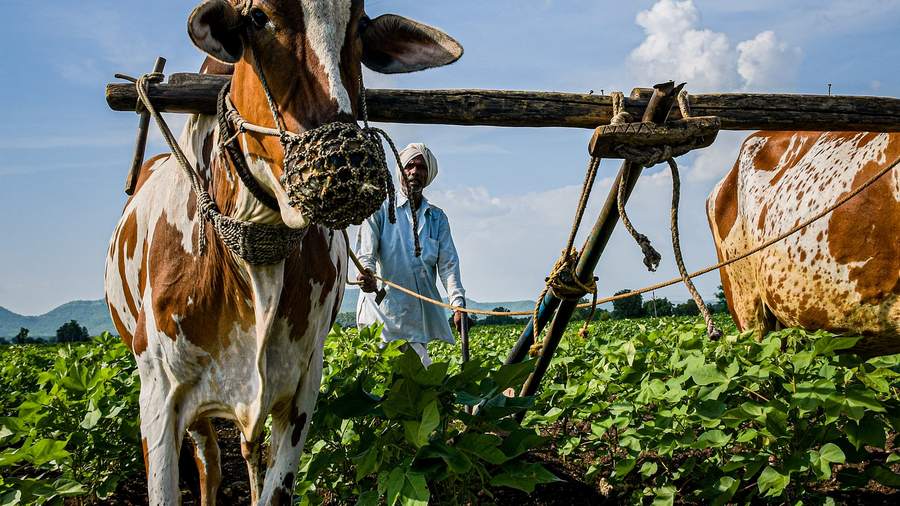
Person plowing field with cows,

So I have heard. At one time the Buddha was staying in the land of the Magadhans in the Southern Hills near the brahmin village of Ekanāḷa. Now at that time the brahmin Bhāradvāja the Farmer had harnessed around five hundred plows, it being the season for sowing. Then the Buddha robed up in the morning and, taking his bowl and robe, went to where Bhāradvāja the Farmer was working. Now at that time Bhāradvāja the Farmer was distributing food. Then the Buddha went to where the distribution was taking place and stood to one side.

Bhāradvāja the Farmer saw him standing for alms and said to him, “I plough and sow, ascetic, and then I eat. You too should plough and sow, then you may eat.”

“I too plough and sow, brahmin, and then I eat.” “I don’t see Mister Gotama with a yoke or plow or plowshare or goad or oxen, yet he says: ‘I too plough and sow, brahmin, and then I eat.’”

Then Bhāradvāja the Farmer addressed the Buddha in verse:

“You claim to be a farmer,
but I don’t see you farming.
Tell me your farming when asked,
so I can recognize your farming.”

“Faith is my seed, fervor my rain,
and wisdom is my yoke and plough.
Conscience is my pole, mind my strap,
mindfulness my plowshare and goad.

Guarded in body and speech,
I restrict my intake of food.
I use truth as my scythe,
and sweetness is my release.

Energy is my beast of burden,
transporting me to sanctuary from the yoke.
It goes without turning back
where there is no sorrow.

That’s how to do the farming
that has freedom from death as its fruit.
When you finish this farming
you’re released from all suffering.”

Then Bhāradvāja the Farmer filled a large bronze dish with milk-rice and presented it to the Buddha: “Eat the milk-rice, Mister Gotama, you are truly a farmer. For Mister Gotama does the farming that has freedom from death as its fruit.”

“Food enchanted by a verse isn’t fit for me to eat.
That’s not the principle of those who see, brahmin.
The Buddhas reject things enchanted with verses.
Since there is such a principle, brahmin,that’s how they live.

Serve with other food and drink
the consummate one, the great seer,
with defilements ended and remorse stilled.
For he is the field for the seeker of merit.”

“Then, Mister Gotama, to whom should I give the milk-rice?” “Brahmin, I don’t see anyone in this world—with its gods, Māras, and Brahmās, this population with its ascetics and brahmins, its gods and humans—who can properly digest this milk-rice, except for the Realized One or one of his disciples. Well then, brahmin, throw out the milk-rice where there is little that grows, or drop it into water that has no living creatures.”

So Bhāradvāja the Farmer dropped the milk-rice in water that had no living creatures. And when the milk-rice was placed in the water, it sizzled and hissed, steaming and fuming. Suppose there was an iron cauldron that had been heated all day. If you placed it in the water, it would sizzle and hiss, steaming and fuming. In the same way, when the milk-rice was placed in the water, it sizzled and hissed, steaming and fuming.

Then Bhāradvāja the Farmer, shocked and awestruck, went up to the Buddha, bowed down with his head at the Buddha’s feet, and said, “Excellent, Mister Gotama! Excellent! As if he were righting the overturned, or revealing the hidden, or pointing out the path to the lost, or lighting a lamp in the dark so people with clear eyes can see what’s there, Mister Gotama has made the teaching clear in many ways. I go for refuge to Mister Gotama, to the teaching, and to the mendicant Saṅgha. May I receive the going forth, the ordination in Mister Gotama’s presence?”

And Bhāradvāja the Farmer received the going forth, the ordination in the Buddha’s presence. Not long after his ordination, Venerable Bhāradvāja, living alone, withdrawn, diligent, keen, and resolute, soon realized the supreme end of the spiritual path in this very life. He lived having achieved with his own insight the goal for which gentlemen rightly go forth from the lay life to homelessness. He understood: “Rebirth is ended; the spiritual journey has been completed; what had to be done has been done; there is no return to any state of existence.” And Venerable Bhāradvāja became one of the perfected.


Read this translation of Snp 1.4 Kasibhāradvājasutta: With Bhāradvāja the Farmer by Bhikkhu Sujato on SuttaCentral.net. Or read a different translation on SuttaFriends.org, DhammaTalks.org or AccessToInsight.org. Or listen on SC-Voice.net. Or explore the Pali on DigitalPaliReader.online.

Or read a translation in Deutsch, Afrikaans, Français, Bahasa Indonesia, Italiano, 日本語, မြန်မာဘာသာ, Nederlands, Norsk, Português, Русский, සිංහල, Slovenščina, or தமிழ். Learn how to find your language.

MN 70 From… Kīṭāgirisutta: At Kīṭāgiri

Buddhist monastic worshiping an ancient Buddha statue in Anuradhapura.

…For a faithful disciple who is practicing to fathom the Teacher’s instructions, this is in line with the teaching: ‘The Buddha is my Teacher, I am his disciple. The Buddha knows, I do not know.’ For a faithful disciple who is practicing to fathom the Teacher’s instructions, the Teacher’s instructions are nourishing and nutritious.…


Read the entire translation of Majjhima Nikāya 70 Kīṭāgirisutta: At Kīṭāgiri Kīṭāgirisutta by Bhikkhu Sujato on SuttaCentral.net. Or read a different translation on SuttaCentral.net or DhammaTalks.org. Or listen on PaliAudio.com or SC-Voice.net. Or explore the Pali on DigitalPaliReader.online.

Or read a translation in Deutsch, Русский, বাংলা, Čeština, Español, עִבְֿרִיתּ, हिन्दी, Magyar, Bahasa Indonesia, Italiano, 日本語, မြန်မာဘာသာ, Norsk, Português, සිංහල, Slovenščina, Srpski, ไทย, Tiếng Việt, or 汉语. Learn how to find your language.

Dhp 333 From… Nāgavagga: Attadantavatthu

Old person offering incense.

It’s a blessing to keep precepts until you grow old;
a blessing to be grounded in faith;
the getting of wisdom’s a blessing;
and it’s a blessing to avoid doing wrong.


Read the entire translation of Dhammapada 320–333 Nāgavagga: Attadantavatthu by Bhikkhu Sujato on SuttaCentral.net. Or read a different translation on SuttaFriends.org, DhammaTalks.org, Ancient-Buddhist-Texts.net or AccessToInsight.org. Or listen on SC-Voice.net. Or explore the Pali on DigitalPaliReader.online.

Or read a translation in Deutsch, Tiếng Việt, Català, Čeština, Español, Français, עִבְֿרִיתּ, Magyar, Italiano, 日本語, Latine, मराठी, မြန်မာဘာသာ, Nederlands, Norsk, Polski, Português, සිංහල, Slovenščina, தமிழ், or 汉语. Learn how to find your language.

SN 48.44 Pubbakoṭṭhakasutta: At the Eastern Gate

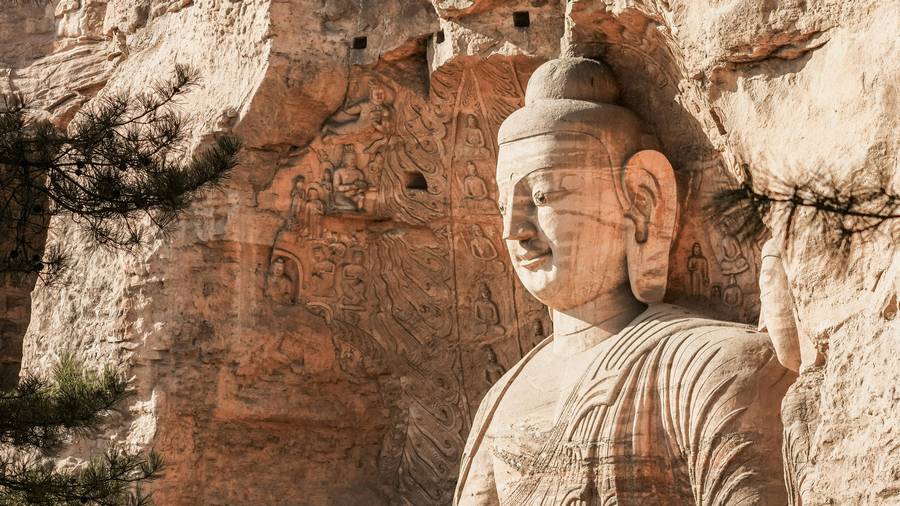
Giant Buddha statue cut into a rock face.

So I have heard. At one time the Buddha was staying in Sāvatthī at the eastern gate. Then the Buddha said to Venerable Sāriputta:

“Sāriputta, do you have faith that the faculties of faith, energy, mindfulness, immersion, and wisdom, when developed and cultivated, culminate, finish, and end in freedom from death?”

“Sir, in this case I don’t rely on faith in the Buddha’s claim that the faculties of faith, energy, mindfulness, immersion, and wisdom, when developed and cultivated, culminate, finish, and end in freedom from death. There are those who have not known or seen or understood or realized or experienced this with wisdom. They may rely on faith in this matter. But there are those who have known, seen, understood, realized, and experienced this with wisdom. They have no doubts or uncertainties in this matter. I have known, seen, understood, realized, and experienced this with wisdom. I have no doubts or uncertainties that the faculties of faith, energy, mindfulness, immersion, and wisdom, when developed and cultivated, culminate, finish, and end in freedom from death.”

“Good, good, Sāriputta! There are those who have not known or seen or understood or realized or experienced this with wisdom. They may rely on faith in this matter. But there are those who have known, seen, understood, realized, and experienced this with wisdom. They have no doubts or uncertainties that the faculties of faith, energy, mindfulness, immersion, and wisdom, when developed and cultivated, culminate, finish, and end in freedom from death.”


Read this translation of Saṁyutta Nikāya 48.44 Pubbakoṭṭhakasutta: At the Eastern Gate by Bhikkhu Sujato on SuttaCentral.net.

AN 7.6 Vitthatadhanasutta: Wealth in Detail

Old person's hands holding coins.

“Mendicants, there are these seven kinds of wealth. What seven? The wealth of faith, ethics, conscience, prudence, learning, generosity, and wisdom.

And what is the wealth of faith? It’s when a noble disciple has faith in the Realized One’s awakening … This is called the wealth of faith.

And what is the wealth of ethical conduct? It’s when a noble disciple doesn’t kill living creatures, steal, commit sexual misconduct, use speech that’s false, divisive, harsh, or nonsensical, or consume alcoholic drinks that cause negligence. This is called the wealth of ethical conduct.

And what is the wealth of conscience? It’s when a noble disciple has a conscience. They’re conscientious about bad conduct by way of body, speech, and mind, and conscientious about having any bad, unskillful qualities. This is called the wealth of conscience.

And what is the wealth of prudence? It’s when a noble disciple is prudent. They’re prudent when it comes to bad conduct by way of body, speech, and mind, and prudent when it comes to the acquiring of any bad, unskillful qualities. This is called the wealth of prudence.

And what is the wealth of learning? It’s when a noble disciple is very learned, remembering and keeping what they’ve learned. These teachings are good in the beginning, good in the middle, and good in the end, meaningful and well-phrased, describing a spiritual practice that’s entirely full and pure. They are very learned in such teachings, remembering them, reciting them, mentally scrutinizing them, and comprehending them theoretically. This is called the wealth of learning.

And what is the wealth of generosity? It’s when a noble disciple lives at home rid of the stain of stinginess, freely generous, open-handed, loving to let go, committed to charity, loving to give and to share. This is called the wealth of generosity.

And what is the wealth of wisdom? It’s when a noble disciple is wise. They have the wisdom of arising and passing away which is noble, penetrative, and leads to the complete ending of suffering. This is called the wealth of wisdom.

These are the seven kinds of wealth.

Faith and ethical conduct are kinds of wealth,
as are conscience and prudence,
learning and generosity,
and wisdom is the seventh kind of wealth.

When a woman or man
has these kinds of wealth,
they’re said to be prosperous,
their life is not in vain.

So let the wise devote themselves
to faith, ethical behavior,
confidence, and insight into the teaching,
remembering the instructions of the Buddhas.”


Read this translation of Aṅguttara Nikāya 7.6 Vitthatadhanasutta: Wealth in Detail by Bhikkhu Sujato on SuttaCentral.net. Or read a different translation on DhammaTalks.org. Or listen on SC-Voice.net. Or explore the Pali on DigitalPaliReader.online.

Or read a translation in Deutsch, বাংলা, Español, Français, Magyar, Bahasa Indonesia, Italiano, 日本語, မြန်မာဘာသာ, Nederlands, Português, Русский, සිංහල, ไทย, Tiếng Việt, or 汉语. Learn how to find your language.

AN 6.45 Iṇasutta: Debt

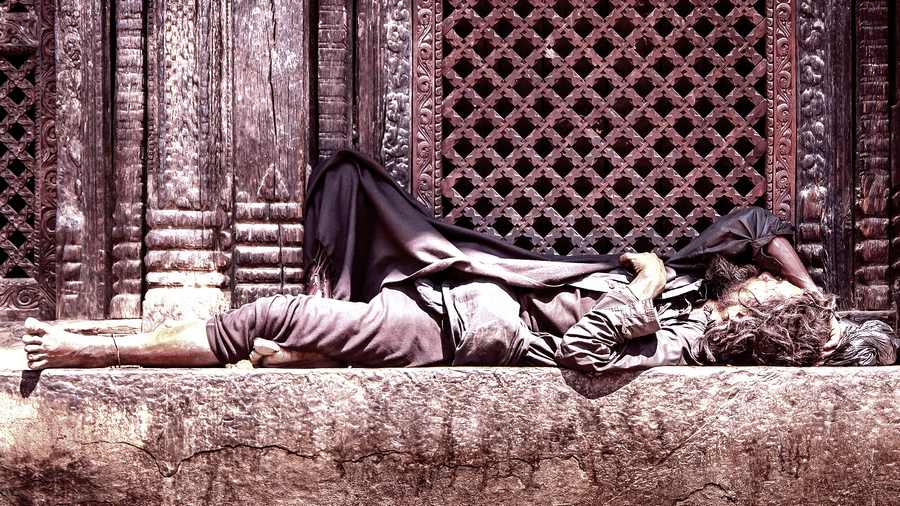
Person sleeping along the side of the road.

“Mendicants, isn’t poverty suffering in the world for a person who enjoys sensual pleasures?”

“Yes, sir.”

“When a poor, penniless person falls into debt, isn’t being in debt also suffering in the world for a person who enjoys sensual pleasures?”

“Yes, sir.”

“When a poor person who has fallen into debt agrees to pay interest, isn’t the interest also suffering in the world for a person who enjoys sensual pleasures?”

“Yes, sir.”

“When a poor person who has fallen into debt and agreed to pay interest fails to pay it when it falls due, they get a warning. Isn’t being warned suffering in the world for a person who enjoys sensual pleasures?”

“Yes, sir.”

“When a poor person fails to pay after getting a warning, they’re prosecuted. Isn’t being prosecuted suffering in the world for a person who enjoys sensual pleasures?”

“Yes, sir.”

“When a poor person fails to pay after being prosecuted, they’re imprisoned. Isn’t being imprisoned suffering in the world for a person who enjoys sensual pleasures?”

“Yes, sir.”

“So mendicants, poverty, debt, interest, warnings, prosecution, and imprisonment are suffering in the world for those who enjoy sensual pleasures. In the same way, whoever has no faith, conscience, prudence, energy, and wisdom when it comes to skillful qualities is called poor and penniless in the training of the Noble One.

Since they have no faith, conscience, prudence, energy, or wisdom when it comes to skillful qualities, they do bad things by way of body, speech, and mind. This is how they’re in debt, I say.

In order to conceal the bad things they do by way of body, speech, and mind they harbour corrupt wishes. They wish, plan, speak, and act with the thought: ‘May no-one find me out!’ This is how they pay interest, I say.

Good-hearted spiritual companions say this about them: ‘This venerable acts like this, and behaves like that.’ This is how they’re warned, I say.

When they go to a wilderness, the root of a tree, or an empty hut, they’re beset by remorseful, unskillful thoughts. This is how they’re prosecuted, I say.

That poor, penniless person has done bad things by way of body, speech, and mind. When their body breaks up, after death, they’re trapped in the prison of hell or the animal realm. I don’t see a single prison that’s as brutal, as vicious, and such an obstacle to reaching the supreme sanctuary from the yoke as the prison of hell or the animal realm.

Poverty is said to be suffering in the world,
and so is being in debt.
A poor person who has fallen into debt
frets even when spending the loan.

And then they’re prosecuted,
or even thrown in jail.
Such imprisonment is true suffering
for someone who prays for pleasure and possessions.

In the same way, in the noble one’s training
whoever has no faith,
no conscience or prudence,
contemplates bad deeds.

After doing bad things
by way of body,
speech, and mind,
they wish, ‘May no-one find me out!’

Their behavior is creepy
by body, speech, and mind.
They pile up bad deeds
on and on, life after life.

That stupid evildoer,
knowing their own misdeeds,
is a poor person who has fallen into debt,
and frets even when spending the loan.

And when in village or wilderness
they’re prosecuted
by painful mental plans,
which are born of remorse.

That stupid evildoer,
knowing their own misdeeds,
goes to one of the animal realms,
or is trapped in hell.

Such imprisonment is true suffering,
from which a wise one is released.
With confident heart, they give
with wealth that is properly earned.

That faithful householder
holds a perfect hand on both counts:
welfare and benefit in this life,
and happiness in the next.
This is how, for a householder,
merit grows by generosity.

In the same way, in the noble one’s training,
whoever is grounded in faith,
with conscience and prudence,
wise, and ethically restrained,

is said to live happily
in the noble one’s training.
After gaining pleasure not of the flesh,
they concentrate on equanimity.

They give up the five hindrances,
constantly energetic,
and enter the absorptions,
unified, alert, and mindful.

Truly knowing in this way
the end of all fetters,
by not grasping in any way,
their mind is rightly freed.

To that poised one, rightly freed
with the end of the fetters of rebirth,
the knowledge comes:
‘My freedom is unshakable.’

This is the ultimate knowledge.
This is the supreme happiness.
Sorrowless, stainless, secure:
this is the highest freedom from debt.”


Read this translation of Aṅguttara Nikāya 6.45 Iṇasutta: Debt by Bhikkhu Sujato on SuttaCentral.net. Or read a different translation on SuttaFriends.org or DhammaTalks.org. Or listen on SC-Voice.net. Or explore the Pali on DigitalPaliReader.online.

Or read a translation in Deutsch, Bengali, Čeština, Español, Indonesian, Italiano, မြန်မာဘာသာ, Português, ру́сский язы́к, සිංහල, ไทย, Tiếng Việt, or 汉语. Learn how to find your language.

AN 7.67 Nagaropamasutta: The Simile of the Citadel

Citadel in the desert

[Sometimes the Buddha gave very complex similes to explain an important topic. We will have some of these as longer suttas on the weekends.]

“Mendicants, when a king’s frontier citadel is well provided with seven essentials and gets four kinds of sustenance when needed, without trouble or difficulty, it is then called a king’s frontier citadel that cannot be overrun by external foes and enemies.

With what seven essentials is a citadel well provided?

Firstly, a citadel has a pillar with deep foundations, firmly embedded, imperturbable and unshakable. This is the first essential with which a king’s frontier citadel is well provided, to defend those within and repel those outside.

Furthermore, a citadel has a moat that is deep and wide. This is the second essential …

Furthermore, a citadel has a patrol path that is high and wide. This is the third essential …

Furthermore, a citadel has stores of many weapons, both projectile and hand-held. This is the fourth essential …

Furthermore, many kinds of armed forces reside in a citadel, such as elephant riders, cavalry, charioteers, archers, bannermen, adjutants, food servers, warrior-chiefs, princes, chargers, great warriors, heroes, leather-clad soldiers, and sons of bondservants. This is the fifth essential …

Furthermore, a citadel has a gatekeeper who is astute, competent, and intelligent. He keeps strangers out and lets known people in. This is the sixth essential …

Furthermore, a citadel has a wall that’s high and wide, covered with plaster. This is the seventh essential with which a king’s frontier citadel is well provided, to defend those within and repel those outside.

With these seven essentials a citadel is well provided.

What are the four kinds of sustenance it gets when needed, without trouble or difficulty?

Firstly, a king’s frontier citadel has much hay, wood, and water stored up for the enjoyment, relief, and comfort of those within and to repel those outside.

Furthermore, a king’s frontier citadel has much rice and barley stored up for those within.

Furthermore, a king’s frontier citadel has much food such as sesame, green gram, and black gram stored up for those within.

Furthermore, a king’s frontier citadel has much medicine—ghee, butter, oil, honey, molasses, and salt—stored up for the enjoyment, relief, and comfort of those within and to repel those outside.

These are the four kinds of sustenance it gets when needed, without trouble or difficulty.

When a king’s frontier citadel is well provided with seven essentials and gets four kinds of sustenance when needed, without trouble or difficulty, it is then called a king’s frontier citadel that cannot be overrun by external foes and enemies.

In the same way, when a noble disciple has seven good qualities, and they get the four absorptions—blissful meditations in the present life that belong to the higher mind—when they want, without trouble or difficulty, they are then called a noble disciple who cannot be overrun by Māra, who cannot be overrun by the Wicked One. What are the seven good qualities that they have?

Just as a king’s frontier citadel has a pillar with deep foundations, firmly embedded, imperturbable and unshakable, to defend those within and repel those outside, in the same way a noble disciple has faith in the Realized One’s awakening: ‘That Blessed One is perfected, a fully awakened Buddha, accomplished in knowledge and conduct, holy, knower of the world, supreme guide for those who wish to train, teacher of gods and humans, awakened, blessed.’ A noble disciple with faith as their pillar gives up the unskillful and develops the skillful, they give up the blameworthy and develop the blameless, and they keep themselves pure. This is the first good quality they have.

Just as a citadel has a moat that is deep and wide, in the same way a noble disciple has a conscience. They’re conscientious about bad conduct by way of body, speech, and mind, and conscientious about having any bad, unskillful qualities. A noble disciple with a conscience as their moat gives up the unskillful and develops the skillful, they give up the blameworthy and develop the blameless, and they keep themselves pure. This is the second good quality they have.

Just as a citadel has a patrol path that is high and wide, in the same way a noble disciple is prudent. They’re prudent when it comes to bad conduct by way of body, speech, and mind, and prudent when it comes to acquiring any bad, unskillful qualities. A noble disciple with prudence as their patrol path gives up the unskillful and develops the skillful, they give up the blameworthy and develop the blameless, and they keep themselves pure. This is the third good quality they have.

Just as a citadel has stores of many weapons, both projectile and hand-held, in the same way a noble disciple is very learned. They remember and keep what they’ve learned. These teachings are good in the beginning, good in the middle, and good in the end, meaningful and well-phrased, describing a spiritual practice that’s entirely full and pure. They are very learned in such teachings, remembering them, reciting them, mentally scrutinizing them, and comprehending them theoretically. A noble disciple with learning as their weapon gives up the unskillful and develops the skillful, they give up the blameworthy and develop the blameless, and they keep themselves pure. This is the fourth good quality they have.

Just as many kinds of armed forces reside in a citadel … in the same way a noble disciple is energetic. They live with energy roused up for giving up unskillful qualities and embracing skillful qualities. They are strong, staunchly vigorous, not slacking off when it comes to developing skillful qualities. A noble disciple with energy as their armed forces gives up the unskillful and develops the skillful, they give up the blameworthy and develop the blameless, and they keep themselves pure. This is the fifth good quality they have.

Just as a citadel has a gatekeeper who is astute, competent, and intelligent, who keeps strangers out and lets known people in, in the same way a noble disciple is mindful. They have utmost mindfulness and alertness, and can remember and recall what was said and done long ago. A noble disciple with mindfulness as their gatekeeper gives up the unskillful and develops the skillful, they give up the blameworthy and develop the blameless, and they keep themselves pure. This is the sixth good quality they have.

Just as a citadel has a wall that’s high and wide, covered with plaster, to defend those within and repel those outside, in the same way a noble disciple is wise. They have the wisdom of arising and passing away which is noble, penetrative, and leads to the complete ending of suffering. A noble disciple with wisdom as their wall gives up the unskillful and develops the skillful, they give up the blameworthy and develop the blameless, and they keep themselves pure. This is the seventh good quality they have. These are the seven good qualities that they have.

And what are the four absorptions—blissful meditations in the present life that belong to the higher mind—that they get when they want, without trouble or difficulty? Just as a king’s frontier citadel has much hay, wood, and water stored up for the enjoyment, relief, and comfort of those within and to repel those outside, in the same way a noble disciple, quite secluded from sensual pleasures, secluded from unskillful qualities, enters and remains in the first absorption, which has the rapture and bliss born of seclusion, while placing the mind and keeping it connected. This is for their own enjoyment, relief, and comfort, and for alighting upon extinguishment.

Just as a king’s frontier citadel has much rice and barley stored up, in the same way, as the placing of the mind and keeping it connected are stilled, a noble disciple enters and remains in the second absorption, which has the rapture and bliss born of immersion, with internal clarity and mind at one, without placing the mind and keeping it connected. This is for their own enjoyment, relief, and comfort, and for alighting upon extinguishment.

Just as a king’s frontier citadel has much food such as sesame, green gram, and black gram stored up, in the same way with the fading away of rapture, a noble disciple enters and remains in the third absorption, where they meditate with equanimity, mindful and aware, personally experiencing the bliss of which the noble ones declare, ‘Equanimous and mindful, one meditates in bliss.’ This is for their own enjoyment, relief, and comfort, and for alighting upon extinguishment.

Just as a king’s frontier citadel has much medicine—ghee, butter, oil, honey, molasses, and salt—stored up for the enjoyment, relief, and comfort of those within and to repel those outside, in the same way, giving up pleasure and pain, and ending former happiness and sadness, a noble disciple enters and remains in the fourth absorption, without pleasure or pain, with pure equanimity and mindfulness. This is for their own enjoyment, relief, and comfort, and for alighting upon extinguishment. These are the four absorptions—blissful meditations in the present life that belong to the higher mind—which they get when they want, without trouble or difficulty.

When a noble disciple has seven good qualities, and they get the four absorptions—blissful meditations in the present life that belong to the higher mind—when they want, without trouble or difficulty, they are then called a noble disciple who cannot be overrun by Māra, who cannot be overrun by the Wicked One.”


Read this translation of Aṅguttara Nikāya 7.67 Nagaropamasutta: The Simile of the Citadel by Bhikkhu Sujato on SuttaCentral.net. Or read a different translation on DhammaTalks.org or SuttaFriends.org. Or listen on SC-Voice.net. Or explore the Pali on DigitalPaliReader.online.

Or read a translation in Deutsch, Bengali, Español, Indonesian, မြန်မာဘာသာ, Norsk, Português, ру́сский язы́к, සිංහල, ไทย, Tiếng Việt, or 汉语. Learn how to find your language.

SN 37.34 Vaḍḍhīsutta: Growth

Person sitting in a very deep chamber of some sort.

“Mendicants, a female noble disciple who grows in five ways grows nobly, taking on what is essential and excellent in this life. What five? She grows in faith, ethics, learning, generosity, and wisdom. A female noble disciple who grows in these five ways grows nobly, taking on what is essential and excellent in this life.

When she grows in faith and ethics,
wisdom, and both generosity and learning—
a virtuous laywoman such as she
takes on what is essential for herself in this life.”


Read this translation of Saṁyutta Nikāya 37.34 Vaḍḍhīsutta: Growth by Bhikkhu Sujato on SuttaCentral.net. Or read a different translation on DhammaTalks.org. Or listen on SC-Voice.net. Or explore the Pali on DigitalPaliReader.online.

Or read a translation in Deutsch, Bengali, Indonesian, 日本語, မြန်မာဘာသာ, Norsk, ру́сский язы́к, සිංහල, ไทย, Tiếng Việt, or 汉语. Learn how to find your language.

AN 6.30 Anuttariyasutta: Unsurpassable

Person worshiping below a large Buddha shrine.

“Mendicants, these six things are unsurpassable. What six? The unsurpassable seeing, listening, acquisition, training, service, and recollection.

And what is the unsurpassable seeing? Some people go to see an elephant-treasure, a horse-treasure, a jewel-treasure, or a diverse spectrum of sights; or ascetics and brahmins of wrong view and wrong practice. There is such a seeing, I don’t deny it. That seeing is low, crude, ordinary, ignoble, and pointless. It doesn’t lead to disillusionment, dispassion, cessation, peace, insight, awakening, and extinguishment. The unsurpassable seeing is when someone with settled faith and love, sure and devoted, goes to see a Realized One or their disciple. This is in order to purify sentient beings, to get past sorrow and crying, to make an end of pain and sadness, to discover the system, and to realize extinguishment. This is called the unsurpassable seeing. Such is the unsurpassable seeing.

But what of the unsurpassable hearing? Some people go to hear the sound of drums, arched harps, singing, or a diverse spectrum of sounds; or ascetics and brahmins of wrong view and wrong practice. There is such a hearing, I don’t deny it. That hearing … doesn’t lead to extinguishment. The unsurpassable hearing is when someone with settled faith and love, sure and devoted, goes to hear the teaching of a Realized One or one of his disciples. … This is called the unsurpassable hearing. Such is the unsurpassable seeing and hearing.

But what of the unsurpassable acquisition? Some people acquire a child, a wife, wealth, or a diverse spectrum of things; or they acquire faith in an ascetic or brahmin of wrong view and wrong practice. There is such an acquisition, I don’t deny it. That acquisition … doesn’t lead to extinguishment. The unsurpassable acquisition is when someone with settled faith and love, sure and devoted, acquires faith in a Realized One or their disciple. … This is called the unsurpassable acquisition. Such is the unsurpassable seeing, hearing, and acquisition.

But what of the unsurpassable training? Some people train in elephant riding, horse riding, chariot driving, archery, swordsmanship, or a diverse spectrum of things; or they train under an ascetic or brahmin of wrong view and wrong practice. There is such a training, I don’t deny it. That training … doesn’t lead to extinguishment. The unsurpassable training is when someone with settled faith and love, sure and devoted, trains in the higher ethics, the higher mind, and the higher wisdom in the teaching and training proclaimed by a Realized One. … This is called the unsurpassable training. Such is the unsurpassable seeing, hearing, acquisition, and training.

But what of the unsurpassable service? Some people serve an aristocrat, a brahmin, a householder, or a diverse spectrum of people; or they serve ascetics and brahmins of wrong view and wrong practice. There is such service, I don’t deny it. That service … doesn’t lead to extinguishment. The unsurpassable service is when someone with settled faith and love, sure and devoted, serves a Realized One or their disciple. … This is called the unsurpassable service. Such is the unsurpassable seeing, listening, acquisition, training, and service.

But what of the unsurpassable recollection? Some people recollect a child, a wife, wealth, or a diverse spectrum of things; or they recollect an ascetic or brahmin of wrong view and wrong practice. There is such recollection, I don’t deny it. That recollection is low, crude, ordinary, ignoble, and pointless. It doesn’t lead to disillusionment, dispassion, cessation, peace, insight, awakening, and extinguishment. The unsurpassable recollection is when someone with settled faith and love, sure and devoted, recollects a Realized One or their disciple. … This is called the unsurpassable recollection.

These are the six unsurpassable things.

They’ve gained the unsurpassed seeing,
the unsurpassed hearing,
and the unsurpassable acquisition.
They enjoy the unsurpassable training

and serve with care.
Then they develop recollection
connected with seclusion,
which is safe, and leads to the deathless.

They rejoice in diligence,
alert and ethically restrained.
And in time they arrive
at the place where suffering ceases.”


Read this translation of Aṅguttara Nikāya 6.30 Anuttariyasutta: Unsurpassable Anuttariyasutta by Bhikkhu Sujato on SuttaCentral.net. Or listen on SC-Voice.net. Or explore the Pali on DigitalPaliReader.online.

Or read a translation in Deutsch, Bengali, Español, Indonesian, မြန်မာဘာသာ, ру́сский язы́к, සිංහල, ไทย, Tiếng Việt, or 汉语. Learn how to find your language.