ReadingFaithfully.org icon Facebook icon Bluesky icon Reddit icon Tumblr icon Mastodon icon RSS icon

AN 10.224: Untitled Discourse on Forty Qualities

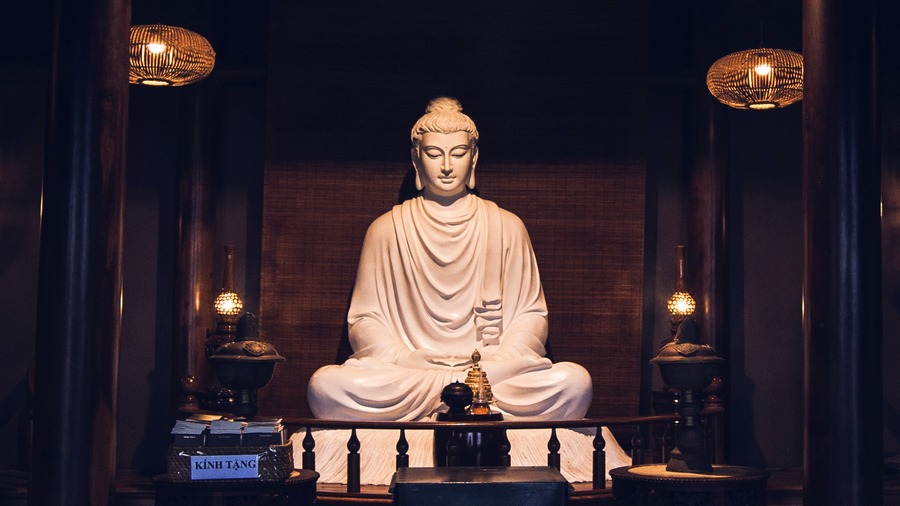
Dimly lit shrine with white Buddha statue.

“Someone with forty qualities is cast down to hell. What forty? They kill living creatures, steal, and commit sexual misconduct. They use speech that’s false, divisive, harsh, or nonsensical. They’re covetous, malicious, with wrong view. They encourage others to do these things. They approve of these things. And they praise these things. Someone with these forty qualities is cast down to hell.

Someone with forty qualities is raised up to heaven. What forty? They don’t kill living creatures, steal, or commit sexual misconduct. They don’t use speech that’s false, divisive, harsh, or nonsensical. They’re contented, kind-hearted, with right view. They encourage others to do these things. They approve of these things. And they praise these things. Someone with these forty qualities is raised up to heaven.”


Read this translation of Aṅguttara Nikāya 10.224: Untitled Discourse on Forty Qualities by Bhikkhu Sujato on SuttaCentral.net. Or explore the Pali on the Digital Pali Reader.

Or read a translation in Deutsch, Bengali, Indonesian, မြန်မာဘာသာ, ру́сский язы́к, සිංහල, ไทย, Tiếng Việt, or 汉语. Learn how to find your language.

AN 8.29 Akkhaṇasutta: Inopportune Moments

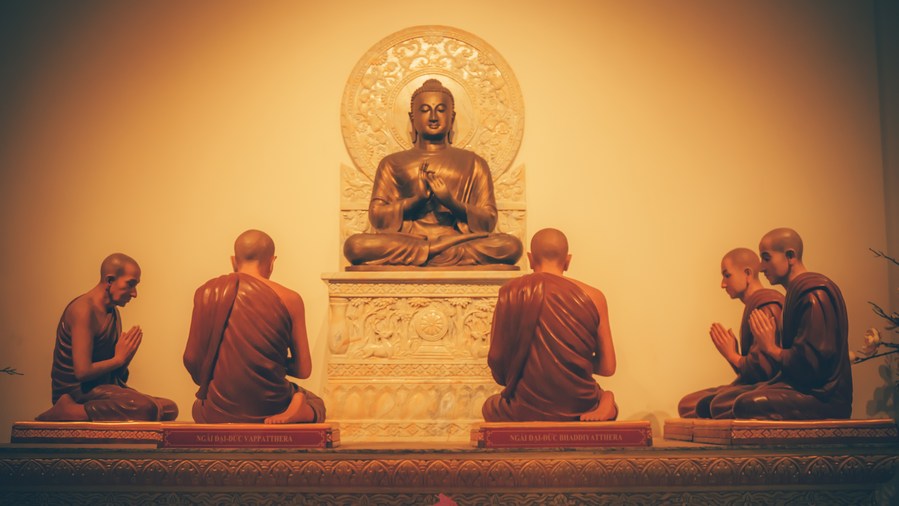
A scene with five statues. One of the Buddha teaching the first sermon, and five of the first five monks.

“Bhikkhus, the uninstructed worldling says: ‘The world has gained the opportunity! The world has gained the opportunity!’ but he does not know what is an opportunity and what is not an opportunity. There are, bhikkhus, these eight inopportune moments that are not right occasions for living the spiritual life. What eight?

(1) “Here, a Tathāgata has arisen in the world, an arahant, perfectly enlightened, accomplished in true knowledge and conduct, fortunate, knower of the world, unsurpassed trainer of persons to be tamed, teacher of devas and humans, an Enlightened One, a Blessed One, and the Dhamma leading to peace, nibbāna, and enlightenment is taught as proclaimed by a Fortunate One. But a person has been reborn in hell. This is the first inopportune moment that is not the right occasion for living the spiritual life.

(2) “Again, a Tathāgata has arisen in the world … and the Dhamma leading to peace, nibbāna, and enlightenment is taught as proclaimed by a Fortunate One. But a person has been reborn in the animal realm. This is the second inopportune moment that is not the right occasion for living the spiritual life.

(3) “Again, a Tathāgata has arisen in the world … and the Dhamma leading to peace, nibbāna, and enlightenment is taught as proclaimed by a Fortunate One. But a person has been reborn in the sphere of afflicted spirits. This is the third inopportune moment that is not the right occasion for living the spiritual life.

(4) “Again, a Tathāgata has arisen in the world … and the Dhamma leading to peace, nibbāna, and enlightenment is taught as proclaimed by a Fortunate One. But a person has been reborn in a certain order of long-lived devas. This is the fourth inopportune moment that is not the right occasion for living the spiritual life.

(5) “Again, a Tathāgata has arisen in the world … and the Dhamma leading to peace, nibbāna, and enlightenment is taught as proclaimed by a Fortunate One. But a person has been reborn in the outlying provinces among the uncouth foreigners, a place to which bhikkhus, bhikkhunīs, male lay followers, and female lay followers do not travel. This is the fifth inopportune moment that is not the right occasion for living the spiritual life.

(6) “Again, a Tathāgata has arisen in the world … and the Dhamma leading to peace, nibbāna, and enlightenment is taught as proclaimed by a Fortunate One. A person has been reborn in the central provinces, but he holds wrong view and has a distorted perspective: ‘There is nothing given, nothing sacrificed, nothing offered; there is no fruit or result of good and bad actions; there is no this world, no other world; there is no mother, no father; there are no beings spontaneously reborn; there are in the world no ascetics and brahmins of right conduct and right practice who, having realized this world and the other world for themselves by direct knowledge, make them known to others.’ This is the sixth inopportune moment that is not the right occasion for living the spiritual life.

(7) “Again, a Tathāgata has arisen in the world … and the Dhamma leading to peace, nibbāna, and enlightenment is taught as proclaimed by a Fortunate One. A person has been reborn in the central provinces, but he is unwise, stupid, obtuse, unable to understand the meaning of what has been well stated and badly stated. This is the seventh inopportune moment that is not the right occasion for living the spiritual life.

(8) “Again, a Tathāgata has not arisen in the world … and the Dhamma leading to peace, nibbāna, and enlightenment is not taught as proclaimed by a Fortunate One. But a person has been reborn in the central provinces, and he is wise, intelligent, astute, able to understand the meaning of what has been well stated and badly stated. This is the eighth inopportune moment that is not the right occasion for living the spiritual life.

“These are the eight inopportune moments that are not the right occasions for living the spiritual life.

“There is, bhikkhus, one unique opportune moment that is the right occasion for living the spiritual life. What is it? Here, a Tathāgata has arisen in the world, an arahant, perfectly enlightened, accomplished in true knowledge and conduct, fortunate, knower of the world, unsurpassed trainer of persons to be tamed, teacher of devas and humans, an Enlightened One, a Blessed One, and the Dhamma leading to peace, nibbāna, and enlightenment is taught as proclaimed by a Fortunate One. And a person has been reborn in the central provinces, and he is wise, intelligent, astute, able to understand the meaning of what has been well stated and badly stated. This, bhikkhus, is the one unique opportune moment that is the right occasion for living the spiritual life.”

Having obtained the human state
when the good Dhamma has been well proclaimed,
those who do not seize the moment
have let the right moment slip by.

For many inopportune times are spoken of,
occasions obstructive to the path;
for it is only sometimes, on occasion,
that Tathāgatas arise in the world.

If one has directly encountered them,
fortune rarely gained in the world,
if one has obtained the human state,
and the good Dhamma is being taught,
for a person desiring his own good,
this is incentive enough to strive.

How can one understand the good Dhamma,
so that the moment won’t slip by?
For those who miss the moment grieve
when they are reborn in hell.

One here who has failed to obtain
the fixed course of the good Dhamma,
will come to regret it for a long time
like a merchant who has missed a profit.

A person hindered by ignorance
who has failed in the good Dhamma
will long experience wandering on
in the round of birth and death.

But those who gain the human state
when the good Dhamma is well proclaimed,
have accomplished the Teacher’s word,
or will do so, or are doing so now.

Those who have practiced the path,
proclaimed by the Tathāgata,
have penetrated the right moment in the world
the unsurpassed spiritual life.

You should dwell without leakages,
guarded, ever-mindful in the restraints
taught by the One with Vision,
the Kinsman of the Sun.

Having cut off all underlying tendencies
that follow one drifting in Māra’s domain,
those who attain the destruction of the taints,
though in the world, have gone beyond.

Read this translation of Aṅguttara Nikāya 8.29 Akkhaṇasutta: Inopportune Moments by Bhikkhu Bodhi on SuttaCentral.net. Or read a different translation on SuttaCentral.net. Or listen on SC-Voice.net. Or explore the Pali on DigitalPaliReader.online.

Or read a translation in Deutsch, Bengali, Indonesian, မြန်မာဘာသာ, ру́сский язы́к, සිංහල, ไทย, Tiếng Việt, or 汉语. Learn how to find your language.

AN 6.39 Nidānasutta: Sources

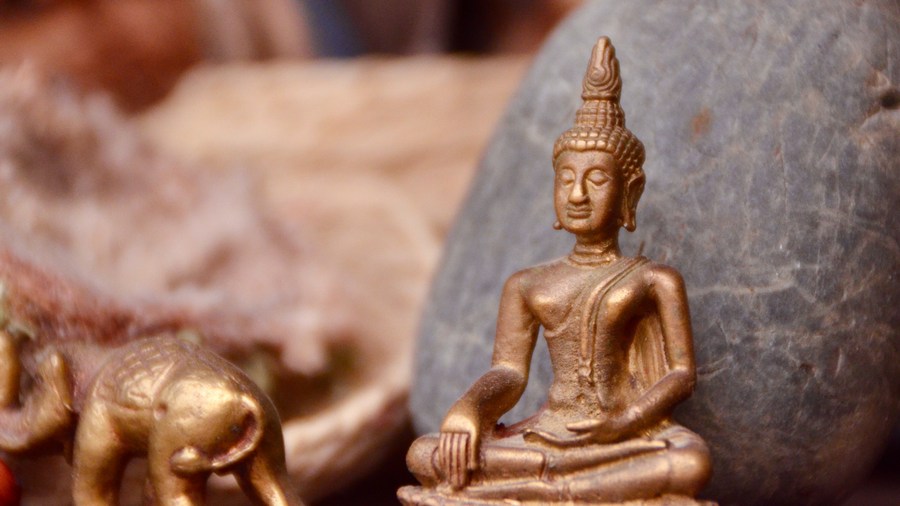
Tiny Buddha statue with a small elephant statue.

“Mendicants, there are these three sources that give rise to deeds. What three? Greed, hate, and delusion are sources that give rise to deeds. Greed doesn’t give rise to contentment. Rather, greed just gives rise to greed. Hate doesn’t give rise to love. Rather, hate just gives rise to hate. Delusion doesn’t give rise to understanding. Rather, delusion just gives rise to delusion. It’s not because of deeds born of greed, hate, and delusion that gods, humans, or those in any other good places are found. Rather, it’s because of deeds born of greed, hate, and delusion that hell, the animal realm, the ghost realm, or any other bad places are found. These are three sources that give rise to deeds.

Mendicants, there are these three sources that give rise to deeds. What three? Contentment, love, and understanding are sources that give rise to deeds. Contentment doesn’t give rise to greed. Rather, contentment just gives rise to contentment. Love doesn’t give rise to hate. Rather, love just gives rise to love. Understanding doesn’t give rise to delusion. Rather, understanding just gives rise to understanding. It’s not because of deeds born of contentment, love, and understanding that hell, the animal realm, the ghost realm, or any other bad places are found. Rather, it’s because of deeds born of contentment, love, and understanding that gods, humans, or those in any other good places are found. These are three sources that give rise to deeds.”


Read this translation of Aṅguttara Nikāya 6.39 Nidānasutta: Sources by Bhikkhu Sujato on SuttaCentral.net.

AN 2.29 From… Bālavagga: 21

Stone Buddha with ocean in the background.

“There are two places waiting to receive an unethical person: hell and the animal realm.

There are two places waiting to receive an ethical person: the realms of gods and humans.”


Read the entire translation of Aṅguttara Nikāya 2.21–31 Bālavagga: 21 by Bhikkhu Sujato on SuttaCentral.net. Or listen on PaliAudio.com or SC-Voice.net. Or explore the Pali on DigitalPaliReader.online.

Or read a translation in 18 other modern languages.

MN 12 Mahāsīhanādasutta: The Longer Discourse on the Lion’s Roar—The Path to Hell

Glowing charcoal.

…When I’ve comprehended the mind of a certain person, I understand: ‘This person is practicing in such a way and has entered such a path that when their body breaks up, after death, they will be reborn in a place of loss, a bad place, the underworld, hell.’ Then some time later I see that they have indeed been reborn in hell, where they experience exclusively painful feelings, sharp and severe.

Suppose there was a pit of glowing coals deeper than a man’s height, full of glowing coals that neither flamed nor smoked. Then along comes a person struggling in the oppressive heat, weary, thirsty, and parched. And they have set out on a path that meets with that same pit of coals. If a person with clear eyes saw them, they’d say: ‘This person is proceeding in such a way and has entered such a path that they will arrive at that very pit of coals.’ Then some time later they see that they have indeed fallen into that pit of coals, where they experience exclusively painful feelings, sharp and severe.

In the same way, when I’ve comprehended the mind of a certain person, I understand: ‘This person is practicing in such a way and has entered such a path that when their body breaks up, after death, they will be reborn in a place of loss, a bad place, the underworld, hell.’ Then some time later I see that they have indeed been reborn in hell, where they experience exclusively painful feelings, sharp and severe.…


Read this translation of Majjhima Nikāya 12 Mahāsīhanādasutta: The Longer Discourse on the Lion’s Roar by Bhikkhu Sujato on SuttaCentral.net.

Or read a different translation on SuttaCentral.net or DhammaTalks.org. Or listen on PaliAudio.com or SC-Voice.net. Or explore the Pali on DigitalPaliReader.online.

Or read a translation in ру́сский язы́к, Bengali, Čeština, Deutsch, Español, Français, हिन्दी, Indonesian, Italiano, မြန်မာဘာသာ, Norsk, Português, සිංහල, Slovenščina, Srpski, ไทย, Tiếng Việt, or 汉语. Learn how to find your language.

AN 5.145 Nirayasutta: Hell

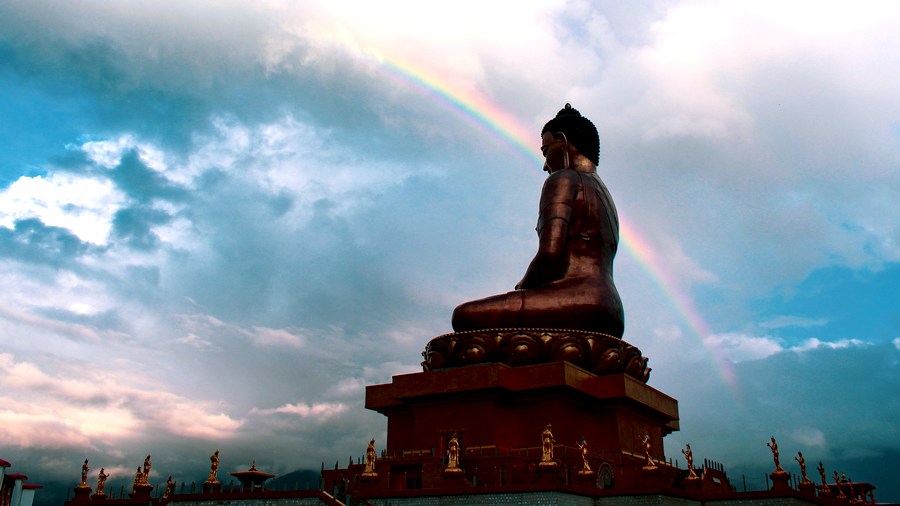
Giant Buddha statue with dark sky and rainbow in the background.

“Mendicants, someone with five qualities is cast down to hell. What five? They kill living creatures, steal, commit sexual misconduct, lie, and use alcoholic drinks that cause negligence. Someone with these five qualities is cast down to hell.

Someone with five qualities is raised up to heaven What five? They don’t kill living creatures, steal, commit sexual misconduct, lie, or use alcoholic drinks that cause negligence. Someone with these five qualities is raised up to heaven.”


Read this translation of Aṅguttara Nikāya 5.145 Nirayasutta: Hell by Bhikkhu Sujato on SuttaCentral.net. Or listen on SC-Voice.net. Or explore the Pali on DigitalPaliReader.online.

Or read a translation in Deutsch, Bengali, Español, Français, Indonesian, မြန်မာဘာသာ, ру́сский язы́к, සිංහල, ไทย, Tiếng Việt, or 汉语. Learn how to find your language.

AN 2.1: Faults

Closeup of feet tied in chains.

So I have heard. At one time the Buddha was staying near Sāvatthī in Jeta’s Grove, Anāthapiṇḍika’s monastery. There the Buddha addressed the mendicants, “Mendicants!”

“Venerable sir,” they replied. The Buddha said this:

“There are, mendicants, these two faults. What two? The fault apparent in the present life, and the fault to do with lives to come.

What is the fault apparent in the present life? It’s when someone sees that kings have arrested a bandit, a criminal, and subjected them to various punishments—whipping, caning, and clubbing; cutting off hands or feet, or both; cutting off ears or nose, or both; the ‘porridge pot’, the ‘shell-shave’, the ‘Rāhu’s mouth’, the ‘garland of fire’, the ‘burning hand’, the ‘bulrush twist’, the ‘bark dress’, the ‘antelope’, the ‘meat hook’, the ‘coins’, the ‘caustic pickle’, the ‘twisting bar’, the ‘straw mat’; being splashed with hot oil, being fed to the dogs, being impaled alive, and being beheaded.

It occurs to them: ‘If I were to commit the kinds of bad deeds for which the kings arrested that bandit, that criminal, the rulers would arrest me and subject me to the same punishments. Afraid of the fault apparent in the present life, they do not steal the belongings of others. This is called the fault apparent in the present life.

What is the fault to do with lives to come? It’s when someone reflects: ‘Bad conduct of body, speech, or mind has a bad, painful result in the next life. If I conduct myself badly, then, when my body breaks up, after death, won’t I be reborn in a place of loss, a bad place, the underworld, hell?’ Afraid of the fault to do with lives to come, they give up bad conduct by way of body, speech, and mind, and develop good conduct by way of body, speech, and mind, keeping themselves pure. This is called the fault to do with lives to come.

These are the two faults.

So you should train like this: ‘We will fear the fault apparent in the present life, and we will fear the fault to do with lives to come. We will fear faults, seeing the danger in faults.’ That’s how you should train. If you fear faults, seeing the danger in faults, you can expect to be freed from all faults.”


Read this translation of Aṅguttara Nikāya 2.1 by Bhikkhu Sujato on SuttaCentral.net. Or listen on PaliAudio.com or SC-Voice.net. Or explore the Pali on DigitalPaliReader.online.

Or read in one of 16 modern languages.