ReadingFaithfully.org icon Facebook icon Bluesky icon Reddit icon Tumblr icon Mastodon icon RSS icon

AN 10.117 Saṅgāravasutta: With Saṅgārava

Drone shot of beach with two tiny people on it.

Then Saṅgārava the brahmin went up to the Buddha, and exchanged greetings with him. When the greetings and polite conversation were over, he sat down to one side and said to the Buddha:

“Master Gotama, what is the near shore? And what is the far shore?”

“Wrong view is the near shore, brahmin, and right view is the far shore. Wrong thought is the near shore, and right thought is the far shore. Wrong speech is the near shore, and right speech is the far shore. Wrong action is the near shore, and right action is the far shore. Wrong livelihood is the near shore, and right livelihood is the far shore. Wrong effort is the near shore, and right effort is the far shore. Wrong mindfulness is the near shore, and right mindfulness is the far shore. Wrong immersion is the near shore, and right immersion is the far shore. Wrong knowledge is the near shore, and right knowledge is the far shore. Wrong freedom is the near shore, and right freedom is the far shore. This is the near shore, and this is the far shore.

Few are those among humans
who cross to the far shore.
The rest just run around
on the near shore.

When the teaching is well explained,
those who practice accordingly
are the ones who will cross over
Death’s domain so hard to pass.

Rid of dark qualities,
an astute person should develop the bright.
Leaving home behind
for the seclusion so hard to enjoy,

find delight there,
having left behind sensual pleasures.
With no possessions, an astute person
would cleanse themselves of mental corruptions.

Those whose minds are rightly developed
in the awakening factors;
who, letting go of attachments,
delight in not grasping:
with defilements ended, brilliant,
they in this world are quenched.”


Read this translation of Aṅguttara Nikāya 10.117 Saṅgāravasutta: With Saṅgārava Saṅgāravasutta by Bhikkhu Sujato on SuttaCentral.net. Or read a different translation on SuttaCentral.net. Or listen on SC-Voice.net. Or explore the Pali on DigitalPaliReader.online.

Or read a translation in Deutsch, Bengali, Español, Indonesian, မြန်မာဘာသာ, ру́сский язы́к, සිංහල, ไทย, Tiếng Việt, or 汉语. Learn how to find your language.

SN 45.160 Nadīsutta: A River

A boat on the river Ganges.

“Mendicants, suppose that, although the Ganges river slants, slopes, and inclines to the east, a large crowd were to come along with a spade and basket, saying: ‘We’ll make this Ganges river slant, slope, and incline to the west!’

What do you think, mendicants? Would they succeed?”

“No, sir. Why is that? The Ganges river slants, slopes, and inclines to the east. It’s not easy to make it slant, slope, and incline to the west. That large crowd will eventually get weary and frustrated.”

“In the same way, while a mendicant develops and cultivates the noble eightfold path, if rulers or their ministers, friends or colleagues, relatives or family should invite them to accept wealth, saying: ‘Please, mister, why let these ocher robes torment you? Why follow the practice of shaving your head and carrying an alms bowl? Come, return to a lesser life, enjoy wealth, and make merit!’ It’s quite impossible for a mendicant who develops and cultivates the noble eightfold path to resign the training and return to a lesser life. Why is that? Because for a long time that mendicant’s mind has slanted, sloped, and inclined to seclusion. So it’s impossible for them to return to a lesser life.

And how does a mendicant develop the noble eightfold path? It’s when a mendicant develops right view, right thought, right speech, right action, right livelihood, right effort, right mindfulness, and right immersion, which rely on seclusion, fading away, and cessation, and ripen as letting go. That’s how a mendicant develops and cultivates the noble eightfold path.”


Read this translation of Saṁyutta Nikāya 45.160 Nadīsutta: A River by Bhikkhu Sujato on SuttaCentral.net. Or read a different translation on SuttaCentral.net. Or listen on SC-Voice.net. Or explore the Pali on DigitalPaliReader.online.

Or read a translation in Deutsch, Bengali, Español, Indonesian, မြန်မာဘာသာ, Norsk, ру́сский язы́к, සිංහල, ไทย, Tiếng Việt, or 汉语. Learn how to find your language.

MN 149 Mahāsaḷāyatanikasutta: The Great Discourse on the Six Sense Fields

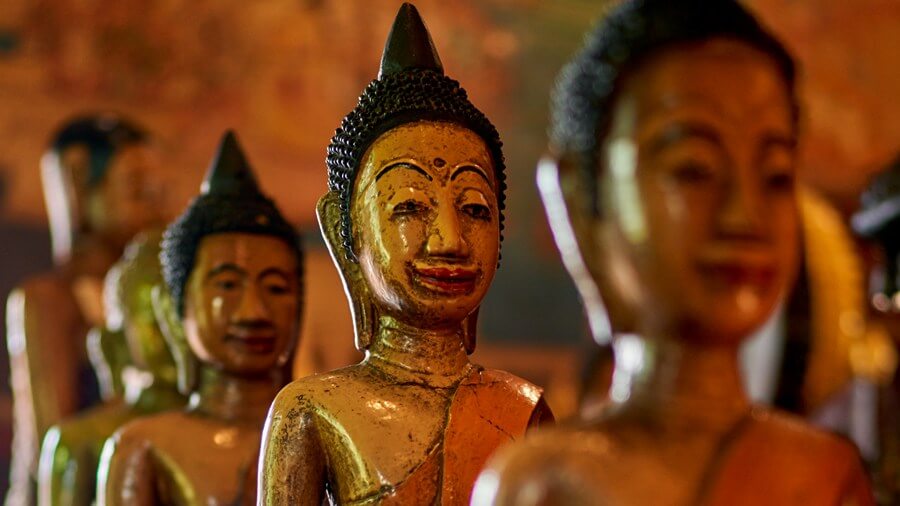
Small wooden Buddha statues.

So I have heard. At one time the Buddha was staying near Sāvatthī in Jeta’s Grove, Anāthapiṇḍika’s monastery. There the Buddha addressed the mendicants, “Mendicants!”

“Venerable sir,” they replied. The Buddha said this:

“Mendicants, I shall teach you the great discourse on the six sense fields. Listen and apply your mind well, I will speak.”

“Yes, sir,” they replied. The Buddha said this:

“Mendicants, when you don’t truly know and see the eye, sights, eye consciousness, eye contact, and what is felt as pleasant, painful, or neutral that arises conditioned by eye contact, you’re aroused by these things.

Someone who lives aroused like this—fettered, confused, concentrating on gratification—accumulates the five grasping aggregates for themselves in the future. And their craving—which leads to future lives, mixed up with relishing and greed, chasing pleasure in various realms—grows. Their physical and mental stress, torment, and fever grow. And they experience physical and mental suffering.

When you don’t truly know and see the ear … nose … tongue … body … mind, thoughts, mind consciousness, mind contact, and what is felt as pleasant, painful, or neutral that arises conditioned by mind contact, you’re aroused by these things.

Someone who lives aroused like this—fettered, confused, concentrating on gratification—accumulates the five grasping aggregates for themselves in the future. And their craving—which leads to future lives, mixed up with relishing and greed, chasing pleasure in various realms—grows. Their physical and mental stress, torment, and fever grow. And they experience physical and mental suffering.

When you do truly know and see the eye, sights, eye consciousness, eye contact, and what is felt as pleasant, painful, or neutral that arises conditioned by eye contact, you’re not aroused by these things.

Someone who lives unaroused like this—unfettered, unconfused, concentrating on drawbacks—disperses the the five grasping aggregates for themselves in the future. And their craving—which leads to future lives, mixed up with relishing and greed, chasing pleasure in various realms—is given up. Their physical and mental stress, torment, and fever are given up. And they experience physical and mental pleasure.

The view of such a person is right view. Their intention is right intention, their effort is right effort, their mindfulness is right mindfulness, and their immersion is right immersion. And their actions of body and speech have already been fully purified before. So this noble eightfold path is fully developed.

When the noble eightfold path is developed, the following are fully developed: the four kinds of mindfulness meditation, the four right efforts, the four bases of psychic power, the five faculties, the five powers, and the seven awakening factors.

And these two qualities proceed in conjunction: serenity and discernment. They completely understand by direct knowledge those things that should be completely understood by direct knowledge. They give up by direct knowledge those things that should be given up by direct knowledge. They develop by direct knowledge those things that should be developed by direct knowledge. They realize by direct knowledge those things that should be realized by direct knowledge.

And what are the things that should be completely understood by direct knowledge? You should say: ‘The five grasping aggregates.’ That is: form, feeling, perception, choices, and consciousness. These are the things that should be completely understood by direct knowledge.

And what are the things that should be given up by direct knowledge? Ignorance and craving for continued existence. These are the things that should be given up by direct knowledge.

And what are the things that should be developed by direct knowledge? Serenity and discernment. These are the things that should be developed by direct knowledge.

And what are the things that should be realized by direct knowledge? Knowledge and freedom. These are the things that should be realized by direct knowledge.

When you truly know and see the ear … nose … tongue … body … mind, thoughts, mind consciousness, mind contact, and what is felt as pleasant, painful, or neutral that arises conditioned by mind contact, you are not aroused by these things. …

These are the things that should be realized by direct knowledge.”

That is what the Buddha said. Satisfied, the mendicants were happy with what the Buddha said.


Read this translation of Majjhima Nikāya 149 Mahāsaḷāyatanikasutta: The Great Discourse on the Six Sense Fields by Bhikkhu Sujato on SuttaCentral.net. Or read a different translation on SuttaCentral.net or DhammaTalks.org. Or listen on PaliAudio.com or SC-Voice.net. Or explore the Pali on DigitalPaliReader.online.

Or read a translation in Bengali, Català, Čeština, Deutsch, Español, हिन्दी, Indonesian, Italiano, 한국어/조선말, မြန်မာဘာသာ, Nederlands, Norsk, Português, ру́сский язы́к, සිංහල, ไทย, Tiếng Việt, or 汉语. Learn how to find your language.

AN 8.13 Assājānīyasutta: Thoroughbred

Pure white horse running.

“Bhikkhus, possessing eight factors, a king’s excellent thoroughbred horse is worthy of a king, an accessory of a king, and reckoned as a factor of kingship. What eight?

  1. “Here, a king’s excellent thoroughbred horse is well born on both sides, maternal and paternal; he is born in whatever area other excellent thoroughbred horses are born.
  2. He respectfully eats whatever food they give him, whether moist or dry, without scattering it.
  3. He is repelled by sitting down or lying down near feces or urine.
  4. He is mild and pleasant to live with, and he does not agitate other horses.
  5. He reveals his tricks, ploys, gambits, and wiles as they really are to his trainer so that his trainer can make an effort to stamp them out of him.
  6. He carries loads, determined: ‘Whether or not the other horses carry loads, I myself will carry them.’
  7. When moving, he moves only along a straight path.
  8. He is strong, and he shows his strength right up until the end of his life.

Possessing these eight factors, a king’s excellent thoroughbred horse is worthy of a king, an accessory of a king, and reckoned as a factor of kingship.

“So too, bhikkhus, possessing eight qualities, a bhikkhu is worthy of gifts … an unsurpassed field of merit for the world. What eight?

  1. “Here, a bhikkhu is virtuous; he dwells restrained by the Pātimokkha, possessed of good conduct and resort, seeing danger in minute faults. Having undertaken the training rules, he trains in them.
  2. He respectfully eats whatever food they give him, whether coarse or excellent, without being annoyed.
  3. He is repelled by bodily, verbal, and mental misconduct; he is repelled by the acquisition of the numerous kinds of bad unwholesome qualities.
  4. He is mild and pleasant to live with, and he does not agitate other bhikkhus.
  5. He reveals his tricks, ploys, gambits, and wiles as they really are to the Teacher or to his wise fellow monks so that they can make an effort to stamp them out of him.
  6. He is one who takes up the training, determined: ‘Whether or not other bhikkhus train, I will train.’
  7. When moving, he moves only along a straight path. In this connection, this is the straight path: right view, right intention, right speech, right action, right livelihood, right effort, right mindfulness, right concentration.
  8. He has aroused energy thus: ‘Willingly, let only my skin, sinews, and bones remain, and let the flesh and blood dry up in my body, but I will not relax my energy so long as I have not attained what can be attained by manly strength, energy, and exertion.’

Possessing these eight qualities, a bhikkhu is worthy of gifts … an unsurpassed field of merit for the world.”


Read this translation of Aṅguttara Nikāya 8.13 Assājānīyasutta: Thoroughbred by Bhikkhu Bodhi on SuttaCentral.net. Or read a different translation on SuttaCentral.net or DhammaTalks.org. Or listen on SC-Voice.net. Or explore the Pali on DigitalPaliReader.online.

Or read a translation in Deutsch, Bengali, Indonesian, Italiano, မြန်မာဘာသာ, ру́сский язы́к, සිංහල, ไทย, Tiếng Việt, or 汉语. Learn how to find your language.

SN 45.27 Kumbhasutta: Pots

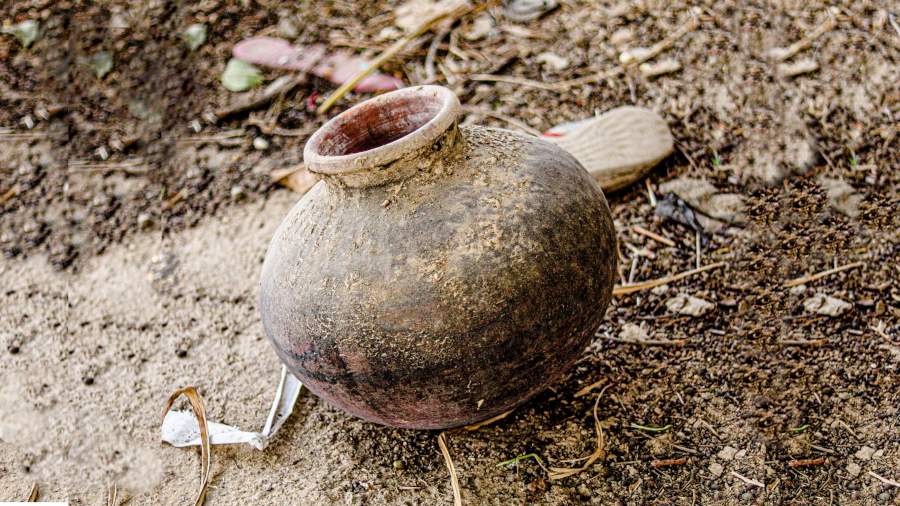
A pot with a rounded bottom as is common in Southeast Asia.

At Sāvatthī.

“A pot without a stand is easy to overturn, but if it has a stand it’s hard to overturn. In the same way, a mind without a stand is easy to overturn, but if it has a stand it’s hard to overturn.

And what’s the stand for the mind? It is simply this noble eightfold path, that is: right view, right thought, right speech, right action, right livelihood, right effort, right mindfulness, and right immersion. This is the stand for the mind.

A pot without a stand is easy to overturn, but if it has a stand it’s hard to overturn. In the same way, a mind without a stand is easy to overturn, but if it has a stand it’s hard to overturn.”


Read this translation of Saṁyutta Nikāya 45.27 Kumbhasutta: Pots by Bhikkhu Sujato on SuttaCentral.net. Or read a different translation on SuttaCentral.net or DhammaTalks.org. Or listen on SC-Voice.net. Or explore the Pali on DigitalPaliReader.online.

Or read a translation in Deutsch, Bengali, Español, Indonesian, မြန်မာဘာသာ, Norsk, Português, ру́сский язы́к, සිංහල, ไทย, Tiếng Việt, or 汉语. Learn how to find your language.

SN 45.150 Bījasutta: Seeds

Several small seedlings.

“Bhikkhus, just as whatever kinds of seed and plant life attain to growth, increase, and expansion, all do so based upon the earth, established upon the earth, so too, based upon virtue, established upon virtue, a bhikkhu develops and cultivates the Noble Eightfold Path, and thereby he attains to growth, increase, and expansion in wholesome states.

“And how does a bhikkhu do so? Here, bhikkhus, a bhikkhu develops right view … right intention … right speech … right action … right livelihood … right effort … right mindfulness … right concentration, which is based upon seclusion, dispassion, and cessation, maturing in release. It is in this way, bhikkhus, that a bhikkhu, based upon virtue, established upon virtue, develops and cultivates the Noble Eightfold Path, and thereby attains to growth, increase, and expansion in wholesome states.”


Read this translation of Saṁyutta Nikāya 45.150 Bījasutta: Seeds by Bhikkhu Bodhi on SuttaCentral.net.

SN 45.155 Ākāsasutta: The Sky

Person wearing white walking down a forest path.

“Bhikkhus, just as various winds blow in the sky—easterly winds, westerly winds, northerly winds, southerly winds, dusty winds and dustless winds, cold winds and hot winds, gentle winds and strong winds —so too, when a bhikkhu develops and cultivates the Noble Eightfold Path, then for him

  • the four establishments of mindfulness go to fulfilment by development;
  • the four right strivings go to fulfilment by development;
  • the four bases for spiritual power go to fulfilment by development;
  • the five spiritual faculties go to fulfilment by development;
  • the five powers go to fulfilment by development;
  • the seven factors of enlightenment go to fulfilment by development.

“And how is this so? Here, bhikkhus, a bhikkhu develops right view … right intention … right speech … right action … right livelihood … right effort … right mindfulness … right concentration, which is based upon seclusion, dispassion, and cessation, maturing in release. It is in this way, bhikkhus, that when a bhikkhu develops and cultivates the Noble Eightfold Path, then for him the four establishments of mindfulness … the seven factors of enlightenment go to fulfilment by development.”


Read this translation of Saṁyutta Nikāya 45.155 Ākāsasutta: The Sky by Bhikkhu Bodhi on SuttaCentral.net. Or read a different translation on SuttaCentral.net or DhammaTalks.org. Or listen on SC-Voice.net. Or explore the Pali on DigitalPaliReader.online.

Or read a translation in Deutsch, Bengali, Español, Indonesian, မြန်မာဘာသာ, Norsk, ру́сский язы́к, සිංහල, ไทย, Tiếng Việt, or 汉语. Learn how to find your language.

AN 4.205 Aṭṭhaṅgikasutta: Eightfold

Rack of oil lamps.

“Mendicants, I will teach you a bad person and a worse person, a good person and a better person.

And what is a bad person? It’s someone who has wrong view, wrong thought, wrong speech, wrong action, wrong livelihood, wrong effort, wrong mindfulness, and wrong immersion. This is called a bad person.

And what is a worse person? It’s someone who has wrong view, wrong thought, wrong speech, wrong action, wrong livelihood, wrong effort, wrong mindfulness, and wrong immersion. And they encourage others in these same qualities. This is called a worse person.

And what is a good person? It’s someone who has right view, right thought, right speech, right action, right livelihood, right effort, right mindfulness, and right immersion. This is called a good person.

And what is a better person? It’s someone who has right view, right thought, right speech, right action, right livelihood, right effort, right mindfulness, and right immersion. And they encourage others in these same qualities. This is called a better person.”


Read this translation of Aṅguttara Nikāya 4.205 Aṭṭhaṅgikasutta: Eightfold by Bhikkhu Sujato on SuttaCentral.net. Or listen on PaliAudio.com or SC-Voice.net. Or explore the Pali on DigitalPaliReader.online.

Or read a translation in Čeština, Deutsch, Bengali, Español, Indonesian, မြန်မာဘာသာ, ру́сский язы́к, සිංහල, ไทย, Tiếng Việt, or 汉语. Learn how to find your language.

MN 117 Mahācattārīsakasutta: The Great Forty

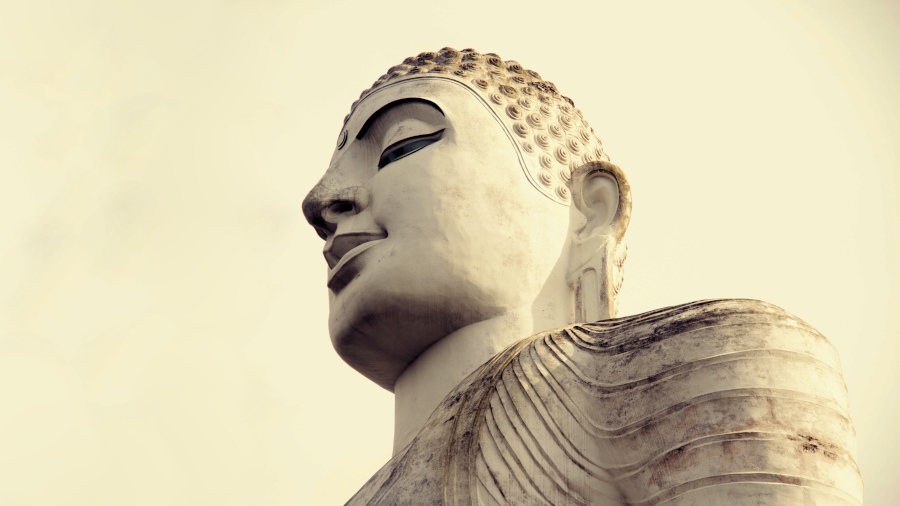
Bust of a giant Buddha statue.

[Note: Today’s sutta is very long, but it’s an important one when studying the Noble Eightfold Path. It includes the definition of two types of right view, right intention, right action, right speech and right livelihood.]

Thus have I heard. On one occasion the Blessed One was living at Sāvatthī in Jeta’s Grove, Anāthapiṇḍika’s Park. There he addressed the bhikkhus thus: “Bhikkhus.”—“Venerable sir,” they replied. The Blessed One said this:

“Bhikkhus, I shall teach you noble right concentration with its supports and its requisites. Listen and attend closely to what I shall say.”—“Yes, venerable sir,” the bhikkhus replied. The Blessed One said this:

“What, bhikkhus, is noble right concentration with its supports and its requisites, that is, right view, right intention, right speech, right action, right livelihood, right effort, and right mindfulness? Unification of mind equipped with these seven factors is called noble right concentration with its supports and its requisites.

View

“Therein, bhikkhus, right view comes first. And how does right view come first? One understands wrong view as wrong view and right view as right view: this is one’s right view.

“And what, bhikkhus, is wrong view? ‘There is nothing given, nothing offered, nothing sacrificed; no fruit or result of good and bad actions; no this world, no other world; no mother, no father; no beings who are reborn spontaneously; no good and virtuous recluses and brahmins in the world who have realised for themselves by direct knowledge and declare this world and the other world.’ This is wrong view.

“And what, bhikkhus, is right view? Right view, I say, is twofold: there is right view that is affected by taints, partaking of merit, ripening in the acquisitions; and there is right view that is noble, taintless, supramundane, a factor of the path.

“And what, bhikkhus, is right view that is affected by the taints, partaking of merit, ripening in the acquisitions? ‘There is what is given and what is offered and what is sacrificed; there is fruit and result of good and bad actions; there is this world and the other world; there is mother and father; there are beings who are reborn spontaneously; there are in the world good and virtuous recluses and brahmins who have realised for themselves by direct knowledge and declare this world and the other world.’ This is right view affected by taints, partaking of merit, ripening in the acquisitions.

“And what, bhikkhus, is right view that is noble, taintless, supramundane, a factor of the path? The wisdom, the faculty of wisdom, the power of wisdom, the investigation-of-states enlightenment factor, the path factor of right view in one whose mind is noble, whose mind is taintless, who possesses the noble path and is developing the noble path: this is right view that is noble, taintless, supramundane, a factor of the path.

“One makes an effort to abandon wrong view and to enter upon right view: this is one’s right effort. Mindfully one abandons wrong view, mindfully one enters upon and abides in right view: this is one’s right mindfulness. Thus these three states run and circle around right view, that is, right view, right effort, and right mindfulness.

Intention

“Therein, bhikkhus, right view comes first. And how does right view come first? One understands wrong intention as wrong intention and right intention as right intention: this is one’s right view.

“And what, bhikkhus, is wrong intention? The intention of sensual desire, the intention of ill will, and the intention of cruelty: this is wrong intention.

“And what, bhikkhus, is right intention? Right intention, I say, is twofold: there is right intention that is affected by taints, partaking of merit, ripening in the acquisitions, and there is right intention that is noble, taintless, supramundane, a factor of the path.

“And what, bhikkhus, is right intention that is affected by taints, partaking of merit, ripening in the acquisitions? The intention of renunciation, the intention of non-ill will, and the intention of non-cruelty: this is right intention that is affected by taints…ripening in the acquisitions.

“And what, bhikkhus, is right intention that is noble, taintless, supramundane, a factor of the path? The thinking, thought, intention, mental absorption, mental fixity, directing of mind, verbal formation in one whose mind is noble, whose mind is taintless, who possesses the noble path and is developing the noble path: this is right intention that is noble…a factor of the path.

“One makes an effort to abandon wrong intention and to enter upon right intention: this is one’s right effort. Mindfully one abandons wrong intention, mindfully one enters upon and abides in right intention: this is one’s right mindfulness. Thus these three states run and circle around right intention, that is, right view, right effort, and right mindfulness.

Speech

“Therein, bhikkhus, right view comes first. And how does right view come first? One understands wrong speech as wrong speech and right speech as right speech: this is one’s right view.

“And what, bhikkhus, is wrong speech? False speech, malicious speech, harsh speech, and gossip: this is wrong speech.

“And what, bhikkhus, is right speech? Right speech, I say, is twofold: there is right speech that is affected by taints, partaking of merit, ripening in the acquisitions; and there is right speech that is noble, taintless, supramundane, a factor of the path.

“And what, bhikkhus, is right speech that is affected by taints, partaking of merit, ripening in the acquisitions? Abstinence from false speech, abstinence from malicious speech, abstinence from harsh speech, abstinence from gossip: this is right speech that is affected by taints…ripening in the acquisitions.

“And what, bhikkhus, is right speech that is noble, taintless, supramundane, a factor of the path? The desisting from the four kinds of verbal misconduct, the abstaining, refraining, abstinence from them in one whose mind is noble, whose mind is taintless, who possesses the noble path and is developing the noble path: this is right speech that is noble…a factor of the path.

“One makes an effort to abandon wrong speech and to enter upon right speech: this is one’s right effort. Mindfully one abandons wrong speech, mindfully one enters upon and abides in right speech: this is one’s right mindfulness. Thus these three states run and circle around right speech, that is, right view, right effort, and right mindfulness.

Action

“Therein, bhikkhus, right view comes first. And how does right view come first? One understands wrong action as wrong action and right action as right action: this is one’s right view.

“And what, bhikkhus, is wrong action? Killing living beings, taking what is not given, and misconduct in sensual pleasures: this is wrong action.

“And what, bhikkhus, is right action? Right action, I say, is twofold: there is right action that is affected by taints, partaking of merit, ripening in the acquisitions; and there is right action that is noble, taintless, supramundane, a factor of the path.

“And what, bhikkhus, is right action that is affected by taints, partaking of merit, ripening in the acquisitions? Abstinence from killing living beings, abstinence from taking what is not given, abstinence from misconduct in sensual pleasures: this is right action that is affected by taints…ripening in the acquisitions.

“And what, bhikkhus, is right action that is noble, taintless, supramundane, a factor of the path? The desisting from the three kinds of bodily misconduct, the abstaining, refraining, abstinence from them in one whose mind is noble, whose mind is taintless, who possesses the noble path and is developing the noble path: this is right action that is noble…a factor of the path.

“One makes an effort to abandon wrong action and to enter upon right action: this is one’s right effort. Mindfully one abandons wrong action, mindfully one enters upon and dwells in right action: this is one’s right mindfulness. Thus these three states run and circle around right action, that is, right view, right effort, and right mindfulness.

Livelihood

“Therein, bhikkhus, right view comes first. And how does right view come first? One understands wrong livelihood as wrong livelihood and right livelihood as right livelihood: this is one’s right view.

“And what, bhikkhus, is wrong livelihood? Scheming, talking, hinting, belittling, pursuing gain with gain: this is wrong livelihood.

“And what, bhikkhus, is right livelihood? Right livelihood, I say, is twofold: there is right livelihood that is affected by taints, partaking of merit, ripening in the acquisitions; and there is right livelihood that is noble, taintless, supramundane, a factor of the path.

“And what, bhikkhus, is right livelihood that is affected by taints, partaking of merit, ripening in the acquisitions? Here, bhikkhus, a noble disciple abandons wrong livelihood and gains his living by right livelihood: this is right livelihood that is affected by taints…ripening in the acquisitions.

“And what, bhikkhus, is right livelihood that is noble, taintless, supramundane, a factor of the path? The desisting from wrong livelihood, the abstaining, refraining, abstinence from it in one whose mind is noble, whose mind is taintless, who possesses the noble path and is developing the noble path: this is right livelihood that is noble…a factor of the path.

“One makes an effort to abandon wrong livelihood and to enter upon right livelihood: this is one’s right effort. Mindfully one abandons wrong livelihood, mindfully one enters upon and dwells in right livelihood: this is one’s right mindfulness. Thus these three states run and circle around right livelihood, that is, right view, right effort, and right mindfulness.

The Great Forty

“Therein, bhikkhus, right view comes first. And how does right view come first? In one of right view, right intention comes into being; in one of right intention, right speech comes into being; in one of right speech, right action comes into being; in one of right action, right livelihood comes into being; in one of right livelihood, right effort comes into being; in one of right effort, right mindfulness comes into being; in one of right mindfulness, right concentration comes into being; in one of right concentration, right knowledge comes into being; in one of right knowledge, right deliverance comes into being. Thus, bhikkhus, the path of the disciple in higher training possesses eight factors, the arahant possesses ten factors.

“Therein, bhikkhus, right view comes first. And how does right view come first? In one of right view, wrong view is abolished, and the many evil unwholesome states that originate with wrong view as condition are also abolished, and the many wholesome states that originate with right view as condition come to fulfilment by development.

“In one of right intention, wrong intention is abolished, and the many evil unwholesome states that originate with wrong intention as condition are also abolished, and the many wholesome states that originate with right intention as condition come to fulfilment by development.

“In one of right speech, wrong speech is abolished…In one of right action, wrong action is abolished…In one of right livelihood, wrong livelihood is abolished …In one of right effort, wrong effort is abolished…In one of right mindfulness, wrong mindfulness is abolished…In one of right concentration, wrong concentration is abolished…In one of right knowledge, wrong knowledge is abolished…In one of right deliverance, wrong deliverance is abolished, and the many evil unwholesome states that originate with wrong deliverance as condition are also abolished, and the many wholesome states that originate with right deliverance as condition come to fulfilment by development.

“Thus, bhikkhus, there are twenty factors on the side of the wholesome, and twenty factors on the side of the unwholesome. This Dhamma discourse on the Great Forty has been set rolling and cannot be stopped by any recluse or brahmin or god or Māra or Brahmā or anyone in the world.

“Bhikkhus, if any recluse or brahmin thinks that this Dhamma discourse on the Great Forty should be censured and rejected, then there are ten legitimate deductions from his assertions that would provide grounds for censuring him here and now. If that worthy one censures right view, then he would honour and praise those recluses and brahmins who are of wrong view. If that worthy one censures right intention, then he would honour and praise those recluses and brahmins who are of wrong intention. If that worthy one censures right speech… right action…right livelihood…right effort…right mindfulness…right concentration…right knowledge…right deliverance, then he would honour and praise those recluses and brahmins who are of wrong deliverance. If any recluse or brahmin thinks that this Dhamma discourse on the Great Forty should be censured and rejected, then these are ten legitimate deductions from his assertions that would provide grounds for censuring him here and now.

“Bhikkhus, even those teachers from Okkala, Vassa and Bhañña, who held the doctrine of non-causality, the doctrine of non-doing, and the doctrine of nihilism, would not think that this Dhamma discourse on the Great Forty should be censured and rejected. Why is that? For fear of blame, attack, and confutation.”

That is what the Blessed One said. The bhikkhus were satisfied and delighted in the Blessed One’s words.


Read this translation of Majjhima Nikāya 117 Mahācattārīsakasutta: The Great Forty by Bhikkhu Bodhi on SuttaCentral.net. Or read a different translation on SuttaCentral.net or DhammaTalks.org. Or listen on PaliAudio.com or SC-Voice.net. Or explore the Pali on DigitalPaliReader.online.

Or read a translation in Lietuvių Kalba, Bengali, Català, Deutsch, Español, Français, हिन्दी, Magyar, Indonesian, Italiano, မြန်မာဘာသာ, Nederlands, Norsk, Português, ру́сский язы́к, සිංහල, Srpski, ไทย, Tiếng Việt, or 汉语. Learn how to find your language.

AN 3.62 Bhayasutta: Perils

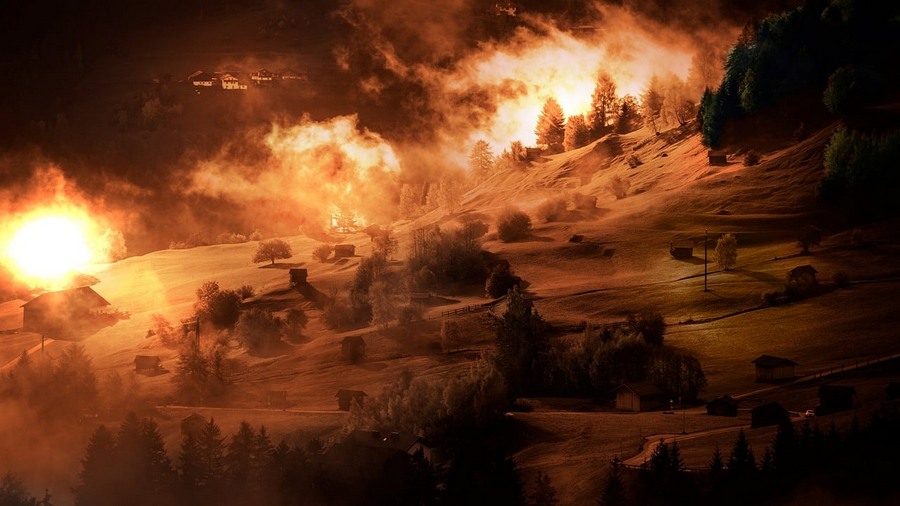
Hillside with houses on fire.

“Bhikkhus, the uninstructed worldling speaks of these three perils that separate mother and son. What three?

(1) “There comes a time when a great conflagration arises. When the great conflagration has arisen, it burns up villages, towns, and cities. When villages, towns, and cities are burning up, the mother does not find her son and the son does not find his mother. This is the first peril that separates mother and son of which the uninstructed worldling speaks.

(2) “Again, there comes a time when a great rain cloud arises. When the great rain cloud has arisen, a great deluge takes place. When the great deluge takes place, villages, towns, and cities are swept away. When villages, towns, and cities are being swept away, the mother does not find her son and the son does not find his mother. This is the second peril that separates mother and son of which the uninstructed worldling speaks.

(3) “Again, there comes a time of perilous turbulence in the wilderness, when the people of the countryside, mounted on their vehicles, flee on all sides. When there is perilous turbulence in the wilderness, and the people of the countryside, mounted on their vehicles, are fleeing on all sides, the mother does not find her son and the son does not find his mother. This is the third peril that separates mother and son of which the uninstructed worldling speaks.

“These are the three perils that separate mother and son of which the uninstructed worldling speaks.

“There are, bhikkhus, these three perils when mother and son reconnect that the uninstructed worldling speaks of as perils that separate mother and son. What three?

(1) “There comes a time when a great conflagration arises. When the great conflagration has arisen, it burns up villages, towns, and cities. When villages, towns, and cities are burning up, there is sometimes an occasion when the mother finds her son and the son finds his mother. This is the first peril when mother and son reconnect that the uninstructed worldling speaks of as a peril that separates mother and son.

(2) “Again, there comes a time when a great rain cloud arises. When the great rain cloud has arisen, a great deluge takes place. When the great deluge takes place, villages, towns, and cities are swept away. When villages, towns, and cities are being swept away, there is sometimes an occasion when the mother finds her son and the son finds his mother. This is the second peril when mother and son reconnect that the uninstructed worldling speaks of as a peril that separates mother and son.

(3) “Again, there comes a time of perilous turbulence in the wilderness, when the people of the countryside, mounted on their vehicles, flee on all sides. When there is perilous turbulence in the wilderness, and the people of the countryside, mounted on their vehicles, are fleeing on all sides, there is sometimes an occasion when the mother finds her son and the son finds his mother. This is the third peril when mother and son reconnect that the uninstructed worldling speaks of as a peril that separates mother and son.

“These are the three perils when mother and son reconnect that the uninstructed worldling speak of as perils that separate mother and son.

“There are, bhikkhus, these three perils that separate mother and son. What three? The peril of old age, the peril of illness, and the peril of death.

(1) “When the son is growing old, the mother cannot fulfill her wish: ‘Let me grow old, but may my son not grow old!’ And when the mother is growing old, the son cannot fulfill his wish: ‘Let me grow old, but may my mother not grow old!’

(2) “When the son has fallen ill, the mother cannot fulfill her wish: ‘Let me fall ill, but may my son not fall ill!’ And when the mother has fallen ill, the son cannot fulfill his wish: ‘Let me fall ill, but may my mother not fall ill!’

(3) “When the son is dying, the mother cannot fulfill her wish: ‘Let me die, but may my son not die!’ And when the mother is dying, the son cannot fulfill his wish: ‘Let me die, but may my mother not die!’

“These are the three perils that separate mother and son.

There is a path, bhikkhus, there is a way that leads to the abandoning and overcoming of these three perils when mother and son reconnect and of these three perils that separate mother and son. And what is the path and way? It is just this noble eightfold path; that is, right view, right intention, right speech, right action, right livelihood, right effort, right mindfulness, and right concentration. This is the path and way that leads to the abandoning and overcoming of these three perils when mother and son reconnect and of these three perils that separate mother and son.”


Read this translation of Aṅguttara Nikāya 3.62 Bhayasutta: Perils by Bhikkhu Bodhi on SuttaCentral.net. Or read a different translation on SuttaCentral.net, or Ancient-Buddhist-Texts.net. Or listen on PaliAudio.com or SC-Voice.net. Or explore the Pali on DigitalPaliReader.online.

Or read a translation in Deutsch, Português, Bengali, Magyar, Indonesian, Italiano, မြန်မာဘာသာ, ру́сский язы́к, සිංහල, ไทย, Tiếng Việt, or 汉语. Learn how to find your language.

SN 45.9 Sūkasutta: The Spike

Hand grabbing stalks of grain.

At Savatthī. “Bhikkhus, suppose a spike of rice or a spike of barley were wrongly directed and were pressed upon by the hand or the foot. That it could pierce the hand or the foot and draw blood: this is impossible. For what reason? Because the spike is wrongly directed. So too, bhikkhus, that a bhikkhu with a wrongly directed view, with a wrongly directed development of the path, could pierce ignorance, arouse true knowledge, and realize Nibbāna: this is impossible. For what reason? Because his view is wrongly directed.

“Bhikkhus, suppose a spike of rice or a spike of barley were rightly directed and were pressed upon by the hand or the foot. That it could pierce the hand or the foot and draw blood: this is possible. For what reason? Because the spike is rightly directed. So too, bhikkhus, that a bhikkhu with a rightly directed view, with a rightly directed development of the path, could pierce ignorance, arouse true knowledge, and realize Nibbāna: this is possible. For what reason? Because his view is rightly directed.

“And how does a bhikkhu do so? Here, bhikkhus, a bhikkhu develops right view, which is based upon seclusion, dispassion, and cessation, maturing in release. He develops right intention … right speech … right action … right livelihood … right effort … right mindfulness … right concentration, which is based upon seclusion, dispassion, and cessation, maturing in release.

“It is in this way, bhikkhus, that a bhikkhu with a rightly directed view, with a rightly directed development of the path, pierces ignorance, arouses true knowledge, and realizes Nibbāna.”


Read this translation of Saṁyutta Nikāya 45.9 Sūkasutta: The Spike by Bhikkhu Bodhi on SuttaCentral.net. Or read a different translation on SuttaCentral.net. Or listen on SC-Voice.net. Or explore the Pali on DigitalPaliReader.online.

Or read a translation in Deutsch, Bengali, Español, Indonesian, မြန်မာဘာသာ, Norsk, ру́сский язы́к, සිංහල, ไทย, Tiếng Việt, or 汉语. Learn how to find your language.

AN 10.104 Bīja Sutta: The Seed

Hand dripping water on a seedling.

“When a person has wrong view, wrong resolve, wrong speech, wrong action, wrong livelihood, wrong effort, wrong mindfulness, wrong concentration, wrong knowledge, & wrong release, then whatever bodily deeds he undertakes in line with that view, whatever verbal deeds… whatever mental deeds he undertakes in line with that view, whatever intentions, whatever determinations, whatever vows, whatever fabrications, all lead to what is disagreeable, unpleasing, unappealing, unprofitable, & stressful. Why is that? Because the view is evil.

“Just as when a neem-tree seed, a bitter creeper seed, or a bitter melon seed is placed in moist soil, whatever nutriment it takes from the soil & the water, all conduces to its bitterness, acridity, & distastefulness. Why is that? Because the seed is evil. In the same way, when a person has wrong view… wrong release, then whatever bodily deeds he undertakes in line with that view, whatever verbal deeds… whatever mental deeds he undertakes in line with that view, whatever intentions, whatever determinations, whatever vows, whatever fabrications, all lead to what is disagreeable, unpleasing, unappealing, unprofitable, & stressful. Why is that? Because the view is evil.

“When a person has right view, right resolve, right speech, right action, right livelihood, right effort, right mindfulness, right concentration, right knowledge, & right release, then whatever bodily deeds he undertakes in line with that view, whatever verbal deeds… whatever mental deeds he undertakes in line with that view, whatever intentions, whatever vows, whatever determinations, whatever fabrications, all lead to what is agreeable, pleasing, charming, profitable, & easeful. Why is that? Because the view is auspicious.

“Just as when a sugar cane seed, a rice grain, or a grape seed is placed in moist soil, whatever nutriment it takes from the soil & the water, all conduces to its sweetness, tastiness, & unalloyed delectability. Why is that? Because the seed is auspicious. In the same way, when a person has right view… right release, then whatever bodily deeds he undertakes in line with that view, whatever verbal deeds… whatever mental deeds he undertakes in line with that view, whatever intentions, whatever vows, whatever determinations, whatever fabrications, all lead to what is agreeable, pleasing, charming, profitable, & easeful. Why is that? Because the view is auspicious.”


Note: “Right resolve” is another translation of “right intention.”

Read this translation of Aṅguttara Nikāya 10.104 Bīja Sutta. The Seed by Bhikkhu Ṭhanissaro on DhammaTalks.org. Or read a different translation on SuttaCentral.net or DhammaTalks.org. Or listen on SC-Voice.net. Or explore the Pali on DigitalPaliReader.online.

Or read a translation in Deutsch, Bengali, Español, Indonesian, Italiano, မြန်မာဘာသာ, Norsk, ру́сский язы́к, සිංහල, ไทย, Tiếng Việt, or 汉语. Learn how to find your language.

MN 126 Bhūmijasutta: With Bhūmija

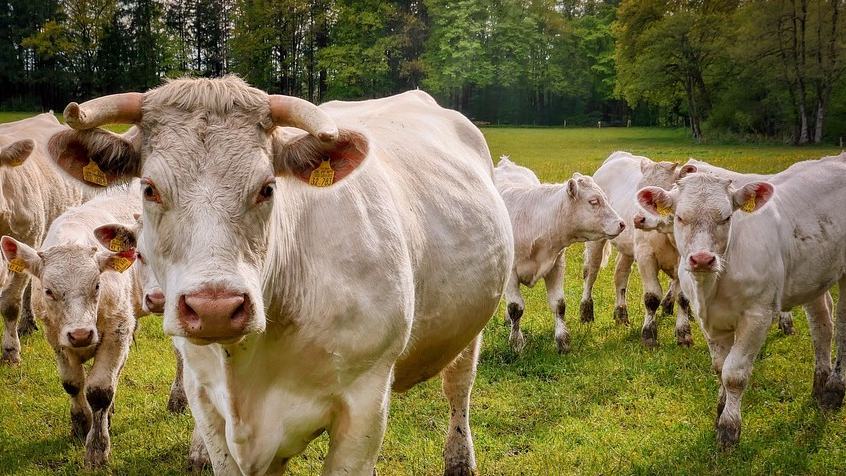
A group of not very happy looking cows.

[Note: Today’s sutta is a bit longer than usual, but it’s easy to read.]

So I have heard. At one time the Buddha was staying near Rājagaha, in the Bamboo Grove, the squirrels’ feeding ground.

Then Venerable Bhūmija robed up in the morning and, taking his bowl and robe, went to the home of Prince Jayasena, where he sat on the seat spread out.

Then Jayasena approached and exchanged greetings with him. When the greetings and polite conversation were over, he sat down to one side and said to Bhūmija:

“Master Bhūmija, there are some ascetics and brahmins who have this doctrine and view: ‘If you make a wish and lead the spiritual life, you can’t win the fruit. If you don’t make a wish and lead the spiritual life, you can’t win the fruit. If you both make a wish and don’t make a wish and lead the spiritual life, you can’t win the fruit. If you neither make a wish nor don’t make a wish and lead the spiritual life, you can’t win the fruit.’ What does Master Bhūmija’s Teacher say about this? How does he explain it?”

“Prince, I haven’t heard and learned this in the presence of the Buddha. But it’s possible that he might explain it like this: ‘If you lead the spiritual life irrationally, you can’t win the fruit, regardless of whether you make a wish, you don’t make a wish, you both do and do not make a wish, or you neither do nor don’t make a wish. But if you lead the spiritual life rationally, you can win the fruit, regardless of whether you make a wish, you don’t make a wish, you both do and do not make a wish, or you neither do nor don’t make a wish.’ I haven’t heard and learned this in the presence of the Buddha. But it’s possible that he might explain it like that.”

“If that’s what your teacher says, Master Bhūmija, he clearly stands head and shoulders above all the various other ascetics and brahmins.” Then Prince Jayasena served Venerable Bhūmija from his own dish.

Then after the meal, on his return from almsround, Bhūmija went to the Buddha, bowed, sat down to one side, and told him all that had happened, adding: “Answering this way, I trust that I repeated what the Buddha has said, and didn’t misrepresent him with an untruth. I trust my explanation was in line with the teaching, and that there are no legitimate grounds for rebuke or criticism.”

“Indeed, Bhūmija, in answering this way you repeated what I’ve said, and didn’t misrepresent me with an untruth. Your explanation was in line with the teaching, and there are no legitimate grounds for rebuke or criticism.

There are some ascetics and brahmins who have wrong view, wrong thought, wrong speech, wrong action, wrong livelihood, wrong effort, wrong mindfulness, and wrong immersion. If they lead the spiritual life, they can’t win the fruit, regardless of whether they make a wish, they don’t make a wish, they both do and do not make a wish, or they neither do nor don’t make a wish. Why is that? Because that’s an irrational way to win the fruit.

Suppose there was a person in need of oil. While wandering in search of oil, they tried heaping sand in a bucket, sprinkling it thoroughly with water, and pressing it out. But by doing this, they couldn’t extract any oil, regardless of whether they made a wish, didn’t make a wish, both did and did not make a wish, or neither did nor did not make a wish. Why is that? Because that’s an irrational way to extract oil.

And so it is for any ascetics and brahmins who have wrong view, wrong thought, wrong speech, wrong action, wrong livelihood, wrong effort, wrong mindfulness, and wrong immersion. If they lead the spiritual life, they can’t win the fruit, regardless of whether or not they make a wish. Why is that? Because that’s an irrational way to win the fruit.

Suppose there was a person in need of milk. While wandering in search of milk, they tried pulling the horn of a newly-calved cow. But by doing this, they couldn’t get any milk, regardless of whether they made a wish, didn’t make a wish, both did and did not make a wish, or neither did nor did not make a wish. Why is that? Because that’s an irrational way to get milk.

And so it is for any ascetics and brahmins who have wrong view … Because that’s an irrational way to win the fruit.

Suppose there was a person in need of butter. While wandering in search of butter, they tried pouring water into a pot and churning it with a stick. But by doing this, they couldn’t produce any butter, regardless of whether they made a wish, didn’t make a wish, both did and did not make a wish, or neither did nor did not make a wish. Why is that? Because that’s an irrational way to produce butter.

And so it is for any ascetics and brahmins who have wrong view … Because that’s an irrational way to win the fruit.

Suppose there was a person in need of fire. While wandering in search of fire, they tried drilling a green, sappy log with a drill-stick. But by doing this, they couldn’t start a fire, regardless of whether they made a wish, didn’t make a wish, both did and did not make a wish, or neither did nor did not make a wish. Why is that? Because that’s an irrational way to start a fire.

And so it is for any ascetics and brahmins who have wrong view … Because that’s an irrational way to win the fruit.

There are some ascetics and brahmins who have right view, right thought, right speech, right action, right livelihood, right effort, right mindfulness, and right immersion. If they lead the spiritual life, they can win the fruit, regardless of whether they make a wish, they don’t make a wish, they both do and do not make a wish, or they neither do nor do not make a wish. Why is that? Because that’s a rational way to win the fruit.

Suppose there was a person in need of oil. While wandering in search of oil, they tried heaping sesame flour in a bucket, sprinkling it thoroughly with water, and pressing it out. By doing this, they could extract oil, regardless of whether they made a wish, didn’t make a wish, both did and did not make a wish, or neither did nor did not make a wish. Why is that? Because that’s a rational way to extract oil.

And so it is for any ascetics and brahmins who have right view … Because that’s a rational way to win the fruit.

Suppose there was a person in need of milk. While wandering in search of milk, they tried pulling the udder of a newly-calved cow. By doing this, they could get milk, regardless of whether they made a wish, didn’t make a wish, both did and did not make a wish, or neither did nor did not make a wish. Why is that? Because that’s a rational way to get milk.

And so it is for any ascetics and brahmins who have right view … Because that’s a rational way to win the fruit.

Suppose there was a person in need of butter. While wandering in search of butter, they tried pouring curds into a pot and churning them with a stick. By doing this, they could produce butter, regardless of whether they made a wish, didn’t make a wish, both did and did not make a wish, or neither did nor did not make a wish. Why is that? Because that’s a rational way to produce butter.

And so it is for any ascetics and brahmins who have right view … Because that’s a rational way to win the fruit.

Suppose there was a person in need of fire. While wandering in search of fire, they tried drilling a dried up, withered log with a drill-stick. By doing this, they could start a fire, regardless of whether they made a wish, didn’t make a wish, both did and did not make a wish, or neither did nor did not make a wish. Why is that? Because that’s a rational way to start a fire.

And so it is for any ascetics and brahmins who have right view … Because that’s a rational way to win the fruit.

Bhūmija, it wouldn’t be surprising if, had these four similes occurred to you, Prince Jayasena would have gained confidence in you and shown his confidence.”

“But sir, how could these four similes have occurred to me as they did to the Buddha, since they were neither supernaturally inspired, nor learned before in the past?”

That is what the Buddha said. Satisfied, Venerable Bhūmija was happy with what the Buddha said.


Read this translation of Majjhima Nikāya 126 Bhūmijasutta: With Bhūmija by Bhikkhu Sujato on SuttaCentral.net. Or read a different translation on DhammaTalks.org. Or listen on PaliAudio.com or SC-Voice.net. Or explore the Pali on DigitalPaliReader.online.

Or read a translation in Bengali, Deutsch, Español, Français, हिन्दी, Indonesian, Italiano, မြန်မာဘာသာ, Norsk, Português, ру́сский язы́к, සිංහල, Srpski, ไทย, Tiếng Việt, or 汉语. Learn how to find your language.

SN 45.8 Vibhaṅgasutta: Analysis

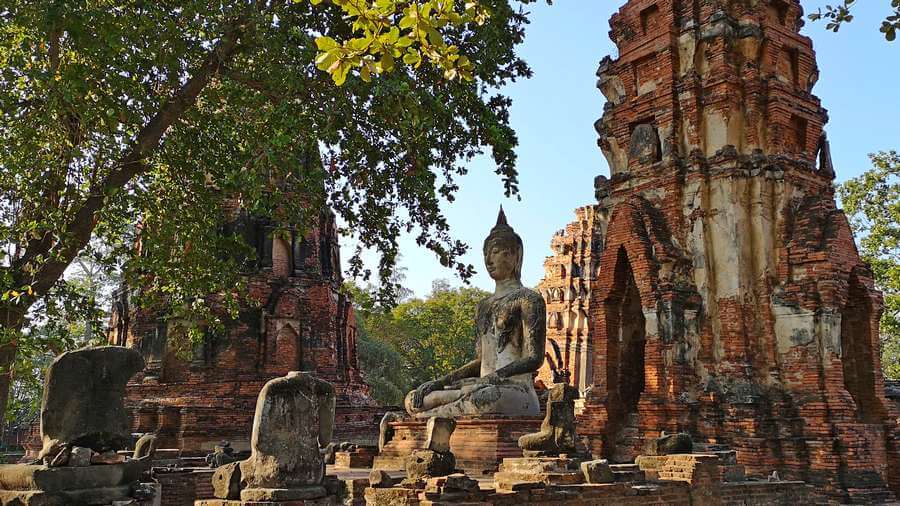
Ancient Buddhist ruins with Buddha statues.

At Savatthī. “Bhikkhus, I will teach you the Noble Eightfold Path and I will analyse it for you. Listen to that and attend closely, I will speak.”

“Yes, venerable sir,” those bhikkhus replied. The Blessed One said this:

“And what, bhikkhus, is the Noble Eightfold Path? Right view, right intention, right speech, right action, right livelihood, right effort, right mindfulness, right concentration.

“And what, bhikkhus, is right view? Knowledge of suffering, knowledge of the origin of suffering, knowledge of the cessation of suffering, knowledge of the way leading to the cessation of suffering: this is called right view.

“And what, bhikkhus, is right intention? Intention of renunciation, intention of non-ill will, intention of harmlessness: this is called right intention.

“And what, bhikkhus, is right speech? Abstinence from false speech, abstinence from divisive speech, abstinence from harsh speech, abstinence from idle chatter: this is called right speech.

“And what, bhikkhus, is right action? Abstinence from the destruction of life, abstinence from taking what is not given, abstinence from sexual misconduct: this is called right action.

“And what, bhikkhus, is right livelihood? Here a noble disciple, having abandoned a wrong mode of livelihood, earns his living by a right livelihood: this is called right livelihood.

“And what, bhikkhus, is right effort? Here, bhikkhus, a bhikkhu generates desire for the nonarising of unarisen evil unwholesome states; he makes an effort, arouses energy, applies his mind, and strives. He generates desire for the abandoning of arisen evil unwholesome states…. He generates desire for the arising of unarisen wholesome states…. He generates desire for the maintenance of arisen wholesome states, for their nondecay, increase, expansion, and fulfilment by development; he makes an effort, arouses energy, applies his mind, and strives. This is called right effort.

“And what, bhikkhus is right mindfulness? Here, bhikkhus, a bhikkhu dwells contemplating the body in the body, ardent, clearly comprehending, mindful, having removed covetousness and displeasure in regard to the world. He dwells contemplating feelings in feelings, ardent, clearly comprehending, mindful, having removed covetousness and displeasure in regard to the world. He dwells contemplating mind in mind, ardent, clearly comprehending, mindful, having removed covetousness and displeasure in regard to the world. He dwells contemplating phenomena in phenomena, ardent, clearly comprehending, mindful, having removed covetousness and displeasure in regard to the world. This is called right mindfulness.

“And what, bhikkhus, is right concentration? Here, bhikkhus, secluded from sensual pleasures, secluded from unwholesome states, a bhikkhu enters and dwells in the first jhana, which is accompanied by thought and examination, with rapture and happiness born of seclusion. With the subsiding of thought and examination, he enters and dwells in the second jhana, which has internal confidence and unification of mind, is without thought and examination, and has rapture and happiness born of concentration. With the fading away as well of rapture, he dwells equanimous and, mindful and clearly comprehending, he experiences happiness with the body; he enters and dwells in the third jhana of which the noble ones declare: ‘He is equanimous, mindful, one who dwells happily.’ With the abandoning of pleasure and pain, and with the previous passing away of joy and displeasure, he enters and dwells in the fourth jhana, which is neither painful nor pleasant and includes the purification of mindfulness by equanimity. This is called right concentration.”


Read this translation of Saṁyutta Nikāya 45.8 Vibhaṅgasutta: Analysis by Bhikkhu Bodhi on SuttaCentral.net. Or read a different translation on SuttaCentral.net or DhammaTalks.org. Or listen on SC-Voice.net. Or explore the Pali on DigitalPaliReader.online.

Or read a translation in Deutsch, Lietuvių Kalba, Bengali, Español, Français, Indonesian, Italiano, မြန်မာဘာသာ, Norsk, Português, ру́сский язы́к, සිංහල, Slovenščina, Svenska, தமிழ், ไทย, Tiếng Việt, or 汉语. Learn how to find your language.

SN 45.14 Paṭhamauppādasutta: Arising (1st)

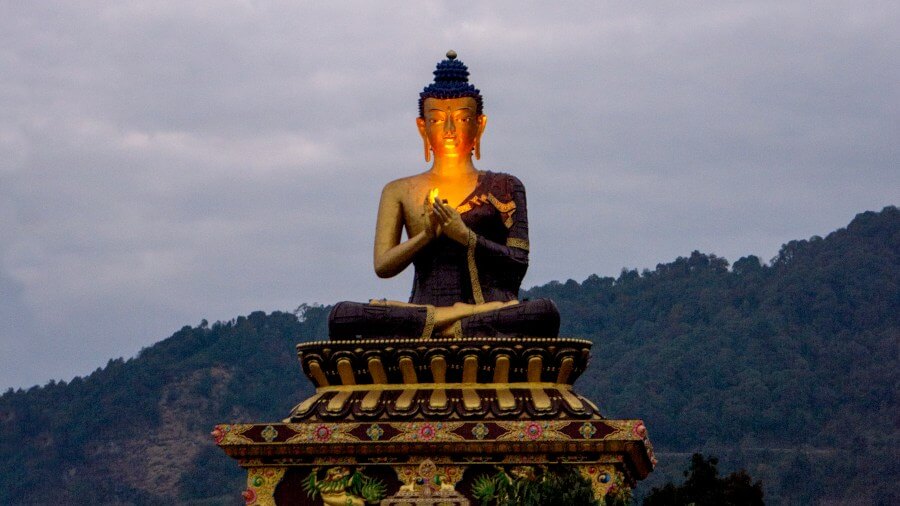
Large painted Buddha statue at dusk with a light in his hands.

At Sāvatthī.

“Mendicants, these eight things don’t arise to be developed and cultivated except when a Realized One, a perfected one, a fully awakened Buddha has appeared. What eight? They are: right view, right thought, right speech, right action, right livelihood, right effort, right mindfulness, and right immersion. These eight things don’t arise to be developed and cultivated except when a Realized One, a perfected one, a fully awakened Buddha has appeared.”


Read this translation of Saṁyutta Nikāya 45.14 Paṭhamauppādasutta: Arising (1st) by Bhikkhu Sujato on SuttaCentral.net. Or read a different translation on SuttaCentral.net. Or listen on SC-Voice.net. Or explore the Pali on DigitalPaliReader.online.

Or read a translation in Deutsch, Bengali, Español, Indonesian, မြန်မာဘာသာ, Norsk, Português, ру́сский язы́к, සිංහල, ไทย, Tiếng Việt, or 汉语. Learn how to find your language.

MN 139 From… Araṇavibhaṅgasutta: The Analysis of Non-Conflict—Just Teach Dhamma

Large gold Buddha statue rising above trees with a Dhamma Wheel behind his head.

[Note: In this excerpt, the Buddha takes the teaching on avoiding the extremes of self mortification and self indulgence (which he gave in his very first sermon) and illuminates how we can think about these teachings without criticizing or praising others. In this way we can avoid conflict while still teaching the Dhamma. It’s a wonderful reminder of how he was able to talk about good and bad qualities without personally criticizing people. This is just one of many cases of the Buddha showing his “supreme trainer of persons to be tamed” quality.]

‘Don’t indulge in sensual pleasures, which are low, crude, ordinary, ignoble, and pointless. And don’t indulge in self-mortification, which is painful, ignoble, and pointless.’ That’s what I said, but why did I say it?

Pleasure linked to sensuality is low, crude, ordinary, ignoble, and pointless. Indulging in such happiness is a principle beset by pain, harm, stress, and fever, and it is the wrong way. Breaking off such indulgence is a principle free of pain, harm, stress, and fever, and it is the right way.

Indulging in self-mortification is painful, ignoble, and pointless. It is a principle beset by pain, harm, stress, and fever, and it is the wrong way. Breaking off such indulgence is a principle free of pain, harm, stress, and fever, and it is the right way.

‘Don’t indulge in sensual pleasures, which are low, crude, ordinary, ignoble, and pointless. And don’t indulge in self-mortification, which is painful, ignoble, and pointless.’ That’s what I said, and this is why I said it.

· • ·

‘Avoiding these two extremes, the Realized One woke up by understanding the middle way of practice, which gives vision and knowledge, and leads to peace, direct knowledge, awakening, and extinguishment.’ That’s what I said, but why did I say it? It is simply this noble eightfold path, that is: right view, right thought, right speech, right action, right livelihood, right effort, right mindfulness, and right immersion.

‘Avoiding these two extremes, the Realized One woke up by understanding the middle way of practice, which gives vision and knowledge, and leads to peace, direct knowledge, awakening, and extinguishment.’ That’s what I said, and this is why I said it.

· • ·

‘Know what it means to flatter and to rebuke. Knowing these, avoid them, and just teach Dhamma.’ That’s what I said, but why did I say it? And how is there flattering and rebuking without teaching Dhamma?

In speaking like this, some are rebuked: ‘Pleasure linked to sensuality is low, crude, ordinary, ignoble, and pointless. All those who indulge in such happiness are beset by pain, harm, stress, and fever, and they are practicing the wrong way.’

In speaking like this, some are flattered: ‘Pleasure linked to sensuality is low, crude, ordinary, ignoble, and pointless. All those who have broken off such indulgence are free of pain, harm, stress, and fever, and they are practicing the right way.’

In speaking like this, some are rebuked: ‘Indulging in self-mortification is painful, ignoble, and pointless. All those who indulge in it are beset by pain, harm, stress, and fever, and they are practicing the wrong way.’

In speaking like this, some are flattered: ‘Indulging in self-mortification is painful, ignoble, and pointless. All those who have broken off such indulgence are free of pain, harm, stress, and fever, and they are practicing the right way.’

In speaking like this, some are rebuked: ‘All those who have not given up the fetters of rebirth are beset by pain, harm, stress, and fever, and they are practicing the wrong way.’

In speaking like this, some are flattered: ‘All those who have given up the fetters of rebirth are free of pain, harm, stress, and fever, and they are practicing the right way.’ That’s how there is flattering and rebuking without teaching Dhamma.

· • ·

And how is there neither flattering nor rebuking, and just teaching Dhamma? You don’t say: ‘Pleasure linked to sensuality is low, crude, ordinary, ignoble, and pointless. All those who indulge in such happiness are beset by pain, harm, stress, and fever, and they are practicing the wrong way.’ Rather, by saying this you just teach Dhamma: ‘The indulgence is a principle beset by pain, harm, stress, and fever, and it is the wrong way.’

You don’t say: ‘Pleasure linked to sensuality is low, crude, ordinary, ignoble, and pointless. All those who have broken off such indulgence are free of pain, harm, stress, and fever, and they are practicing the right way.’ Rather, by saying this you just teach Dhamma: ‘Breaking off the indulgence is a principle free of pain, harm, stress, and fever, and it is the right way.’

You don’t say: ‘Indulging in self-mortification is painful, ignoble, and pointless. All those who indulge in it are beset by pain, harm, stress, and fever, and they are practicing the wrong way.’ Rather, by saying this you just teach Dhamma: ‘The indulgence is a principle beset by pain, harm, stress, and fever, and it is the wrong way.’

You don’t say: ‘Indulging in self-mortification is painful, ignoble, and pointless. All those who have broken off such indulgence are free of pain, harm, stress, and fever, and they are practicing the right way.’ Rather, by saying this you just teach Dhamma: ‘Breaking off the indulgence is a principle free of pain, harm, stress, and fever, and it is the right way.’

You don’t say: ‘All those who have not given up the fetters of rebirth are beset by pain, harm, stress, and fever, and they are practicing the wrong way.’ Rather, by saying this you just teach Dhamma: ‘When the fetter of rebirth is not given up, rebirth is also not given up.’

You don’t say: ‘All those who have given up the fetters of rebirth are free of pain, harm, stress, and fever, and they are practicing the right way.’ Rather, by saying this you just teach Dhamma: ‘When the fetter of rebirth is given up, rebirth is also given up.’

That’s how there is neither flattering nor rebuking, and just teaching Dhamma. ‘Know what it means to flatter and to rebuke. Knowing these, avoid them, and just teach Dhamma.’ That’s what I said, and this is why I said it.


Read the entire translation of Majjhima Nikāya 139 Araṇavibhaṅgasutta: The Analysis of Non-Conflict by Bhikkhu Sujato on SuttaCentral.net. Or read a different translation on SuttaCentral.net, SuttaFriends.org, DhammaTalks.org, Ancient-Buddhist-Texts.net or AccessToInsight.org. Or listen on PaliAudio.com or SC-Voice.net. Or explore the Pali on DigitalPaliReader.online.

Or read a translation in Deutsch, Français, Lietuvių Kalba, Bengali, Català, Čeština, Español, Suomi, Hebrew, Magyar, Indonesian, Italiano, မြန်မာဘာသာ, Nederlands, Norsk, Português, ру́сский язы́к, සිංහල, Slovenščina, Svenska, தமிழ், ไทย, Tiếng Việt, or 汉语. Learn how to find your language.