ReadingFaithfully.org icon Facebook icon Bluesky icon Reddit icon Tumblr icon Mastodon icon RSS icon

SN 12.68 Kosambisutta: Kosambī

An illustration of the view down into a well where the viewer's reflection can be seen in the water below.

[NOTE: It is not possible to know the exact level of attainment of Venerables Saviṭṭha and Narada, but they would at least be stream enterers.]

On one occasion the Venerable Musīla, the Venerable Saviṭṭha, the Venerable Narada, and the Venerable Ānanda were living at Kosambī in Ghosita’s Park.

Then the Venerable Saviṭṭha said to the Venerable Musīla: “Friend Musīla, apart from faith, apart from personal preference, apart from oral tradition, apart from reasoned reflection, apart from acceptance of a view after pondering it, does the Venerable Musīla have personal knowledge thus: ‘With birth as condition, aging-and-death comes to be’?”

“Friend Saviṭṭha, apart from faith, apart from personal preference, apart from oral tradition, apart from reasoned reflection, apart from acceptance of a view after pondering it, I know this, I see this: ‘With birth as condition, aging-and-death comes to be.’”

“Friend Musīla, apart from faith … apart from acceptance of a view after pondering it, does the Venerable Musīla have personal knowledge thus: ‘With existence as condition, birth’?… ‘With ignorance as condition, volitional formations’?”

“Friend Saviṭṭha, apart from faith … apart from acceptance of a view after pondering it, I know this, I see this: ‘With ignorance as condition, volitional formations.’”

“Friend Musīla, apart from faith … apart from acceptance of a view after pondering it, does the Venerable Musīla have personal knowledge: ‘With the cessation of birth comes cessation of aging-and-death’? … … ‘With the cessation of ignorance comes cessation of volitional formations’?”

“Friend Saviṭṭha, apart from faith …. apart from acceptance of a view after pondering it, I know this, I see this: ‘With the cessation of birth comes cessation of aging-and-death.’… ‘With the cessation of ignorance comes cessation of volitional formations.’”

“Friend Musīla, apart from faith, apart from personal preference, apart from oral tradition, apart from reasoned reflection, apart from acceptance of a view after pondering it, does the Venerable Musīla have personal knowledge thus: ‘Nibbāna is the cessation of existence’?”

“Friend Saviṭṭha, apart from faith, apart from personal preference, apart from oral tradition, apart from reasoned reflection, apart from acceptance of a view after pondering it, I know this, I see this: ‘Nibbāna is the cessation of existence.’”

“Then the Venerable Musīla is an arahant, one whose taints are destroyed.”

When this was said, the Venerable Musīla kept silent.

Then the Venerable Narada said to the Venerable Saviṭṭha: “Friend Saviṭṭha, it would be good if I were asked that series of questions. Ask me that series of questions and I will answer you.”

“Then let the Venerable Narada get to answer that series of questions. I will ask the Venerable Narada that series of questions, and let him answer me.”

[Here the Venerable Saviṭṭha asks the Venerable Narada the same series of questions as were addressed to the Venerable Musīla, and he answers in exactly the same way.]

“Then the Venerable Narada is an arahant, one whose taints are destroyed.”

“Friend, though I have clearly seen as it really is with correct wisdom, ‘Nibbāna is the cessation of existence,’ I am not an arahant, one whose taints are destroyed. Suppose, friend, there was a well along a desert road, but it had neither a rope nor a bucket. Then a man would come along, oppressed and afflicted by the heat, tired, parched, and thirsty. He would look down into the well and the knowledge would occur to him, ‘There is water,’ but he would not be able to make bodily contact with it. So too, friend, though I have clearly seen as it really is with correct wisdom, ‘Nibbāna is the cessation of existence,’ I am not an arahant, one whose taints are destroyed.”

When this was said, the Venerable Ānanda asked the Venerable Saviṭṭha: “When he speaks in such a way, friend Saviṭṭha, what would you say about the Venerable Narada?”

“When he speaks in such a way, friend Ānanda, I would not say anything about the Venerable Narada except what is good and favourable.”


Read this translation of Saṁyutta Nikāya 12.68 Kosambisutta: Kosambī by Bhikkhu Bodhi on SuttaCentral.net. Or read a different translation on SuttaCentral.net or DhammaTalks.org. Or listen on PaliAudio.com or SC-Voice.net. Or explore the Pali on DigitalPaliReader.online.

MN 68 From… Naḷakapānasutta: At Naḷakapāna—Declaiming Rebirth

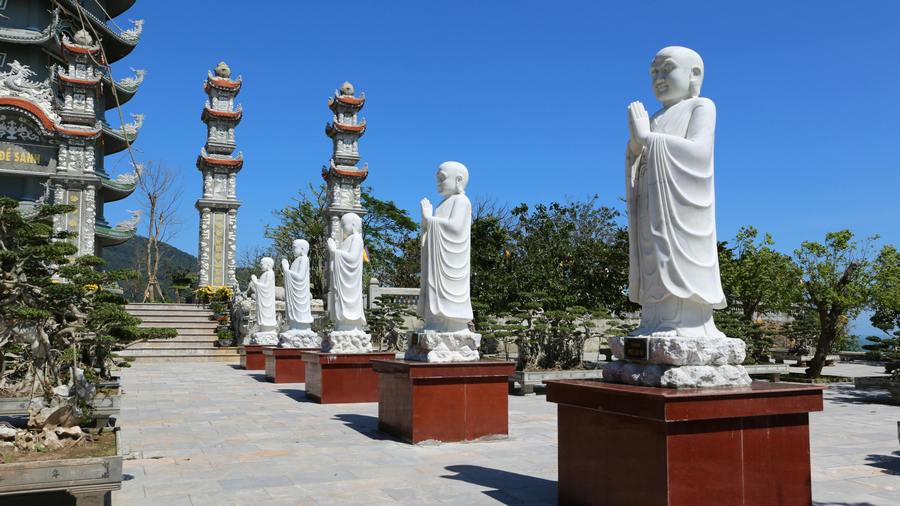
A line of statues of standing Buddhist monastics holding alms bowls.

[NOTE: This is just part of a longer sutta. It is valuable to read the whole thing if you have time.]

…What do you think, Anuruddha and friends? What advantage does the Realized One see in declaring the rebirth of his disciples who have passed away: ‘This one is reborn here, while that one is reborn there’?”

“Our teachings are rooted in the Buddha. He is our guide and our refuge. Sir, may the Buddha himself please clarify the meaning of this. The mendicants will listen and remember it.”

“The Realized One does not declare such things for the sake of deceiving people or flattering them, nor for the benefit of possessions, honor, or popularity, nor thinking, ‘So let people know about me!’ Rather, there are gentlemen of faith who are full of sublime joy and gladness. When they hear that, they apply their minds to that end. That is for their lasting welfare and happiness.

Take a monk who hears this: ‘The monk named so-and-so has passed away. The Buddha has declared that, with the ending of three fetters he’s a stream-enterer, not liable to be reborn in the underworld, bound for awakening.’ And he’s either seen for himself, or heard from someone else, that that venerable had such ethics, such qualities, such wisdom, such meditation, or such freedom. Recollecting that monk’s faith, ethics, learning, generosity, and wisdom, he applies his mind to that end. That too is how a monk lives at ease.

Take a nun who hears this: ‘The nun named so-and-so has passed away. The Buddha has declared that, with the ending of three fetters she’s a stream-enterer, not liable to be reborn in the underworld, bound for awakening.’ And she’s either seen for herself, or heard from someone else, that that sister had such ethics, such qualities, such wisdom, such meditation, or such freedom. Recollecting that nun’s faith, ethics, learning, generosity, and wisdom, she applies her mind to that end. That too is how a nun lives at ease.

Take a layman who hears this: ‘The layman named so-and-so has passed away. The Buddha has declared that, with the ending of three fetters he’s a stream-enterer, not liable to be reborn in the underworld, bound for awakening.’ And he’s either seen for himself, or heard from someone else, that that venerable had such ethics, such qualities, such wisdom, such meditation, or such freedom. Recollecting that layman’s faith, ethics, learning, generosity, and wisdom, he applies his mind to that end. That too is how a layman lives at ease.

Take a laywoman who hears this: ‘The laywoman named so-and-so has passed away. The Buddha has declared that, with the ending of three fetters she’s a stream-enterer, not liable to be reborn in the underworld, bound for awakening.’ And she’s either seen for herself, or heard from someone else, that that sister had such ethics, such qualities, such wisdom, such meditation, or such freedom. Recollecting that laywoman’s faith, ethics, learning, generosity, and wisdom, she applies her mind to that end. That too is how a laywoman lives at ease.

So it’s not for the sake of deceiving people or flattering them, nor for the benefit of possessions, honor, or popularity, nor thinking, ‘So let people know about me!’ that the Realized One declares the rebirth of his disciples who have passed away: ‘This one is reborn here, while that one is reborn there.’ Rather, there are gentlemen of faith who are full of joy and gladness. When they hear that, they apply their minds to that end. That is for their lasting welfare and happiness.”…


Read the entire translation of Majjhima Nikāya 68 Naḷakapānasutta: At Naḷakapāna by Bhikkhu Sujato on SuttaCentral.net. Or listen on PaliAudio.com or SC-Voice.net. Or explore the Pali on DigitalPaliReader.online.

Or read a translation in Deutsch, Русский, বাংলা, Español, Français, हिन्दी, Hrvatski, Bahasa Indonesia, Italiano, 日本語, မြန်မာဘာသာ, Norsk, Português, සිංහල, Slovenščina, ไทย, Tiếng Việt, or 汉语. Learn how to find your language.

AN 6.92 Paṭhamaabhabbaṭṭhānasutta: Things That Can’t Be Done (1st)

Statue of a Buddhist monastic covered with patches of gold leaf.

[NOTE: A “person accomplished in view” refers to someone who is at least a stream enterer.]

“Mendicants, these six things can’t be done. What six? A person accomplished in view can’t live disrespectful and irreverent toward the Teacher, the teaching, the Saṅgha, or the training. They can’t establish their belief on unreliable grounds. And they can’t generate an eighth rebirth. These are the six things that can’t be done.”


Read this translation of Aṅguttara Nikāya 6.92 Paṭhamaabhabbaṭṭhānasutta: Things That Can’t Be Done (1st) by Bhikkhu Sujato on SuttaCentral.net. Or read a different translation on DhammaTalks.org. Or listen on SC-Voice.net. Or explore the Pali on DigitalPaliReader.online.

SN 48.12 Paṭhamasaṁkhittasutta: In Brief (1st)

Small stream with a stone bridge in winter time.

“Mendicants, there are these five faculties. What five? The faculties of faith, energy, mindfulness, immersion, and wisdom. These are the five faculties.

Someone who has completed and fulfilled these five faculties is a perfected one. If they are weaker than that, they’re a non-returner. If they are weaker still, they’re a once-returner. If they are weaker still, they’re a stream-enterer. If they’re weaker still, they’re a follower of the teachings. If they’re weaker still, they’re a follower by faith.”


Read this translation of Saṁyutta Nikāya 48.12 Paṭhamasaṁkhittasutta: In Brief (1st) by Bhikkhu Sujato on SuttaCentral.net. Or listen on SC-Voice.net. Or explore the Pali on DigitalPaliReader.online.

SN 22.109 Sotāpannasutta: A Stream-Enterer

Head of giant Buddha statue on cliff.

At Sāvatthī.

“Mendicants, there are these five grasping aggregates. What five? That is, the grasping aggregates of form, feeling, perception, choices, and consciousness. A noble disciple comes to truly understand these five grasping aggregates’ origin, ending, gratification, drawback, and escape. Such a noble disciple is called a stream-enterer, not liable to be reborn in the underworld, bound for awakening.”


Read this translation of Saṁyutta Nikāya 22.109 Sotāpannasutta: A Stream-Enterer by Bhikkhu Sujato on SuttaCentral.net. Or read a different translation on SuttaCentral.net. Or listen on SC-Voice.net. Or explore the Pali on the Digital Pali Reader.

SN 55.40 Nandiya Sutta: To Nandiya

Looking up at a large white Buddha statue.

On one occasion the Blessed One was staying among the Sakyans near Kapilavatthu in the Banyan Park. Then Nandiya the Sakyan went to the Blessed One and, on arrival, having bowed down to him, sat to one side. As he was sitting there he said to the Blessed One, “Lord, the disciple of the noble ones in whom the factors of stream entry are altogether & in every way lacking: Is he called a disciple of the noble ones who lives heedlessly?

“Nandiya, the person in whom the factors of stream entry are altogether & in every way lacking I call an outsider, one who stands in the faction of the run-of-the-mill. But as to how a disciple of the noble ones dwells in heedlessness and dwells in heedfulness, listen well and pay attention, I will speak.”

“As you say, lord,” Nandiya the Sakyan responded to the Blessed One.

The Blessed One said, “And how, Nandiya, does a disciple of the noble ones dwell in heedlessness? There is the case where a disciple of the noble ones is endowed with verified confidence in the Awakened One: ‘Indeed, the Blessed One is worthy & rightly self-awakened, consummate in clear-knowing & conduct, well-gone, an expert with regard to the cosmos, unexcelled trainer of people fit to be tamed, teacher of devas & human beings, awakened, blessed.’ Content with that verified confidence in the Awakened One, he doesn’t exert himself further in solitude by day or seclusion by night. For him, dwelling thus heedlessly, there is no joy. There being no joy, there is no rapture. There being no rapture, there is no calm. There being no calm, he dwells in pain. When pained, the mind doesn’t become concentrated. When the mind is unconcentrated, phenomena don’t become manifest. When phenomena aren’t manifest, he is reckoned simply as one who dwells in heedlessness.

“And further, the disciple of the noble ones is endowed with verified confidence in the Dhamma: ‘The Dhamma is well taught by the Blessed One, to be seen here & now, timeless, inviting verification, pertinent, to be experienced by the observant for themselves.’ Content with that verified confidence in the Dhamma, he doesn’t exert himself further in solitude by day or seclusion by night. For him, dwelling thus heedlessly, there is no joy. There being no joy, there is no rapture. There being no rapture, there is no calm. There being no calm, he dwells in pain. When pained, the mind doesn’t become centered. When the mind is uncentered, phenomena don’t become manifest. When phenomena aren’t manifest, he is reckoned simply as one who dwells in heedlessness.

“And further, the disciple of the noble ones is endowed with verified confidence in the Saṅgha: ‘The Saṅgha of the Blessed One’s disciples who have practiced well… who have practiced straight-forwardly… who have practiced methodically… who have practiced masterfully—in other words, the four types of noble disciples when taken as pairs, the eight when taken as individual types—they are the Saṅgha of the Blessed One’s disciples: deserving of gifts, deserving of hospitality, deserving of offerings, deserving of respect, the incomparable field of merit for the world.’ Content with that verified confidence in the Saṅgha, he doesn’t exert himself further in solitude by day or seclusion by night. For him, dwelling thus heedlessly, there is no joy. There being no joy, there is no rapture. There being no rapture, there is no calm. There being no calm, he dwells in pain. When pained, the mind doesn’t become centered. When the mind is uncentered, phenomena don’t become manifest. When phenomena aren’t manifest, he is reckoned simply as one who dwells in heedlessness.

“And further, the disciple of the noble ones is endowed with virtues that are appealing to the noble ones: untorn, unbroken, unspotted, unsplattered, liberating, praised by the observant, ungrasped at, leading to concentration. Content with those virtues pleasing to the noble ones, he doesn’t exert himself further in solitude by day or seclusion by night. For him, dwelling thus heedlessly, there is no joy. There being no joy, there is no rapture. There being no rapture, there is no calm. There being no calm, he dwells in pain. When pained, the mind doesn’t become centered. When the mind is uncentered, phenomena don’t become manifest. When phenomena aren’t manifest, he is reckoned simply as one who dwells in heedlessness.

“This is how a disciple of the noble ones dwells in heedlessness.

“And how, Nandiya, does a disciple of the noble ones dwell in heedfulness? There is the case where a disciple of the noble ones is endowed with verified confidence in the Awakened One.… Not content with that verified confidence in the Awakened One, he exerts himself further in solitude by day & seclusion by night. For him, dwelling thus heedfully, joy is born. In one who has joy, rapture is born. The body of one enraptured at heart grows calm. When the body is calm, one feels pleasure. Feeling pleasure, the mind becomes centered. When the mind is centered, phenomena become manifest. When phenomena are manifest, he is reckoned as one who dwells in heedfulness.

“And further, the disciple of the noble ones is endowed with verified confidence in the Dhamma.… verified confidence in the Saṅgha… virtues that are appealing to the noble ones: untorn, unbroken, unspotted, unsplattered, liberating, praised by the observant, ungrasped at, leading to concentration. Not content with those virtues pleasing to the noble ones, he exerts himself further in solitude by day & seclusion by night. For him, dwelling thus heedfully, joy is born. In one who has joy, rapture is born. The body of one enraptured at heart grows calm. When the body is calm, one feels pleasure. Feeling pleasure, the mind becomes centered. When the mind is centered, phenomena become manifest. When phenomena are manifest, he is reckoned as one who dwells in heedfulness.

“This is how a disciple of the noble ones dwells in heedfulness.”


Read this translation of Saṁyutta Nikāya 55.40 Nandiya Sutta. To Nandiya by Bhikkhu Ṭhanissaro on DhammaTalks.org. Or read a different translation on SuttaCentral.net, or SuttaFriends.org. Or listen on SC-Voice.net. Or explore the Pali on DigitalPaliReader.online.

SN 55.17 Dutiya Mittāmacca Sutta: Friends 2

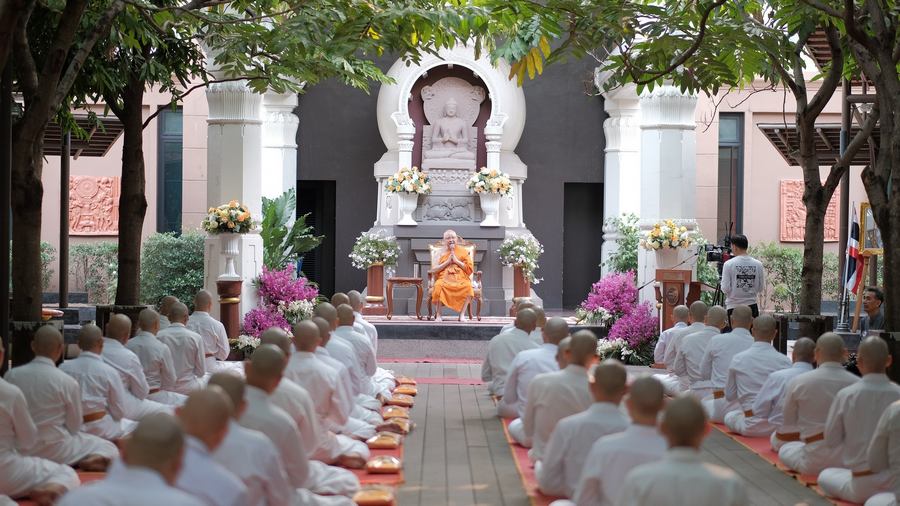
Buddhist monastic teaching a large group of people wearing white.

“Monks, you have friends, relatives and family members who you have sympathy for. If they listen to your advice, you should establish them in the four factors of stream-entry. You should encourage them to have the four factors of stream-entry. What four?

“You should establish them and encourage them to have unshakable confidence in the Buddha…

“Monks, there might be change in the four primary elements—earth, water, fire, and air—but a noble disciple with unshakable confidence in the Buddha would never change. In this context, ‘change’ means that such a noble disciple will be reborn in hell, the animal world, or the ghost world: this is not possible.

“You should establish them and encourage them to have the unshakable confidence in the Dhamma…

“You should establish them and encourage them to have the unshakable confidence in the Saṅgha…

“You should establish them and encourage them to have virtue loved by the noble ones… leading to concentration.

“Monks, there might be change in the four primary elements—earth, water, fire, and air—but a noble disciple with the ethical conduct loved by the noble ones would never change. In this context, ‘change’ means that such a noble disciple will be reborn in hell, the animal world, or the ghost world: this is not possible.

“Monks, you should establish your friends, relatives and family members who you have sympathy for, in these four factors of stream-entry. If they listen to your advice, you should encourage them to have these four factors of stream-entry.”


Read this translation of Saṁyutta Nikāya 55.17 Dutiya Mittāmacca Sutta: Friends 2 by Ven. Kiribathgoda Gnananda Thero on SuttaFriends.org. Or read a different translation on SuttaCentral.net. Or listen on SC-Voice.net. Or explore the Pali on DigitalPaliReader.online.