ReadingFaithfully.org icon Facebook icon Bluesky icon Reddit icon Tumblr icon Mastodon icon RSS icon

SN 46.16 Tatiyagilānasutta: Ill (3)

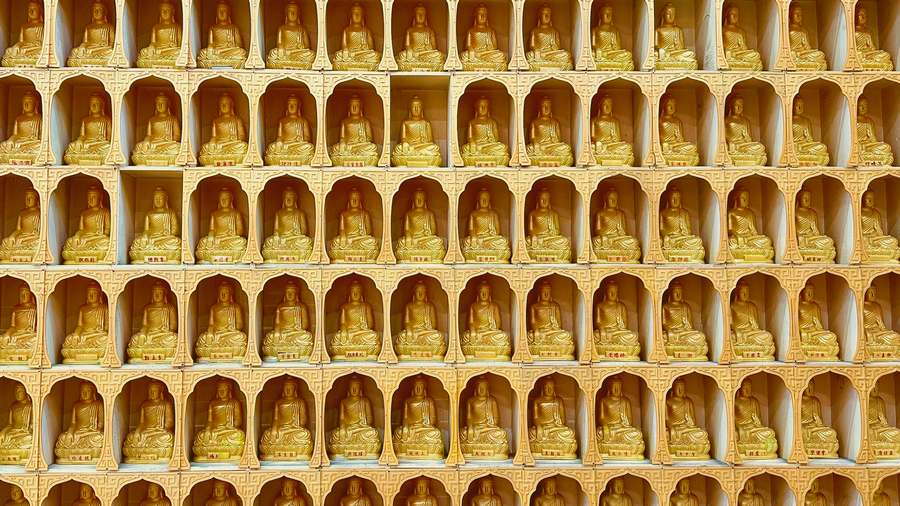
Wall with many small Buddha statues in nooks.

On one occasion the Blessed One was dwelling at Rajagaha in the Bamboo Grove, the Squirrel Sanctuary. Now on that occasion the Blessed One was sick, afflicted, gravely ill. Then the Venerable Mahacunda approached the Blessed One, paid homage to him, and sat down to one side. The Blessed One then said to the Venerable Mahacunda:

“Recite the factors of enlightenment, Cunda.”

“These seven factors of enlightenment, venerable sir, have been rightly expounded by the Blessed One; when developed and cultivated, they lead to direct knowledge, to enlightenment, to Nibbāna. What seven? The enlightenment factor of mindfulness has been rightly expounded by the Blessed One; when developed and cultivated, it leads to direct knowledge, to enlightenment, to Nibbāna…. The enlightenment factor of discrimination of states … The enlightenment factor of energy … The enlightenment factor of rapture … The enlightenment factor of tranquillity … The enlightenment factor of concentration …The enlightenment factor of equanimity has been rightly expounded by the Blessed One; when developed and cultivated, it leads to direct knowledge, to enlightenment, to Nibbāna. These seven factors of enlightenment, venerable sir, have been rightly expounded by the Blessed One; when developed and cultivated, they lead to direct knowledge, to enlightenment, to Nibbāna.”

“Surely, Cunda, they are factors of enlightenment! Surely, Cunda, they are factors of enlightenment!”

This is what the Venerable Mahacunda said. The Teacher approved. And the Blessed One recovered from that illness. In such a way the Blessed One was cured of his illness.


Read this translation of Saṁyutta Nikāya 46.16 Tatiyagilānasutta: Ill (3) by Bhikkhu Bodhi on SuttaCentral.net. Or read a different translation on SuttaCentral.net or AccessToInsight.org. Or listen on SC-Voice.net. Or explore the Pali on DigitalPaliReader.online.

Or read a translation in Deutsch, বাংলা, Español, Bahasa Indonesia, Italiano, 日本語, မြန်မာဘာသာ, Norsk, Português, Русский, සිංහල, Svenska, ไทย, Tiếng Việt, or 汉语. Learn how to find your language.

SN 35.13 Paṭhamapubbesambodhasutta: Before My Enlightenment (1)

Closeup of eye, ear, nose

At Savatthi. “Bhikkhus, before my enlightenment, while I was still a bodhisatta, not yet fully enlightened, it occurred to me: ‘What is the gratification, what is the danger, what is the escape in the case of the eye? What is the gratification, what is the danger, what is the escape in the case of the ear … the nose … the tongue … the body … the mind?’

“Then, bhikkhus, it occurred to me: ‘The pleasure and joy that arise in dependence on the eye: this is the gratification in the eye. That the eye is impermanent, suffering, and subject to change: this is the danger in the eye. The removal and abandonment of desire and lust for the eye: this is the escape from the eye.

“‘The pleasure and joy that arise in dependence on the ear … the nose … the tongue … the body … the mind: this is the gratification in the mind. That the mind is impermanent, suffering, and subject to change: this is the danger in the mind. The removal and abandonment of desire and lust for the mind: this is the escape from the mind.’

“So long, bhikkhus, as I did not directly know as they really are the gratification, the danger, and the escape in the case of these six internal sense bases, I did not claim to have awakened to the unsurpassed perfect enlightenment in this world with its devas, Mara, and Brahma, in this generation with its ascetics and brahmins, its devas and humans. But when I directly knew all this as it really is, then I claimed to have awakened to the unsurpassed perfect enlightenment in this world with … its devas and humans.

“The knowledge and vision arose in me: ‘Unshakable is my liberation of mind; this is my last birth; now there is no more renewed existence.’”


Read this translation of Saṁyutta Nikāya 35.13 Paṭhamapubbesambodhasutta: Before My Enlightenment (1) by Bhikkhu Bodhi on SuttaCentral.net. Or read a different translation on SuttaCentral.net. Or listen on SC-Voice.net. Or explore the Pali on DigitalPaliReader.online.

Or read a translation in Deutsch, Lietuvių Kalba, বাংলা, Español, Bahasa Indonesia, 日本語, မြန်မာဘာသာ, Norsk, Русский, සිංහල, ไทย, Tiếng Việt, or 汉语. Learn how to find your language.

MN 28 Mahāhatthipadopamasutta: The Greater Discourse on the Simile of the Elephant’s Footprint

An elephant's feet.

[Note: Today’s selection is much longer than usual so we can see the Arahant Sāriputtas great ability to expand upon a topic of Dhamma. It’s a wonderful example of the deep yet practical teachings he was able to give.]

Thus have I heard. On one occasion the Blessed One was living at Sāvatthī in Jeta’s Grove, Anāthapiṇḍika’s Park. There the venerable Sāriputta addressed the bhikkhus thus: “Friends, bhikkhus.”—“Friend,” they replied. The venerable Sāriputta said this:

“Friends, just as the footprint of any living being that walks can be placed within an elephant’s footprint, and so the elephant’s footprint is declared the chief of them because of its great size; so too, all wholesome states can be included in the Four Noble Truths. In what four? In the noble truth of suffering, in the noble truth of the origin of suffering, in the noble truth of the cessation of suffering, and in the noble truth of the way leading to the cessation of suffering.

“And what is the noble truth of suffering? Birth is suffering, ageing is suffering, death is suffering; sorrow, lamentation, pain, grief, and despair are suffering; not to obtain what one wants is suffering; in short, the five aggregates affected by clinging are suffering.

“And what are the five aggregates affected by clinging? They are: the material form aggregate affected by clinging, the feeling aggregate affected by clinging, the perception aggregate affected by clinging, the formations aggregate affected by clinging, and the consciousness aggregate affected by clinging.

“And what is the material form aggregate affected by clinging? It is the four great elements and the material form derived from the four great elements. And what are the four great elements? They are the earth element, the water element, the fire element, and the air element.

The Earth Element

“What, friends, is the earth element? The earth element may be either internal or external. What is the internal earth element? Whatever internally, belonging to oneself, is solid, solidified, and clung-to; that is, head-hairs, body-hairs, nails, teeth, skin, flesh, sinews, bones, bone-marrow, kidneys, heart, liver, diaphragm, spleen, lungs, intestines, mesentery, contents of the stomach, feces, or whatever else internally, belonging to oneself, is solid, solidified, and clung-to: this is called the internal earth element. Now both the internal earth element and the external earth element are simply earth element. And that should be seen as it actually is with proper wisdom thus: ‘This is not mine, this I am not, this is not my self.’ When one sees it thus as it actually is with proper wisdom, one becomes disenchanted with the earth element and makes the mind dispassionate toward the earth element.

“Now there comes a time when the water element is disturbed and then the external earth element vanishes. When even this external earth element, great as it is, is seen to be impermanent, subject to destruction, disappearance, and changeˌ what of this body, which is clung to by craving and lasts but a while? There can be no considering that as ‘I’ or ‘mine’ or ‘I am.’

“So then, if others abuse, revile, scold, and harass a bhikkhu who has seen this element as it actually is, he understands thus: ‘This painful feeling born of ear-contact has arisen in me. That is dependent, not independent. Dependent on what? Dependent on contact.’ Then he sees that contact is impermanent, that feeling is impermanent, that perception is impermanent, that formations are impermanent, and that consciousness is impermanent. And his mind, having made an element its objective support, enters into that new objective support and acquires confidence, steadiness, and resolution.

“Now, if others attack that bhikkhu in ways that are unwished for, undesired, and disagreeable, by contact with fists, clods, sticks, or knives, he understands thus: ‘This body is of such a nature that contact with fists, clods, sticks, and knives assail it. But this has been said by the Blessed One in his “advice on the simile of the saw”: “Bhikkhus, even if bandits were to sever you savagely limb by limb with a two-handled saw, he who gave rise to a mind of hate towards them would not be carrying out my teaching.” So tireless energy shall be aroused in me and unremitting mindfulness established, my body shall be tranquil and untroubled, my mind concentrated and unified. And now let contact with fists, clods, sticks, and knives assail this body; for this teaching of the Buddhas is being practised by me.’

“When that bhikkhu thus recollects the Buddha, the Dhamma, and the Sangha, if equanimity supported by the wholesome does not become established in him, then he arouses a sense of urgency thus: ‘It is a loss for me, it is no gain for me, it is bad for me, it is no good for me, that when I thus recollect the Buddha, the Dhamma, and the Sangha, equanimity supported by the wholesome does not become established in me.’ Just as when a daughter-in-law sees her father-in-law, she arouses a sense of urgency to please him, so too, when that bhikkhu thus recollects the Buddha, the Dhamma, and the Sangha, if equanimity supported by the wholesome does not become established in him, then he arouses a sense of urgency. But if, when he recollects the Buddha, the Dhamma, and the Sangha, equanimity supported by the wholesome becomes established in him, then he is satisfied with it. At that point, friends, much has been done by that bhikkhu.

The Water Element

“What, friends, is the water element? The water element may be either internal or external. What is the internal water element? Whatever internally, belonging to oneself, is water, watery, and clung-to; that is, bile, phlegm, pus, blood, sweat, fat, tears, grease, spittle, snot, oil-of-the-joints, urine, or whatever else internally, belonging to oneself, is water, watery, and clung-to: this is called the internal water element. Now both the internal water element and the external water element are simply water element. And that should be seen as it actually is with proper wisdom thus: ‘This is not mine, this I am not, this is not my self.’ When one sees it thus as it actually is with proper wisdom, one becomes disenchanted with the water element and makes the mind dispassionate toward the water element.

“Now there comes a time when the external water element is disturbed. It carries away villages, towns, cities, districts, and countries. There comes a time when the waters in the great ocean sink down a hundred leagues, two hundred leagues, three hundred leagues, four hundred leagues, five hundred leagues, six hundred leagues, seven hundred leagues. There comes a time when the waters in the great ocean stand seven palms deep, six palms deep…two palms deep, only a palm deep. There comes a time when the waters in the great ocean stand seven fathoms deep, six fathoms deep…two fathoms deep, only a fathom deep. There comes a time when the waters in the great ocean stand half a fathom deep, only waist deep, only knee deep, only ankle deep. There comes a time when the waters in the great ocean are not enough to wet even the joint of a finger. When even this external water element, great as it is, is seen to be impermanent, subject to destruction, disappearance, and change, what of this body, which is clung to by craving and lasts but a while? There can be no considering that as ‘I’ or ‘mine’ or ‘I am.’

“So then, if others abuse, revile, scold, and harass a bhikkhu who has seen this element as it actually is, he understands thus:…repeat §§8—10…At that point too, friends, much has been done by that bhikkhu.

The Fire Element

“What, friends, is the fire element? The fire element may be either internal or external. What is the internal fire element? Whatever internally, belonging to oneself, is fire, fiery, and clung-to; that is, that by which one is warmed, ages, and is consumed, and that by which what is eaten, drunk, consumed, and tasted gets completely digested, or whatever else internally, belonging to oneself, is fire, fiery, and clung-to: this is called the internal fire element. Now both the internal fire element and the external fire element are simply fire element. And that should be seen as it actually is with proper wisdom thus: ‘This is not mine, this I am not, this is not my self.’ When one sees it thus as it actually is with proper wisdom, one becomes disenchanted with the fire element and makes the mind dispassionate toward the fire element.

“Now there comes a time when the external fire element is disturbed. It burns up villages, towns, cities, districts, and countries. It goes out due to lack of fuel only when it comes to green grass, or to a road, or to a rock, or to water, or to a fair open space. There comes a time when they seek to make a fire even with a cock’s feather or a hide-paring. When even this external fire element, great as it is, is seen to be impermanent, subject to destruction, disappearance, and change, what of this body, which is clung to by craving and lasts but a while? There can be no considering that as ‘I’ or ‘mine’ or ‘I am.’

“So then, if others abuse, revile, scold, and harass a bhikkhu who has seen this element as it actually is, he understands thus:…repeat §§8—10…At that point too, friends, much has been done by that bhikkhu.

The Air Element

“What, friends, is the air element? The air element may be either internal or external. What is the internal air element? Whatever internally, belonging to oneself, is air, airy, and clung-to; that is, up-going winds, down-going winds, winds in the belly, winds in the bowels, winds that course through the limbs, in-breath and out-breath, or whatever else internally, belonging to oneself, is air, airy, and clung-to: this is called the internal air element. Now both the internal air element and the external air element are simply air element. And that should be seen as it actually is with proper wisdom thus: ‘This is not mine, this I am not, this is not my self.’ When one sees it thus as it actually is with proper wisdom, one becomes disenchanted with the air element and makes the mind dispassionate toward the air element.

“Now there comes a time when the external air element is disturbed. It sweeps away villages, towns, cities, districts, and countries. There comes a time in the last month of the hot season when they seek wind by means of a fan or bellows and even the strands of straw in the drip-fringe of the thatch do not stir. When even this external air element, great as it is, is seen to be impermanent, subject to destruction, disappearance, and change, what of this body, which is clung to by craving and lasts but a while? There can be no considering that as ‘I’ or ‘mine’ or ‘I am.’

“So then, if others abuse, revile, scold, and harass a bhikkhu who has seen this element as it actually is, he understands thus:… repeat §§8—10…At that point too, friends, much has been done by that bhikkhu.

“Friends, just as when a space is enclosed by timber and creepers, grass, and clay, it comes to be termed just ‘house,’ so too, when a space is enclosed by bones and sinews, flesh and skin, it comes to be termed just ‘material form.’

“If, friends, internally the eye is intact but no external forms come into its range, and there is no corresponding conscious engagement, then there is no manifestation of the corresponding section of consciousness. If internally the eye is intact and external forms come into its range, but there is no corresponding conscious engagement, then there is no manifestation of the corresponding section of consciousness. But when internally the eye is intact and external forms come into its range and there is the corresponding conscious engagement, then there is the manifestation of the corresponding section of consciousness.

“The material form in what has thus come to be is included in the material form aggregate affected by clinging. The feeling in what has thus come to be is included in the feeling aggregate affected by clinging. The perception in what has thus come to be is included in the perception aggregate affected by clinging. The formations in what has thus come to be are included in the formations aggregate affected by clinging. The consciousness in what has thus come to be is included in the consciousness aggregate affected by clinging. He understands thus: ‘This, indeed, is how there comes to be the inclusion, gathering, and amassing of things into these five aggregates affected by clinging. Now this has been said by the Blessed One: “One who sees dependent origination sees the Dhamma; one who sees the Dhamma sees dependent origination.” And these five aggregates affected by clinging are dependently arisen. The desire, indulgence, inclination, and holding based on these five aggregates affected by clinging is the origin of suffering. The removal of desire and lust, the abandonment of desire and lust for these five aggregates affected by clinging is the cessation of suffering.’ At that point too, friends, much has been done by that bhikkhu.

“If, friends, internally the ear is intact but no external sounds come into its range…as in §§27—28…At that point too, friends, much has been done by that bhikkhu.

“If, friends, internally the nose is intact but no external smells come into its range…At that point too, friends, much has been done by that bhikkhu.

“If, friends, internally the tongue is intact but no external flavours come into its range…At that point too, friends, much has been done by that bhikkhu.

“If, friends, internally the body is intact but no external tangibles come into its range…At that point too, friends, much has been done by that bhikkhu.

“If, friends, internally the mind is intact but no external mind-objects come into its range, and there is no corresponding conscious engagement, then there is no manifestation of the corresponding section of consciousness. If internally the mind is intact and external mind-objects come into its range, but there is no corresponding conscious engagement, then there is no manifestation of the corresponding section of consciousness. But when internally the mind is intact and external mind-objects come into its range and there is the corresponding conscious engagement, then there is the manifestation of the corresponding section of consciousness.

“The material form in what has thus come to be is included in the material form aggregate affected by clinging. The feeling in what has thus come to be is included in the feeling aggregate affected by clinging. The perception in what has thus come to be is included in the perception aggregate affected by clinging. The formations in what has thus come to be are included in the formations aggregate affected by clinging. The consciousness in what has thus come to be is included in the consciousness aggregate affected by clinging. He understands thus: ‘This, indeed, is how there comes to be the inclusion, gathering, and amassing of things into these five aggregates affected by clinging. Now this has been said by the Blessed One: “One who sees dependent origination sees the Dhamma; one who sees the Dhamma sees dependent origination.” And these five aggregates affected by clinging are dependently arisen. The desire, indulgence, inclination, and holding based on these five aggregates affected by clinging is the origin of suffering. The removal of desire and lust, the abandonment of desire and lust for these five aggregates affected by clinging is the cessation of suffering.’ At that point too, friends, much has been done by that bhikkhu.”

That is what the venerable Sāriputta said. The bhikkhus were satisfied and delighted in the venerable Sāriputta’s words.


Read this translation of Majjhima Nikāya 28 Mahāhatthipadopamasutta: The Greater Discourse on the Simile of the Elephant’s Footprint by Bhikkhu Bodhi on SuttaCentral.net. Or read a different translation on SuttaCentral.net or DhammaTalks.org. Or listen on PaliAudio.com or SC-Voice.net. Or explore the Pali on DigitalPaliReader.online.

Or read a translation in Deutsch, Русский, বাংলা, Català, Čeština, Español, Français, हिन्दी, Magyar, Bahasa Indonesia, Italiano, 日本語, မြန်မာဘာသာ, Norsk, Português, සිංහල, Slovenščina, Srpski, ไทย, Tiếng Việt, or 汉语. Learn how to find your language.

SN 47.12 Nālandasutta: Nalanda

Cat looking through a hole in a wall.

On one occasion the Blessed One was dwelling at Nalanda in Pavarika’s Mango Grove. Then the Venerable Sāriputta approached the Blessed One, paid homage to him, sat down to one side, and said to him:

“Venerable sir, I have such confidence in the Blessed One that I believe there has not been nor ever will be nor exists at present another ascetic or brahmin more knowledgeable than the Blessed One with respect to enlightenment.”

“Lofty indeed is this bellowing utterance of yours, Sāriputta, you have roared a definitive, categorical lion’s roar: ‘Venerable sir, I have such confidence in the Blessed One that I believe there has not been nor ever will be nor exists at present another ascetic or brahmin more knowledgeable than the Blessed One with respect to enlightenment.’ Have you now, Sāriputta, encompassed with your mind the minds of all the Arahants, the Perfectly Enlightened Ones, arisen in the past and known thus: ‘Those Blessed Ones were of such virtue, or of such qualities, or of such wisdom, or of such dwellings, or of such liberation’?”

“No, venerable sir.”

“Then, Sāriputta, have you encompassed with your mind the minds of all the Arahants, the Perfectly Enlightened Ones, who will arise in the future and known thus: ‘Those Blessed Ones will be of such virtue, or of such qualities, or of such wisdom, or of such dwellings, or of such liberation’?”

“No, venerable sir.”

“Then, Sāriputta, have you encompassed with your mind my own mind—I being at present the Arahant, the Perfectly Enlightened One—and known thus: ‘The Blessed One is of such virtue, or of such qualities, or of such wisdom, or of such dwellings, or of such liberation’?”

“No, venerable sir.”

“Sāriputta, when you do not have any knowledge encompassing the minds of the Arahants, the Perfectly Enlightened Ones of the past, the future, and the present, why do you utter this lofty, bellowing utterance and roar this definitive, categorical lion’s roar: ‘Venerable sir, I have such confidence in the Blessed One that I believe there has not been nor ever will be nor exists at present another ascetic or brahmin more knowledgeable than the Blessed One with respect to enlightenment’?”

“I do not have, venerable sir, any knowledge encompassing the minds of the Arahants, the Perfectly Enlightened Ones of the past, the future, and the present, but still I have understood this by inference from the Dhamma. Suppose, venerable sir, a king had a frontier city with strong ramparts, walls, and arches, and with a single gate. The gatekeeper posted there would be wise, competent, and intelligent; one who keeps out strangers and admits acquaintances. While he is walking along the path that encircles the city he would not see a cleft or an opening in the walls even big enough for a cat to slip through. He might think: ‘Whatever large creatures enter or leave this city, all enter and leave through this one gate.’

“So too, venerable sir, I have understood this by inference from the Dhamma: Whatever Arahants, Perfectly Enlightened Ones arose in the past, all those Blessed Ones had first abandoned the five hindrances, corruptions of the mind and weakeners of wisdom; and then, with their minds well established in the four establishments of mindfulness, they had developed correctly the seven factors of enlightenment; and thereby they had awakened to the unsurpassed perfect enlightenment. And, venerable sir, whatever Arahants, Perfectly Enlightened Ones will arise in the future, all those Blessed Ones will first abandon the five hindrances, corruptions of the mind and weakeners of wisdom; and then, with their minds well established in the four establishments of mindfulness, they will develop correctly the seven factors of enlightenment; and thereby they will awaken to the unsurpassed perfect enlightenment. And, venerable sir, the Blessed One, who is at present the Arahant, the Perfectly Enlightened One, first abandoned the five hindrances, corruptions of the mind and weakeners of wisdom; and then, with his mind well established in the four establishments of mindfulness, he developed correctly the seven factors of enlightenment; and thereby he has awakened to the unsurpassed perfect enlightenment.”

“Good, good, Sāriputta! Therefore, Sāriputta, you should repeat this Dhamma exposition frequently to the bhikkhus and the bhikkhunis, to the male lay followers and the female lay followers. Even though some foolish people may have perplexity or uncertainty regarding the Tathagata, when they hear this Dhamma exposition their perplexity or uncertainty regarding the Tathagata will be abandoned.”


Read this translation of Saṁyutta Nikāya 47.12 Nālandasutta: Nalanda by Bhikkhu Bodhi on SuttaCentral.net. Or read a different translation on SuttaCentral.net. Or listen on SC-Voice.net. Or explore the Pali on DigitalPaliReader.online.

Or read a translation in Deutsch, বাংলা, Español, Bahasa Indonesia, 日本語, မြန်မာဘာသာ, Norsk, Português, Русский, සිංහල, ไทย, Tiếng Việt, or 汉语. Learn how to find your language.

AN 10.1 Kimatthiyasutta: What Purpose?

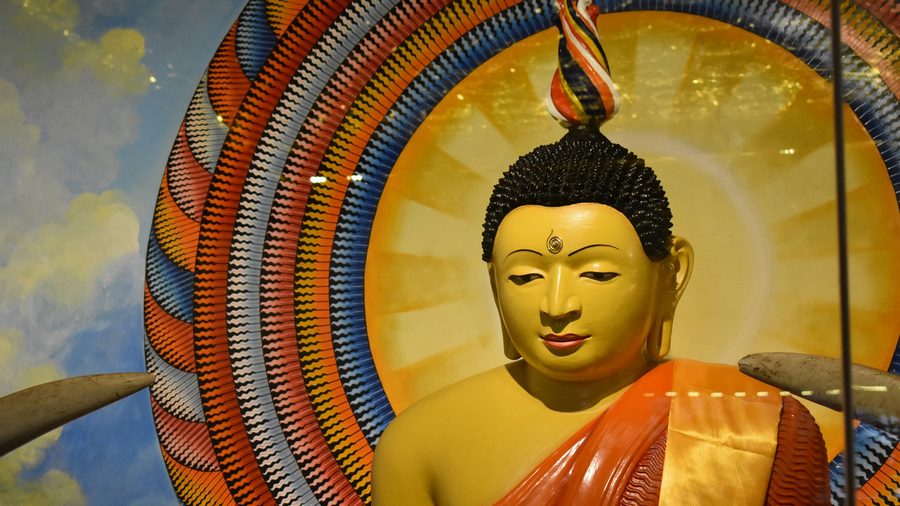
Colorful Sri Lankan style Buddha statue.

Thus have I heard. On one occasion the Blessed One was dwelling at Sāvatthī in Jeta’s Grove, Anāthapiṇḍika’s Park. Then the Venerable Ānanda approached the Blessed One, paid homage to him, sat down to one side, and said to him:

(1) “Bhante, what is the purpose and benefit of wholesome virtuous behavior?”

(2) “Ānanda, the purpose and benefit of wholesome virtuous behavior is non-regret.”

(3) “And what, Bhante, is the purpose and benefit of non-regret?”

“The purpose and benefit of non-regret is joy.”

(4) “And what, Bhante, is the purpose and benefit of joy?”

“The purpose and benefit of joy is rapture.”

(5) “And what, Bhante, is the purpose and benefit of rapture?”

“The purpose and benefit of rapture is tranquility.”

(6) “And what, Bhante, is the purpose and benefit of tranquility?”

“The purpose and benefit of tranquility is pleasure.”

(7) “And what, Bhante, is the purpose and benefit of pleasure?”

“The purpose and benefit of pleasure is concentration.”

(8) “And what, Bhante, is the purpose and benefit of concentration?”

“The purpose and benefit of concentration is the knowledge and vision of things as they really are.”

(9) “And what, Bhante, is the purpose and benefit of the knowledge and vision of things as they really are?”

“The purpose and benefit of the knowledge and vision of things as they really are is disenchantment and dispassion.”

(10) “And what, Bhante, is the purpose and benefit of disenchantment and dispassion?”

“The purpose and benefit of disenchantment and dispassion is the knowledge and vision of liberation.

“Thus, Ānanda, (1)–(2) the purpose and benefit of wholesome virtuous behavior is non-regret; (3) the purpose and benefit of non-regret is joy; (4) the purpose and benefit of joy is rapture; (5) the purpose and benefit of rapture is tranquility; (6) the purpose and benefit of tranquility is pleasure; (7) the purpose and benefit of pleasure is concentration; (8) the purpose and benefit of concentration is the knowledge and vision of things as they really are; (9) the purpose and benefit of the knowledge and vision of things as they really are is disenchantment and dispassion; and (10) the purpose and benefit of disenchantment and dispassion is the knowledge and vision of liberation. Thus, Ānanda, wholesome virtuous behavior progressively leads to the foremost.”


Read this translation of Aṅguttara Nikāya 10.1 Kimatthiyasutta: What Purpose? by Bhikkhu Bodhi on SuttaCentral.net. Or read a different translation on SuttaCentral.net. Or listen on SC-Voice.net. Or explore the Pali on DigitalPaliReader.online.

Or read a translation in Deutsch, বাংলা, Čeština, Español, Bahasa Indonesia, 日本語, မြန်မာဘာသာ, Nederlands, Português, Русский, සිංහල, ไทย, Tiếng Việt, or 汉语. Learn how to find your language.

SN 46.1 Himavantasutta: The Himalayas

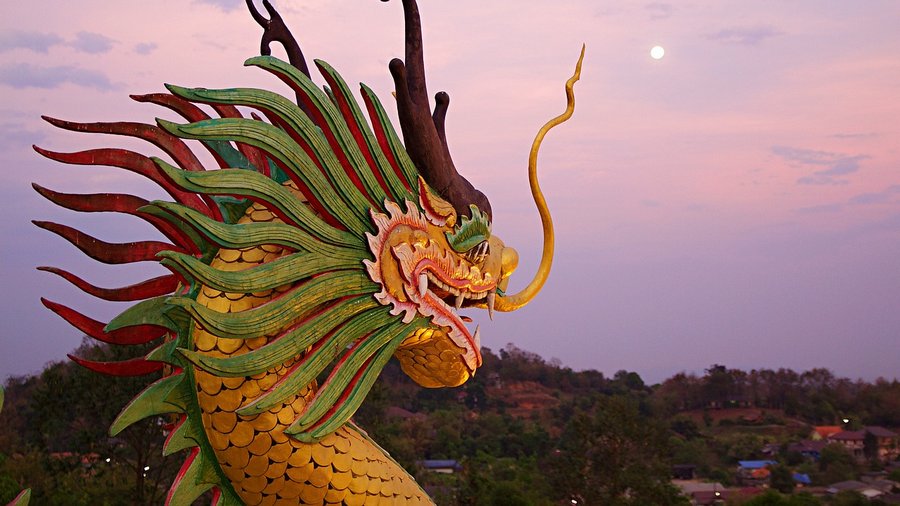
Carved naga statue looking down over a valley.

[Note: Nāgas are powerful non-human beings that resemble large snakes or dragons.]

At Savatthī. “Bhikkhus, based upon the Himalayas, the king of mountains, the nagas nurture their bodies and acquire strength. When they have nurtured their bodies and acquired strength, they then enter the pools. From the pools they enter the lakes, then the streams, then the rivers, and finally they enter the ocean. There they achieve greatness and expansiveness of body. So too, bhikkhus, based upon virtue, established upon virtue, a bhikkhu develops and cultivates the seven factors of enlightenment, and thereby he achieves greatness and expansiveness in wholesome states.

“And how does a bhikkhu, based upon virtue, established upon virtue, develop the seven factors of enlightenment? Here, bhikkhus, a bhikkhu develops the enlightenment factor of mindfulness, which is based upon seclusion, dispassion, and cessation, maturing in release. He develops the enlightenment factor of discrimination of states … the enlightenment factor of energy … the enlightenment factor of rapture … the enlightenment factor of tranquillity … the enlightenment factor of concentration … the enlightenment factor of equanimity, which is based upon seclusion, dispassion, and cessation, maturing in release. It is in this way, bhikkhus, that a bhikkhu, based upon virtue, established upon virtue, develops the seven factors of enlightenment, and thereby achieves greatness and expansiveness in wholesome states.”


Read this translation of Saṁyutta Nikāya 46.1 Himavantasutta: The Himalayas by Bhikkhu Bodhi on SuttaCentral.net. Or read a different translation on SuttaCentral.net or DhammaTalks.org. Or listen on SC-Voice.net. Or explore the Pali on DigitalPaliReader.online.

Or read a translation in Deutsch, Lietuvių Kalba, বাংলা, Bahasa Indonesia, Italiano, 日本語, မြန်မာဘာသာ, Norsk, Português, Русский, සිංහල, ไทย, Tiếng Việt, or 汉语. Learn how to find your language.

AN 4.12 Sīlasutta: Virtuous Behavior

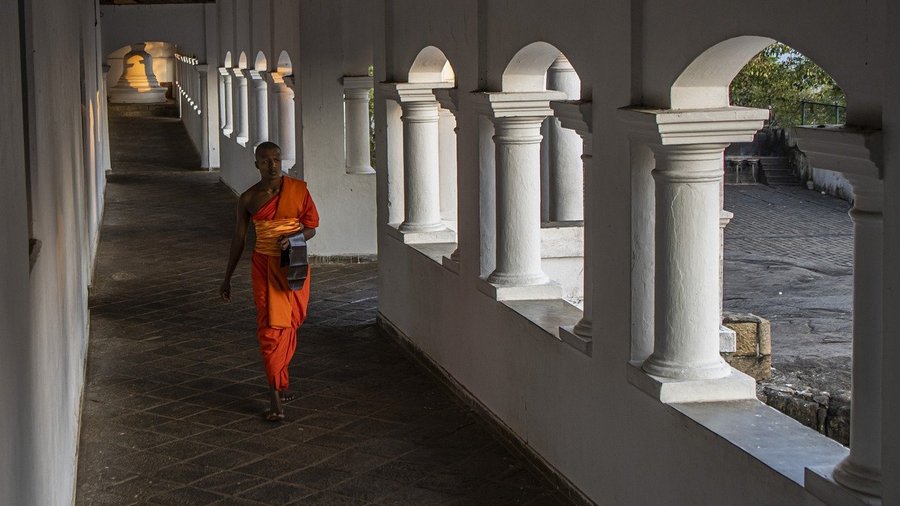
Buddhist monastic walking down an open corridor in a temple.

“Bhikkhus, dwell observant of virtuous behavior, observant of the Pātimokkha. Dwell restrained by the Pātimokkha, possessed of good conduct and resort, seeing danger in minute faults. Having undertaken them, train in the training rules. When you have done so, what further should be done?

(1) “Bhikkhus, if a bhikkhu has gotten rid of longing and ill will while walking; if he has abandoned dullness and drowsiness, restlessness and remorse, and doubt; if his energy is aroused without slackening; if his mindfulness is established and unmuddled; if his body is tranquil and undisturbed; if his mind is concentrated and one-pointed, then that bhikkhu is said to be ardent and to dread wrongdoing; he is constantly and continuously energetic and resolute while walking.

(2) “If a bhikkhu has gotten rid of longing and ill will while standing … (3) If a bhikkhu has gotten rid of longing and ill will while sitting … … (4) If a bhikkhu has gotten rid of longing and ill will while wakefully lying down; if he has abandoned dullness and drowsiness, restlessness and remorse, and doubt; if his energy is aroused without slackening; if his mindfulness is established and unmuddled; if his body is tranquil and undisturbed; if his mind is concentrated and one-pointed, then that bhikkhu is said to be ardent and to dread wrongdoing; he is constantly and continuously energetic and resolute while wakefully lying down.”

Controlled in walking, controlled in standing,
controlled in sitting and in lying down;
controlled, a bhikkhu draws in the limbs,
and controlled, he stretches them out.

Above, across, and below,
as far as the world extends,
he is one who scrutinizes the arising and vanishing
of such phenomena as the aggregates.

Training in what is conducive
to serenity of mind, always mindful,
they call such a bhikkhu
one constantly resolute.


Read this translation of Aṅguttara Nikāya 4.12 Sīlasutta: Virtuous Behavior by Bhikkhu Bodhi on SuttaCentral.net. Or read a different translation on SuttaCentral.net. Or listen on PaliAudio.com or SC-Voice.net. Or explore the Pali on DigitalPaliReader.online.

Or read a translation in Čeština, Deutsch, বাংলা, Français, Bahasa Indonesia, 日本語, မြန်မာဘာသာ, Português, Русский, සිංහල, ไทย, Tiếng Việt, or 汉语. Learn how to find your language.

AN 10.34 Upasampadāsutta: Full Ordination

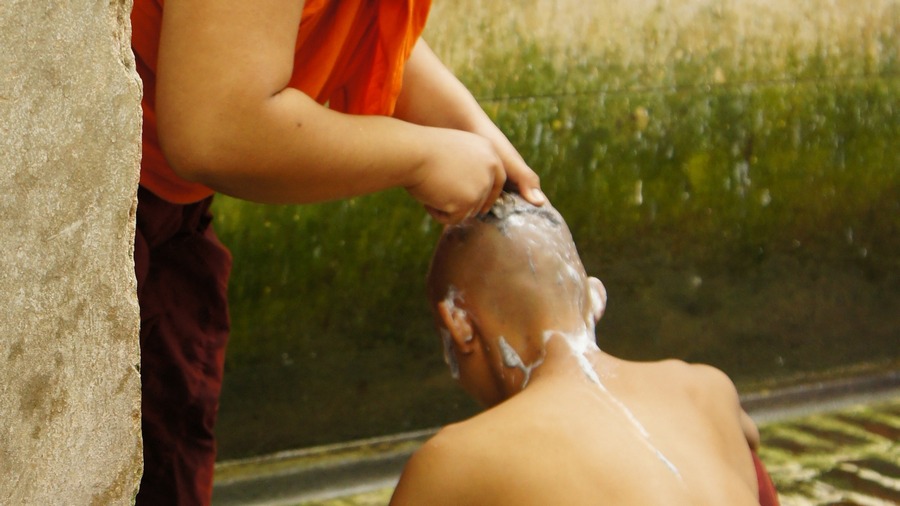
Monk shaving someone's head.

“Bhante, how many qualities should a bhikkhu possess to give full ordination?”

“A bhikkhu who possesses ten qualities, Upāli, may give full ordination. What ten?

(1) Here, a bhikkhu is virtuous; he dwells restrained by the Pātimokkha, possessed of good conduct and resort, seeing danger in minute faults. Having undertaken the training rules, he trains in them.

(2) He has learned much, remembers what he has learned, and accumulates what he has learned. Those teachings that are good in the beginning, good in the middle, and good in the end, with the right meaning and phrasing, which proclaim the perfectly complete and pure spiritual life—such teachings as these he has learned much of, retained in mind, recited verbally, investigated mentally, and penetrated well by view.

(3) Both Pātimokkhas have been well transmitted to him in detail, well analyzed, well mastered, well determined in terms of the rules and their detailed explication.

(4) He is able to look after a patient or to get someone else to look after him.

(5) He is able to eliminate one’s dissatisfaction or to get someone else to eliminate it.

(6) He is able to use the Dhamma to dispel regrets that might arise in his pupils.

(7) He is able to dissuade them, by way of the Dhamma, from erroneous views that have arisen.

(8) He is able to encourage them in the higher virtuous behavior.

(9) He is able to encourage them in the higher mind.

(10) He is able to encourage them in the higher wisdom. A bhikkhu who possesses these ten qualities may give full ordination.”


Read this translation of Aṅguttara Nikāya 10.34 Upasampadāsutta: Full Ordination by Bhikkhu Bodhi on SuttaCentral.net. Or read a different translation on SuttaCentral.net. Or listen on SC-Voice.net. Or explore the Pali on DigitalPaliReader.online.

Or read a translation in Deutsch, বাংলা, Bahasa Indonesia, 日本語, မြန်မာဘာသာ, Русский, සිංහල, ไทย, Tiếng Việt, or 汉语. Learn how to find your language.

SN 47.15 Bāhiyasutta: Bahiya

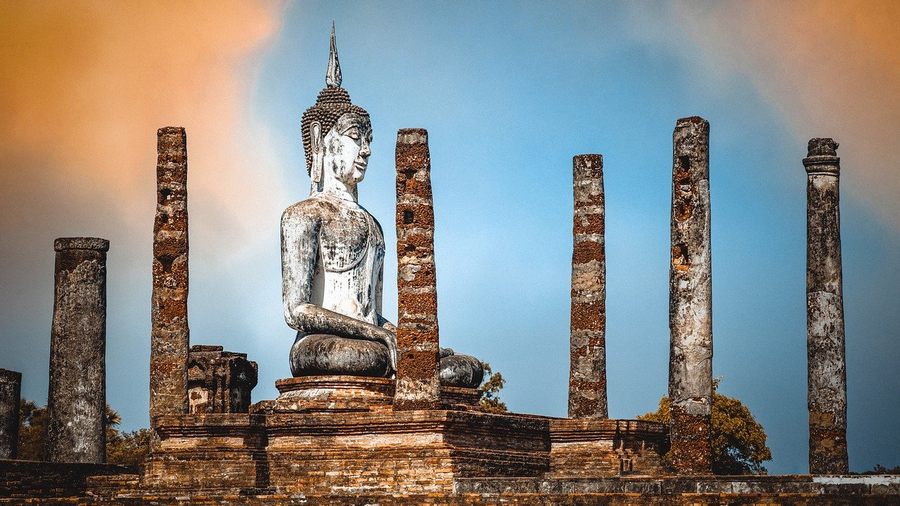
Old Buddha statue in ruins.

At Savatthi. Then the Venerable Bahiya approached the Blessed One, paid homage to him, sat down to one side, and said to him:

“Venerable sir, it would be good if the Blessed One would teach me the Dhamma in brief, so that, having heard the Dhamma from the Blessed One, I might dwell alone, withdrawn, diligent, ardent, and resolute.”

“Well then, Bahiya, purify the very starting point of wholesome states. And what is the starting point of wholesome states? Virtue that is well purified and view that is straight. Then, Bahiya, when your virtue is well purified and your view is straight, based upon virtue, established upon virtue, you should develop the four establishments of mindfulness.

“What four? Here, Bahiya, dwell contemplating the body in the body, ardent, clearly comprehending, mindful, having removed covetousness and displeasure in regard to the world. Dwell contemplating feelings in feelings … mind in mind … phenomena in phenomena, ardent, clearly comprehending, mindful, having removed covetousness and displeasure in regard to the world.

“When, Bahiya, based upon virtue, established upon virtue, you develop these four establishments of mindfulness in such a way, then whether night or day comes, you may expect only growth in wholesome states, not decline.”

Then the Venerable Bahiya, having delighted and rejoiced in the Blessed One’s words, rose from his seat, and, after paying homage to the Blessed One, keeping him on his right, he departed. Then, dwelling alone, withdrawn, diligent, ardent, and resolute, the Venerable Bahiya, by realizing it for himself with direct knowledge, in this very life entered and dwelt in that unsurpassed goal of the holy life for the sake of which clansmen rightly go forth from the household life into homelessness. He directly knew: “Destroyed is birth, the holy life has been lived, what had to be done has been done, there is no more for this state of being.” And the Venerable Bahiya became one of the arahants.


Read this translation of Saṁyutta Nikāya 47.15 Bāhiyasutta: Bahiya by Bhikkhu Bodhi on SuttaCentral.net. Or read a different translation on SuttaCentral.net. Or listen on SC-Voice.net. Or explore the Pali on DigitalPaliReader.online.

Or read a translation in Deutsch, বাংলা, Español, Bahasa Indonesia, 日本語, မြန်မာဘာသာ, Norsk, Português, Русский, සිංහල, ไทย, Tiếng Việt, or 汉语. Learn how to find your language.

SN 45.149 Balasutta: Strenuous

Worker lays out wet bricks on the ground.

At Savatthī. “Bhikkhus, just as whatever strenuous deeds are done, are all done based upon the earth, established upon the earth, so too, based upon virtue, established upon virtue, a bhikkhu develops and cultivates the Noble Eightfold Path.

“And how, bhikkhus, does a bhikkhu, based upon virtue, established upon virtue, develop and cultivate the Noble Eightfold Path? Here, bhikkhus, a bhikkhu develops right view … right concentration, which is based upon seclusion, dispassion, and cessation, maturing in release. It is in this way, bhikkhus, that a bhikkhu, based upon virtue, established upon virtue, develops and cultivates the Noble Eightfold Path.”


Read this translation of Saṁyutta Nikāya 45.149 Balasutta: Strenuous by Bhikkhu Bodhi on SuttaCentral.net. Or read a different translation on SuttaCentral.net. Or listen on SC-Voice.net. Or explore the Pali on DigitalPaliReader.online.

Or read a translation in Deutsch, বাংলা, Español, Bahasa Indonesia, 日本語, မြန်မာဘာသာ, Norsk, Русский, සිංහල, ไทย, Tiếng Việt, or 汉语. Learn how to find your language.

SN 47.10 Bhikkhunupassayasutta: The Bhikkhunis’ Quarter

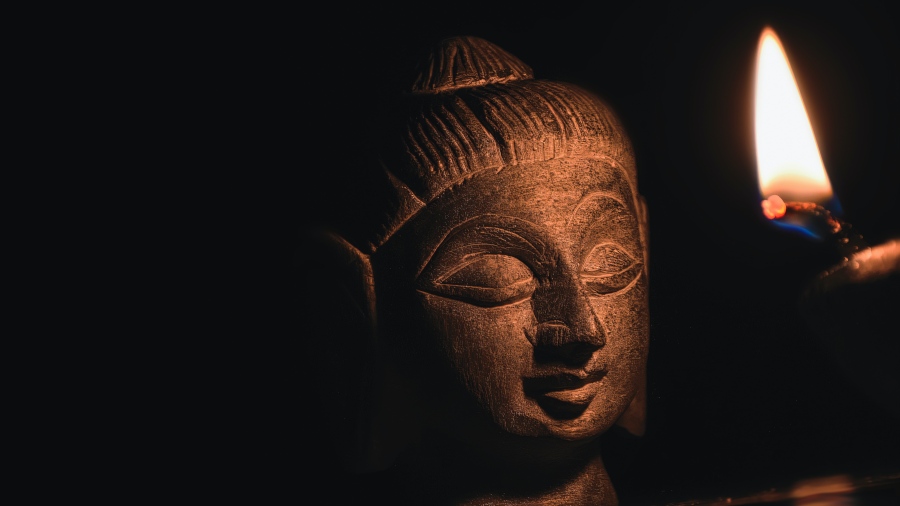
Buddha statue head.

Then in the morning the Venerable Ānanda dressed and, taking bowl and robe, he approached the bhikkhunis’ quarters and sat down in the appointed seat. Then a number of bhikkhunis approached the Venerable Ānanda, paid homage to him, sat down to one side, and said to him:

“Here, Venerable Ānanda, a number of bhikkhunis, dwelling with their minds well established in the four establishments of mindfulness, perceive successively loftier stages of distinction.”

“So it is, sisters, so it is! It may be expected of anyone, sisters—whether bhikkhu or bhikkhuni—who dwells with a mind well established in the four establishments of mindfulness, that such a one will perceive successively loftier stages of distinction.”

Then the Venerable Ānanda instructed, exhorted, inspired, and gladdened those bhikkhunis with a Dhamma talk, after which he rose from his seat and left. Then the Venerable Ānanda walked for alms in Savatthi. When he had returned from the alms round, after his meal he approached the Blessed One, paid homage to him, sat down to one side, and reported all that had happened. The Blessed One said:

“So it is, Ānanda, so it is! It may be expected of anyone, Ānanda—whether bhikkhu or bhikkhuni—who dwells with a mind well established in the four establishments of mindfulness, that such a one will perceive successively loftier stages of distinction.

“What four? Here, Ānanda, a bhikkhu dwells contemplating the body in the body, ardent, clearly comprehending, mindful, having removed covetousness and displeasure in regard to the world. While he is contemplating the body in the body, there arises in him, based on the body, either a fever in the body or sluggishness of mind, or the mind is distracted outwardly. That bhikkhu should then direct his mind towards some inspiring sign. When he directs his mind towards some inspiring sign, gladness is born. When he is gladdened, rapture is born. When the mind is uplifted by rapture, the body becomes tranquil. One tranquil in body experiences happiness. The mind of one who is happy becomes concentrated. He reflects thus: ‘The purpose for the sake of which I directed my mind has been achieved. Let me now withdraw it.’ So he withdraws the mind and does not think or examine. He understands: ‘Without thought and examination, internally mindful, I am happy.’

“Again, a bhikkhu dwells contemplating feelings in feelings … mind in mind … phenomena in phenomena, ardent, clearly comprehending, mindful, having removed covetousness and displeasure in regard to the world. While he is contemplating phenomena in phenomena, there arises in him, based on phenomena, either a fever in the body or sluggishness of mind, or the mind is distracted outwardly. That bhikkhu should then direct his mind towards some inspiring sign. When he directs his mind towards some inspiring sign … He understands: ‘Without thought and examination, internally mindful, I am happy.’

“It is in such a way, Ānanda, that there is development by direction.

“And how, Ānanda, is there development without direction? Not directing his mind outwardly, a bhikkhu understands: ‘My mind is not directed outwardly.’ Then he understands: ‘It is unconstricted after and before, liberated, undirected.’ Then he further understands: ‘I dwell contemplating the body in the body, ardent, clearly comprehending, mindful; I am happy.’

“Not directing his mind outwardly, a bhikkhu understands: ‘My mind is not directed outwardly.’ Then he understands: ‘It is unconstricted after and before, liberated, undirected.’ Then he further understands: ‘I dwell contemplating feelings in feelings, ardent, clearly comprehending, mindful; I am happy.’

“Not directing his mind outwardly, a bhikkhu understands: ‘My mind is not directed outwardly.’ Then he understands: ‘It is unconstricted after and before, liberated, undirected.’ Then he further understands: ‘I dwell contemplating mind in mind, ardent, clearly comprehending, mindful; I am happy.’

“Not directing his mind outwardly, a bhikkhu understands: ‘My mind is not directed outwardly.’ Then he understands: ‘It is unconstricted after and before, liberated, undirected.’ Then he further understands: ‘I dwell contemplating phenomena in phenomena, ardent, clearly comprehending, mindful; I am happy.’

“It is in this way, Ānanda, that there is development without direction.

“Thus, Ānanda, I have taught development by direction, I have taught development without direction. Whatever should be done, Ānanda, by a compassionate teacher out of compassion for his disciples, desiring their welfare, that I have done for you. These are the feet of trees, Ānanda, these are empty huts. Meditate, Ānanda, do not be negligent, lest you regret it later. This is our instruction to you.”

This is what the Blessed One said. Elated, the Venerable Ānanda delighted in the Blessed One’s statement.


Read this translation of Saṁyutta Nikāya 47.10 Bhikkhunupassayasutta: The Bhikkhunis’ Quarter by Bhikkhu Bodhi on SuttaCentral.net. Or read a different translation on SuttaCentral.net or DhammaTalks.org. Or listen on SC-Voice.net. Or explore the Pali on DigitalPaliReader.online.

Or read a translation in Deutsch, বাংলা, Indonesian, Italiano, 日本語, မြန်မာဘာသာ, Norsk, Português, Русский, සිංහල, ไทย, Tiếng Việt, or 汉语. Learn how to find your language.

SN 21.1 Kolitasutta: Kolita

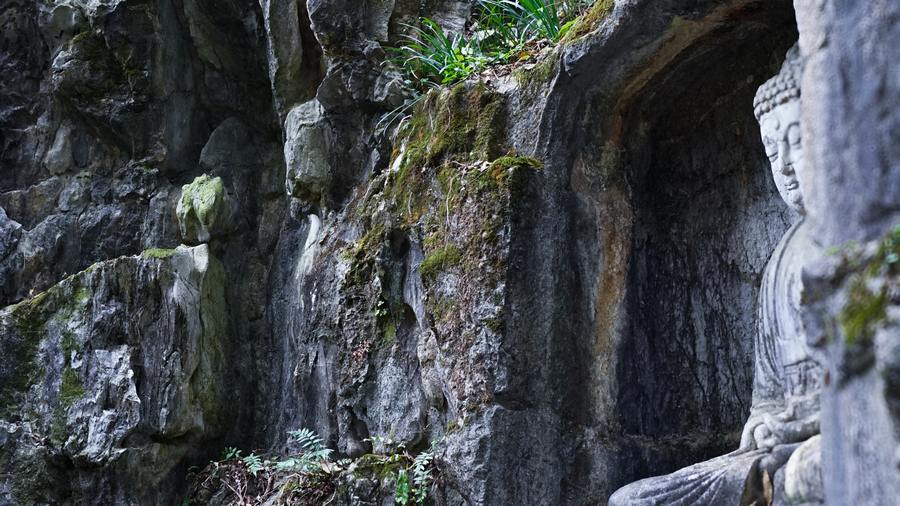
Giant Buddha statue carved into a cliff face.

Thus have I heard. On one occasion the Blessed One was dwelling at Savatthi in Jeta’s Grove, Anathapiṇḍika’s Park. There the Venerable Mahamoggallana addressed the bhikkhus thus: “Friends, bhikkhus!”

“Friend!” those bhikkhus replied. The Venerable Mahamoggallana said this:

“Here, friends, while I was alone in seclusion, a reflection arose in my mind thus: ‘It is said, “noble silence, noble silence.” What now is noble silence?’

“Then, friends, it occurred to me: ‘Here, with the subsiding of thought and examination, a bhikkhu enters and dwells in the second jhana, which has internal confidence and unification of mind, is without thought and examination, and has rapture and happiness born of concentration. This is called noble silence.’

“Then, friends, with the subsiding of thought and examination, I entered and dwelt in the second jhana, which … has rapture and happiness born of concentration. While I dwelt therein, perception and attention accompanied by thought assailed me.

“Then, friends, the Blessed One came to me by means of spiritual power and said this: ‘Moggallana, Moggallana, do not be negligent regarding noble silence, brahmin. Steady your mind in noble silence, unify your mind in noble silence, concentrate your mind on noble silence.’ Then, friends, on a later occasion, with the subsiding of thought and examination, I entered and dwelt in the second jhana, which has internal confidence and unification of mind, is without thought and examination, and has rapture and happiness born of concentration.

“If, friends, one speaking rightly could say of anyone: ‘He is a disciple who attained to greatness of direct knowledge with the assistance of the Teacher,’ it is of me that one could rightly say this.”


Read this translation of Saṁyutta Nikāya 21.1 Kolitasutta: Kolita by Bhikkhu Bodhi on SuttaCentral.net. Or read a different translation on SuttaCentral.net or DhammaTalks.org. Or listen on PaliAudio.com or SC-Voice.net. Or explore the Pali on DigitalPaliReader.online.

Or read a translation in Deutsch, বাংলা, Indonesian, 日本語, မြန်မာဘာသာ, Norsk, Português, Русский, සිංහල, ไทย, Tiếng Việt, or 汉语. Learn how to find your language.

AN 5.54 Samayasutta: Times Good for Meditation

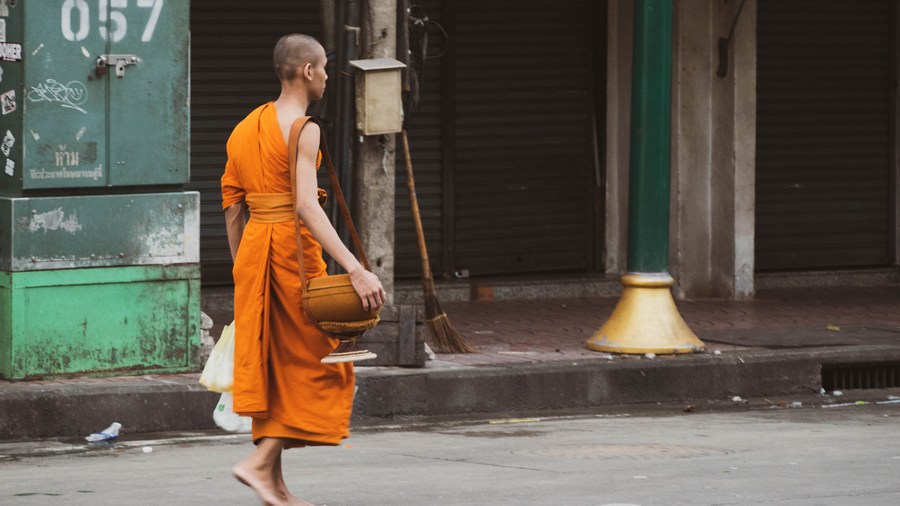
Buddhist monastic walking on alms round.

“Mendicants, there are five times that are not good for meditation. What five?

Firstly, a mendicant is old, overcome with old age. This is the first time that’s not good for meditation.

Furthermore, a mendicant is sick, overcome by sickness. This is the second time that’s not good for meditation.

Furthermore, there’s a famine, a bad harvest, so it’s hard to get almsfood, and not easy to keep going by collecting alms. This is the third time that’s not good for meditation.

Furthermore, there’s peril from wild savages, and the countryfolk mount their vehicles and flee everywhere. This is the fourth time that’s not good for meditation.

Furthermore, there’s a schism in the Saṅgha. When the Saṅgha is split, they abuse, insult, block, and reject each other. This doesn’t inspire confidence in those without it, and it causes some with confidence to change their minds. This is the fifth time that’s not good for meditation.

These are the five times that are not good for meditation.

There are five times that are good for meditation. What five?

Firstly, a mendicant is a youth, young, with pristine black hair, blessed with youth, in the prime of life. This is the first time that’s good for meditation.

Furthermore, they are rarely ill or unwell. Their stomach digests well, being neither too hot nor too cold, but just right, and fit for meditation. This is the second time that’s good for meditation.

Furthermore, there’s plenty of food, a good harvest, so it’s easy to get almsfood, and easy to keep going by collecting alms. This is the third time that’s good for meditation.

Furthermore, people live in harmony, appreciating each other, without quarreling, blending like milk and water, and regarding each other with kindly eyes. This is the fourth time that’s good for meditation.

Furthermore, the Saṅgha lives comfortably, in harmony, appreciating each other, without quarreling, with one recitation. When the Saṅgha is in harmony, they don’t abuse, insult, block, or reject each other. This inspires confidence in those without it, and increases confidence in those who have it. This is the fifth time that’s good for meditation.

These are the five times that are good for meditation.”


Read this translation of Aṅguttara Nikāya 5.54 Samayasutta: Times Good for Meditation by Bhikkhu Sujato on SuttaCentral.net. Or read a different translation on SuttaCentral.net. Or listen on SC-Voice.net. Or explore the Pali on DigitalPaliReader.online.

Or read a translation in Deutsch, Bengali, Español, Français, Indonesian, 日本語, မြန်မာဘာသာ, Português, ру́сский язы́к, සිංහල, ไทย, Tiếng Việt, or 汉语. Learn how to find your language.

AN 5.53 Padhāniyaṅgasutta: Factors

Side view of person seated in meditation next to a window.

“Bhikkhus, there are these five factors that assist striving. What five?

(1) “Here, a bhikkhu is endowed with faith. He places faith in the enlightenment of the Tathāgata thus: ‘The Blessed One is an arahant, perfectly enlightened, accomplished in true knowledge and conduct, fortunate, knower of the world, unsurpassed trainer of persons to be tamed, teacher of devas and humans, the Enlightened One, the Blessed One.’

(2) “He is seldom ill or afflicted, possessing an even digestion that is neither too cool nor too hot but moderate and suitable for striving.

(3) “He is honest and open, one who reveals himself as he really is to the Teacher and his wise fellow monks.

(4) “He has aroused energy for abandoning unwholesome qualities and acquiring wholesome qualities; he is strong, firm in exertion, not casting off the duty of cultivating wholesome qualities.

(5) “He is wise; he possesses the wisdom that discerns arising and passing away, which is noble and penetrative and leads to the complete destruction of suffering.

“These, bhikkhus, are the five factors that assist striving.”


Read this translation of Aṅguttara Nikāya 5.53 Padhāniyaṅgasutta: Factors by Bhikkhu Bodhi on SuttaCentral.net. Or read a different translation on SuttaCentral.net or DhammaTalks.org. Or listen on SC-Voice.net. Or explore the Pali on DigitalPaliReader.online.

Or read a translation in Deutsch, Bengali, Čeština, Español, Français, Indonesian, Italiano, 日本語, မြန်မာဘာသာ, Português, ру́сский язы́к, සිංහල, ไทย, Tiếng Việt, or 汉语. Learn how to find your language.

AN 8.34 Khettasutta: The Field

Field of corn under a blue sky.

“Bhikkhus, a seed sown in a field that possesses eight factors does not bring forth abundant fruits, its fruits are not delectable, and it does not yield a profit. What eight factors?

“Here, (1) the field has mounds and ditches; (2) it contains stones and gravel; (3) it is salty; (4) it is not deeply furrowed; (5) it does not have inlets for the water to enter; (6) it does not have outlets for excess water to flow out; (7) it does not have irrigation channels; and (8) it does not have boundaries. A seed sown in a field that possesses these eight factors does not bring forth abundant fruits, its fruits are not delectable, and it does not yield a profit.

“So too, bhikkhus, a gift given to ascetics and brahmins who possess eight factors is not of great fruit and benefit, and it is not very brilliant or pervasive. What eight factors? Here, the ascetics and brahmins are of wrong view, wrong intention, wrong speech, wrong action, wrong livelihood, wrong effort, wrong mindfulness, and wrong concentration. A gift given to ascetics and brahmins who possess these eight factors is not of great fruit and benefit, and it is not very brilliant or pervasive.

“Bhikkhus, a seed sown in a field that possesses eight factors brings forth abundant fruits, its fruits are delectable, and it yields a profit. What eight factors?

“Here, (1) the field does not have mounds and ditches; (2) it does not contain stones and gravel; (3) it is not salty; (4) it is deeply furrowed; (5) it has inlets for the water to enter; (6) it has outlets for excess water to flow out; (7) it has irrigation channels; and (8) it has boundaries. A seed sown in a field that possesses these eight factors brings forth abundant fruits, its fruits are delectable, and it yields a profit.

“So too, bhikkhus, a gift given to ascetics and brahmins who possess eight factors is of great fruit and benefit, and it is extraordinarily brilliant and pervasive. What eight factors? Here, the ascetics and brahmins are of right view, right intention, right speech, right action, right livelihood, right effort, right mindfulness, and right concentration. A gift given to ascetics and brahmins who possess these eight factors is of great fruit and benefit, and it is extraordinarily brilliant and pervasive.”

When the field is excellent,
and the seed sown is excellent,
and there is an excellent supply of rain,
the yield of grain is excellent.

Its health is excellent;
its growth too is excellent;
its maturation is excellent;
its fruit truly is excellent.

So too when one gives excellent food
to those accomplished in virtuous behavior,
it arrives at several kinds of excellence,
for what one has done is excellent.

Therefore if one desires excellence
let a person here be accomplished;
one should resort to those accomplished in wisdom;
thus one’s own accomplishments flourish.

One accomplished in true knowledge and conduct,
having gained accomplishment of mind,
performs action that is accomplished
and accomplishes the good.

Having known the world as it is,
one should attain accomplishment in view.
One accomplished in mind advances
by relying on accomplishment in the path.

Having rubbed off all stains,
having attained nibbāna,
one is then freed from all sufferings:
this is total accomplishment.


Read this translation of Aṅguttara Nikāya 8.34 Khettasutta: The Field by Bhikkhu Bodhi on SuttaCentral.net. Or read a different translation on SuttaCentral.net. Or listen on SC-Voice.net. Or explore the Pali on DigitalPaliReader.online.

Or read a translation in Deutsch, Bengali, Indonesian, 日本語, မြန်မာဘာသာ, ру́сский язы́к, සිංහල, ไทย, Tiếng Việt, or 汉语. Learn how to find your language.

SN 47.6 Sakuṇagghisutta: The Hawk

Quail on a heap of dirt.

“Bhikkhus, once in the past a hawk suddenly swooped down and seized a quail. Then, while the quail was being carried off by the hawk, he lamented: ‘We were so unlucky, of so little merit! We strayed out of our own resort into the domain of others. If we had stayed in our own resort today, in our own ancestral domain, this hawk wouldn’t have stood a chance against me in a fight.’—‘But what is your own resort, quail, what is your own ancestral domain?’—‘The freshly ploughed field covered with clods of soil.’

“Then the hawk, confident of her own strength, not boasting of her own strength, released the quail, saying: ‘Go now, quail, but even there you won’t escape me.’

“Then, bhikkhus, the quail went to a freshly ploughed field covered with clods of soil. Having climbed up on a large clod, he stood there and addressed the hawk: ‘Come get me now, hawk! Come get me now, hawk!’

“Then the hawk, confident of her own strength, not boasting of her own strength, folded up both her wings and suddenly swooped down on the quail. But when the quail knew, ‘That hawk has come close,’ he slipped inside that clod, and the hawk shattered her breast right on the spot. So it is, bhikkhus, when one strays outside one’s own resort into the domain of others.

“Therefore, bhikkhus, do not stray outside your own resort into the domain of others. Mara will gain access to those who stray outside their own resort into the domain of others; Mara will get a hold on them.

“And what is not a bhikkhu’s own resort but the domain of others? It is the five cords of sensual pleasure. What five? Forms cognizable by the eye that are desirable, lovely, agreeable, pleasing, sensually enticing, tantalizing. Sounds cognizable by the ear … Odours cognizable by the nose … Tastes cognizable by the tongue … Tactile objects cognizable by the body that are desirable, lovely, agreeable, pleasing, sensually enticing, tantalizing. These are the five cords of sensual pleasure. This is what is not a bhikkhu’s own resort but the domain of others.

“Move in your own resort, bhikkhus, in your own ancestral domain. Mara will not gain access to those who move in their own resort, in their own ancestral domain; Mara will not get a hold on them.

“And what is a bhikkhu’s resort, his own ancestral domain? It is the four establishments of mindfulness. What four? Here, bhikkhus, a bhikkhu dwells contemplating the body in the body, ardent, clearly comprehending, mindful, having removed covetousness and displeasure in regard to the world. He dwells contemplating feelings in feelings … mind in mind … phenomena in phenomena, ardent, clearly comprehending, mindful, having removed covetousness and displeasure in regard to the world. This is a bhikkhu’s resort, his own ancestral domain.”


Read this translation of Saṁyutta Nikāya 47.6 Sakuṇagghisutta: The Hawk by Bhikkhu Bodhi on SuttaCentral.net.

SN 35.246 Vīṇopamasutta: The Simile of the Lute

Closeup of someone playing a stringed instrument.

“Bhikkhus, if in any bhikkhu or bhikkhunī desire or lust or hatred or delusion or aversion of mind should arise in regard to forms cognizable by the eye, such a one should rein in the mind from them thus: ‘This path is fearful, dangerous, strewn with thorns, covered by jungle, a deviant path, an evil path, a way beset by scarcity. This is a path followed by inferior people; it is not the path followed by superior people. This is not for you.’ In this way the mind should be reined in from these states regarding forms cognizable by the eye. So too regarding sounds cognizable by the ear … regarding mental phenomena cognizable by the mind.

“Suppose, bhikkhus, that the barley has ripened and the watchman is negligent. If a bull fond of barley enters the barley field, he might indulge himself as much as he likes. So too, bhikkhus, the uninstructed worldling who does not exercise restraint over the six bases for contact indulges himself as much as he likes in the five cords of sensual pleasure.

“Suppose, bhikkhus, that the barley has ripened and the watchman is vigilant. If a bull fond of barley enters the barley field, the watchman would catch hold of him firmly by the muzzle. While holding him firmly by the muzzle, he would get a secure grip on the locks between his horns and, keeping him in check there, would give him a sound beating with his staff. After giving him that beating, he would drive the bull away. This might happen a second time and a third time. Thus that bull fond of barley, whether he has gone to the village or the forest, whether he is accustomed to standing or to sitting, remembering the previous beating he got from the staff, would not enter that barley field again.

“So too, bhikkhus, when a bhikkhu’s mind has been subdued, well subdued, regarding the six bases for contact, it then becomes inwardly steady, settled, unified, and concentrated.

“Suppose, bhikkhus, there was a king or a royal minister who had never before heard the sound of a lute. He might hear the sound of a lute and say: ‘Good man, what is making this sound—so tantalizing, so lovely, so intoxicating, so entrancing, so enthralling?’ They would say to him: ‘Sire, it is a lute that is making this sound—so tantalizing, so lovely, so intoxicating, so entrancing, so enthralling.’ He would reply: ‘Go, man, bring me that lute.’

“They would bring him the lute and tell him: ‘Sire, this is that lute, the sound of which was so tantalizing, so lovely, so intoxicating, so entrancing, so enthralling.’ The king would say: ‘I’ve had enough with this lute, man. Bring me just that sound.’ The men would reply: ‘This lute, sire, consists of numerous components, of a great many components, and it gives off a sound when it is played upon with its numerous components; that is, in dependence on the parchment sounding board, the belly, the arm, the head, the strings, the plectrum, and the appropriate effort of the musician. So it is, sire, that this lute consisting of numerous components, of a great many components, gives off a sound when it is played upon with its numerous components.’

“The king would split the lute into ten or a hundred pieces, then he would reduce these to splinters. Having reduced them to splinters, he would burn them in a fire and reduce them to ashes, and he would winnow the ashes in a strong wind or let them be carried away by the swift current of a river. Then he would say: ‘A poor thing, indeed sir, is this so-called lute, as well as anything else called a lute. How the multitude are utterly heedless about it, utterly taken in by it!’

“So too, bhikkhus, a bhikkhu investigates form to the extent that there is a range for form, he investigates feeling to the extent that there is a range for feeling, he investigates perception to the extent that there is a range for perception, he investigates volitional formations to the extent that there is a range for volitional formations, he investigates consciousness to the extent that there is a range for consciousness. As he investigates form to the extent that there is a range for form … consciousness to the extent that there is a range for consciousness, whatever notions of ‘I’ or ‘mine’ or ‘I am’ had occurred to him before no longer occur to him.”


Read this translation of Saṁyutta Nikāya 35.246 Vīṇopamasutta: The Simile of the Lute by Bhikkhu Bodhi on SuttaCentral.net.

AN 8.19 Pahārādasutta: Pahārāda

Wave in the ocean.

On one occasion the Blessed One was dwelling at Verañjā at the foot of Naḷeru’s neem tree. Then Pahārāda, ruler of the asuras, approached the Blessed One, paid homage to him, and stood to one side. The Blessed One then said to him:

“Pahārāda, do the asuras take delight in the great ocean?”

“Bhante, the asuras do take delight in the great ocean.”

“But, Pahārāda, how many astounding and amazing qualities do the asuras see in the great ocean because of which they take delight in it?”

“The asuras see eight astounding and amazing qualities in the great ocean because of which they take delight in it. What eight?

(1) “The great ocean, Bhante, slants, slopes, and inclines gradually, not dropping off abruptly. This is the first astounding and amazing quality that the asuras see in the great ocean because of which they take delight in it.

(2) “Again, the great ocean is stable and does not overflow its boundaries. This is the second astounding and amazing quality that the asuras see in the great ocean….

(3) “Again, the great ocean does not associate with a corpse, but quickly carries it to the coast and washes it ashore. This is the third astounding and amazing quality that the asuras see in the great ocean….

(4) “Again, when the great rivers—the Ganges, the Yamunā, the Aciravatī, the Sarabhū, and the Mahī—reach the great ocean, they give up their former names and designations and are simply called the great ocean. This is the fourth astounding and amazing quality that the asuras see in the great ocean….

(5) “Again, whatever streams in the world flow into the great ocean and however much rain falls into it from the sky, neither a decrease nor a filling up can be seen in the great ocean. This is the fifth astounding and amazing quality that the asuras see in the great ocean….

(6) “Again, the great ocean has but one taste, the taste of salt. This is the sixth astounding and amazing quality that the asuras see in the great ocean….

(7) “Again, the great ocean contains many precious substances, numerous precious substances such as pearls, gems, lapis lazuli, conch, quartz, coral, silver, gold, rubies, and cats-eye. This is the seventh astounding and amazing quality that the asuras see in the great ocean….

(8) “Again, the great ocean is the abode of great beings such as timis, timiṅgalas, timirapiṅgalas, asuras, nāgas, and gandhabbas. There are in the great ocean beings with bodies one hundred yojanas long, two hundred, three hundred, four hundred, and five hundred yojanas long. This is the eighth astounding and amazing quality that the asuras see in the great ocean because of which they take delight in it.

“These, Bhante, are the eight astounding and amazing qualities that the asuras see in the great ocean because of which they take delight in it. But do the bhikkhus take delight in this Dhamma and discipline?”

“Pahārāda, the bhikkhus do take delight in this Dhamma and discipline.”

“But, Bhante, how many astounding and amazing qualities do the bhikkhus see in this Dhamma and discipline because of which they take delight in it?”

“The bhikkhus see eight astounding and amazing qualities in this Dhamma and discipline because of which they take delight in it. What eight?

(1) “Just as, Pahārāda, the great ocean slants, slopes, and inclines gradually, not dropping off abruptly, so too, in this Dhamma and discipline penetration to final knowledge occurs by gradual training, gradual activity, and gradual practice, not abruptly. This is the first astounding and amazing quality that the bhikkhus see in this Dhamma and discipline because of which they take delight in it.

(2) “Just as the great ocean is stable and does not overflow its boundaries, so too, when I have prescribed a training rule for my disciples, they will not transgress it even for life’s sake. This is the second astounding and amazing quality that the bhikkhus see in this Dhamma and discipline….

(3) “Just as the great ocean does not associate with a corpse, but quickly carries it to the coast and washes it ashore, so too, the Saṅgha does not associate with a person who is immoral, of bad character, impure, of suspect behavior, secretive in his actions, not an ascetic though claiming to be one, not a celibate though claiming to be one, inwardly rotten, corrupt, depraved; rather, it quickly assembles and expels him. Even though he is seated in the midst of the Saṅgha of bhikkhus, yet he is far from the Saṅgha and the Saṅgha is far from him. This is the third astounding and amazing quality that the bhikkhus see in this Dhamma and discipline….

(4) “Just as, when the great rivers … reach the great ocean, they give up their former names and designations and are simply called the great ocean, so too, when members of the four social classes—khattiyas, brahmins, vessas, and suddas—go forth from the household life into homelessness in the Dhamma and discipline proclaimed by the Tathāgata, they give up their former names and clans and are simply called ascetics following the Sakyan son. This is the fourth astounding and amazing quality that the bhikkhus see in this Dhamma and discipline….

(5) “Just as, whatever streams in the world flow into the great ocean and however much rain falls into it from the sky, neither a decrease nor a filling up can be seen in the great ocean, so too, even if many bhikkhus attain final nibbāna by way of the nibbāna element without residue remaining, neither a decrease nor a filling up can be seen in the nibbāna element. This is the fifth astounding and amazing quality that the bhikkhus see in this Dhamma and discipline….

(6) “Just as the great ocean has but one taste, the taste of salt, so too, this Dhamma and discipline has but one taste, the taste of liberation. This is the sixth astounding and amazing quality that the bhikkhus see in this Dhamma and discipline….

(7) “Just as the great ocean contains many precious substances, numerous precious substances such as pearls … cats-eye, so too, this Dhamma and discipline contains many precious substances, numerous precious substances: the four establishments of mindfulness, the four right strivings, the four bases for psychic potency, the five spiritual faculties, the five powers, the seven factors of enlightenment, the noble eightfold path. This is the seventh astounding and amazing quality that the bhikkhus see in this Dhamma and discipline….

(8) “Just as the great ocean is the abode of great beings such as timis … … gandhabbas; and as there are in the great ocean beings with bodies one hundred yojanas long … five hundred yojanas long, so too this Dhamma and discipline is the abode of great beings: the stream-enterer, the one practicing for realization of the fruit of stream-entry; the once-returner, the one practicing for realization of the fruit of once-returning; the non-returner, the one practicing for realization of the fruit of non-returning; the arahant, the one practicing for arahantship. This is the eighth astounding and amazing quality that the bhikkhus see in this Dhamma and discipline because of which they take delight in it.

“These, Pahārāda, are the eight astounding and amazing qualities that the bhikkhus see in this Dhamma and discipline because of which they take delight in it.”


Read this translation of Aṅguttara Nikāya 8.19 Pahārādasutta: Pahārāda by Bhikkhu Bodhi on SuttaCentral.net.

SN 36.6 Sallasutta: The Dart

Three darts sitting on a table.

“Bhikkhus, the uninstructed worldling feels a pleasant feeling, a painful feeling, and a neither-painful-nor-pleasant feeling. The instructed noble disciple too feels a pleasant feeling, a painful feeling, and a neither-painful-nor-pleasant feeling. Therein, bhikkhus, what is the distinction, the disparity, the difference between the instructed noble disciple and the uninstructed worldling?”

“Venerable sir, our teachings are rooted in the Blessed One, guided by the Blessed One, take recourse in the Blessed One. It would be good if the Blessed One would clear up the meaning of this statement. Having heard it from him, the bhikkhus will remember it.”

“Then listen and attend closely, bhikkhus, I will speak.”

“Yes, venerable sir,” the bhikkhus replied. The Blessed One said this:

“Bhikkhus, when the uninstructed worldling is being contacted by a painful feeling, he sorrows, grieves, and laments; he weeps beating his breast and becomes distraught. He feels two feelings—a bodily one and a mental one. Suppose they were to strike a man with a dart, and then they would strike him immediately afterwards with a second dart, so that the man would feel a feeling caused by two darts. So too, when the uninstructed worldling is being contacted by a painful feeling … he feels two feelings—a bodily one and a mental one.

“Being contacted by that same painful feeling, he harbours aversion towards it. When he harbours aversion towards painful feeling, the underlying tendency to aversion towards painful feeling lies behind this. Being contacted by painful feeling, he seeks delight in sensual pleasure. For what reason? Because the uninstructed worldling does not know of any escape from painful feeling other than sensual pleasure. When he seeks delight in sensual pleasure, the underlying tendency to lust for pleasant feeling lies behind this. He does not understand as it really is the origin and the passing away, the gratification, the danger, and the escape in the case of these feelings. When he does not understand these things, the underlying tendency to ignorance in regard to neither-painful-nor-pleasant feeling lies behind this.

“If he feels a pleasant feeling, he feels it attached. If he feels a painful feeling, he feels it attached. If he feels a neither-painful-nor-pleasant feeling, he feels it attached. This, bhikkhus, is called an uninstructed worldling who is attached to birth, aging, and death; who is attached to sorrow, lamentation, pain, displeasure, and despair; who is attached to suffering, I say.

“Bhikkhus, when the instructed noble disciple is contacted by a painful feeling, he does not sorrow, grieve, or lament; he does not weep beating his breast and become distraught. He feels one feeling—a bodily one, not a mental one. Suppose they were to strike a man with a dart, but they would not strike him immediately afterwards with a second dart, so that the man would feel a feeling caused by one dart only. So too, when the instructed noble disciple is contacted by a painful feeling … he feels one feeling—a bodily one, not a mental one.

“Being contacted by that same painful feeling, he harbours no aversion towards it. Since he harbours no aversion towards painful feeling, the underlying tendency to aversion towards painful feeling does not lie behind this. Being contacted by painful feeling, he does not seek delight in sensual pleasure. For what reason? Because the instructed noble disciple knows of an escape from painful feeling other than sensual pleasure. Since he does not seek delight in sensual pleasure, the underlying tendency to lust for pleasant feeling does not lie behind this. He understands as it really is the origin and the passing away, the gratification, the danger, and the escape in the case of these feelings. Since he understands these things, the underlying tendency to ignorance in regard to neither-painful-nor-pleasant feeling does not lie behind this.

“If he feels a pleasant feeling, he feels it detached. If he feels a painful feeling, he feels it detached. If he feels a neither-painful-nor-pleasant feeling, he feels it detached. This, bhikkhus, is called a noble disciple who is detached from birth, aging, and death; who is detached from sorrow, lamentation, pain, displeasure, and despair; who is detached from suffering, I say.

“This, bhikkhus, is the distinction, the disparity, the difference between the instructed noble disciple and the uninstructed worldling.”

The wise one, learned, does not feel
The pleasant and painful mental feeling.
This is the great difference between
The wise one and the worldling.

For the learned one who has comprehended Dhamma,
Who clearly sees this world and the next,
Desirable things do not provoke his mind,
Towards the undesired he has no aversion.

For him attraction and repulsion no more exist;
Both have been extinguished, brought to an end.
Having known the dust-free, sorrowless state,
The transcender of existence rightly understands.


Read this translation of Saṁyutta Nikāya 36.6 Sallasutta: The Dart by Bhikkhu Bodhi on SuttaCentral.net. Or read a different translation on SuttaCentral.net, DhammaTalks.org or AccessToInsight.org. Or listen on SC-Voice.net. Or explore the Pali on DigitalPaliReader.online.

Or read a translation in Deutsch, Español, Lietuvių Kalba, Bengali, Català, Čeština, Français, Indonesian, Italiano, 日本語, မြန်မာဘာသာ, Norsk, Português, ру́сский язы́к, සිංහල, Slovenščina, ไทย, Tiếng Việt, or 汉语. Learn how to find your language.

AN 8.38 Sappurisasutta: The Good Person

Storm clouds above yellow-flowered crops.

“Bhikkhus, when a good person is born in a family, it is for the good, welfare, and happiness of many people. It is for the good, welfare, and happiness of (1) his mother and father, (2) his wife and children, (3) his slaves, workers, and servants, (4) his friends and companions, (5) his departed ancestors, (6) the king, (7) the deities, and (8) ascetics and brahmins. Just as a great rain cloud, nurturing all the crops, appears for the good, welfare, and happiness of many people, so too, when a good person is born in a family, it is for the good, welfare, and happiness of many people. It is for the good, welfare, and happiness of his mother and father … … ascetics and brahmins.”

The wise person, dwelling at home,
truly lives for the good of many.
Day and night diligent toward
his mother, father, and ancestors,
he venerates them in accordance with the Dhamma,
recollecting what they did for him in the past.

Firm in faith, the pious man,
having known their good qualities,
venerates the homeless renouncers,
the mendicants who lead the spiritual life.

Beneficial to the king and the devas,
beneficial to his relatives and friends,
indeed, beneficial to all,
well established in the good Dhamma,
he has removed the stain of miserliness
and fares on to an auspicious world.


Read this translation of Aṅguttara Nikāya 8.38 Sappurisasutta: The Good Person by Bhikkhu Bodhi on SuttaCentral.net. Or read a different translation on SuttaCentral.net. Or listen on SC-Voice.net. Or explore the Pali on DigitalPaliReader.online.

Or read a translation in Deutsch, Bengali, Español, Indonesian, မြန်မာဘာသာ, ру́сский язы́к, සිංහල, ไทย, Tiếng Việt, or 汉语. Learn how to find your language.

SN 47.19 Sedakasutta: Sedaka

Acrobats suspended from a pole.

On one occasion the Blessed One was dwelling among the Sumbhas, where there was a town of the Sumbhas named Sedaka. There the Blessed One addressed the bhikkhus thus:

“Bhikkhus, once in the past an acrobat set up his bamboo pole and addressed his apprentice Medakathalika thus: ‘Come, dear Medakathalika, climb the bamboo pole and stand on my shoulders.’ Having replied, ‘Yes, teacher,’ the apprentice Medakathalika climbed up the bamboo pole and stood on the teacher’s shoulders. The acrobat then said to the apprentice Medakathalika: ‘You protect me, dear Medakathalika, and I’ll protect you. Thus guarded by one another, protected by one another, we’ll display our skills, collect our fee, and get down safely from the bamboo pole.’ When this was said, the apprentice Medakathalika replied: ‘That’s not the way to do it, teacher. You protect yourself, teacher, and I’ll protect myself. Thus, each self-guarded and self-protected, we’ll display our skills, collect our fee, and get down safely from the bamboo pole.’

“That’s the method there,” the Blessed One said. “It’s just as the apprentice Medakathalika said to the teacher. ‘I will protect myself,’ bhikkhus: thus should the establishments of mindfulness be practised. ‘I will protect others,’ bhikkhus: thus should the establishments of mindfulness be practised. Protecting oneself, bhikkhus, one protects others; protecting others, one protects oneself.

“And how is it, bhikkhus, that by protecting oneself one protects others? By the pursuit, development, and cultivation of the four establishments of mindfulness. It is in such a way that by protecting oneself one protects others.

“And how is it, bhikkhus, that by protecting others one protects oneself? By patience, harmlessness, lovingkindness, and sympathy. It is in such a way that by protecting others one protects oneself.

“‘I will protect myself,’ bhikkhus: thus should the establishments of mindfulness be practised. ‘I will protect others,’ bhikkhus: thus should the establishments of mindfulness be practised. Protecting oneself, bhikkhus, one protects others; protecting others, one protects oneself.”


Read this translation of Saṁyutta Nikāya 47.19 Sedakasutta: Sedaka by Bhikkhu Bodhi on SuttaCentral.net. Or read a different translation on SuttaCentral.net or DhammaTalks.org. Or listen on SC-Voice.net. Or explore the Pali on DigitalPaliReader.online.

Or read a translation in Deutsch, Lietuvių Kalba, Polski, Bengali, Français, Magyar, Indonesian, Italiano, 日本語, မြန်မာဘာသာ, Norsk, Português, ру́сский язы́к, සිංහල, ไทย, Tiếng Việt, or 汉语. Learn how to find your language.

SN 22.27 Dutiyaassādasutta: Gratification (2)

Large copper Buddha statue surrounded by fall foliage.

At Savatthi. “Bhikkhus, I set out seeking the gratification in form. Whatever gratification there is in form—that I discovered. I have clearly seen with wisdom just how far the gratification in form extends.

“Bhikkhus, I set out seeking the danger in form. Whatever danger there is in form—that I discovered. I have clearly seen with wisdom just how far the danger in form extends.

“Bhikkhus, I set out seeking the escape from form. Whatever escape there is from form—that I discovered. I have clearly seen with wisdom just how far the escape from form extends.

“Bhikkhus, I set out seeking the gratification in … the danger in … the escape from feeling … from perception … from volitional formations … from consciousness. Whatever escape there is from consciousness—that I discovered. I have clearly seen with wisdom just how far the escape from consciousness extends.

“So long, bhikkhus, as I did not directly know as they really are the gratification, the danger, and the escape in the case of these five aggregates subject to clinging, I did not claim to have awakened to the unsurpassed perfect enlightenment in this world with its devas, Mara, and Brahma, in this generation with its ascetics and brahmins, its devas and humans. But when I directly knew all this as it really is, then I claimed to have awakened to the unsurpassed perfect enlightenment in this world with … its devas and humans.

“The knowledge and vision arose in me: ‘Unshakable is my liberation of mind; this is my last birth; now there is no more renewed existence.’”


Read this translation of Saṁyutta Nikāya 22.27 Dutiyaassādasutta: Gratification (2) by Bhikkhu Bodhi on SuttaCentral.net. Or read a different translation on SuttaCentral.net. Or listen on PaliAudio.com or SC-Voice.net. Or explore the Pali on DigitalPaliReader.online.

Or read a translation in Deutsch, Bengali, Español, Magyar, Indonesian, 日本語, မြန်မာဘာသာ, Norsk, Português, ру́сский язы́к, සිංහල, ไทย, Tiếng Việt, or 汉语. Learn how to find your language.

SN 1.23 Jaṭāsutta: Tangle

Tangled yarn.

Thus have I heard. On one occasion the Blessed One was dwelling at Savatthi in Jeta’s Grove, Anathapiṇḍika’s Park. Then, when the night had advanced, a certain devatā of stunning beauty, illuminating the entire Jeta’s Grove, approached the Blessed One. Having approached, he paid homage to the Blessed One and stood to one side. Standing to one side, that devatā recited this verse in the presence of the Blessed One:

“A tangle inside, a tangle outside,
This generation is entangled in a tangle.
I ask you this, O Gotama,
Who can disentangle this tangle?”

The Blessed One:

“A man established on virtue, wise,
Developing the mind and wisdom,
A bhikkhu ardent and discreet:
He can disentangle this tangle.

“Those for whom lust and hatred
Along with ignorance have been expunged,
The arahants with taints destroyed:
For them the tangle is disentangled.

“Where name-and-form ceases,
Stops without remainder,
And also impingement and perception of form:
It is here this tangle is cut.”


Read this translation of Saṁyutta Nikāya 1.23 Jaṭāsutta: Tangle by Bhikkhu Bodhi on SuttaCentral.net. Or read a different translation on SuttaCentral.net or SuttaFriends.org. Or listen on PaliAudio.com or SC-Voice.net. Or explore the Pali on DigitalPaliReader.online.

Or read a translation in Deutsch, Srpski, Bengali, Català, Español, Indonesian, Italiano, 日本語, မြန်မာဘာသာ, Norsk, Português, ру́сский язы́к, සිංහල, ไทย, Tiếng Việt, or 汉语. Learn how to find your language.

SN 1.13 Natthiputtasamasutta: None Equal to That for a Son

Sun setting on a field of grain.

Thus have I heard. On one occasion the Blessed One was dwelling at Savatthi in Jeta’s Grove, Anathapiṇḍika’s Park. Then, when the night had advanced, a certain devatā of stunning beauty, illuminating the entire Jeta’s Grove, approached the Blessed One. Having approached, he paid homage to the Blessed One and stood to one side. Standing to one side, that devatā recited this verse in the presence of the Blessed One:

“There is no affection like that for a son,
No wealth equal to cattle,
There is no light like the sun,
Among the waters the ocean is supreme.”

The Blessed One:

“There is no affection like that for oneself,
No wealth equal to grain,
There is no light like wisdom,
Among the waters the rain is supreme.”


Read this translation of Saṁyutta Nikāya 1.13 Natthiputtasamasutta: None Equal to That for a Son by Bhikkhu Bodhi on SuttaCentral.net. Or read a different translation on SuttaCentral.net or SuttaFriends.org. Or listen on PaliAudio.com or SC-Voice.net. Or explore the Pali on DigitalPaliReader.online.

Or read a translation in Deutsch, Português, Srpski, Bengali, Català, Español, Français, Indonesian, Italiano, 日本語, မြန်မာဘာသာ, Norsk, Polski, ру́сский язы́к, සිංහල, ไทย, Tiếng Việt, or 汉语. Learn how to find your language.

AN 3.2 Lakkhaṇasutta: Characteristics

Head of a Buddha statue.

“Bhikkhus, the fool is characterized by his actions; the wise person is characterized by his actions. Wisdom shines in its manifestation.

“Bhikkhus, one who possesses three qualities should be known as a fool. What three? Bodily misconduct, verbal misconduct, and mental misconduct. One who possesses these three qualities should be known as a fool. One who possesses three qualities should be known as a wise person. What three? Bodily good conduct, verbal good conduct, and mental good conduct. One who possesses these three qualities should be known as a wise person.

“Therefore, bhikkhus, you should train yourselves thus: ‘We will avoid the three qualities possessing which one is known as a fool, and we will undertake and observe the three qualities possessing which one is known as a wise person.’ It is in this way that you should train yourselves.”


Read this translation of Aṅguttara Nikāya 3.2 Lakkhaṇasutta: Characteristics by Bhikkhu Bodhi on SuttaCentral.net. Or read a different translation on SuttaCentral.net or DhammaTalks.org. Or listen on PaliAudio.com or SC-Voice.net. Or explore the Pali on DigitalPaliReader.online.

Or read a translation in Deutsch, Português, Bengali, Català, Español, Français, Indonesian, Italiano, မြန်မာဘာသာ, Nederlands, ру́сский язы́к, සිංහල, ไทย, Tiếng Việt, or 汉语. Learn how to find your language.

AN 10.23 Kāyasutta: Body

Bust of a small metal Buddha statue.

“Bhikkhus, there are things to be abandoned by body, not by speech. There are things to be abandoned by speech, not by body. There are things to be abandoned neither by body nor by speech but by having repeatedly seen with wisdom.

“And what, bhikkhus, are the things to be abandoned by body, not by speech? Here, a bhikkhu has committed a particular unwholesome deed with the body. His wise fellow monks investigate him and say thus: ‘You have committed a particular unwholesome deed with the body. It would really be good if you would abandon bodily misconduct and develop bodily good conduct.’ When his wise fellow monks investigate him and speak to him, he abandons bodily misconduct and develops bodily good conduct. These are called things to be abandoned by body, not by speech.

“And what are the things to be abandoned by speech, not by body? Here, a bhikkhu has committed a particular unwholesome deed by speech. His wise fellow monks investigate him and say thus: ‘You have committed a particular unwholesome deed by speech. It would really be good if you would abandon verbal misconduct and develop verbal good conduct.’ When his wise fellow monks investigate him and speak to him, he abandons verbal misconduct and develops verbal good conduct. These are called things to be abandoned by speech, not by body.

“And what are the things to be abandoned neither by body nor by speech but by having repeatedly seen with wisdom? Greed is to be abandoned neither by body nor by speech but by having repeatedly seen with wisdom. Hatred … Delusion … Anger … Hostility … Denigration … Insolence … Miserliness is to be abandoned neither by body nor by speech but by having repeatedly seen with wisdom.

“Evil envy, bhikkhus, is to be abandoned neither by body nor by speech but by having repeatedly seen with wisdom. And what is evil envy? Here, a householder or householder’s son is prospering in wealth or grain, in silver or gold. A slave or dependent might think of him: ‘Oh, may this householder or householder’s son not prosper in wealth or grain, in silver or gold!’ Or else an ascetic or brahmin gains robes, almsfood, lodging, and medicines and provisions for the sick. Another ascetic or brahmin might think of him: ‘Oh, may this venerable one not gain robes, almsfood, lodging, and medicines and provisions for the sick!’ This is called evil envy. Evil envy is to be abandoned neither by body nor by speech but by having repeatedly seen with wisdom.

“Evil desire, bhikkhus, is to be abandoned neither by body nor by speech but by having repeatedly seen with wisdom. And what is evil desire? Here, one without faith desires: ‘Let them know me as one endowed with faith.’ An immoral person desires: ‘Let them know me as virtuous.’ One with little learning desires: ‘Let them know me as learned.’ One who delights in company desires: ‘Let them know me as solitary.’ One who is lazy desires: ‘Let them know me as energetic.’ One who is muddle-minded desires: ‘Let them know me as mindful.’ One who is unconcentrated desires: ‘Let them know me as concentrated.’ One who is unwise desires: ‘Let them know me as wise.’ One whose taints are not destroyed desires: ‘Let them know me as one whose taints are destroyed.’ This is called evil desire. Evil desire is to be abandoned neither by body nor by speech but by having repeatedly seen with wisdom.

“If, bhikkhus, greed overcomes that bhikkhu and continues on; if hatred … delusion … anger … hostility … denigration … insolence … miserliness … evil envy … evil desire overcomes that bhikkhu and continues on, he should be understood thus: ‘This venerable one does not understand in such a way that he would have no greed; thus greed overcomes him and continues on. This venerable one does not understand in such a way that he would have no hatred … no delusion … no anger … no hostility … no denigration … no insolence … no miserliness … no evil envy … no evil desire; thus evil desire overcomes him and continues on.’

“If, bhikkhus, greed does not overcome that bhikkhu and continue on; if hatred … delusion … anger … hostility … denigration … insolence … miserliness … evil envy … evil desire does not overcome that bhikkhu and continue on, he should be understood thus: ‘This venerable one understands in such a way that he would have no greed; thus greed does not overcome him and continue on. This venerable one understands in such a way that he would have no hatred … no delusion … no anger … no hostility … no denigration … no insolence … no miserliness … no evil envy … no evil desire; thus evil desire does not overcome him and continue on.’”


Read this translation of Aṅguttara Nikāya 10.23 Kāyasutta: Body by Bhikkhu Bodhi on SuttaCentral.net.

AN 5.12 Kūṭasutta: Peak (1)

Three roof peaks in Thailand.

“Bhikkhus, there are these five trainee’s powers. What five? The power of faith, the power of moral shame, the power of moral dread, the power of energy, and the power of wisdom. These are the five trainee’s powers. Among these five trainee’s powers, the power of wisdom is foremost, the one that holds all the others in place, the one that unifies them. Just as the peak is the chief part of a peaked-roof house, the part that holds all the others in place, that unifies them, so among these five trainee powers, the power of wisdom is foremost, the one that holds all the others in place, the one that unifies them.

“Therefore, bhikkhus, you should train yourselves thus: (1) ‘We will possess the power of faith, a trainee’s power; (2) the power of moral shame, a trainee’s power; (3) the power of moral dread, a trainee’s power; (4) the power of energy, a trainee’s power; (5) the power of wisdom, a trainee’s power.’ Thus, bhikkhus, should you train yourselves.”


Read this translation of Aṅguttara Nikāya 5.12 Kūṭasutta: Peak (1) by Bhikkhu Bodhi on SuttaCentral.net. Or read a different translation on SuttaCentral.net. Or listen on SC-Voice.net. Or explore the Pali on DigitalPaliReader.online.

Or read a translation in Deutsch, Bengali, Français, Indonesian, မြန်မာဘာသာ, ру́сский язы́к, සිංහල, ไทย, Tiếng Việt, or 汉语. Learn how to find your language.

AN 10.216 Saṁsappanīyasutta: Creeping

Closeup of a centipede.

“Bhikkhus, I will teach you an exposition of the Dhamma on creeping. Listen and attend closely. I will speak.”

“Yes, Bhante,” those bhikkhus replied. The Blessed One said this:

“And what, bhikkhus, is that exposition of the Dhamma on creeping? Bhikkhus, beings are the owners of their kamma, the heirs of their kamma; they have kamma as their origin, kamma as their relative, kamma as their resort; whatever kamma they do, good or bad, they are its heirs.

(1) “Here, someone destroys life; he is murderous, bloody-handed, given to blows and violence, merciless to living beings. He creeps along by body, speech, and mind. His bodily kamma is crooked; his verbal kamma is crooked; his mental kamma is crooked. His destination is crooked; his rebirth is crooked. But for one with a crooked destination and rebirth, I say, there is one of two destinations: either the exclusively painful hells or a species of creeping animal. And what are the species of creeping animals? The snake, the scorpion, the centipede, the mongoose, the cat, the mouse, and the owl, or any other animals that creep away when they see people. Thus a being is reborn from a being; one is reborn through one’s deeds. When one has been reborn, contacts affect one. It is in this way, I say, that beings are the heirs of their kamma.

(2) “Someone takes what is not given … (3) … engages in sexual misconduct … (4) … speaks falsehood … (5) … speaks divisively … (6) … speaks harshly … (7) … indulges in idle chatter … (8) … is full of longing … (9) … has a mind of ill will and intentions of hate … (10) … holds wrong view and has an incorrect perspective thus: ‘There is nothing given … there are in the world no ascetics and brahmins of right conduct and right practice who, having realized this world and the other world for themselves by direct knowledge, make them known to others.’ He creeps along by body, speech, and mind. His bodily kamma is crooked … His destination is crooked; his rebirth is crooked…. Thus a being is reborn from a being; one is reborn through one’s deeds. When one has been reborn, contacts affect one. It is in this way, I say, that beings are the heirs of their kamma.

“Bhikkhus, beings are the owners of their kamma, the heirs of their kamma; they have kamma as their origin, kamma as their relative, kamma as their resort; whatever kamma they do, good or bad, they are its heirs.

(1) “Here, having abandoned the destruction of life, someone abstains from the destruction of life; with the rod and weapon laid aside, conscientious and kindly, he dwells compassionate toward all living beings. He does not creep along by body, speech, and mind. His bodily kamma is straight; his verbal kamma is straight; his mental kamma is straight. His destination is straight; his rebirth is straight. But for one with a straight destination and rebirth, I say, there is one of two destinations: either the exclusively pleasant heavens or eminent families, such as those of affluent khattiyas, affluent brahmins, or affluent householders, families that are rich, with great wealth and property, abundant gold and silver, abundant treasures and belongings, abundant wealth and grain. Thus a being is reborn from a being; one is reborn through one’s deeds. When one has been reborn, contacts affect one. It is in this way, I say, that beings are the heirs of their kamma.

(2) “Having abandoned the taking of what is not given, someone abstains from taking what is not given … (3) … abstains from sexual misconduct … (4) … abstains from false speech … (5) … abstains from divisive speech … (6) … abstains from harsh speech … (7) … abstains from idle chatter … (8) … is without longing … (9) … is of good will … (10) … holds right view and has a correct perspective thus: ‘There is what is given … there are in the world ascetics and brahmins of right conduct and right practice who, having realized this world and the other world for themselves by direct knowledge, make them known to others.’ He does not creep along by body, speech, and mind. His bodily kamma is straight … His destination is straight; his rebirth is straight…. Thus a being is reborn from a being; one is reborn through one’s deeds. When one has been reborn, contacts affect one. It is in this way, I say, that beings are the heirs of their kamma.

“Bhikkhus, beings are the owners of their kamma, the heirs of their kamma; they have kamma as their origin, kamma as their relative, kamma as their resort; whatever kamma they do, good or bad, they are its heirs.

“This, bhikkhus, is that exposition of the Dhamma on creeping.”


Read this translation of Aṅguttara Nikāya 10.216 Saṁsappanīyasutta: Creeping by Bhikkhu Bodhi on SuttaCentral.net. Or read a different translation on SuttaCentral.net. Or listen on SC-Voice.net. Or explore the Pali on

Or read a translation in Deutsch, Bengali, Español, Indonesian, မြန်မာဘာသာ, ру́сский язы́к, සිංහල, ไทย, Tiếng Việt, or 汉语. Learn how to find your language.

AN 3.36 Devadūtasutta: Messengers

Closeup of old person's hands while praying.

[For a longer explanation of divine messengers, see MN 130 Devadūta]

“Bhikkhus, there are these three divine messengers. What three?

“Here, bhikkhus, someone engages in misconduct by body, speech, and mind. In consequence, with the breakup of the body, after death, he is reborn in the plane of misery, in a bad destination, in the lower world, in hell. There the wardens of hell grab him by both arms and show him to King Yama, saying: ‘This person, your majesty, did not behave properly toward his mother and father; he did not behave properly toward ascetics and brahmins; and he did not honor the elders of the family. May your majesty inflict due punishment on him!’

(1) “Then King Yama questions, interrogates, and cross-examines him about the first divine messenger: ‘Good man, didn’t you see the first divine messenger that appeared among human beings?’ And he replies: ‘No, lord, I didn’t see him.’

“Then King Yama says to him: ‘But, good man, didn’t you ever see among human beings a man or a woman, eighty, ninety or a hundred years of age, frail, bent like a roof bracket, crooked, wobbling as they go along leaning on a stick, ailing, youth gone, with broken teeth, with grey and scanty hair or bald, with wrinkled skin and blotched limbs?’ And the man replies: ‘Yes, lord, I have seen this.’

“Then King Yama says to him: ‘Good man, didn’t it occur to you, an intelligent and mature person: “I too am subject to old age, I am not exempt from old age. Let me now do good by body, speech, and mind”?’ —‘No, lord, I could not. I was heedless.’

“Then King Yama says: ‘Through heedlessness, good man, you failed to do good by body, speech, or mind. Surely, they will treat you in a way that fits your heedlessness. That bad kamma of yours was not done by your mother or father, nor by your brother or sister, nor by your friends and companions, nor by your relatives and family members, nor by the deities, nor by ascetics and brahmins. Rather, you were the one who did that bad kamma, and you yourself will have to experience its result.’

(2) “When King Yama has questioned, interrogated, and cross-examined him about the first divine messenger, he again questions, interrogates, and cross-examines him about the second divine messenger: ‘Good man, didn’t you see the second divine messenger that appeared among human beings?’ And he replies: ‘No, lord, I didn’t see him.’

“Then King Yama says to him: ‘But, good man, didn’t you ever see among human beings a man or a woman, sick, afflicted, gravely ill, lying in his own urine and excrement, having to be lifted up by some and put down by others?’ And he replies: ‘Yes, lord, I have seen this.’

“Then King Yama says to him: ‘Good man, didn’t it occur to you, an intelligent and mature person: “I too am subject to illness, I am not exempt from illness. Let me now do good by body, speech, and mind”?’—‘No, lord, I could not. I was heedless.’

“Then King Yama says: ‘Through heedlessness, good man, you failed to do good by body, speech, or mind. Surely, they will treat you in a way that fits your heedlessness. That bad kamma of yours was not done by your mother or father, nor by your brother or sister, nor by your friends and companions, nor by your relatives and family members, nor by the deities, nor by ascetics and brahmins. Rather, you were the one who did that bad kamma, and you yourself will have to experience its result.’

(3) “When King Yama has questioned, interrogated, and cross-examined him about the second divine messenger, he again questions, interrogates, and cross-examines him about the third divine messenger: ‘Good man, didn’t you see the third divine messenger that appeared among human beings?’ And he replies: ‘No, lord, I didn’t see him.’

“Then King Yama says to him: ‘But, good man, didn’t you ever see among human beings a man or a woman, one, two, or three days dead, the corpse bloated, livid, and festering?’ And he replies: ‘Yes, lord, I have seen this.’

“Then King Yama says to him: ‘Good man, didn’t it occur to you, an intelligent and mature person: “I too am subject to death, I am not exempt from death. Let me now do good by body, speech, and mind”?’—‘No, lord, I could not. I was heedless.’

“Then King Yama says: ‘Through heedlessness, good man, you failed to do good by body, speech, or mind. Surely, they will treat you in a way that fits your heedlessness. That bad kamma of yours was not done by your mother or father, nor by your brother or sister, nor by your friends and companions, nor by your relatives and family members, nor by the deities, nor by ascetics and brahmins. Rather, you were the one who did that bad kamma, and you yourself will have to experience its result.’

“When, bhikkhus, King Yama has questioned, interrogated, and cross-examined him about the third divine messenger, he falls silent. Then the wardens of hell torture him with the fivefold transfixing. They drive a red-hot iron stake through one hand and another red-hot iron stake through the other hand; they drive a red-hot iron stake through one foot and another red-hot iron stake through the other foot; they drive a red-hot iron stake through the middle of his chest. There he feels painful, racking, piercing feelings, yet he does not die so long as that bad kamma is not exhausted.

“Next the wardens of hell throw him down and pare him with axes. There he feels painful, racking, piercing feelings, yet he does not die so long as that bad kamma is not exhausted. Next the wardens of hell turn him upside down and pare him with adzes…. Next the wardens of hell harness him to a chariot and drive him back and forth across ground that is burning, blazing, and glowing…. Next the wardens of hell make him climb up and down a great mound of coals that are burning, blazing, and glowing…. Next the wardens of hell turn him upside down and plunge him into a red-hot copper cauldron that is burning, blazing, and glowing. He is cooked there in a swirl of foam. And as he is being cooked there in a swirl of foam, he is swept now up, now down, and now across. There he feels painful, racking, piercing feelings, yet he does not die so long as that bad kamma is not exhausted.

“Next the wardens of hell throw him into the great hell. Now, bhikkhus, as to that great hell:

“It has four corners and four doors
and is divided into separate compartments;
it is surrounded by iron ramparts
and shut in with an iron roof.

“Its floor as well is made of iron
and heated till it glows with fire.
The range is a full hundred yojanas
which it ever covers pervasively.

“Once, bhikkhus, in the past King Yama thought: ‘Those in the world who do evil deeds are punished with such diverse tortures. Oh, that I might attain the human state! That a Tathāgata, Arahant, Perfectly Enlightened One might arise in the world! That I might attend upon that Blessed One! That the Blessed One might teach me the Dhamma, and that I might come to understand his Dhamma!’

“Bhikkhus, I am not repeating something that I heard from another ascetic or brahmin, but rather I am speaking about a matter that I have actually known, seen, and understood myself.”

Though warned by the divine messengers,
those people who remain heedless
sorrow for a long time,
having fared on to a lower realm.

But those good people here who,
when warned by the divine messengers,
never become heedless
in regard to the noble Dhamma;
who, having seen the peril in clinging
as the origin of birth and death,
are liberated by non-clinging
in the extinction of birth and death:
those happy ones have attained security;
they have reached nibbāna in this very life.
Having overcome all enmity and peril,
they have transcended all suffering.


Read this translation of Aṅguttara Nikāya 3.36 Devadūtasutta: Messengers by Bhikkhu Bodhi on SuttaCentral.net. Or read a different translation on SuttaCentral.net. Or listen on PaliAudio.com or SC-Voice.net. Or explore the Pali on DigitalPaliReader.online.

Or read a translation in Deutsch, Español, Português, Bengali, Català, Indonesian, မြန်မာဘာသာ, Nederlands, Norsk, ру́сский язы́к, සිංහල, ไทย, Tiếng Việt, or 汉语. Learn how to find your language.

AN 10.211 Paṭhamanirayasaggasutta: Hell (1)

A white stupa with gold trim.

“Bhikkhus, possessing ten qualities, one is deposited in hell as if brought there. What ten?

(1) “Here, someone destroys life; he is murderous, bloody-handed, given to blows and violence, merciless to living beings.

(2) “He takes what is not given; he steals the wealth and property of others in the village or forest.

(3)“He engages in sexual misconduct; he has sexual relations with women who are protected by their mother, father, mother and father, brother, sister, or relatives; who are protected by their Dhamma; who have a husband; whose violation entails a penalty; or even with one already engaged.

(4) “He speaks falsehood. If he is summoned to a council, to an assembly, to his relatives’ presence, to his guild, or to the court, and questioned as a witness thus: ‘So, good man, tell what you know,’ then, not knowing, he says, ‘I know,’ or knowing, he says, ‘I do not know’; not seeing, he says, ‘I see,’ or seeing, he says, ‘I do not see.’ Thus he consciously speaks falsehood for his own ends, or for another’s ends, or for some trifling worldly end.

(5) “He speaks divisively. Having heard something here, he repeats it elsewhere in order to divide those people from these; or having heard something elsewhere, he repeats it to these people in order to divide them from those. Thus he is one who divides those who are united, a creator of divisions, one who enjoys factions, rejoices in factions, delights in factions, a speaker of words that create factions.

(6) “He speaks harshly. He utters such words as are rough, hard, hurtful to others, offensive to others, bordering on anger, unconducive to concentration.

(7) “He indulges in idle chatter. He speaks at an improper time, speaks falsely, speaks what is unbeneficial, speaks contrary to the Dhamma and the discipline; at an improper time he speaks such words as are worthless, unreasonable, rambling, and unbeneficial.

(8)“He is full of longing. He longs for the wealth and property of others thus: ‘Oh, may what belongs to another be mine!’

(9) “He has a mind of ill will and intentions of hate thus: ‘May these beings be slain, slaughtered, cut off, destroyed, or annihilated!’

(10) “He holds wrong view and has an incorrect perspective thus: ‘There is nothing given, nothing sacrificed, nothing offered; there is no fruit or result of good and bad actions; there is no this world, no other world; there is no mother, no father; there are no beings spontaneously reborn; there are in the world no ascetics and brahmins of right conduct and right practice who, having realized this world and the other world for themselves by direct knowledge, make them known to others.’

“One possessing these ten qualities is deposited in hell as if brought there.

“Bhikkhus, one possessing ten qualities is deposited in heaven as if brought there. What ten?

(1)“Here, someone, having abandoned the destruction of life, abstains from the destruction of life. With the rod and weapon laid aside, conscientious and kindly, he dwells compassionate toward all living beings.

(2) “Having abandoned the taking of what is not given, he abstains from taking what is not given. He does not steal the wealth and property of others in the village or in the forest.

(3) “Having abandoned sexual misconduct, he abstains from sexual misconduct. He does not have sexual relations with women who are protected by their mother, father, mother and father, brother, sister, or relatives; who are protected by their Dhamma; who have a husband; whose violation entails a penalty; or even with one already engaged.

(4) “Having abandoned false speech, he abstains from false speech. If he is summoned to a council, to an assembly, to his relatives’ presence, to his guild, or to the court, and questioned as a witness thus: ‘So, good man, tell what you know,’ then, not knowing, he says, ‘I do not know,’ or knowing, he says, ‘I know’; not seeing, he says, ‘I do not see,’ or seeing, he says, ‘I see.’ Thus he does not consciously speak falsehood for his own ends, or for another’s ends, or for some trifling worldly end.

(5) “Having abandoned divisive speech, he abstains from divisive speech. Having heard something here, he does not repeat it elsewhere in order to divide those people from these; or having heard something elsewhere, he does not repeat it to these people in order to divide them from those. Thus he is one who reunites those who are divided, a promoter of unity, who enjoys concord, rejoices in concord, delights in concord, a speaker of words that promote concord.

(6) “Having abandoned harsh speech, he abstains from harsh speech. He speaks such words as are gentle, pleasing to the ear, and lovable, as go to the heart, are courteous, desired by many, and agreeable to many.

(7) “Having abandoned idle chatter, he abstains from idle chatter. He speaks at a proper time, speaks truth, speaks what is beneficial, speaks on the Dhamma and the discipline; at a proper time he speaks such words as are worth recording, reasonable, succinct, and beneficial.

(8) “He is without longing. He does not long for the wealth and property of others thus: ‘Oh, may what belongs to another be mine!’

(9) “He is of good will and his intentions are free of hate thus: ‘May these beings live happily, free from enmity, affliction, and anxiety!’

(10) “He holds right view and has a correct perspective thus: ‘There is what is given, sacrificed, and offered; there is fruit and result of good and bad actions; there is this world and the other world; there is mother and father; there are beings spontaneously reborn; there are in the world ascetics and brahmins of right conduct and right practice who, having realized this world and the other world for themselves by direct knowledge, make them known to others.’

“One possessing these ten qualities is deposited in heaven as if brought there.”


Read this translation of Aṅguttara Nikāya 10.211 Paṭhamanirayasaggasutta: Hell (1) by Bhikkhu Bodhi on SuttaCentral.net. Or read a different translation on SuttaCentral.net. Or listen on SC-Voice.net. Or explore the Pali on

Or read a translation in Deutsch, Bengali, Español, Indonesian, မြန်မာဘာသာ, ру́сский язы́к, සිංහල, ไทย, Tiếng Việt, or 汉语. Learn how to find your language.

MN 12 From… Mahāsīhanādasutta: The Greater Discourse on the Lion’s Roar—The Path to the Ghost World

Person walking towards a tree with no shade.

[Note: This is a short excerpt where the Buddha is explaining his psychic abilities.]

“By encompassing mind with mind I understand a certain person thus: ‘This person so behaves, so conducts himself, has taken such a path that on the dissolution of the body, after death, he will reappear in the realm of ghosts.’ And then later on…I see that…he has reappeared in the realm of ghosts and is experiencing much painful feeling.

Suppose there were a tree growing on uneven ground with scanty foliage casting a dappled shadow; and then a man scorched and exhausted by hot weather, weary, parched, and thirsty, came by a path going in one way only and directed to that same tree. Then a man with good sight on seeing him would say: ‘This person so behaves… that he will come to this same tree’; and then later on he sees that he is sitting or lying in the shade of that tree experiencing much painful feeling.

“So too, by encompassing mind with mind I understand a certain person thus: ‘This person so behaves, so conducts himself, has taken such a path that on the dissolution of the body, after death, he will reappear in the realm of ghosts.’ And then later on…I see that…he has reappeared in the realm of ghosts and is experiencing much painful feeling. …”


Read the entire translation of Majjhima Nikāya 12 Mahāsīhanādasutta: The Greater Discourse on the Lion’s Roar by Bhikkhu Bodhi on SuttaCentral.net. Or read a different translation on SuttaCentral.net or DhammaTalks.org. Or listen on PaliAudio.com or SC-Voice.net. Or explore the Pali on DigitalPaliReader.online.

Or read a translation in ру́сский язы́к, Srpski, Bengali, Čeština, Deutsch, Español, Français, हिन्दी, Indonesian, Italiano, မြန်မာဘာသာ, Norsk, Português, සිංහල, Slovenščina, ไทย, Tiếng Việt, or 汉语. Learn how to find your language.