ReadingFaithfully.org icon Facebook icon Bluesky icon Reddit icon Tumblr icon Mastodon icon RSS icon

AN 3.113 Āpāyikasutta: Bound for Loss

Silhouette of people dancing at a party.

“Mendicants, three kinds of people are bound for a place of loss, bound for hell, if they don’t give up this fault. What three?

  • Someone who is unchaste, but claims to be celibate;
  • someone who makes a groundless accusation of unchastity against a person whose celibacy is pure;
  • and someone who has the view, ‘There is nothing wrong with sensual pleasures,’ so they throw themselves into sensual pleasures.

These are the three kinds of people bound for a place of loss, bound for hell, if they don’t give up this fault.”


Read this translation of Aṅguttara Nikāya 3.113 Āpāyikasutta: Bound for Loss by Bhikkhu Sujato on SuttaCentral.net. Or listen on PaliAudio.com or SC-Voice.net. Or explore the Pali on DigitalPaliReader.online.

Or read a translation in Deutsch, Bengali, Español, Français, Indonesian, မြန်မာဘာသာ, ру́сский язы́к, සිංහල, ไทย, Tiếng Việt, or 汉语. Learn how to find your language.

AN 8.56 Bhayasutta: Danger

A swamp.

“Mendicants, ‘danger’ is a term for sensual pleasures. ‘Suffering’, ‘disease’, ‘boil’, ‘dart’, ‘snare’, ‘bog’, and ‘womb’ are terms for sensual pleasures. And why is ‘danger’ a term for sensual pleasures? Someone who is besotted by sensual greed and shackled by lustful desire is not freed from dangers in the present life or in lives to come. That is why ‘danger’ is a term for sensual pleasures. And why are ‘suffering’, ‘disease’, ‘boil’, ‘dart’, ‘snare’, ‘bog’, and ‘womb’ terms for sensual pleasures? Someone who is besotted by sensual greed and shackled by lustful desire is not freed from wombs in the present life or in lives to come. That is why ‘womb’ is a term for sensual pleasures.

Danger, suffering, and disease,
boil, dart, and snare,
and bogs and wombs both.
These describe the sensual pleasures
to which ordinary people are attached.

Swamped by things that seem pleasant,
you go to another womb.
But when a mendicant is keen,
and doesn’t forget awareness,

in this way they transcend
this grueling swamp.
They watch this population flounder,
fallen into rebirth and old age.”


Read this translation of Aṅguttara Nikāya 8.56 Bhayasutta: Danger by Bhikkhu Sujato on SuttaCentral.net. Or listen on SC-Voice.net. Or explore the Pali on DigitalPaliReader.online.

Or read a translation in Deutsch, Bengali, Español, Indonesian, မြန်မာဘာသာ, Português, ру́сский язы́к, සිංහල, ไทย, Tiếng Việt, or 汉语. Learn how to find your language.


AN 10.30 Dutiyakosalasutta: Kosala (2)

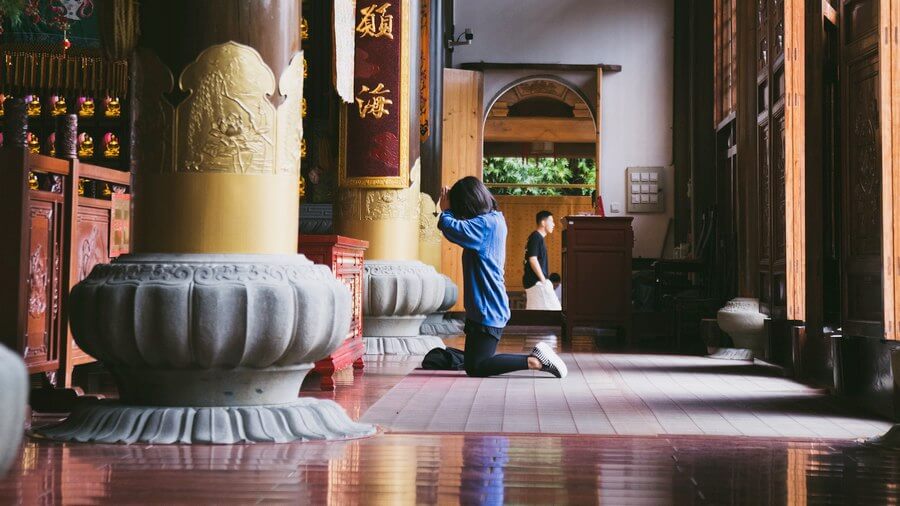
Person worshiping at a shrine.

On one occasion the Blessed One was dwelling at Sāvatthī in Jeta’s Grove, Anāthapiṇḍika’s Park. Now on that occasion King Pasenadi of Kosala had returned from the war front, victorious in battle, his purpose having been achieved. Then King Pasenadi of Kosala set out for the park. He went by carriage as far as the ground was suitable for a carriage, and then he dismounted from his carriage and entered the park on foot. Now on that occasion a number of bhikkhus were walking back and forth in the open air. Then King Pasenadi of Kosala approached those bhikkhus and asked them:

“Bhante, where is the Blessed One, the Arahant, the Perfectly Enlightened One now dwelling? For I wish to see the Blessed One, the Arahant, the Perfectly Enlightened One.”

“Great king, that is his dwelling with the closed door. Approach it quietly. Without hurrying, enter the porch, clear your throat, and tap on the bolt. The Blessed One will open the door for you.”

Then, King Pasenadi of Kosala went quietly up to the dwelling with the closed door. Without hurrying, he entered the porch, cleared his throat, and tapped on the bolt. The Blessed One opened the door.

Then King Pasenadi of Kosala entered the dwelling, prostrated himself with his head at the Blessed One’s feet, and covered the Blessed One’s feet with kisses and caressed them with his hands, pronouncing his name: “Bhante, I am King Pasenadi of Kosala! Bhante, I am King Pasenadi of Kosala!”

“But, great king, what reasons do you have for showing such supreme honor to this body and displaying such an offering of loving-kindness?”

“Bhante, it is out of my gratitude and thankfulness that I show such supreme honor toward the Blessed One and display such an offering of loving-kindness to him.

(1) “For, Bhante, the Blessed One is practicing for the welfare of many people, for the happiness of many people; he has established many people in the noble method, that is, in the way of the good Dhamma, in the way of the wholesome Dhamma. This is one reason I show such supreme honor toward the Blessed One and display such an offering of loving-kindness to him.

(2) “Again, Bhante, the Blessed One is virtuous, of mature behavior, of noble behavior, of wholesome behavior, possessing wholesome behavior. This is another reason I show such supreme honor toward the Blessed One….

(3) “Again, Bhante, for a long time the Blessed One has been a forest-dweller who resorts to remote lodgings in forests and jungle groves. Since that is so, this is another reason I show such supreme honor toward the Blessed One….

(4) “Again, Bhante, the Blessed One is content with any kind of robe, almsfood, lodging, and medicines and provisions for the sick. This is another reason I show such supreme honor toward the Blessed One….

(5) “Again, Bhante, the Blessed One is worthy of gifts, worthy of hospitality, worthy of offerings, worthy of reverential salutation, an unsurpassed field of merit for the world. This is another reason I show such supreme honor toward the Blessed One….

(6) “Again, Bhante, the Blessed One gets to hear at will, without trouble or difficulty, talk concerned with the austere life that leads to the elimination of defilements, that is conducive to opening up the heart, that is, talk on fewness of desires, on contentment, on solitude, on not getting bound up with others, on arousing energy, on virtuous behavior, on concentration, on wisdom, on liberation, on the knowledge and vision of liberation. This is another reason I show such supreme honor toward the Blessed One….

(7) “Again, Bhante, the Blessed One gains at will, without trouble or difficulty, the four jhānas that constitute the higher mind and are pleasant dwellings in this very life. This is another reason I show such supreme honor toward the Blessed One….

(8) “Again, Bhante, the Blessed One recollects his manifold past abodes, that is, one birth, two births, three births, four births, five births, ten births, twenty births, thirty births, forty births, fifty births, a hundred births, a thousand births, a hundred thousand births, many eons of world-dissolution, many eons of world-evolution, many eons of world-dissolution and world-evolution thus: ‘There I was so named, of such a clan, with such an appearance, such was my food, such my experience of pleasure and pain, such my life span; passing away from there, I was reborn elsewhere, and there too I was so named, of such a clan, with such an appearance, such was my food, such my experience of pleasure and pain, such my life span; passing away from there, I was reborn here.’ Thus he recollects his manifold past abodes with their aspects and details. Since that is so, this is another reason I show such supreme honor toward the Blessed One….

(9) “Again, Bhante, with the divine eye, which is purified and surpasses the human, the Blessed One sees beings passing away and being reborn, inferior and superior, beautiful and ugly, fortunate and unfortunate, and he understands how beings fare in accordance with their kamma thus: ‘These beings who engaged in misconduct by body, speech, and mind, who reviled the noble ones, held wrong view, and undertook kamma based on wrong view, with the breakup of the body, after death, have been reborn in the plane of misery, in a bad destination, in the lower world, in hell; but these beings who engaged in good conduct by body, speech, and mind, who did not revile the noble ones, who held right view, and undertook kamma based on right view, with the breakup of the body, after death, have been reborn in a good destination, in the heavenly world.’ Thus with the divine eye, which is purified and surpasses the human, he sees beings passing away and being reborn, inferior and superior, beautiful and ugly, fortunate and unfortunate, and he understands how beings fare in accordance with their kamma. Since that is so, this is another reason I show such supreme honor toward the Blessed One….

(10) “Again, Bhante, with the destruction of the taints, the Blessed One has realized for himself with direct knowledge, in this very life, the taintless liberation of mind, liberation by wisdom, and having entered upon it, he dwells in it. Since that is so, this is another reason I show such supreme honor toward the Blessed One and display such an offering of loving-kindness to him.

“And now, Bhante, we must be going. We are busy and have much to do.”

“You may go, great king, at your own convenience.”

Then King Pasenadi of Kosala rose from his seat, paid homage to the Blessed One, circumambulated him keeping the right side toward him, and departed.


Read this translation of Aṅguttara Nikāya 10.30 Dutiyakosalasutta: Kosala (2) by Bhikkhu Bodhi on SuttaCentral.net. Or read a different translation on SuttaCentral.net. Or listen on SC-Voice.net. Or explore the Pali on DigitalPaliReader.online.

Or read a translation in Deutsch, Bengali, Español, Indonesian, မြန်မာဘာသာ, Português, ру́сский язы́к, සිංහල, ไทย, Tiếng Việt, or 汉语. Learn how to find your language.

AN 9.30 Āghātapaṭivinayasutta: Getting Rid of Resentment

Bust of a silver Buddha statue.

“Mendicants, there are these nine methods to get rid of resentment. What nine?

  1. Thinking: ‘They harmed me, but what can I possibly do?’ you get rid of resentment.
  2. Thinking: ‘They are harming me, but what can I possibly do?’ you get rid of resentment.
  3. Thinking: ‘They will harm me, but what can I possibly do?’ you get rid of resentment.
  4. Thinking: ‘They harmed someone I love, but what can I possibly do?’ you get rid of resentment.
  5. Thinking: ‘They are harming someone I love, but what can I possibly do?’ you get rid of resentment.
  6. Thinking: ‘They will harm someone I love, but what can I possibly do?’ you get rid of resentment.
  7. Thinking: ‘They helped someone I dislike, but what can I possibly do?’ you get rid of resentment.
  8. Thinking: ‘They are helping someone I dislike, but what can I possibly do?’ you get rid of resentment.
  9. Thinking: ‘They will help someone I dislike, but what can I possibly do?’ you get rid of resentment.

These are the nine methods to get rid of resentment.”


Read this translation of Aṅguttara Nikāya 9.30 Āghātapaṭivinayasutta: Getting Rid of Resentment by Bhikkhu Sujato on SuttaCentral.net. Or listen on SC-Voice.net. Or explore the Pali on DigitalPaliReader.online.

AN 9.25 Paññāsutta: Consolidated by Wisdom

A collection of identical tea lights burning in the dark.

“Mendicants, when a mendicant’s mind has been well consolidated with wisdom it’s appropriate for them to say: ‘I understand: “Rebirth is ended, the spiritual journey has been completed, what had to be done has been done, there is no return to any state of existence.”’

And how is a mendicant’s mind well consolidated with wisdom? The mind is well consolidated with wisdom when they know: ‘My mind is without greed.’ … ‘My mind is without hate.’ … ‘My mind is without delusion.’ … ‘My mind is not liable to become greedy.’ … ‘My mind is not liable to become hateful.’ … ‘My mind is not liable to become deluded.’ … ‘My mind is not liable to return to rebirth in the sensual realm.’ … ‘My mind is not liable to return to rebirth in the realm of luminous form.’ … ‘My mind is not liable to return to rebirth in the formless realm.’ When a mendicant’s mind has been well consolidated with wisdom it’s appropriate for them to say: ‘I understand: “Rebirth is ended, the spiritual journey has been completed, what had to be done has been done, there is no return to any state of existence.”’”


Read this translation of Aṅguttara Nikāya 9.25 Paññāsutta: Consolidated by Wisdom by Bhikkhu Sujato on SuttaCentral.net. Or read a different translation on DhammaTalks.org. Or listen on SC-Voice.net. Or explore the Pali on DigitalPaliReader.online.

AN 6.19 From… Paṭhamamaraṇassatisutta: Mindfulness of Death (1st)

Potato on a fork.

…“As to the mendicants who develop mindfulness of death by wishing to live for a day and night … or to live for a day … or to live as long as it takes to eat a meal of almsfood … or to live as long as it takes to chew and swallow four or five mouthfuls— these are called mendicants who live negligently. They slackly develop mindfulness of death for the ending of defilements.

But as to the mendicants who develop mindfulness of death by wishing to live as long as it takes to chew and swallow a single mouthful … or to live as long as it takes to breathe out after breathing in, or to breathe in after breathing out— these are called mendicants who live diligently. They keenly develop mindfulness of death for the ending of defilements.

So you should train like this: ‘We will live diligently. We will keenly develop mindfulness of death for the ending of defilements.’ That’s how you should train.”


Read the entire translation of Aṅguttara Nikāya 6.19 Paṭhamamaraṇassatisutta: Mindfulness of Death (1st) by Bhikkhu Sujato on SuttaCentral.net. Or read a different translation on DhammaTalks.org. Or listen on SC-Voice.net. Or explore the Pali on DigitalPaliReader.online.

AN 4.114 Nāgasutta: A Royal Elephant

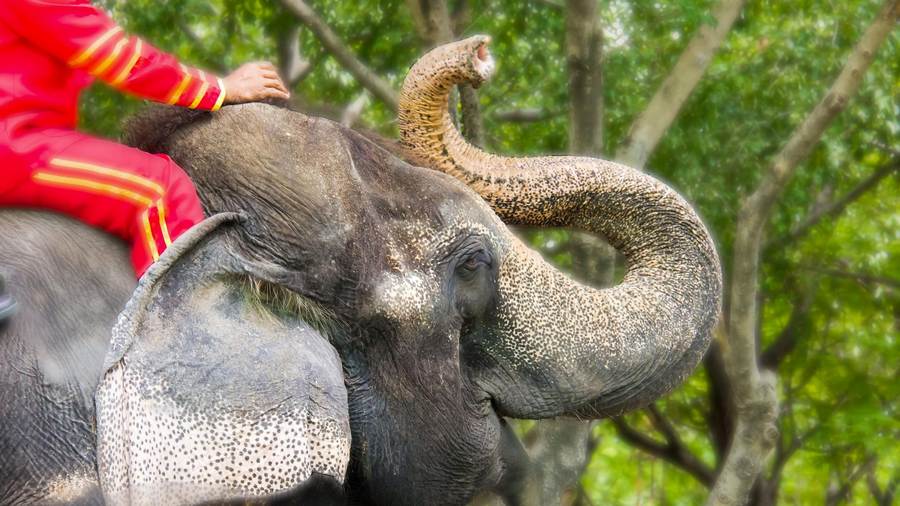
Person riding an elephant.

“Mendicants, a royal bull elephant with four factors is worthy of a king, fit to serve a king, and is considered a factor of kingship. What four? A royal bull elephant listens, destroys, endures, and goes fast.

And how does a royal bull elephant listen? It’s when a royal bull elephant pays heed, pays attention, engages wholeheartedly, and lends an ear to whatever task the elephant trainer has it do, whether or not it has done it before. That’s how a royal bull elephant listens.

And how does a royal bull elephant destroy? It’s when a royal bull elephant in battle destroys elephants with their riders, horses with their riders, chariots and charioteers, and foot soldiers. That’s how a royal bull elephant destroys.

And how does a royal bull elephant endure? It’s when a royal bull elephant in battle endures being struck by spears, swords, arrows, and axes; it endures the thunder of the drums, kettledrums, horns, and cymbals. That’s how a royal bull elephant endures.

And how does a royal bull elephant go fast? It’s when a royal bull elephant swiftly goes in whatever direction the elephant trainer sends it, whether or not it has been there before. That’s how a royal bull elephant goes fast. A royal bull elephant with four factors is worthy of a king, fit to serve a king, and is considered a factor of kingship.

In the same way, a mendicant with four qualities is worthy of offerings dedicated to the gods, worthy of hospitality, worthy of a religious donation, worthy of veneration with joined palms, and is the supreme field of merit for the world. What four? A mendicant listens, destroys, endures, and goes fast.

And how does a mendicant listen? It’s when a mendicant pays heed, pays attention, engages wholeheartedly, and lends an ear when the teaching and training proclaimed by a Realized One is being taught. That’s how a mendicant listens.

And how does a mendicant destroy? It’s when a mendicant doesn’t tolerate a sensual, malicious, or cruel thought. They don’t tolerate any bad, unskillful qualities that have arisen, but give them up, get rid of them, eliminate them, and obliterate them. That’s how a mendicant destroys.

And how does a mendicant endure? It’s when a mendicant endures cold, heat, hunger, and thirst; the touch of flies, mosquitoes, wind, sun, and reptiles; rude and unwelcome criticism; and they put up with physical pain—sharp, severe, acute, unpleasant, disagreeable, and life-threatening. That’s how a mendicant endures.

And how does a mendicant go fast? It’s when a mendicant swiftly goes in the direction they’ve never gone before in all this long time; that is, the stilling of all activities, the letting go of all attachments, the ending of craving, fading away, cessation, extinguishment. That’s how a mendicant goes fast. A mendicant with these four qualities … is the supreme field of merit for the world.”


Read this translation of Aṅguttara Nikāya 4.114 Nāgasutta: A Royal Elephant by Bhikkhu Sujato on SuttaCentral.net. Or listen on PaliAudio.com or SC-Voice.net. Or explore the Pali on DigitalPaliReader.online.

Or read a translation in Deutsch, বাংলা, Bahasa Indonesia, 日本語, မြန်မာဘာသာ, Русский, සිංහල, ไทย, Tiếng Việt, or 汉语. Learn how to find your language.
AN 5.181 Āraññikasutta: Wilderness Dwellers

Person walking through moss covered forest.

“Mendicants, there are these five kinds of wilderness dwellers. What five? A person may be wilderness dweller because of stupidity and folly. Or because of wicked desires, being naturally full of desires. Or because of madness and mental disorder. Or because it is praised by the Buddhas and their disciples. Or for the sake of having few wishes, for the sake of contentment, self-effacement, seclusion, and simplicity. These are the five kinds of wilderness dwellers. But the person who dwells in the wilderness for the sake of having few wishes is the foremost, best, chief, highest, and finest of the five.

From a cow comes milk, from milk comes curds, from curds come butter, from butter comes ghee, and from ghee comes cream of ghee. And the cream of ghee is said to be the best of these. In the same way, the person who dwells in the wilderness for the sake of having few wishes is the foremost, best, chief, highest, and finest of the five.”


Read this translation of Aṅguttara Nikāya 5.181 Āraññikasutta: Wilderness Dwellers by Bhikkhu Sujato on SuttaCentral.net. Or read a different translation on SuttaCentral.net. Or listen on SC-Voice.net.

AN 4.95 Chavālātasutta: A Firebrand

Close up of a fire.

“Mendicants, these four people are found in the world. What four?

  1. One who practices to benefit neither themselves nor others;
  2. one who practices to benefit others, but not themselves;
  3. one who practices to benefit themselves, but not others; and
  4. one who practices to benefit both themselves and others.

Suppose there was a firebrand for lighting a funeral pyre, burning at both ends, and smeared with dung in the middle. It couldn’t be used as timber either in the village or the wilderness. The person who practices to benefit neither themselves nor others is like this, I say.

The person who practices to benefit others, but not themselves, is better than that. The person who practices to benefit themselves, but not others, is better than both of those. But the person who practices to benefit both themselves and others is the foremost, best, chief, highest, and finest of the four.

From a cow comes milk, from milk comes curds, from curds come butter, from butter comes ghee, and from ghee comes cream of ghee. And the cream of ghee is said to be the best of these. In the same way, the person who practices to benefit both themselves and others is the foremost, best, chief, highest, and finest of the four.

These are the four people found in the world.”


Read this translation of Aṅguttara Nikāya 4.95 Chavālātasutta: A Firebrand by Bhikkhu Sujato on SuttaCentral.net. Or read a different translation on SuttaCentral.net or DhammaTalks.org. Or listen on PaliAudio.com or SC-Voice.net.

AN 5.51 Āvaraṇasutta: Obstacles

Swiftly flowing mountain river.

Thus have I heard. On one occasion the Blessed One was dwelling at Sāvatthī in Jeta’s Grove, Anāthapiṇḍika’s Park. There the Blessed One addressed the bhikkhus: “Bhikkhus!”

“Venerable sir!” those bhikkhus replied. The Blessed One said this:

“Bhikkhus, there are these five obstructions, hindrances, encumbrances of the mind, states that weaken wisdom. What five?

(1) Sensual desire is an obstruction, a hindrance, an encumbrance of the mind, a state that weakens wisdom.
(2) Ill will …
(3) Dullness and drowsiness …
(4) Restlessness and remorse …
(5) Doubt is an obstruction, a hindrance, an encumbrance of the mind, a state that weakens wisdom.

These are the five obstructions, hindrances, encumbrances of the mind, states that weaken wisdom.

“Bhikkhus, without having abandoned these five obstructions, hindrances, encumbrances of the mind, states that weaken wisdom, it is impossible that a bhikkhu, with his powerless and feeble wisdom, might know his own good, the good of others, or the good of both, or realize a superhuman distinction in knowledge and vision worthy of the noble ones. Suppose a river were flowing down from a mountain, traveling a long distance, with a swift current, carrying along much flotsam. Then, on both of its banks, a man would open irrigation channels. In such a case, the current in the middle of the river would be dispersed, spread out, and divided, so that the river would no longer travel a long distance, with a swift current, carrying along much flotsam. So too, without having abandoned these five obstructions … it is impossible that a bhikkhu … might realize a superhuman distinction in knowledge and vision worthy of the noble ones.

“But, bhikkhus, having abandoned these five obstructions, hindrances, encumbrances of the mind, states that weaken wisdom, it is possible that a bhikkhu, with his powerful wisdom, might know his own good, the good of others, and the good of both, and realize a superhuman distinction in knowledge and vision worthy of the noble ones. Suppose a river were flowing down from a mountain, traveling a long distance, with a swift current, carrying along much flotsam. Then a man would close up the irrigation channels on both of its banks. In such a case, the current in the middle of the river would not be dispersed, spread out, and divided, so that the river could travel a long distance, with a swift current, carrying along much flotsam. So too, having abandoned these five obstructions … it is possible that a bhikkhu … might realize a superhuman distinction in knowledge and vision worthy of the noble ones.”


Read this translation of Aṅguttara Nikāya 5.51 Āvaraṇasutta: Obstacles by Bhikkhu Sujato on SuttaCentral.net. Or read a different translation on SuttaCentral.net, or DhammaTalks.org. Or listen on SC-Voice.net.

AN 5.31 Sumanasutta: Sumanā

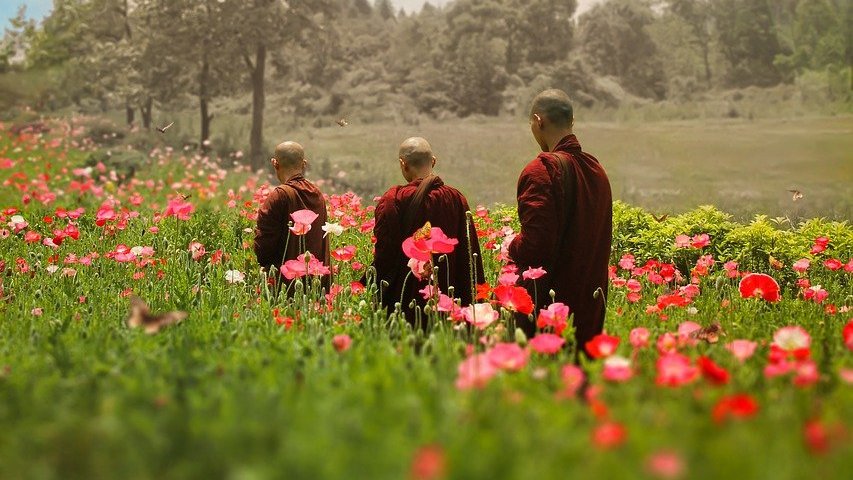
Monastics walking through field of flowers.

On one occasion the Blessed One was dwelling at Sāvatthī in Jeta’s Grove, Anāthapiṇḍika’s Park. Then Princess Sumanā, accompanied by five hundred chariots and five hundred court girls, approached the Blessed One, paid homage to him, and sat down to one side. Princess Sumanā then said to the Blessed One:

“Here, Bhante, there might be two disciples of the Blessed One equal in faith, virtuous behavior, and wisdom, but one is generous while the other is not. With the breakup of the body, after death, they would both be reborn in a good destination, in a heavenly world. When they have become devas, would there be any distinction or difference between them?”

“There would be, Sumanā,” the Blessed One said. “The generous one, having become a deva, would surpass the other in five ways: in celestial life span, celestial beauty, celestial happiness, celestial glory, and celestial authority. The generous one, having become a deva, would surpass the other in these five ways.”

“But, Bhante, if these two pass away from there and again become human beings, would there still be some distinction or difference between them?”

“There would be, Sumanā,” the Blessed One said. “When they again become human beings, the generous one would surpass the other in five ways: in human life span, human beauty, human happiness, human fame, and human authority. When they again become human beings, the generous one would surpass the other in these five ways.”

“But, Bhante, if these two should go forth from the household life into homelessness, would there still be some distinction or difference between them?”

“There would be, Sumanā,” the Blessed One said. “The generous one, having gone forth, would surpass the other in five ways. 1) He would usually use a robe that has been specifically offered to him, seldom one that had not been specifically offered to him. 2) He would usually eat almsfood that has been specifically offered to him, seldom almsfood that had not been specifically offered to him. 3) He would usually use a lodging that had been specifically offered to him, seldom one that had not been specifically offered to him. 4) He would usually use medicines and provisions for the sick that had been specifically offered to him, seldom those that had not been specifically offered to him. 5) His fellow monastics, those with whom he dwells, would usually behave toward him in agreeable ways by bodily, verbal, and mental action, seldom in disagreeable ways. They would usually present him what is agreeable, seldom what is disagreeable. The generous one, having gone forth, would surpass the other in these five ways.”

But, Bhante, if both attain arahantship, would there still be some distinction or difference between them after they have attained arahantship?”

“In this case, Sumanā, I declare, there would be no difference between the liberation of one and the liberation of the other.”

“It’s astounding and amazing, Bhante! Truly, one has good reason to give alms and do meritorious deeds, since they will be helpful if one becomes a deva, again becomes a human being, or goes forth.”

“So it is, Sumanā! So it is, Sumanā! Truly, one has good reason to give alms and do meritorious deeds, since they will be helpful if one becomes a deva, again becomes a human being, or goes forth.”

This is what the Blessed One said. Having said this, the Fortunate One, the Teacher, further said this:

“As the stainless moon
moving through the sphere of space
outshines with its radiance
all the stars in the world,
so one accomplished in virtuous behavior,
a person endowed with faith,
outshines by generosity
all the misers in the world.

“As the hundred-peaked rain cloud,
thundering, wreathed in lightning,
pours down rain upon the earth,
inundating the plains and lowlands,
so the Perfectly Enlightened One’s disciple,
the wise one accomplished in vision,
surpasses the miserly person
in five specific respects:
life span and glory,
beauty and happiness.
Possessed of wealth, after death
he rejoices in heaven.”


Read this translation of Aṅguttara Nikāya 5.31 Sumanasutta: Sumanā by Bhikkhu Bodhi on SuttaCentral.net. Or read a different translation on SuttaCentral.net, SuttaFriends.org or DhammaTalks.org.

Or listen on SC-Voice.net.

AN 3.95 Parisāsutta: Assemblies

Mountain stream.

“Mendicants, these are the three assemblies. What three? An assembly of the best, a divided assembly, and a harmonious assembly.

And what is an assembly of the best? An assembly where the senior mendicants are not indulgent or slack, nor are they backsliders. Instead, they take the lead in seclusion, rousing energy for attaining the unattained, achieving the unachieved, and realizing the unrealized. And those who come afterwards follow their example. They too are not indulgent or slack, nor are they backsliders. Instead, they take the lead in seclusion, rousing energy for attaining the unattained, achieving the unachieved, and realizing the unrealized. This is called an assembly of the best.

And what is a divided assembly? An assembly where the mendicants argue, quarrel, and dispute, continually wounding each other with barbed words. This is called a divided assembly.

And what is a harmonious assembly? An assembly where the mendicants live in harmony, appreciating each other, without quarreling, blending like milk and water, and regarding each other with kindly eyes. This is called a harmonious assembly.

When the mendicants live in harmony like this, they make much merit. At that time the mendicants live in a holy dwelling, that is, the heart’s release by rejoicing. When they’re joyful, rapture springs up. When the mind is full of rapture, the body becomes tranquil. When the body is tranquil, they feel bliss. And when they’re blissful, the mind becomes immersed in samādhi.

It’s like when it rains heavily on a mountain top, and the water flows downhill to fill the hollows, crevices, and creeks. As they become full, they fill up the pools. The pools fill up the lakes, the lakes fill up the streams, and the streams fill up the rivers. And as the rivers become full, they fill up the ocean.

In the same way, when the mendicants are in harmony, appreciating each other, without quarreling, blending like milk and water, and regarding each other with kindly eyes, they make much merit. At that time the mendicants live in a holy dwelling, that is, the heart’s release by rejoicing. When they’re joyful, rapture springs up. When the mind is full of rapture, the body becomes tranquil. When the body is tranquil, they feel bliss. And when they’re blissful, the mind becomes immersed in samādhi.

These are the three assemblies.”


Read this translation of Aṅguttara Nikāya 3.95 Parisāsutta: Assemblies by Bhikkhu Sujato on SuttaCentral.net. Or read a different translation on DhammaTalks.org.