ReadingFaithfully.org icon Facebook icon Bluesky icon Reddit icon Tumblr icon Mastodon icon RSS icon

MN 125 From… Dantabhūmisutta: The Level of the Tamed

Person high upon a mountain looking down at the valley below.

[Note: Although this selection is on the long side, it is just the first part of a wonderful longer sutta. If you have time to read the whole thing it would be good. The rest of the sutta selections this week will be back to their normal length.]

So I have heard. At one time the Buddha was staying near Rājagaha, in the Bamboo Grove, the squirrels’ feeding ground.

Now at that time the novice Aciravata was staying in a wilderness hut. Then as Prince Jayasena was going for a walk he approached Aciravata, and exchanged greetings with him.

When the greetings and polite conversation were over, he sat down to one side and said to Aciravata, “Master Aggivessana, I have heard that a mendicant who meditates diligently, keenly, and resolutely can experience unification of mind.”

“That’s so true, Prince! That’s so true! A mendicant who meditates diligently, keenly, and resolutely can experience unification of mind.”

“Master Aggivessana, please teach me the Dhamma as you have learned and memorized it.”

“I’m not competent to do so, Prince. For if I were to teach you the Dhamma as I have learned and memorized it, you might not understand the meaning, which would be wearying and troublesome for me.”

“Master Aggivessana, please teach me the Dhamma as you have learned and memorized it. Hopefully I will understand the meaning of what you say.”

“Then I shall teach you. If you understand the meaning of what I say, that’s good. If not, then leave each to his own, and do not question me about it further.”

“Master Aggivessana, please teach me the Dhamma as you have learned and memorized it. If I understand the meaning of what you say, that’s good. If not, then I will leave each to his own, and not question you about it further.”

Then the novice Aciravata taught Prince Jayasena the Dhamma as he had learned and memorized it. When he had spoken, Jayasena said to him, “It is impossible, Master Aggivessana, it cannot happen that a mendicant who meditates diligently, keenly, and resolutely can experience unification of mind.” Having declared that this was impossible, Jayasena got up from his seat and left.

Not long after he had left, Aciravata went to the Buddha, bowed, sat down to one side, and informed the Buddha of all they had discussed.

When he had spoken, the Buddha said to him,

“How could it possibly be otherwise, Aggivessana? Prince Jayasena dwells in the midst of sensual pleasures, enjoying them, consumed by thoughts of them, burning with fever for them, and eagerly seeking more. It’s simply impossible for him to know or see or realize what can only be known, seen, and realized by renunciation.

Suppose there was a pair of elephants or horse or oxen in training who were well tamed and well trained. And there was a pair who were not tamed or trained. What do you think, Aggivessana? Wouldn’t the pair that was well tamed and well trained perform the tasks of the tamed and reach the level of the tamed?”

“Yes, sir.”

“But would the pair that was not tamed and trained perform the tasks of the tamed and reach the level of the tamed, just like the tamed pair?”

“No, sir.”

“In the same way, Prince Jayasena dwells in the midst of sensual pleasures, enjoying them, consumed by thoughts of them, burning with fever for them, and eagerly seeking more. It’s simply impossible for him to know or see or realize what can only be known, seen, and realized by renunciation.

Suppose there was a big mountain not far from a town or village. And two friends set out from that village or town, lending each other a hand up to the mountain. Once there, one friend would remain at the foot of the mountain, while the other would climb to the peak. Then the one standing at the foot would say to the one at the peak, ‘My friend, what do you see, standing there at the peak?’ They’d reply, ‘Standing at the peak, I see delightful parks, woods, meadows, and lotus ponds!’

But the other would say, ‘It’s impossible, it cannot happen that, standing at the peak, you can see delightful parks, woods, meadows, and lotus ponds.’ So their friend would come down from the peak, take their friend by the arm, and make them climb to the peak. After giving them a moment to catch their breath, they’d say, ‘My friend, what do you see, standing here at the peak?’ They’d reply, ‘Standing at the peak, I see delightful parks, woods, meadows, and lotus ponds!’

They’d say, ‘Just now I understood you to say: “It’s impossible, it cannot happen that, standing at the peak, you can see delightful parks, woods, meadows, and lotus ponds.” But now you say: “Standing at the peak, I see delightful parks, woods, meadows, and lotus ponds!”’ They’d say, ‘But my friend, it was because I was obstructed by this big mountain that I didn’t see what could be seen.’

But bigger than that is the mass of ignorance by which Prince Jayasena is veiled, shrouded, covered, and engulfed. Prince Jayasena dwells in the midst of sensual pleasures, enjoying them, consumed by thoughts of them, burning with fever for them, and eagerly seeking more. It’s quite impossible for him to know or see or realize what can only be known, seen, and realized by renunciation. It wouldn’t be surprising if, had these two similes occurred to you, Prince Jayasena would have gained confidence in you and shown his confidence.”…


Read the entire translation of Majjhima Nikāya 125 Dantabhūmisutta: The Level of the Tamed by Bhikkhu Sujato on SuttaCentral.net.

Or read a different translation on DhammaTalks.org or AccessToInsight.org. Or listen on PaliAudio.com or SC-Voice.net. Or explore the Pali on DigitalPaliReader.online.

Or read a translation in Bengali, Català, Deutsch, Español, हिन्दी, Indonesian, Italiano, မြန်မာဘာသာ, Norsk, Português, ру́сский язы́к, සිංහල, Srpski, ไทย, Tiếng Việt, or 汉语. Learn how to find your language.

Thig 13.5 Subhākammāradhītutherīgāthā: Subhā, the Smith’s Daughter

A Buddhist monastic offers flowers at the base of a brick stupa.

“I was so young, my clothes so fresh,
at that time I heard the teaching.
Being diligent,
I comprehended the truth;

and then I became profoundly dispassionate
towards all sensual pleasures.
Seeing fear in identity,
I longed for renunciation.

Giving up my family circle,
bonded servants and workers,
and my flourishing villages and lands,
so delightful and pleasant,

I went forth;
all that is no small wealth.
Now that I’ve gone forth in faith like this,
in the true teaching so well proclaimed,

since I desire to have nothing,
it would not be appropriate
to take back gold and money,
having already got rid of them.

Money or gold
doesn’t lead to peace and awakening.
It doesn’t befit an ascetic,
it’s not the wealth of the noble ones;

it’s just greed and vanity,
confusion and growing decadence,
dubious, troublesome—
there is nothing lasting there.

Depraved and heedless,
unenlightened folk, their hearts corrupt,
fight each other,
creating conflict.

Killing, caging, misery,
loss, grief, and lamentation;
those sunk in sensual pleasures
see many disastrous things.

My family, why do you urge me on
to pleasures, as if you were my enemies?
You know I’ve gone forth,
seeing fear in sensual pleasures.

It’s not due to gold, coined or uncoined,
that defilements come to an end.
Sensual pleasures are enemies and murderers,
hostile forces that bind you to thorns.

My family, why do you urge me on
to pleasures, as if you were my enemies?
You know I’ve gone forth,
shaven, wrapped in my outer robe.

Leftovers as gleanings,
and cast-off rags as robes—
that’s what’s fitting for me,
the essentials of the homeless life.

Great seers expel sensual pleasures,
both human and divine.
Safe in their sanctuary, they are freed,
having found unshakable happiness.

May I not encounter sensual pleasures,
for no shelter is found in them.
Sensual pleasures are enemies and murderers,
as painful as a bonfire.

Greed is an obstacle, a threat,
full of anguish and thorns;
it is out of balance,
a great gateway to confusion.

Hazardous and terrifying,
sensual pleasures are like a snake’s head,
where fools delight,
the blind ordinary folk.

Stuck in the swamp of sensuality,
there are so many ignorant in the world.
They know nothing of the end
of rebirth and death.

Because of sensual pleasures,
people jump right on to the path that goes to a bad place.
So many walk the path
that brings disease onto themselves.

That’s how sensual pleasures create enemies;
they are so tormenting, so corrupting,
trapping beings with the world’s material delights,
they are nothing less than the bonds of death.

Maddening, enticing,
sensual pleasures derange the mind.
They’re a snare laid by Māra
for the corruption of beings.

Sensual pleasures are infinitely dangerous,
they’re full of suffering, a terrible poison;
offering little gratification, they’re makers of strife,
withering bright qualities away.

Since I’ve created so much ruination
because of sensual pleasures,
I will not relapse to them again,
but will always delight in quenching.

Fighting against sensual pleasures,
longing for that cool state,
I shall meditate diligently
for the ending of all fetters.

Sorrowless, stainless, secure:
I’ll follow that path,
the straight noble eightfold way
by which the seers have crossed over.”

“Look at this: Subhā the smith’s daughter,
standing firm in the teaching.
She has entered the imperturbable state,
meditating at the root of a tree.

It’s just eight days since she went forth,
full of faith in the beautiful teaching.
Guided by Uppalavaṇṇā,
she is master of the three knowledges, conqueror of death.

This one is freed from slavery and debt,
a nun with faculties developed.
Unyoked from all yokes,
she has completed the task and is free of defilements.”

Thus did Sakka, lord of all creatures,
along with a host of gods,
having come by their psychic powers,
honor Subhā, the smith’s daughter.


Read this translation of Therīgāthā 13.5 Subhākammāradhītutherīgāthā: Subhā, the Smith’s Daughter by Bhikkhu Sujato on SuttaCentral.net.

Or read a different translation on SuttaCentral.net, SuttaFriends.org or DhammaTalks.org. Or listen on SC-Voice.net. Or explore the Pali on DigitalPaliReader.online.

Or read a translation in Deutsch, Français, Indonesian, Italiano, 日本語, Norsk, ру́сский язы́к, සිංහල, or Tiếng Việt. Learn how to find your language.

AN 9.30 Āghātapaṭivinayasutta: Getting Rid of Resentment

Bust of a silver Buddha statue.

“Mendicants, there are these nine methods to get rid of resentment. What nine?

  1. Thinking: ‘They harmed me, but what can I possibly do?’ you get rid of resentment.
  2. Thinking: ‘They are harming me, but what can I possibly do?’ you get rid of resentment.
  3. Thinking: ‘They will harm me, but what can I possibly do?’ you get rid of resentment.
  4. Thinking: ‘They harmed someone I love, but what can I possibly do?’ you get rid of resentment.
  5. Thinking: ‘They are harming someone I love, but what can I possibly do?’ you get rid of resentment.
  6. Thinking: ‘They will harm someone I love, but what can I possibly do?’ you get rid of resentment.
  7. Thinking: ‘They helped someone I dislike, but what can I possibly do?’ you get rid of resentment.
  8. Thinking: ‘They are helping someone I dislike, but what can I possibly do?’ you get rid of resentment.
  9. Thinking: ‘They will help someone I dislike, but what can I possibly do?’ you get rid of resentment.

These are the nine methods to get rid of resentment.”


Read this translation of Aṅguttara Nikāya 9.30 Āghātapaṭivinayasutta: Getting Rid of Resentment by Bhikkhu Sujato on SuttaCentral.net. Or listen on SC-Voice.net. Or explore the Pali on DigitalPaliReader.online.

AN 9.25 Paññāsutta: Consolidated by Wisdom

A collection of identical tea lights burning in the dark.

“Mendicants, when a mendicant’s mind has been well consolidated with wisdom it’s appropriate for them to say: ‘I understand: “Rebirth is ended, the spiritual journey has been completed, what had to be done has been done, there is no return to any state of existence.”’

And how is a mendicant’s mind well consolidated with wisdom? The mind is well consolidated with wisdom when they know: ‘My mind is without greed.’ … ‘My mind is without hate.’ … ‘My mind is without delusion.’ … ‘My mind is not liable to become greedy.’ … ‘My mind is not liable to become hateful.’ … ‘My mind is not liable to become deluded.’ … ‘My mind is not liable to return to rebirth in the sensual realm.’ … ‘My mind is not liable to return to rebirth in the realm of luminous form.’ … ‘My mind is not liable to return to rebirth in the formless realm.’ When a mendicant’s mind has been well consolidated with wisdom it’s appropriate for them to say: ‘I understand: “Rebirth is ended, the spiritual journey has been completed, what had to be done has been done, there is no return to any state of existence.”’”


Read this translation of Aṅguttara Nikāya 9.25 Paññāsutta: Consolidated by Wisdom by Bhikkhu Sujato on SuttaCentral.net. Or read a different translation on DhammaTalks.org. Or listen on SC-Voice.net. Or explore the Pali on DigitalPaliReader.online.

AN 6.19 From… Paṭhamamaraṇassatisutta: Mindfulness of Death (1st)

Potato on a fork.

…“As to the mendicants who develop mindfulness of death by wishing to live for a day and night … or to live for a day … or to live as long as it takes to eat a meal of almsfood … or to live as long as it takes to chew and swallow four or five mouthfuls— these are called mendicants who live negligently. They slackly develop mindfulness of death for the ending of defilements.

But as to the mendicants who develop mindfulness of death by wishing to live as long as it takes to chew and swallow a single mouthful … or to live as long as it takes to breathe out after breathing in, or to breathe in after breathing out— these are called mendicants who live diligently. They keenly develop mindfulness of death for the ending of defilements.

So you should train like this: ‘We will live diligently. We will keenly develop mindfulness of death for the ending of defilements.’ That’s how you should train.”


Read the entire translation of Aṅguttara Nikāya 6.19 Paṭhamamaraṇassatisutta: Mindfulness of Death (1st) by Bhikkhu Sujato on SuttaCentral.net. Or read a different translation on DhammaTalks.org. Or listen on SC-Voice.net. Or explore the Pali on DigitalPaliReader.online.

AN 4.114 Nāgasutta: A Royal Elephant

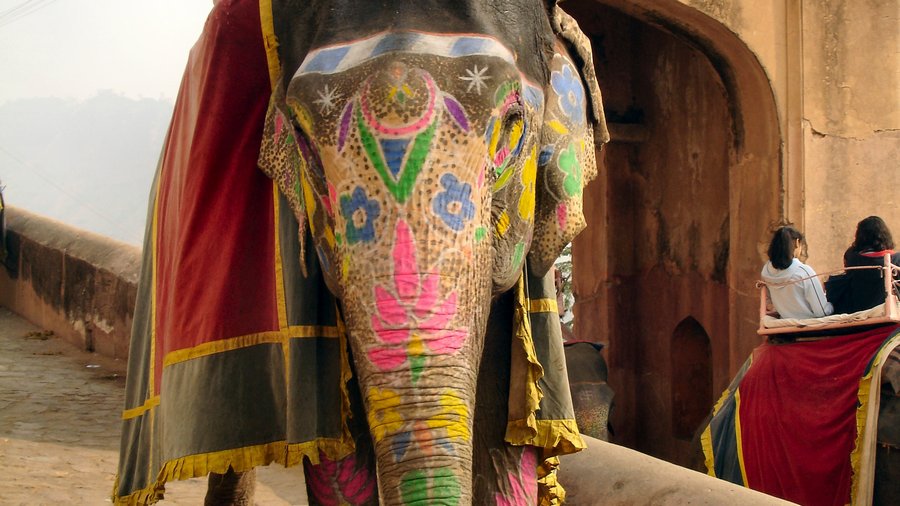
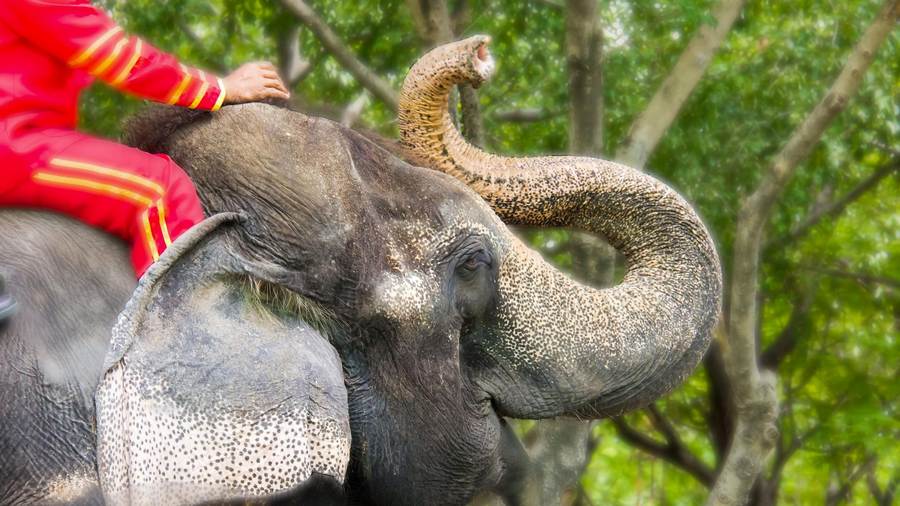
Person riding an elephant.

“Mendicants, a royal bull elephant with four factors is worthy of a king, fit to serve a king, and is considered a factor of kingship. What four? A royal bull elephant listens, destroys, endures, and goes fast.

And how does a royal bull elephant listen? It’s when a royal bull elephant pays heed, pays attention, engages wholeheartedly, and lends an ear to whatever task the elephant trainer has it do, whether or not it has done it before. That’s how a royal bull elephant listens.

And how does a royal bull elephant destroy? It’s when a royal bull elephant in battle destroys elephants with their riders, horses with their riders, chariots and charioteers, and foot soldiers. That’s how a royal bull elephant destroys.

And how does a royal bull elephant endure? It’s when a royal bull elephant in battle endures being struck by spears, swords, arrows, and axes; it endures the thunder of the drums, kettledrums, horns, and cymbals. That’s how a royal bull elephant endures.

And how does a royal bull elephant go fast? It’s when a royal bull elephant swiftly goes in whatever direction the elephant trainer sends it, whether or not it has been there before. That’s how a royal bull elephant goes fast. A royal bull elephant with four factors is worthy of a king, fit to serve a king, and is considered a factor of kingship.

In the same way, a mendicant with four qualities is worthy of offerings dedicated to the gods, worthy of hospitality, worthy of a religious donation, worthy of veneration with joined palms, and is the supreme field of merit for the world. What four? A mendicant listens, destroys, endures, and goes fast.

And how does a mendicant listen? It’s when a mendicant pays heed, pays attention, engages wholeheartedly, and lends an ear when the teaching and training proclaimed by a Realized One is being taught. That’s how a mendicant listens.

And how does a mendicant destroy? It’s when a mendicant doesn’t tolerate a sensual, malicious, or cruel thought. They don’t tolerate any bad, unskillful qualities that have arisen, but give them up, get rid of them, eliminate them, and obliterate them. That’s how a mendicant destroys.

And how does a mendicant endure? It’s when a mendicant endures cold, heat, hunger, and thirst; the touch of flies, mosquitoes, wind, sun, and reptiles; rude and unwelcome criticism; and they put up with physical pain—sharp, severe, acute, unpleasant, disagreeable, and life-threatening. That’s how a mendicant endures.

And how does a mendicant go fast? It’s when a mendicant swiftly goes in the direction they’ve never gone before in all this long time; that is, the stilling of all activities, the letting go of all attachments, the ending of craving, fading away, cessation, extinguishment. That’s how a mendicant goes fast. A mendicant with these four qualities … is the supreme field of merit for the world.”


Read this translation of Aṅguttara Nikāya 4.114 Nāgasutta: A Royal Elephant by Bhikkhu Sujato on SuttaCentral.net. Or listen on PaliAudio.com or SC-Voice.net. Or explore the Pali on DigitalPaliReader.online.

Or read a translation in Deutsch, বাংলা, Bahasa Indonesia, 日本語, မြန်မာဘာသာ, Русский, සිංහල, ไทย, Tiếng Việt, or 汉语. Learn how to find your language.

AN 5.181 Āraññikasutta: Wilderness Dwellers

Person walking through moss covered forest.

“Mendicants, there are these five kinds of wilderness dwellers. What five? A person may be wilderness dweller because of stupidity and folly. Or because of wicked desires, being naturally full of desires. Or because of madness and mental disorder. Or because it is praised by the Buddhas and their disciples. Or for the sake of having few wishes, for the sake of contentment, self-effacement, seclusion, and simplicity. These are the five kinds of wilderness dwellers. But the person who dwells in the wilderness for the sake of having few wishes is the foremost, best, chief, highest, and finest of the five.

From a cow comes milk, from milk comes curds, from curds come butter, from butter comes ghee, and from ghee comes cream of ghee. And the cream of ghee is said to be the best of these. In the same way, the person who dwells in the wilderness for the sake of having few wishes is the foremost, best, chief, highest, and finest of the five.”


Read this translation of Aṅguttara Nikāya 5.181 Āraññikasutta: Wilderness Dwellers by Bhikkhu Sujato on SuttaCentral.net. Or read a different translation on SuttaCentral.net. Or listen on SC-Voice.net.

AN 4.95 Chavālātasutta: A Firebrand

Close up of a fire.

“Mendicants, these four people are found in the world. What four?

  1. One who practices to benefit neither themselves nor others;
  2. one who practices to benefit others, but not themselves;
  3. one who practices to benefit themselves, but not others; and
  4. one who practices to benefit both themselves and others.

Suppose there was a firebrand for lighting a funeral pyre, burning at both ends, and smeared with dung in the middle. It couldn’t be used as timber either in the village or the wilderness. The person who practices to benefit neither themselves nor others is like this, I say.

The person who practices to benefit others, but not themselves, is better than that. The person who practices to benefit themselves, but not others, is better than both of those. But the person who practices to benefit both themselves and others is the foremost, best, chief, highest, and finest of the four.

From a cow comes milk, from milk comes curds, from curds come butter, from butter comes ghee, and from ghee comes cream of ghee. And the cream of ghee is said to be the best of these. In the same way, the person who practices to benefit both themselves and others is the foremost, best, chief, highest, and finest of the four.

These are the four people found in the world.”


Read this translation of Aṅguttara Nikāya 4.95 Chavālātasutta: A Firebrand by Bhikkhu Sujato on SuttaCentral.net. Or read a different translation on SuttaCentral.net or DhammaTalks.org. Or listen on PaliAudio.com or SC-Voice.net.

SN 3.2 Purisasutta: A Person

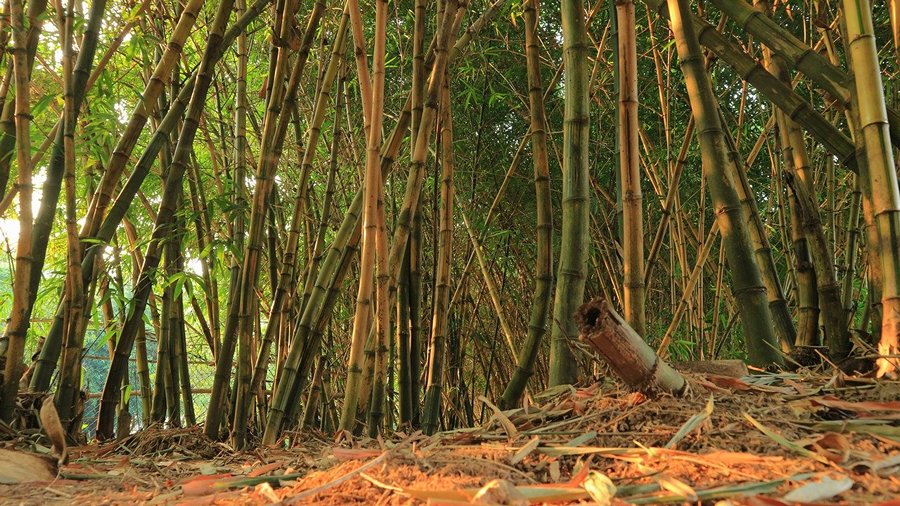
Bamboo forest.

At Sāvatthī.

Then King Pasenadi of Kosala went up to the Buddha, bowed, sat down to one side, and said to the Buddha, “Sir, how many things arise inside a person for their harm, suffering, and discomfort?”

“Great king, three things arise inside a person for their harm, suffering, and discomfort. What three? Greed, hate, and delusion. These three things arise inside a person for their harm, suffering, and discomfort.”

That is what the Buddha said. …

“When greed, hate, and delusion,
have arisen inside oneself,
they harm a person of wicked heart,
as a reed is destroyed by its own fruit.”


Read this translation of SN 3.2 Purisasutta: A Person by Bhikkhu Sujato on SuttaCentral.net. Or read a different translation on SuttaFriends.org. Or listen on PaliAudio.com or SC-Voice.net.

Thag 3.8 Vassikattheragāthā: Vassika

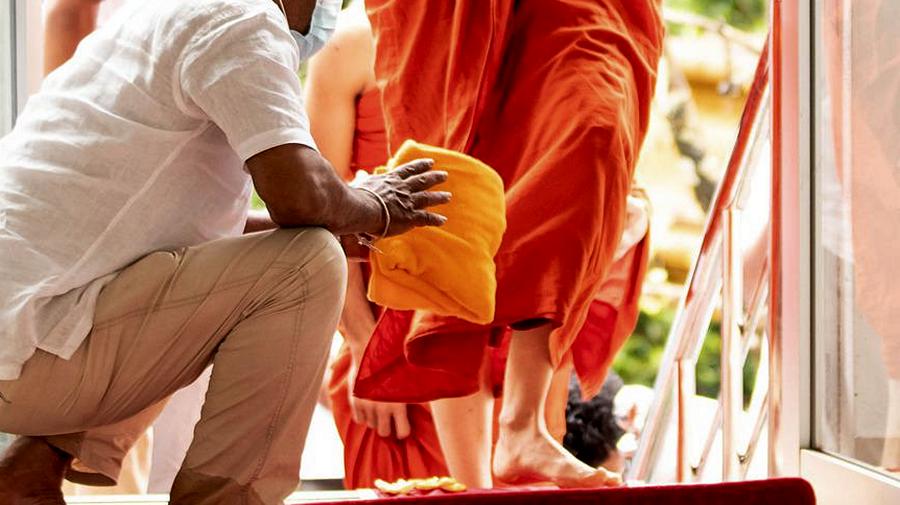
Lay person washing monks feet.

I was the only one in my family
who had faith and wisdom.
It’s good for my relatives that I’m
firm in principle, and ethical.

I corrected my family out of compassion,
telling them off out of love
for my family and relatives.
They performed a service for the monks

and then they passed away,
finding happiness in the heaven of the Thirty-three.
There, my brothers and mother
enjoy all the pleasures they desire.


Read this translation of Theragāthā 3.8 Vassikattheragāthā: Vassika by Bhikkhu Sujato on SuttaCentral.net. Or read a different translation on SuttaFriends.org, or DhammaTalks.org. Or listen on SC-Voice.net.

Iti 71 Sammādiṭṭhikasutta: Having Right View

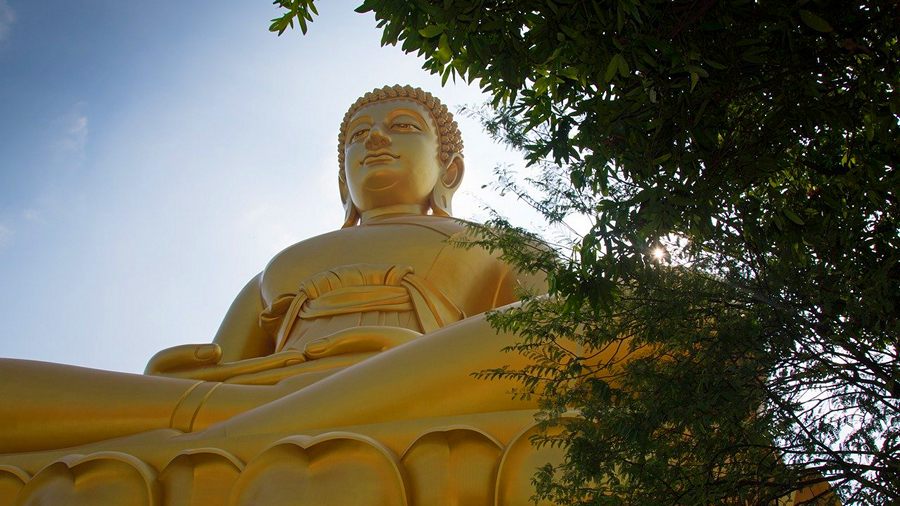
Large gold Buddha statue.

This was said by the Buddha, the Perfected One: that is what I heard.

“Mendicants, I’ve seen beings who engaged in good conduct of body, speech, and mind, who did not abuse the noble ones, who held right view and acted accordingly. At the breaking up of the body, after death, they were reborn in a good destination, a heaven world.

Now, I don’t say this because I’ve heard it from some other ascetic or brahmin. I only say it because I’ve known, seen, and realized it for myself.”

That is what the Buddha said. On this it is said:

“When the mind has been directed right,
and words rightly spoken,
and right bodily deeds have been done,
a person here

learned, doer of good deeds,
though their life may be short,
when their body breaks up,
that wise person is reborn in heaven.”

This too is a matter that was spoken by the Blessed One: that is what I heard.


Read this translation of Itivuttaka 71 Sammādiṭṭhikasutta: Having Right View by Bhikkhu Sujato on SuttaCentral.net. Or read a different translation on SuttaCentral.net, SuttaFriends.org, or DhammaTalks.org. Or listen on SC-Voice.net.

Thig 6.1 Pañcasatamattā­therīgāthā: Paṭācārā, Who Had a Following of Five Hundred

Forest path.

“One whose path you do not know,
not whence they came nor where they went;
though they came from who knows where,
you mourn that being, crying, ‘Oh my son!’

But one whose path you do know,
whence they came or where they went;
that one you do not lament—
such is the nature of living creatures.

Unasked he came,
he left without leave.
He must have come from somewhere,
and stayed who knows how many days.
He left from here by one road,
he will go from there by another.

Departing with the form of a human,
he will go on transmigrating.
As he came, so he went:
why cry over that?”

“Oh! For you have plucked the arrow from me,
so hard to see, stuck in the heart.
You’ve swept away the grief for my son,
in which I once was mired.

Today I’ve plucked the arrow,
I’m hungerless, extinguished.
I go for refuge to that sage, the Buddha,
to his teaching, and to the Sangha.”

That is how Paṭācārā, who had a following of five hundred, declared her enlightenment.


Read Thig 6.1 Pañcasatamattātherīgāthā: Paṭācārā, Who Had a Following of Five Hundred translated by Bhikkhu Sujato on SuttaCentral.net. Or read a different translation on SuttaCentral.net, SuttaFriends.org, or DhammaTalks.org. Or listen on SC-Voice.net.

Snp 1.1 Uragasutta: The Snake

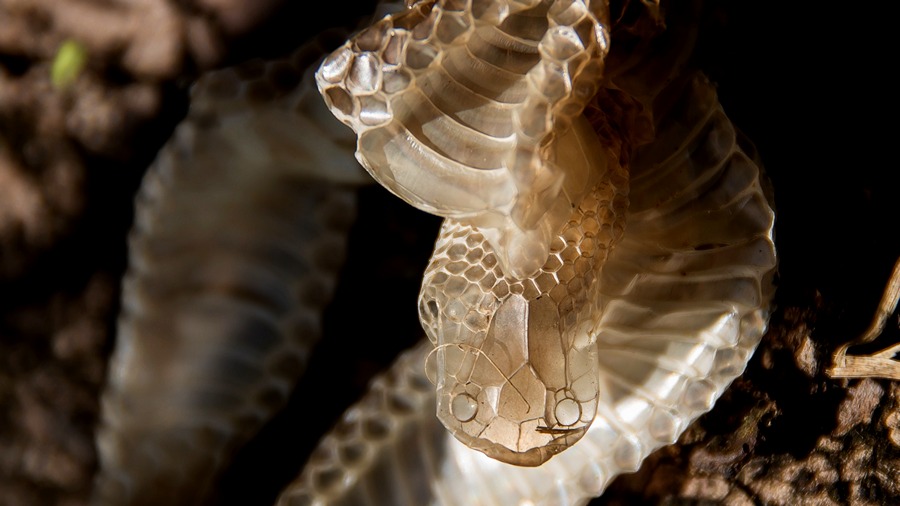
Snake skin.

When anger surges, they drive it out, as with medicine a snake’s spreading venom. Such a mendicant sheds this world and the next, as a snake its old worn-out skin.

They’ve cut off greed entirely, like a lotus plucked flower and stalk. Such a mendicant sheds this world and the next, as a snake its old worn-out skin.

They’ve cut off craving entirely, drying up that swift-flowing stream. Such a mendicant sheds this world and the next, as a snake its old worn-out skin.

They’ve swept away conceit entirely, as a fragile bridge of reeds by a great flood. Such a mendicant sheds this world and the next, as a snake its old worn-out skin.

In future lives they find no substance, as an inspector of fig trees finds no flower. Such a mendicant sheds this world and the next, as a snake its old worn-out skin.

They hide no anger within, gone beyond any kind of existence. Such a mendicant sheds this world and the next, as a snake its old worn-out skin.

Their mental vibrations are cleared away, internally clipped off entirely. Such a mendicant sheds this world and the next, as a snake its old worn-out skin.

They have not run too far nor run back, but have gone beyond all this proliferation. Such a mendicant sheds this world and the next, as a snake its old worn-out skin.

They have not run too far nor run back, for they know that nothing in the world is what it seems. Such a mendicant sheds this world and the next, as a snake its old worn-out skin.

They have not run too far nor run back, knowing nothing is what it seems, free of greed. Such a mendicant sheds this world and the next, as a snake its old worn-out skin.

They have not run too far nor run back, knowing nothing is what it seems, free of lust. Such a mendicant sheds this world and the next, as a snake its old worn-out skin.

They have not run too far nor run back, knowing nothing is what it seems, free of hate. Such a mendicant sheds this world and the next, as a snake its old worn-out skin.

They have not run too far nor run back, knowing nothing is what it seems, free of delusion. Such a mendicant sheds this world and the next, as a snake its old worn-out skin.

They have no underlying tendencies at all, and are rid of unskillful roots, Such a mendicant sheds this world and the next, as a snake its old worn-out skin.

They have nothing born of distress at all, that might cause them to come back to this world. Such a mendicant sheds this world and the next, as a snake its old worn-out skin.

They have nothing born of entanglement at all, that would shackle them to a new life. Such a mendicant sheds this world and the next, as a snake its old worn-out skin.

They’ve given up the five hindrances, untroubled, rid of doubt, free of thorns. Such a mendicant sheds this world and the next, as a snake its old worn-out skin.


Read this translation of Snp 1.1 Uragasutta: The Snake by Bhikkhu Sujato on SuttaCentral.net. Or read a different translation on DhammaTalks.org.

Or listen on SC-Voice.net.

Iti 29 Sukhavihārasutta: Living in Happiness

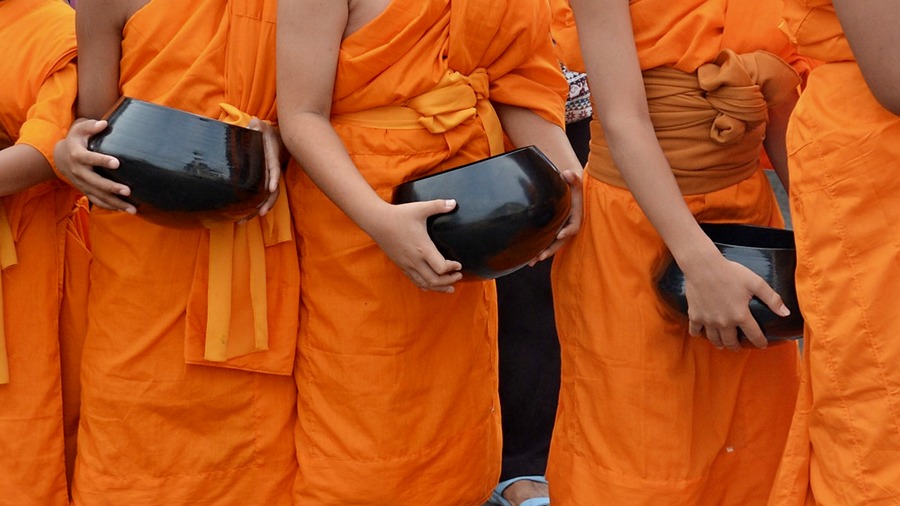
Closeup of monks holding bowls.

This was said by the Buddha, the Perfected One: that is what I heard.

“Mendicants, when a mendicant has two qualities they live happily in the present life—without distress, anguish, and fever—and when the body breaks up, after death, they can expect a good rebirth. What two? Guarding the sense doors and moderation in eating. When a mendicant has these two qualities they live happily in the present life—without distress, anguish, and fever—and when the body breaks up, after death, they can expect a good rebirth.”

That is what the Buddha said. On this it is said:

“Eye, ear, nose, tongue,
body, and likewise mind:
a mendicant who makes these
sense doors well guarded—

eating in moderation,
restrained in the sense faculties—
reaps happiness
both physical and mental.

Not burning in body,
not burning in mind,
by day or by night
such a person lives in happiness.”

This too is a matter that was spoken by the Blessed One: that is what I heard.


Read this translation of Itivuttaka 29 Sukhavihārasutta: Living in Happiness by Bhikkhu Sujato on SuttaCentral.net. Or read a different translation on SuttaCentral.net, SuttaFriends.org, or DhammaTalks.org.

AN 3.95 Parisāsutta: Assemblies

Mountain stream.

“Mendicants, these are the three assemblies. What three? An assembly of the best, a divided assembly, and a harmonious assembly.

And what is an assembly of the best? An assembly where the senior mendicants are not indulgent or slack, nor are they backsliders. Instead, they take the lead in seclusion, rousing energy for attaining the unattained, achieving the unachieved, and realizing the unrealized. And those who come afterwards follow their example. They too are not indulgent or slack, nor are they backsliders. Instead, they take the lead in seclusion, rousing energy for attaining the unattained, achieving the unachieved, and realizing the unrealized. This is called an assembly of the best.

And what is a divided assembly? An assembly where the mendicants argue, quarrel, and dispute, continually wounding each other with barbed words. This is called a divided assembly.

And what is a harmonious assembly? An assembly where the mendicants live in harmony, appreciating each other, without quarreling, blending like milk and water, and regarding each other with kindly eyes. This is called a harmonious assembly.

When the mendicants live in harmony like this, they make much merit. At that time the mendicants live in a holy dwelling, that is, the heart’s release by rejoicing. When they’re joyful, rapture springs up. When the mind is full of rapture, the body becomes tranquil. When the body is tranquil, they feel bliss. And when they’re blissful, the mind becomes immersed in samādhi.

It’s like when it rains heavily on a mountain top, and the water flows downhill to fill the hollows, crevices, and creeks. As they become full, they fill up the pools. The pools fill up the lakes, the lakes fill up the streams, and the streams fill up the rivers. And as the rivers become full, they fill up the ocean.

In the same way, when the mendicants are in harmony, appreciating each other, without quarreling, blending like milk and water, and regarding each other with kindly eyes, they make much merit. At that time the mendicants live in a holy dwelling, that is, the heart’s release by rejoicing. When they’re joyful, rapture springs up. When the mind is full of rapture, the body becomes tranquil. When the body is tranquil, they feel bliss. And when they’re blissful, the mind becomes immersed in samādhi.

These are the three assemblies.”


Read this translation of Aṅguttara Nikāya 3.95 Parisāsutta: Assemblies by Bhikkhu Sujato on SuttaCentral.net. Or read a different translation on DhammaTalks.org.