ReadingFaithfully.org icon Facebook icon Bluesky icon Reddit icon Tumblr icon Mastodon icon RSS icon

AN 4.21 Paṭhamauruvelasutta: At Uruvelā (1st)

Closeup of the arms of a statue that is showing respect with palms placed together over the heart.

So I have heard. At one time the Buddha was staying near Sāvatthī in Jeta’s Grove, Anāthapiṇḍika’s monastery. There the Buddha addressed the mendicants, “Mendicants!”

“Venerable sir,” they replied. The Buddha said this:

“Mendicants, this one time, when I was first awakened, I was staying near Uruvelā at the goatherd’s banyan tree on the bank of the Nerañjarā River. As I was in private retreat this thought came to mind: ‘One without respect and reverence lives in suffering. What ascetic or brahmin should I honor and respect and rely on?’

Then it occurred to me: ‘I would honor and respect and rely on another ascetic or brahmin so as to complete the entire spectrum of ethics, if it were incomplete. But I don’t see any other ascetic or brahmin in this world—with its gods, Māras, and Brahmās, this population with its ascetics and brahmins, its gods and humans—who is more accomplished than myself in ethics, who I should honor and respect and rely on.

I would honor and respect and rely on another ascetic or brahmin so as to complete the entire spectrum of immersion, if it were incomplete. But I don’t see any other ascetic or brahmin … who is more accomplished than myself in immersion …

I would honor and respect and rely on another ascetic or brahmin so as to complete the entrie spectrum of wisdom, if it were incomplete. But I don’t see any other ascetic or brahmin in this world … who is more accomplished than myself in wisdom …

I would honor and respect and rely on another ascetic or brahmin so as to complete the entire spectrum of freedom, if it were incomplete. But I don’t see any other ascetic or brahmin in this world … who is more accomplished than myself in freedom …’

Then it occurred to me: ‘Why don’t I honor and respect and rely on the same teaching to which I was awakened?’

And then Brahmā Sahampati, knowing what I was thinking, vanished from the Brahmā realm and appeared in front of me, as easily as a strong man would extend or contract his arm. He arranged his robe over one shoulder, raised his joined palms toward me, and said: ‘That’s so true, Blessed One! That’s so true, Holy One! All the perfected ones, the fully awakened Buddhas who lived in the past honored and respected and relied on this same teaching. All the perfected ones, the fully awakened Buddhas who will live in the future will honor and respect and rely on this same teaching. May the Blessed One, who is the perfected one, the fully awakened Buddha at present, also honor and respect and rely on this same teaching.’

That’s what Brahmā Sahampati said. Then he went on to say:

‘All Buddhas, whether in the past,
the Buddhas of the future,
and the Buddha at present—
destroyer of the sorrows of many—

respecting the true teaching
they did live, they do live,
and they also will live.
This is the nature of the Buddhas.

Therefore someone who cares for their own welfare,
and wants to become the very best they can be,
should respect the true teaching,
remembering the instructions of the Buddhas.’

That’s what Brahmā Sahampati said. Then he bowed and respectfully circled me, keeping me on his right side, before vanishing right there. Then, knowing the request of Brahmā and what was suitable for myself, I honored and respected and relied on the same teaching to which I was awakened. And since the Saṅgha has also achieved greatness, I also respect the Saṅgha.”


Read this translation of Aṅguttara Nikāya 4.21 Paṭhamauruvelasutta: At Uruvelā (1st) by Bhikkhu Sujato on SuttaCentral.net. Or read a different translation on SuttaCentral.net. Or listen on PaliAudio.com or SC-Voice.net. Or explore the Pali on DigitalPaliReader.online.

Or read a translation in Čeština, Deutsch, Bengali, Español, Français, Indonesian, မြန်မာဘာသာ, Português, ру́сский язы́к, සිංහල, ไทย, Tiếng Việt, or 汉语. Learn how to find your language.

AN 4.76 Kusinārasutta: At Kusinārā

Person sitting in front of a reclining Buddha statue.

At one time the Buddha was staying between a pair of sal trees in the sal forest of the Mallas at Upavattana near Kusinārā at the time of his final extinguishment. There the Buddha addressed the mendicants, “Mendicants!”

“Venerable sir,” they replied. The Buddha said this:

“Perhaps even a single mendicant has doubt or uncertainty regarding the Buddha, the teaching, the Saṅgha, the path, or the practice. So ask, mendicants! Don’t regret it later, thinking: ‘We were in the Teacher’s presence and we weren’t able to ask the Buddha a question.’” When this was said, the mendicants kept silent.

For a second time the Buddha addressed the mendicants: … For a second time, the mendicants kept silent.

For a third time the Buddha addressed the mendicants: … For a third time, the mendicants kept silent.

Then the Buddha said to the mendicants:

“Mendicants, perhaps you don’t ask out of respect for the Teacher. So let a friend tell a friend.” When this was said, the mendicants kept silent. Then Venerable Ānanda said to the Buddha:

“It’s incredible, sir, it’s amazing! I am quite confident that there’s not even a single mendicant in this Saṅgha who has doubt or uncertainty regarding the Buddha, the teaching, the Saṅgha, the path, or the practice.”

“Ānanda, you speak from faith. But the Realized One knows that there’s not even a single mendicant in this Saṅgha who has doubt or uncertainty regarding the Buddha, the teaching, the Saṅgha, the path, or the practice. Even the last of these five hundred mendicants is a stream-enterer, not liable to be reborn in the underworld, bound for awakening.”


Read this translation of Aṅguttara Nikāya 4.76 Kusinārasutta: At Kusinārā Kusinārasutta by Bhikkhu Sujato on SuttaCentral.net. Or listen on PaliAudio.com or SC-Voice.net. Or explore the Pali on DigitalPaliReader.online.

Or read a translation in Čeština, Deutsch, Bengali, Indonesian, မြန်မာဘာသာ, ру́сский язы́к, සිංහල, ไทย, Tiếng Việt, or 汉语. Learn how to find your language.

AN 4.118 Saṁvejanīyasutta: Inspiring

Mahabodhi temple in Bodhgaya, India, site of Buddha's enlightenment.

“Mendicants, a faithful gentleman should go to see these four inspiring places. What four?

Thinking: ‘Here the Realized One was born!’—that is an inspiring place.

Thinking: ‘Here the Realized One became awakened as a supreme fully awakened Buddha!’—that is an inspiring place.

Thinking: ‘Here the Realized One rolled forth the supreme Wheel of Dhamma!’—that is an inspiring place.

Thinking: ‘Here the Realized One became fully extinguished in the element of extinguishment, with nothing left over!’—that is an inspiring place.

These are the four inspiring places that a faithful gentleman should go to see.”


These four places are as follows:

  • Birthplace: Lumbini
  • Enlightenment: Bodh Gaya
  • First sermon: Isipatana
  • Passing away: Kusināra
Map of Ancient Buddhist India.

Read this translation of Aṅguttara Nikāya 4.118 Saṁvejanīyasutta: Inspiring by Bhikkhu Sujato on SuttaCentral.net. Or read a different translation on SuttaCentral.net. Or listen on PaliAudio.com or SC-Voice.net. Or explore the Pali on DigitalPaliReader.online.

Or read a translation in Čeština, Deutsch, Bengali, Español, Français, Indonesian, မြန်မာဘာသာ, ру́сский язы́к, සිංහල, ไทย, Tiếng Việt, or 汉语. Learn how to find your language.

Thag 1.86 Nāgitattheragāthā: Arahant Nāgita

Large gold Buddha statue with palm facing out.

Elsewhere there are many other doctrines;
those paths don’t lead to quenching like this one does.
For the Buddha himself instructs the Saṅgha;
the Teacher shows the palms of his hands.


Note: Showing “the palms of his hands” refers to the fact that the Buddha did not have hidden teachings. See also Iti 100. “Lead to quenching” is a translation of the Pāli “nibbānagamo.”

Read this translation of Theragāthā 1.86 Nāgitattheragāthā by Bhikkhu Sujato on SuttaCentral.net. Or read a different translation on SuttaFriends.org or DhammaTalks.org. Or listen on SC-Voice.net. Or explore the Pali on DigitalPaliReader.online.

Or read a translation in Deutsch, Indonesian, Italiano, 日本語, Norsk, ру́сский язы́к, සිංහල, or Tiếng Việt. Learn how to find your language.

MN 139 From… Araṇavibhaṅgasutta: The Analysis of Non-Conflict—Just Teach Dhamma

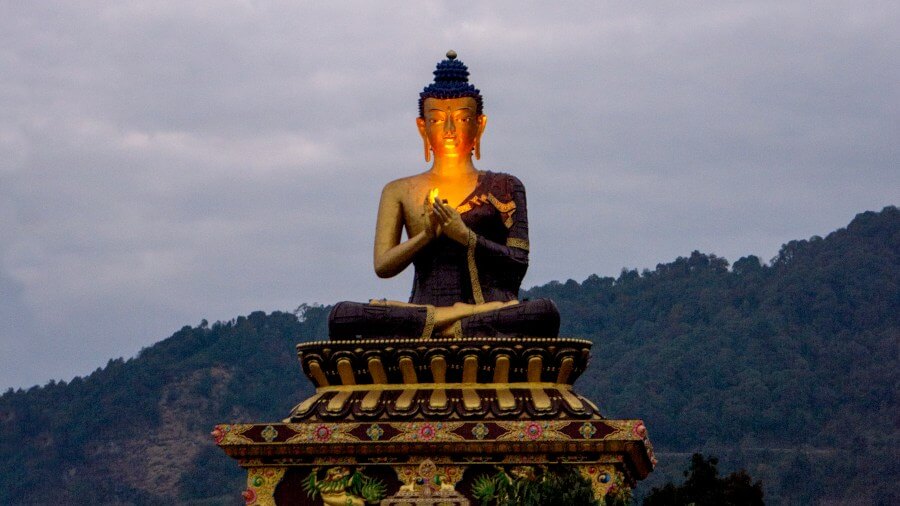
Large gold Buddha statue rising above trees with a Dhamma Wheel behind his head.

[Note: In this excerpt, the Buddha takes the teaching on avoiding the extremes of self mortification and self indulgence (which he gave in his very first sermon) and illuminates how we can think about these teachings without criticizing or praising others. In this way we can avoid conflict while still teaching the Dhamma. It’s a wonderful reminder of how he was able to talk about good and bad qualities without personally criticizing people. This is just one of many cases of the Buddha showing his “supreme trainer of persons to be tamed” quality.]

‘Don’t indulge in sensual pleasures, which are low, crude, ordinary, ignoble, and pointless. And don’t indulge in self-mortification, which is painful, ignoble, and pointless.’ That’s what I said, but why did I say it?

Pleasure linked to sensuality is low, crude, ordinary, ignoble, and pointless. Indulging in such happiness is a principle beset by pain, harm, stress, and fever, and it is the wrong way. Breaking off such indulgence is a principle free of pain, harm, stress, and fever, and it is the right way.

Indulging in self-mortification is painful, ignoble, and pointless. It is a principle beset by pain, harm, stress, and fever, and it is the wrong way. Breaking off such indulgence is a principle free of pain, harm, stress, and fever, and it is the right way.

‘Don’t indulge in sensual pleasures, which are low, crude, ordinary, ignoble, and pointless. And don’t indulge in self-mortification, which is painful, ignoble, and pointless.’ That’s what I said, and this is why I said it.

· • ·

‘Avoiding these two extremes, the Realized One woke up by understanding the middle way of practice, which gives vision and knowledge, and leads to peace, direct knowledge, awakening, and extinguishment.’ That’s what I said, but why did I say it? It is simply this noble eightfold path, that is: right view, right thought, right speech, right action, right livelihood, right effort, right mindfulness, and right immersion.

‘Avoiding these two extremes, the Realized One woke up by understanding the middle way of practice, which gives vision and knowledge, and leads to peace, direct knowledge, awakening, and extinguishment.’ That’s what I said, and this is why I said it.

· • ·

‘Know what it means to flatter and to rebuke. Knowing these, avoid them, and just teach Dhamma.’ That’s what I said, but why did I say it? And how is there flattering and rebuking without teaching Dhamma?

In speaking like this, some are rebuked: ‘Pleasure linked to sensuality is low, crude, ordinary, ignoble, and pointless. All those who indulge in such happiness are beset by pain, harm, stress, and fever, and they are practicing the wrong way.’

In speaking like this, some are flattered: ‘Pleasure linked to sensuality is low, crude, ordinary, ignoble, and pointless. All those who have broken off such indulgence are free of pain, harm, stress, and fever, and they are practicing the right way.’

In speaking like this, some are rebuked: ‘Indulging in self-mortification is painful, ignoble, and pointless. All those who indulge in it are beset by pain, harm, stress, and fever, and they are practicing the wrong way.’

In speaking like this, some are flattered: ‘Indulging in self-mortification is painful, ignoble, and pointless. All those who have broken off such indulgence are free of pain, harm, stress, and fever, and they are practicing the right way.’

In speaking like this, some are rebuked: ‘All those who have not given up the fetters of rebirth are beset by pain, harm, stress, and fever, and they are practicing the wrong way.’

In speaking like this, some are flattered: ‘All those who have given up the fetters of rebirth are free of pain, harm, stress, and fever, and they are practicing the right way.’ That’s how there is flattering and rebuking without teaching Dhamma.

· • ·

And how is there neither flattering nor rebuking, and just teaching Dhamma? You don’t say: ‘Pleasure linked to sensuality is low, crude, ordinary, ignoble, and pointless. All those who indulge in such happiness are beset by pain, harm, stress, and fever, and they are practicing the wrong way.’ Rather, by saying this you just teach Dhamma: ‘The indulgence is a principle beset by pain, harm, stress, and fever, and it is the wrong way.’

You don’t say: ‘Pleasure linked to sensuality is low, crude, ordinary, ignoble, and pointless. All those who have broken off such indulgence are free of pain, harm, stress, and fever, and they are practicing the right way.’ Rather, by saying this you just teach Dhamma: ‘Breaking off the indulgence is a principle free of pain, harm, stress, and fever, and it is the right way.’

You don’t say: ‘Indulging in self-mortification is painful, ignoble, and pointless. All those who indulge in it are beset by pain, harm, stress, and fever, and they are practicing the wrong way.’ Rather, by saying this you just teach Dhamma: ‘The indulgence is a principle beset by pain, harm, stress, and fever, and it is the wrong way.’

You don’t say: ‘Indulging in self-mortification is painful, ignoble, and pointless. All those who have broken off such indulgence are free of pain, harm, stress, and fever, and they are practicing the right way.’ Rather, by saying this you just teach Dhamma: ‘Breaking off the indulgence is a principle free of pain, harm, stress, and fever, and it is the right way.’

You don’t say: ‘All those who have not given up the fetters of rebirth are beset by pain, harm, stress, and fever, and they are practicing the wrong way.’ Rather, by saying this you just teach Dhamma: ‘When the fetter of rebirth is not given up, rebirth is also not given up.’

You don’t say: ‘All those who have given up the fetters of rebirth are free of pain, harm, stress, and fever, and they are practicing the right way.’ Rather, by saying this you just teach Dhamma: ‘When the fetter of rebirth is given up, rebirth is also given up.’

That’s how there is neither flattering nor rebuking, and just teaching Dhamma. ‘Know what it means to flatter and to rebuke. Knowing these, avoid them, and just teach Dhamma.’ That’s what I said, and this is why I said it.


Read the entire translation of Majjhima Nikāya 139 Araṇavibhaṅgasutta: The Analysis of Non-Conflict by Bhikkhu Sujato on SuttaCentral.net. Or read a different translation on SuttaCentral.net, SuttaFriends.org, DhammaTalks.org, Ancient-Buddhist-Texts.net or AccessToInsight.org. Or listen on PaliAudio.com or SC-Voice.net. Or explore the Pali on DigitalPaliReader.online.

Or read a translation in Deutsch, Français, Lietuvių Kalba, Bengali, Català, Čeština, Español, Suomi, Hebrew, Magyar, Indonesian, Italiano, မြန်မာဘာသာ, Nederlands, Norsk, Português, ру́сский язы́к, සිංහල, Slovenščina, Svenska, தமிழ், ไทย, Tiếng Việt, or 汉语. Learn how to find your language.

MN 133 From… Mahākaccānabhaddekarattasutta: Mahākaccāna and One Fine Night

Statue of a Buddhist monastic.

[Note: The excerpt below is often found when people miss the opportunity of asking the Buddha a question and instead ask one of his disciples. It shows the great respect even the most capable disciples have for the Buddha.]

“…Who can explain in detail the meaning of this brief summary given by the Buddha?”

Then those mendicants thought:

“This Venerable Mahākaccāna is praised by the Buddha and esteemed by his sensible spiritual companions. He is capable of explaining in detail the meaning of this brief passage for recitation given by the Buddha. Let’s go to him, and ask him about this matter.”

Then those mendicants went to Mahākaccāna, and exchanged greetings with him. When the greetings and polite conversation were over, they sat down to one side. They told him what had happened, and said: “May Venerable Mahākaccāna please explain this.”

“Reverends, suppose there was a person in need of heartwood. And while wandering in search of heartwood he’d come across a large tree standing with heartwood. But he’d pass over the roots and trunk, imagining that the heartwood should be sought in the branches and leaves. Such is the consequence for the venerables. Though you were face to face with the Buddha, you overlooked him, imagining that you should ask me about this matter. For he is the Buddha, who knows and sees. He is vision, he is knowledge, he is the principle, he is the supreme holiness. He is the teacher, the proclaimer, the elucidator of meaning, the bestower of the deathless, the lord of truth, the Realized One. That was the time to approach the Buddha and ask about this matter. You should have remembered it in line with the Buddha’s answer.”

“Certainly he is the Buddha, who knows and sees. He is vision, he is knowledge, he is the principle, he is the supreme holiness. He is the teacher, the proclaimer, the elucidator of meaning, the bestower of the deathless, the lord of truth, the Realized One. That was the time to approach the Buddha and ask about this matter. We should have remembered it in line with the Buddha’s answer. Still, Venerable Mahākaccāna is praised by the Buddha and esteemed by his sensible spiritual companions. He is capable of explaining in detail the meaning of this brief passage for recitation given by the Buddha. Please explain this, if it’s no trouble.”

“Well then, reverends, listen and pay close attention, I will speak.…”


Read the entire translation of Majjhima Nikāya 133 Mahākaccānabhaddekarattasutta: Mahākaccāna and One Fine Night by Bhikkhu Sujato on SuttaCentral.net. Or listen on PaliAudio.com or SC-Voice.net. Or explore the Pali on DigitalPaliReader.online.

Or read a translation in Bengali, Deutsch, Español, Français, हिन्दी, Indonesian, Italiano, မြန်မာဘာသာ, Norsk, Português, ру́сский язы́к, සිංහල, Srpski, ไทย, Tiếng Việt, or 汉语. Learn how to find your language.

AN 1.296: One Thing—Recollection of the Buddha

Buddha statue in meditation posture.

“One thing, mendicants, when developed and cultivated, leads solely to disillusionment, dispassion, cessation, peace, insight, awakening, and extinguishment. What one thing? Recollection of the Buddha. This one thing, when developed and cultivated, leads solely to disillusionment, dispassion, cessation, peace, insight, awakening, and extinguishment.”


Note: Traditionally, recollection of the Buddha can be practiced through remembering the qualities of the Buddha found in the “Iti pi so…”:

‘That Blessed One is perfected, a fully awakened Buddha, accomplished in knowledge and conduct, holy, knower of the world, supreme guide for those who wish to train, teacher of gods and humans, awakened, blessed.’

In AN 11.12 Dutiya Mahānāma The Buddha says “You should develop this recollection of the Buddha while walking, standing, sitting, lying down, while working, and while at home with your children.”


Read this translation of Aṅguttara Nikāya 1.296 by Bhikkhu Sujato on SuttaCentral.net. Or read a different translation on SuttaFriends.org. Or listen on PaliAudio.com or SC-Voice.net. Or explore the Pali on DigitalPaliReader.online.

Or read a translation in another modern language.

Thag 7.5 Sarabhaṅgattheragāthā: Sarabhaṅga

A long line of Buddha statues.

I broke the reeds off with my hands,
made a hut, and stayed there.
That’s how I became known
as “Reed-breaker”.

But now it’s not appropriate
for me to break reeds with my hands.
The training rules have been laid down for us
by Gotama the renowned.

Previously, I, Sarabhaṅga,
didn’t see the disease in its entirety.
But now I have seen the disease,
as I’ve practiced what was taught
     by he who is beyond the gods.

Gotama traveled by that straight road;
the same path traveled by Vipassī,
by Sikhī, Vessabhū,
Kakusandha, Koṇāgamana, and Kassapa.

These seven Buddhas have plunged into the ending,
free of craving, without grasping,
having become Dhamma, poised.
They have taught this Dhamma

out of compassion for living creatures—
suffering, origin, path,
and cessation, the ending of suffering.
In these four noble truths,

the endless suffering of transmigration
finally comes to an end.
When the body breaks up,
and life comes to an end,
there are no future lives;
I’m everywhere well-freed.


Read this translation of Theragāthā 7.5 Sarabhaṅgattheragāthā: Sarabhaṅga by Bhikkhu Sujato on SuttaCentral.net. Or read a different translation on SuttaFriends.org. Or listen on SC-Voice.net. Or explore the Pali on DigitalPaliReader.online.

Or read a translation in Deutsch, Русский, Bahasa Indonesia, 日本語, Norsk, සිංහල, or Tiếng Việt. Learn how to find your language.

AN 1.172–174 From… Ekapuggalavagga: One Person

Closeup of a large metal Buddha head.

172

“One person, mendicants, arises in the world who is an incredible human being. What one person? The Realized One, the perfected one, the fully awakened Buddha. This is the one person, mendicants, who arises in the world who is an incredible human being.”

173

“The death of one person, mendicants, is regretted by many people. What one person? The Realized One, the perfected one, the fully awakened Buddha. This is the one person, mendicants, whose death is regretted by many people.”

174

“One person, mendicants, arises in the world unique, without peer or counterpart, incomparable, matchless, unrivaled, unequaled, without equal, the best of men. What one person? The Realized One, the perfected one, the fully awakened Buddha. This is the one person, mendicants, who arises in the world unique, without peer or counterpart, incomparable, matchless, unrivaled, unequaled, without equal, the best of men.”


Read the entire translation of Aṅguttara Nikāya 1.170–187 Ekapuggalavagga by Bhikkhu Sujato on SuttaCentral.net. Or read another translation on SuttaFriends.org. Or read the Pāli on DigitalPaliReader.online.

Or read a translation in other languages.

AN 2.137: Acting Wrongly toward Two People

An ornate Buddha shrine.

“When a foolish, incompetent bad person acts wrongly toward two people they keep themselves broken and damaged. They deserve to be blamed and criticized by sensible people, and they make much bad karma. What two? The Realized One and a disciple of the Realized One. When a foolish, incompetent bad person acts wrongly toward these people they keep themselves broken and damaged. They deserve to be blamed and criticized by sensible people, and they make much bad karma.

When an astute, competent good person acts rightly toward two people they keep themselves healthy and whole. They don’t deserve to be blamed and criticized by sensible people, and they make much merit. What two? The Realized One and a disciple of the Realized One. When an astute, competent good person acts rightly toward these two people they keep themselves healthy and whole. They don’t deserve to be blamed and criticized by sensible people, and they make much merit.”


Note: “Realized One” is a translation of the Pali Tathāgata. It refers to the Buddha or Buddhas in general.

Read this translation of Aṅguttara Nikāya 2.137: 137137 by Bhikkhu Sujato on SuttaCentral.net. Or listen on PaliAudio.com or SC-Voice.net. Or explore the Pali on DigitalPaliReader.online.

Or read a translation in Polski, ру́сский язы́к, Bengali, Čeština, Deutsch, Español, Français, हिन्दी, Magyar, Indonesian, Italiano, မြန်မာဘာသာ, Norsk, Português, Română, සිංහල, Slovenščina, Srpski, ไทย, Tiếng Việt, or 汉语. Learn how to find your language.

Snp 3.11 Nālakasutta: About Nālaka

Buddhist monastic bowing.

[Note: Happy Vesak! The sutta below is one of the few that talks directly about the birth of the Buddha. It’s a bit long for a weekday sutta, but it is a good one to read for Vesak, the Buddha’s birthday.]

The hermit Asita in his daily meditation
saw the bright-clad gods of the Thirty-Three
and their lord Sakka joyfully celebrating,
waving streamers in exuberant exaltation.

Seeing the gods rejoicing, elated,
he paid respects and said this there:
“Why is the community of gods in such excellent spirits?
Why take up streamers and whirl them about?

Even in the war with the demons,
when gods were victorious and demons defeated,
there was no such excitement.
What marvel have the celestials seen that they so rejoice?

Shouting and singing and playing music,
they clap their hands and dance.
I ask you, dwellers on Mount Meru’s peak,
quickly dispel my doubt, good sirs!”

“The being intent on awakening, a peerless gem,
has been born in the human realm for the sake of welfare and happiness,
in Lumbinī, a village in the Sakyan land.
That’s why we’re so happy, in such excellent spirits.

He is supreme among all beings, the best of people,
chief of men, supreme among all creatures.
He will roll forth the wheel in the grove of the hermits,
roaring like a mighty lion, lord of beasts.”

Hearing this, he swiftly descended
and right away approached Suddhodana’s home.
Seated there he said this to the Sakyans,
“Where is the boy? I too wish to see him!”

Then the Sakyans showed their son to the one named Asita—
the boy shone like burning gold
well-wrought in the forge;
resplendent with glory, of peerless beauty.

The boy beamed like crested flame,
pure as the moon, lord of stars traversing the sky,
blazing like the sun free of clouds after the rains;
seeing him, he was joyful, brimming with happiness.

The celestials held up a parasol in the sky,
many-ribbed and thousand-circled;
and golden-handled chowries waved—
but none could see who held the chowries or the parasols.

When the dreadlocked hermit called “Dark Splendor”
had seen the boy like a gold nugget on a cream rug
with a white parasol held over his head,
he received him, elated and happy.

Having received the Sakyan bull,
the seeker, master of marks and hymns,
lifted up his voice with confident heart:
“He is supreme, the best of men!”

But then, remembering he would depart this world,
his spirits fell and his tears flowed.
Seeing the weeping hermit, the Sakyans said,
“Surely there will be no threat to the boy?”

Seeing the crestfallen Sakyans, the hermit said,
“I do not forsee harm befall the boy,
and there will be no threat to him,
not in the least; set your minds at ease.

This boy shall reach the highest awakening.
As one of perfectly purified vision,compassionate for the welfare of the many,
he shall roll forth the wheel of the teaching;
his spiritual path will become widespread.

But I have not long left in this life,
I shall die before then.
I will never hear the teaching of the one who bore the unequaled burden.
That’s why I’m so upset and distraught—it’s a disaster for me!”

Having brought abundant happiness to the Sakyans,
the spiritual seeker left the royal compound.
He had a nephew; and out of compassion
he encouraged him in the teaching of the one who bore the unequaled burden.

“When you hear the voice of another saying‘Buddha’—
one who has attained awakening and who reveals the foremost teaching—
go there and ask about his breakthrough;
lead the spiritual life under that Blessed One.”

Now, that Nālaka had a store of accumulated merit;
so when instructed by one of such kindly intent,
with perfectly purified vision of the future,
he waited in hope for the Victor,guarding his senses.

When he heard of the Victor rolling forth the excellent wheel he went to him,
and seeing the leading hermit, he became confident.
The time of Asita’s instruction had arrived;
so he asked the excellent sage about the highest sagacity.

The introductory verses are finished.

“I now know that Asita’s words
have turned out to be true.
I ask you this, Gotama,
who has gone beyond all things:

For one who has entered the homeless life,
seeking food on alms round,
when questioned, O sage, please tell me
of sagacity, the ultimate state.”

“I shall school you in sagacity,” said the Buddha,
“so difficult and challenging.
Come, I shall tell you all about it.
Brace yourself; stay strong!

In the village, keep the same attitude
no matter if reviled or praised.
Guard against ill-tempered thoughts,
wander peaceful, not frantic.

Many different things come up,
like tongues of fire in a forest.
Women try to seduce a sage—
let them not seduce you!

Refraining from sex,
having left behind sensual pleasures high and low,
don’t be hostile or attached
to living creatures firm or frail.

‘As am I, so are they;
as are they, so am I’—
Treating others like oneself,
neither kill nor incite to kill.

Leaving behind desire and greed
for what ordinary people are attached to,
a seer would set out to practice,
they’d cross over this abyss.

With empty stomach, taking limited food,
few in wishes, not greedy;
truly hungerless regarding all desires,
desireless, one is quenched.

Having wandered for alms,
they’d take themselves into the forest;
and nearing the foot of a tree,
the sage would take their seat.

That wise one intent on absorption,
would delight within the forest.
They’d practice absorption at the foot of a tree,
filling themselves with bliss.

Then, at the end of the night,
they’d take themselves into a village.
They’d not welcome being called,
nor offerings brought from the village.

A sage who has come to a village
would not walk hastily among the families.
They’d not discuss their search for food,
nor would they speak suggestively.

‘I got something, that’s good.
I got nothing, that’s fine.’
Impartial in both cases,
they return right to the tree.

Wandering with bowl in hand,
not dumb, but thought to be dumb,
they wouldn’t scorn a tiny gift,
nor look down upon the giver.

For the practice has many aspects,
as explained by the Ascetic.
They do not go to the far shore twice,
nor having gone once do they fall away.

When a mendicant has no creeping,
and has cut the stream of craving,
and given up all the various duties,
no fever is found in them.

I shall school you in sagacity.
Practice as if you were licking a razor’s edge.
With tongue pressed to the roof of your mouth,
be restrained regarding your stomach.

Don’t be sluggish in mind,
nor think overly much.
Be free of putrefaction and unattached,
committed to the spiritual life.

Train in a lonely seat,
attending closely to ascetics;
solitude is sagacity, they say.
If you welcome solitude,
you’ll light up the ten directions.

Having heard the words of the wise,
the meditators who’ve given up sensual desires,
a follower of mine would develop
conscience and faith all the more.

Understand this by the way streams move
in clefts and crevices:
the little creeks flow on babbling,
while silent flow the great rivers.

What is lacking, babbles;
what is full is at peace.
The fool is like a half-full pot;
the wise like a brimfull lake.

When the Ascetic speaks much
it is relevant and meaningful:
knowing, he teaches the Dhamma;
knowing, he speaks much.

But one who, knowing, is restrained,
knowing, does not speak much;
that sage is worthy of sagacity,
that sage has achieved sagacity.”


Read this translation of Snp 3.11 Nālakasutta: About Nālaka by Bhikkhu Sujato on SuttaCentral.net. Or read a different translation on SuttaCentral.net or DhammaTalks.org. Or listen on SC-Voice.net. Or explore the Pali on DigitalPaliReader.online.

Or read a translation in Afrikaans, Deutsch, Français, Indonesian, Italiano, မြန်မာဘာသာ, Nederlands, Norsk, Português, ру́сский язы́к, සිංහල, or தமிழ். Learn how to find your language.

AN 10.105 Vijjāsutta: Knowledge

The view of the tip of a giant stupa, taken from its base. The sun appears to be shining behind it, illuminatign a bright blue sky.

“Mendicants, ignorance precedes the attainment of unskillful qualities, with lack of conscience and prudence following along. An ignoramus, sunk in ignorance, gives rise to wrong view. Wrong view gives rise to wrong thought. Wrong thought gives rise to wrong speech. Wrong speech gives rise to wrong action. Wrong action gives rise to wrong livelihood. Wrong livelihood gives rise to wrong effort. Wrong effort gives rise to wrong mindfulness. Wrong mindfulness gives rise to wrong immersion. Wrong immersion gives rise to wrong knowledge. Wrong knowledge gives rise to wrong freedom.

Knowledge precedes the attainment of skillful qualities, with conscience and prudence following along. A sage, firm in knowledge, gives rise to right view. Right view gives rise to right thought. Right thought gives rise to right speech. Right speech gives rise to right action. Right action gives rise to right livelihood. Right livelihood gives rise to right effort. Right effort gives rise to right mindfulness. Right mindfulness gives rise to right immersion. Right immersion gives rise to right knowledge. Right knowledge gives rise to right freedom.”


Read this translation of Aṅguttara Nikāya 10.105 Vijjāsutta: Knowledge by Bhikkhu Sujato on SuttaCentral.net. Or listen on SC-Voice.net. Or explore the Pali on DigitalPaliReader.online.

Or read a translation in Deutsch, Bengali, Español, Indonesian, မြန်မာဘာသာ, ру́сский язы́к, සිංහල, ไทย, Tiếng Việt, or 汉语. Learn how to find your language.

DN 8 From… Mahāsīhanādasutta: The Lion’s Roar to the Naked Ascetic Kassapa

Monochrome image of giant Buddha statue.

“…There is, Kassapa, a path, there is a practice, practicing in accordance with which you will know and see for yourself: ‘Only the ascetic Gotama’s words are timely, true, and meaningful, in line with the teaching and training.’ And what is that path? It is simply this noble eightfold path, that is: right view, right thought, right speech, right action, right livelihood, right effort, right mindfulness, and right immersion. This is the path, this is the practice, practicing in accordance with which you will know and see for yourself: ‘Only the ascetic Gotama’s words are timely, true, and meaningful, in line with the teaching and training.’”…


Read the entire translation of Dīgha Nikāya 8 Mahāsīhanādasutta: The Lion’s Roar to the Naked Ascetic Kassapa by Bhikkhu Sujato on SuttaCentral.net. Or listen on PaliAudio.com or SC-Voice.net. Or explore the Pali on DigitalPaliReader.online.

Or read a translation in Deutsch, Srpski, Bengali, Hebrew, हिन्दी, Indonesian, Italiano, ಕನ್ನಡ, မြန်မာဘာသာ, Norsk, Português, සිංහල, ไทย, Tiếng Việt, or 汉语. Learn how to find your language.

Thag 1.35 Sāmaññakānittheragāthā: Sāmaññakāni

Shaded forest path.

Seeking happiness, they find it through this practice.
They get a good reputation and grow in fame,
those who develop the direct route:
the noble eightfold path to realize the deathless.


Read this translation of Theragāthā 1.35 Sāmaññakānittheragāthā: Sāmaññakāni by Bhikkhu Sujato on SuttaCentral.net. Or read a different translation on SuttaFriends.org. Or listen on SC-Voice.net. Or explore the Pali on DigitalPaliReader.online.

Or read a translation in Deutsch, Indonesian, 日本語, Norsk, සිංහල, or Tiếng Việt. Learn how to find your language.

MN 44 From… Cūḷavedallasutta: The Shorter Classification

Forest path.

[Note: This is part of a conversation between the lay disciple Visākha and his former wife, the Venerable Dhammadinnā. When their conversation is finished he reports it to the Buddha and the Buddha approves of all of her answers. If you are able it’s good to read the whole sutta.]

…“Ma’am, they speak of this thing called ‘the origin of identity’. What is the origin of identity that the Buddha spoke of?”

“It’s the craving that leads to future lives, mixed up with relishing and greed, chasing pleasure in various realms. That is, craving for sensual pleasures, craving to continue existence, and craving to end existence. The Buddha said that this is the origin of identity.”

“Ma’am, they speak of this thing called ‘the cessation of identity’. What is the cessation of identity that the Buddha spoke of?”

“It’s the fading away and cessation of that very same craving with nothing left over; giving it away, letting it go, releasing it, and not clinging to it. The Buddha said that this is the cessation of identity.”

“Ma’am, they speak of the practice that leads to the cessation of identity. What is the practice that leads to the cessation of identity that the Buddha spoke of?”

“The practice that leads to the cessation of identity that the Buddha spoke of is simply this noble eightfold path, that is: right view, right thought, right speech, right action, right livelihood, right effort, right mindfulness, and right immersion.”

“But ma’am, is that grasping the exact same thing as the five grasping aggregates? Or is grasping one thing and the five grasping aggregates another?”

“That grasping is not the exact same thing as the five grasping aggregates. Nor is grasping one thing and the five grasping aggregates another. The desire and greed for the five grasping aggregates is the grasping there.”

“But ma’am, how does identity view come about?”

“It’s when an unlearned ordinary person has not seen the noble ones, and is neither skilled nor trained in the teaching of the noble ones. They’ve not seen good persons, and are neither skilled nor trained in the teaching of the good persons. They regard form as self, self as having form, form in self, or self in form. They regard feeling … perception … choices … consciousness as self, self as having consciousness, consciousness in self, or self in consciousness. That’s how identity view comes about.”

“But ma’am, how does identity view not come about?”

“It’s when a learned noble disciple has seen the noble ones, and is skilled and trained in the teaching of the noble ones. They’ve seen good persons, and are skilled and trained in the teaching of the good persons. They don’t regard form as self, self as having form, form in self, or self in form. They don’t regard feeling … perception … choices … consciousness as self, self as having consciousness, consciousness in self, or self in consciousness. That’s how identity view does not come about.”

“But ma’am, what is the noble eightfold path?”

“It is simply this noble eightfold path, that is: right view, right thought, right speech, right action, right livelihood, right effort, right mindfulness, and right immersion.”

“But ma’am, is the noble eightfold path conditioned or unconditioned?”

“The noble eightfold path is conditioned.”

“Are the three practice categories included in the noble eightfold path? Or is the noble eightfold path included in the three practice categories?”

“The three practice categories are not included in the noble eightfold path. Rather, the noble eightfold path is included in the three practice categories. Right speech, right action, and right livelihood: these things are included in the category of ethics. Right effort, right mindfulness, and right immersion: these things are included in the category of immersion. Right view and right thought: these things are included in the category of wisdom.”…


Read the entire translation of Majjhima Nikāya 44 Cūḷavedallasutta: The Shorter Classification by Bhikkhu Sujato on SuttaCentral.net. Or read a different translation on SuttaCentral.net, DhammaTalks.org or Ancient-Buddhist-Texts.net. Or listen on PaliAudio.com or SC-Voice.net. Or explore the Pali on DigitalPaliReader.online.

Or read a translation in Deutsch, Bengali, Čeština, Español, Suomi, Français, हिन्दी, hrvatski, Magyar, Indonesian, Italiano, မြန်မာဘာသာ, Norsk, Português, ру́сский язы́к, සිංහල, Slovenščina, ไทย, Tiếng Việt, or 汉语. Learn how to find your language.

SN 45.4 Jāṇussoṇibrāhmaṇasutta: Regarding the Brahmin Jāṇussoṇi

Large statue of white chariot with white horses.

At Sāvatthī.

Then Venerable Ānanda robed up in the morning and, taking his bowl and robe, entered Sāvatthī for alms. He saw the brahmin Jāṇussoṇi driving out of Sāvatthī in a splendid all-white chariot drawn by mares. The yoked horses were pure white, as were the ornaments, chariot, upholstery, reins, goad, and canopy. And his turban, robes, sandals were white, as was the chowry fanning him.

When people saw it they exclaimed, “Wow! That’s a Brahmā vehicle! It’s a vehicle fit for Brahmā!”

Then Ānanda wandered for alms in Sāvatthī. After the meal, on his return from almsround, he went to the Buddha, bowed, sat down to one side, and told him what had happened, adding, “Sir, can you point out a Brahmā vehicle in this teaching and training?”

“I can, Ānanda,” said the Buddha.

“These are all terms for the noble eightfold path: ‘vehicle of Brahmā’, or else ‘vehicle of truth’, or else ‘supreme victory in battle’.

When right view is developed and cultivated it culminates with the removal of greed, hate, and delusion. When right thought … right speech … right action … right livelihood … right effort … right mindfulness … right immersion is developed and cultivated it culminates with the removal of greed, hate, and delusion.

This is a way to understand how these are all terms for the noble eightfold path: ‘vehicle of Brahmā’, or else ‘vehicle of truth’, or else ‘supreme victory in battle’.”

That is what the Buddha said.

Then the Holy One, the Teacher, went on to say:

“Its qualities of faith and wisdom
are always yoked to the shaft.
Conscience is its pole, mind its strap,
and mindfulness its careful driver.

The chariot’s equipped with ethics,
its axle is absorption, and energy its wheel.
Equanimity and immersion are the carriage-shaft,
and it’s upholstered with desirelessness.

Good will, harmlessness, and seclusion
are its weapons,
patience its shield and armor,
as it rolls on to sanctuary from the yoke.

This supreme Brahmā vehicle
arises in oneself.
The wise leave the world in it,
sure of winning the victory.”


Read this translation of Saṁyutta Nikāya 45.4 Jāṇussoṇibrāhmaṇasutta: Regarding the Brahmin Jāṇussoṇi by Bhikkhu Sujato on SuttaCentral.net. Or read a different translation on SuttaCentral.net or DhammaTalks.org. Or listen on SC-Voice.net. Or explore the Pali on DigitalPaliReader.online.

Or read a translation in Deutsch, Bengali, Français, Indonesian, Italiano, မြန်မာဘာသာ, Norsk, ру́сский язы́к, සිංහල, ไทย, Tiếng Việt, or 汉语. Learn how to find your language.

SN 45.161 From… Esanāsutta: Searches

Giant standing Buddha statue in front of mist covered hills.

[Note: This is an abbreviated version of an already abbreviated text. You can read the original on SuttaCentral.net]

At Sāvatthī.

“Mendicants, there are these three searches. What three? The search for sensual pleasures, the search for continued existence, and the search for a spiritual path. These are the three searches.

The noble eightfold path should be developed to directly know these three searches. What is the noble eightfold path? It’s when a mendicant develops right view, right thought, right speech, right action, right livelihood, right effort, right mindfulness, and right immersion, which rely on seclusion, fading away, and cessation, and ripen as letting go.

This is the noble eightfold path that should be developed to directly know these three searches.


“Mendicants, there are these three searches. What three? …

The noble eightfold path should be developed to directly know these three searches. What is the noble eightfold path? It’s when a mendicant develops right view, right thought, right speech, right action, right livelihood, right effort, right mindfulness, and right immersion, which culminate in the removal of greed, hate, and delusion.


“Mendicants, there are these three searches. What three? …

The noble eightfold path should be developed to directly know these three searches. What is the noble eightfold path? It’s when a mendicant develops right view, right thought, right speech, right action, right livelihood, right effort, right mindfulness, and right immersion, which culminate, finish, and end in the deathless.


“Mendicants, there are these three searches. What three? …

The noble eightfold path should be developed to directly know these three searches. What is the noble eightfold path? It’s when a mendicant develops right view, right thought, right speech, right action, right livelihood, right effort, right mindfulness, and right immersion, which slants, slopes, and inclines to extinguishment.


The noble eightfold path should be developed to completely understand …”

The noble eightfold path should be developed to finish …”

The noble eightfold path should be developed to give up …”


Read the entire translation of Saṁyutta Nikāya 45.161 Esanāsutta: Searches by Bhikkhu Sujato on SuttaCentral.net. Or read a different translation on SuttaCentral.net. Or listen on SC-Voice.net. Or explore the Pali on DigitalPaliReader.online.

Or read a translation in Deutsch, Bengali, Español, Indonesian, မြန်မာဘာသာ, Norsk, Português, ру́сский язы́к, සිංහල, ไทย, Tiếng Việt, or 汉语. Learn how to find your language.

SN 14.28 Aṭṭhaṅgikasutta: The Eightfold Path

Group of people sitting in an ornate Buddhist shrine room.

At Sāvatthī.

“Mendicants, sentient beings come together and converge because of an element: those of wrong view with those of wrong view … wrong thought … wrong speech … wrong action … wrong livelihood … wrong effort … wrong mindfulness … wrong immersion …

Those who have right view … right thought … right speech … right action … right livelihood … right effort … right mindfulness … right immersion with those who have right immersion.”


Read this translation of Saṁyutta Nikāya 14.28 Aṭṭhaṅgikasutta: The Eightfold Path by Bhikkhu Sujato on SuttaCentral.net. Or listen on PaliAudio.com or SC-Voice.net. Or explore the Pali on DigitalPaliReader.online.

Or read a translation in Deutsch, Bengali, Indonesian, မြန်မာဘာသာ, Norsk, ру́сский язы́к, සිංහල, ไทย, Tiếng Việt, or 汉语. Learn how to find your language.

AN 10.117 Saṅgāravasutta: With Saṅgārava

Drone shot of beach with two tiny people on it.

Then Saṅgārava the brahmin went up to the Buddha, and exchanged greetings with him. When the greetings and polite conversation were over, he sat down to one side and said to the Buddha:

“Master Gotama, what is the near shore? And what is the far shore?”

“Wrong view is the near shore, brahmin, and right view is the far shore. Wrong thought is the near shore, and right thought is the far shore. Wrong speech is the near shore, and right speech is the far shore. Wrong action is the near shore, and right action is the far shore. Wrong livelihood is the near shore, and right livelihood is the far shore. Wrong effort is the near shore, and right effort is the far shore. Wrong mindfulness is the near shore, and right mindfulness is the far shore. Wrong immersion is the near shore, and right immersion is the far shore. Wrong knowledge is the near shore, and right knowledge is the far shore. Wrong freedom is the near shore, and right freedom is the far shore. This is the near shore, and this is the far shore.

Few are those among humans
who cross to the far shore.
The rest just run around
on the near shore.

When the teaching is well explained,
those who practice accordingly
are the ones who will cross over
Death’s domain so hard to pass.

Rid of dark qualities,
an astute person should develop the bright.
Leaving home behind
for the seclusion so hard to enjoy,

find delight there,
having left behind sensual pleasures.
With no possessions, an astute person
would cleanse themselves of mental corruptions.

Those whose minds are rightly developed
in the awakening factors;
who, letting go of attachments,
delight in not grasping:
with defilements ended, brilliant,
they in this world are quenched.”


Read this translation of Aṅguttara Nikāya 10.117 Saṅgāravasutta: With Saṅgārava Saṅgāravasutta by Bhikkhu Sujato on SuttaCentral.net. Or listen on SC-Voice.net. Or explore the Pali on DigitalPaliReader.online.

Or read a translation in Deutsch, Bengali, Español, Indonesian, မြန်မာဘာသာ, ру́сский язы́к, සිංහල, ไทย, Tiếng Việt, or 汉语. Learn how to find your language.

SN 45.160 Nadīsutta: A River

A boat on the river Ganges.

“Mendicants, suppose that, although the Ganges river slants, slopes, and inclines to the east, a large crowd were to come along with a spade and basket, saying: ‘We’ll make this Ganges river slant, slope, and incline to the west!’

What do you think, mendicants? Would they succeed?”

“No, sir. Why is that? The Ganges river slants, slopes, and inclines to the east. It’s not easy to make it slant, slope, and incline to the west. That large crowd will eventually get weary and frustrated.”

“In the same way, while a mendicant develops and cultivates the noble eightfold path, if rulers or their ministers, friends or colleagues, relatives or family should invite them to accept wealth, saying: ‘Please, mister, why let these ocher robes torment you? Why follow the practice of shaving your head and carrying an alms bowl? Come, return to a lesser life, enjoy wealth, and make merit!’ It’s quite impossible for a mendicant who develops and cultivates the noble eightfold path to resign the training and return to a lesser life. Why is that? Because for a long time that mendicant’s mind has slanted, sloped, and inclined to seclusion. So it’s impossible for them to return to a lesser life.

And how does a mendicant develop the noble eightfold path? It’s when a mendicant develops right view, right thought, right speech, right action, right livelihood, right effort, right mindfulness, and right immersion, which rely on seclusion, fading away, and cessation, and ripen as letting go. That’s how a mendicant develops and cultivates the noble eightfold path.”


Read this translation of Saṁyutta Nikāya 45.160 Nadīsutta: A River by Bhikkhu Sujato on SuttaCentral.net. Or read a different translation on SuttaCentral.net. Or listen on SC-Voice.net. Or explore the Pali on DigitalPaliReader.online.

Or read a translation in Deutsch, Bengali, Español, Indonesian, မြန်မာဘာသာ, Norsk, ру́сский язы́к, සිංහල, ไทย, Tiếng Việt, or 汉语. Learn how to find your language.

MN 149 Mahāsaḷāyatanikasutta: The Great Discourse on the Six Sense Fields

Small wooden Buddha statues.

So I have heard. At one time the Buddha was staying near Sāvatthī in Jeta’s Grove, Anāthapiṇḍika’s monastery. There the Buddha addressed the mendicants, “Mendicants!”

“Venerable sir,” they replied. The Buddha said this:

“Mendicants, I shall teach you the great discourse on the six sense fields. Listen and apply your mind well, I will speak.”

“Yes, sir,” they replied. The Buddha said this:

“Mendicants, when you don’t truly know and see the eye, sights, eye consciousness, eye contact, and what is felt as pleasant, painful, or neutral that arises conditioned by eye contact, you’re aroused by these things.

Someone who lives aroused like this—fettered, confused, concentrating on gratification—accumulates the five grasping aggregates for themselves in the future. And their craving—which leads to future lives, mixed up with relishing and greed, chasing pleasure in various realms—grows. Their physical and mental stress, torment, and fever grow. And they experience physical and mental suffering.

When you don’t truly know and see the ear … nose … tongue … body … mind, thoughts, mind consciousness, mind contact, and what is felt as pleasant, painful, or neutral that arises conditioned by mind contact, you’re aroused by these things.

Someone who lives aroused like this—fettered, confused, concentrating on gratification—accumulates the five grasping aggregates for themselves in the future. And their craving—which leads to future lives, mixed up with relishing and greed, chasing pleasure in various realms—grows. Their physical and mental stress, torment, and fever grow. And they experience physical and mental suffering.

When you do truly know and see the eye, sights, eye consciousness, eye contact, and what is felt as pleasant, painful, or neutral that arises conditioned by eye contact, you’re not aroused by these things.

Someone who lives unaroused like this—unfettered, unconfused, concentrating on drawbacks—disperses the the five grasping aggregates for themselves in the future. And their craving—which leads to future lives, mixed up with relishing and greed, chasing pleasure in various realms—is given up. Their physical and mental stress, torment, and fever are given up. And they experience physical and mental pleasure.

The view of such a person is right view. Their intention is right intention, their effort is right effort, their mindfulness is right mindfulness, and their immersion is right immersion. And their actions of body and speech have already been fully purified before. So this noble eightfold path is fully developed.

When the noble eightfold path is developed, the following are fully developed: the four kinds of mindfulness meditation, the four right efforts, the four bases of psychic power, the five faculties, the five powers, and the seven awakening factors.

And these two qualities proceed in conjunction: serenity and discernment. They completely understand by direct knowledge those things that should be completely understood by direct knowledge. They give up by direct knowledge those things that should be given up by direct knowledge. They develop by direct knowledge those things that should be developed by direct knowledge. They realize by direct knowledge those things that should be realized by direct knowledge.

And what are the things that should be completely understood by direct knowledge? You should say: ‘The five grasping aggregates.’ That is: form, feeling, perception, choices, and consciousness. These are the things that should be completely understood by direct knowledge.

And what are the things that should be given up by direct knowledge? Ignorance and craving for continued existence. These are the things that should be given up by direct knowledge.

And what are the things that should be developed by direct knowledge? Serenity and discernment. These are the things that should be developed by direct knowledge.

And what are the things that should be realized by direct knowledge? Knowledge and freedom. These are the things that should be realized by direct knowledge.

When you truly know and see the ear … nose … tongue … body … mind, thoughts, mind consciousness, mind contact, and what is felt as pleasant, painful, or neutral that arises conditioned by mind contact, you are not aroused by these things. …

These are the things that should be realized by direct knowledge.”

That is what the Buddha said. Satisfied, the mendicants were happy with what the Buddha said.


Read this translation of Majjhima Nikāya 149 Mahāsaḷāyatanikasutta: The Great Discourse on the Six Sense Fields by Bhikkhu Sujato on SuttaCentral.net. Or read a different translation on SuttaCentral.net or DhammaTalks.org. Or listen on PaliAudio.com or SC-Voice.net. Or explore the Pali on DigitalPaliReader.online.

Or read a translation in Bengali, Català, Čeština, Deutsch, Español, हिन्दी, Indonesian, Italiano, 한국어/조선말, မြန်မာဘာသာ, Nederlands, Norsk, Português, ру́сский язы́к, සිංහල, ไทย, Tiếng Việt, or 汉语. Learn how to find your language.

SN 45.27 Kumbhasutta: Pots

A pot with a rounded bottom as is common in Southeast Asia.

At Sāvatthī.

“A pot without a stand is easy to overturn, but if it has a stand it’s hard to overturn. In the same way, a mind without a stand is easy to overturn, but if it has a stand it’s hard to overturn.

And what’s the stand for the mind? It is simply this noble eightfold path, that is: right view, right thought, right speech, right action, right livelihood, right effort, right mindfulness, and right immersion. This is the stand for the mind.

A pot without a stand is easy to overturn, but if it has a stand it’s hard to overturn. In the same way, a mind without a stand is easy to overturn, but if it has a stand it’s hard to overturn.”


Read this translation of Saṁyutta Nikāya 45.27 Kumbhasutta: Pots by Bhikkhu Sujato on SuttaCentral.net. Or read a different translation on SuttaCentral.net or DhammaTalks.org. Or listen on SC-Voice.net. Or explore the Pali on DigitalPaliReader.online.

Or read a translation in Deutsch, Bengali, Español, Indonesian, မြန်မာဘာသာ, Norsk, Português, ру́сский язы́к, සිංහල, ไทย, Tiếng Việt, or 汉语. Learn how to find your language.

AN 4.205 Aṭṭhaṅgikasutta: Eightfold

Rack of oil lamps.

“Mendicants, I will teach you a bad person and a worse person, a good person and a better person.

And what is a bad person? It’s someone who has wrong view, wrong thought, wrong speech, wrong action, wrong livelihood, wrong effort, wrong mindfulness, and wrong immersion. This is called a bad person.

And what is a worse person? It’s someone who has wrong view, wrong thought, wrong speech, wrong action, wrong livelihood, wrong effort, wrong mindfulness, and wrong immersion. And they encourage others in these same qualities. This is called a worse person.

And what is a good person? It’s someone who has right view, right thought, right speech, right action, right livelihood, right effort, right mindfulness, and right immersion. This is called a good person.

And what is a better person? It’s someone who has right view, right thought, right speech, right action, right livelihood, right effort, right mindfulness, and right immersion. And they encourage others in these same qualities. This is called a better person.”


Read this translation of Aṅguttara Nikāya 4.205 Aṭṭhaṅgikasutta: Eightfold by Bhikkhu Sujato on SuttaCentral.net. Or listen on PaliAudio.com or SC-Voice.net. Or explore the Pali on DigitalPaliReader.online.

Or read a translation in Čeština, Deutsch, Bengali, Español, Indonesian, မြန်မာဘာသာ, ру́сский язы́к, සිංහල, ไทย, Tiếng Việt, or 汉语. Learn how to find your language.

AN 5.119 Micchāvācāsutta: Wrong Speech

Two statues of Buddhist monastics facing each other. There appears to be a thread connecting them.

“Mendicants, a nun with five qualities is cast down to hell. What five? Without examining or scrutinizing, she praises those deserving of criticism, and criticizes those deserving of praise. She has wrong speech and wrong action, and wastes gifts given in faith. A nun with these five qualities is cast down to hell.

A nun with five qualities is raised up to heaven. What five? After examining and scrutinizing, she criticizes those deserving of criticism, and praises those deserving of praise. She has right speech and right action, and doesn’t waste gifts given in faith. A nun with these five qualities is raised up to heaven.”


Note: We don’t get any indication from the sutta why it was addressed specifically about bhikkhunīs (nuns), however we do know that senior monks would give talks to the bhikkhunī saṅgha on the uposatha. Of course these same qualities apply to bhikkhus (monks).

Read this translation of Aṅguttara Nikāya 5.119 Micchāvācāsutta: Wrong Speech by Bhikkhu Sujato on SuttaCentral.net. Or listen on SC-Voice.net. Or explore the Pali on DigitalPaliReader.online.

Or read a translation in Deutsch, Bengali, Español, Indonesian, မြန်မာဘာသာ, ру́сский язы́к, සිංහල, ไทย, Tiếng Việt, or 汉语. Learn how to find your language.

MN 126 Bhūmijasutta: With Bhūmija

A group of not very happy looking cows.

[Note: Today’s sutta is a bit longer than usual, but it’s easy to read.]

So I have heard. At one time the Buddha was staying near Rājagaha, in the Bamboo Grove, the squirrels’ feeding ground.

Then Venerable Bhūmija robed up in the morning and, taking his bowl and robe, went to the home of Prince Jayasena, where he sat on the seat spread out.

Then Jayasena approached and exchanged greetings with him. When the greetings and polite conversation were over, he sat down to one side and said to Bhūmija:

“Master Bhūmija, there are some ascetics and brahmins who have this doctrine and view: ‘If you make a wish and lead the spiritual life, you can’t win the fruit. If you don’t make a wish and lead the spiritual life, you can’t win the fruit. If you both make a wish and don’t make a wish and lead the spiritual life, you can’t win the fruit. If you neither make a wish nor don’t make a wish and lead the spiritual life, you can’t win the fruit.’ What does Master Bhūmija’s Teacher say about this? How does he explain it?”

“Prince, I haven’t heard and learned this in the presence of the Buddha. But it’s possible that he might explain it like this: ‘If you lead the spiritual life irrationally, you can’t win the fruit, regardless of whether you make a wish, you don’t make a wish, you both do and do not make a wish, or you neither do nor don’t make a wish. But if you lead the spiritual life rationally, you can win the fruit, regardless of whether you make a wish, you don’t make a wish, you both do and do not make a wish, or you neither do nor don’t make a wish.’ I haven’t heard and learned this in the presence of the Buddha. But it’s possible that he might explain it like that.”

“If that’s what your teacher says, Master Bhūmija, he clearly stands head and shoulders above all the various other ascetics and brahmins.” Then Prince Jayasena served Venerable Bhūmija from his own dish.

Then after the meal, on his return from almsround, Bhūmija went to the Buddha, bowed, sat down to one side, and told him all that had happened, adding: “Answering this way, I trust that I repeated what the Buddha has said, and didn’t misrepresent him with an untruth. I trust my explanation was in line with the teaching, and that there are no legitimate grounds for rebuke or criticism.”

“Indeed, Bhūmija, in answering this way you repeated what I’ve said, and didn’t misrepresent me with an untruth. Your explanation was in line with the teaching, and there are no legitimate grounds for rebuke or criticism.

There are some ascetics and brahmins who have wrong view, wrong thought, wrong speech, wrong action, wrong livelihood, wrong effort, wrong mindfulness, and wrong immersion. If they lead the spiritual life, they can’t win the fruit, regardless of whether they make a wish, they don’t make a wish, they both do and do not make a wish, or they neither do nor don’t make a wish. Why is that? Because that’s an irrational way to win the fruit.

Suppose there was a person in need of oil. While wandering in search of oil, they tried heaping sand in a bucket, sprinkling it thoroughly with water, and pressing it out. But by doing this, they couldn’t extract any oil, regardless of whether they made a wish, didn’t make a wish, both did and did not make a wish, or neither did nor did not make a wish. Why is that? Because that’s an irrational way to extract oil.

And so it is for any ascetics and brahmins who have wrong view, wrong thought, wrong speech, wrong action, wrong livelihood, wrong effort, wrong mindfulness, and wrong immersion. If they lead the spiritual life, they can’t win the fruit, regardless of whether or not they make a wish. Why is that? Because that’s an irrational way to win the fruit.

Suppose there was a person in need of milk. While wandering in search of milk, they tried pulling the horn of a newly-calved cow. But by doing this, they couldn’t get any milk, regardless of whether they made a wish, didn’t make a wish, both did and did not make a wish, or neither did nor did not make a wish. Why is that? Because that’s an irrational way to get milk.

And so it is for any ascetics and brahmins who have wrong view … Because that’s an irrational way to win the fruit.

Suppose there was a person in need of butter. While wandering in search of butter, they tried pouring water into a pot and churning it with a stick. But by doing this, they couldn’t produce any butter, regardless of whether they made a wish, didn’t make a wish, both did and did not make a wish, or neither did nor did not make a wish. Why is that? Because that’s an irrational way to produce butter.

And so it is for any ascetics and brahmins who have wrong view … Because that’s an irrational way to win the fruit.

Suppose there was a person in need of fire. While wandering in search of fire, they tried drilling a green, sappy log with a drill-stick. But by doing this, they couldn’t start a fire, regardless of whether they made a wish, didn’t make a wish, both did and did not make a wish, or neither did nor did not make a wish. Why is that? Because that’s an irrational way to start a fire.

And so it is for any ascetics and brahmins who have wrong view … Because that’s an irrational way to win the fruit.

There are some ascetics and brahmins who have right view, right thought, right speech, right action, right livelihood, right effort, right mindfulness, and right immersion. If they lead the spiritual life, they can win the fruit, regardless of whether they make a wish, they don’t make a wish, they both do and do not make a wish, or they neither do nor do not make a wish. Why is that? Because that’s a rational way to win the fruit.

Suppose there was a person in need of oil. While wandering in search of oil, they tried heaping sesame flour in a bucket, sprinkling it thoroughly with water, and pressing it out. By doing this, they could extract oil, regardless of whether they made a wish, didn’t make a wish, both did and did not make a wish, or neither did nor did not make a wish. Why is that? Because that’s a rational way to extract oil.

And so it is for any ascetics and brahmins who have right view … Because that’s a rational way to win the fruit.

Suppose there was a person in need of milk. While wandering in search of milk, they tried pulling the udder of a newly-calved cow. By doing this, they could get milk, regardless of whether they made a wish, didn’t make a wish, both did and did not make a wish, or neither did nor did not make a wish. Why is that? Because that’s a rational way to get milk.

And so it is for any ascetics and brahmins who have right view … Because that’s a rational way to win the fruit.

Suppose there was a person in need of butter. While wandering in search of butter, they tried pouring curds into a pot and churning them with a stick. By doing this, they could produce butter, regardless of whether they made a wish, didn’t make a wish, both did and did not make a wish, or neither did nor did not make a wish. Why is that? Because that’s a rational way to produce butter.

And so it is for any ascetics and brahmins who have right view … Because that’s a rational way to win the fruit.

Suppose there was a person in need of fire. While wandering in search of fire, they tried drilling a dried up, withered log with a drill-stick. By doing this, they could start a fire, regardless of whether they made a wish, didn’t make a wish, both did and did not make a wish, or neither did nor did not make a wish. Why is that? Because that’s a rational way to start a fire.

And so it is for any ascetics and brahmins who have right view … Because that’s a rational way to win the fruit.

Bhūmija, it wouldn’t be surprising if, had these four similes occurred to you, Prince Jayasena would have gained confidence in you and shown his confidence.”

“But sir, how could these four similes have occurred to me as they did to the Buddha, since they were neither supernaturally inspired, nor learned before in the past?”

That is what the Buddha said. Satisfied, Venerable Bhūmija was happy with what the Buddha said.


Read this translation of Majjhima Nikāya 126 Bhūmijasutta: With Bhūmija by Bhikkhu Sujato on SuttaCentral.net. Or read a different translation on DhammaTalks.org. Or listen on PaliAudio.com or SC-Voice.net. Or explore the Pali on DigitalPaliReader.online.

Or read a translation in Bengali, Deutsch, Español, Français, हिन्दी, Indonesian, Italiano, မြန်မာဘာသာ, Norsk, Português, ру́сский язы́к, සිංහල, Srpski, ไทย, Tiếng Việt, or 汉语. Learn how to find your language.

AN 10.121 Pubbaṅgamasutta: Forerunner

Sunrise over a mountain lake.

“Mendicants, the dawn is the forerunner and precursor of the sunrise. In the same way right view is the forerunner and precursor of skillful qualities. Right view gives rise to right thought. Right thought gives rise to right speech. Right speech gives rise to right action. Right action gives rise to right livelihood. Right livelihood gives rise to right effort. Right effort gives rise to right mindfulness. Right mindfulness gives rise to right immersion. Right immersion gives rise to right knowledge. Right knowledge gives rise to right freedom.”


Read this translation of Aṅguttara Nikāya 10.121 Pubbaṅgamasutta: Forerunner by Bhikkhu Sujato on SuttaCentral.net. Or listen on SC-Voice.net. Or explore the Pali on DigitalPaliReader.online.

Or read a translation in Deutsch, Bengali, Español, Indonesian, မြန်မာဘာသာ, Português, ру́сский язы́к, සිංහල, ไทย, Tiếng Việt, or 汉语. Learn how to find your language.

AN 8.2 Paññāsutta: Wisdom

A large group of Buddhist monastics sitting together meditating.

“Mendicants, there are eight causes and reasons that lead to acquiring the wisdom fundamental to the spiritual life, and to its increase, growth, and full development once it has been acquired. What eight?

1. It’s when a mendicant lives relying on the Teacher or a spiritual companion in a teacher’s role. And they set up a keen sense of conscience and prudence for them, with warmth and respect. This is the first cause.

2. When a mendicant lives relying on the Teacher or a spiritual companion in a teacher’s role—with a keen sense of conscience and prudence for them, with warmth and respect—from time to time they go and ask them questions: ‘Why, sir, does it say this? What does that mean?’ Those venerables clarify what is unclear, reveal what is obscure, and dispel doubt regarding the many doubtful matters. This is the second cause.

3. After hearing that teaching they perfect withdrawal of both body and mind. This is the third cause.

4. A mendicant is ethical, restrained in the monastic code, conducting themselves well and seeking alms in suitable places. Seeing danger in the slightest fault, they keep the rules they’ve undertaken. This is the fourth cause.

5. They’re very learned, remembering and keeping what they’ve learned. These teachings are good in the beginning, good in the middle, and good in the end, meaningful and well-phrased, describing a spiritual practice that’s entirely full and pure. They are very learned in such teachings, remembering them, reinforcing them by recitation, mentally scrutinizing them, and comprehending them theoretically. This is the fifth cause.

6. They live with energy roused up for giving up unskillful qualities and embracing skillful qualities. They’re strong, staunchly vigorous, not slacking off when it comes to developing skillful qualities. This is the sixth cause.

7. When in the Saṅgha they don’t engage in motley talk or low talk. Either they talk on Dhamma, or they invite someone else to do so, or they respect noble silence. This is the seventh cause.

8. They meditate observing rise and fall in the five grasping aggregates. ‘Such is form, such is the origin of form, such is the ending of form. Such is feeling, such is the origin of feeling, such is the ending of feeling. Such is perception, such is the origin of perception, such is the ending of perception. Such are choices, such is the origin of choices, such is the ending of choices. Such is consciousness, such is the origin of consciousness, such is the ending of consciousness.’ This is the eighth cause.

Their spiritual companions esteem them: ‘This venerable lives relying on the Teacher or a spiritual companion in a teacher’s role. They set up a keen sense of conscience and prudence for them, with warmth and respect. Clearly this venerable knows and sees.’ This quality leads to fondness, respect, esteem, harmony, and unity.

‘This venerable lives relying on the Teacher or a spiritual companion in a teacher’s role, and from time to time they go and ask them questions … Clearly this venerable knows and sees.’ This quality also leads to fondness, respect, esteem, harmony, and unity.

‘After hearing that teaching they perfect withdrawal of both body and mind. Clearly this venerable knows and sees.’ This quality also leads to fondness, respect, esteem, harmony, and unity.

‘This venerable is ethical … Clearly this venerable knows and sees.’ This quality also leads to fondness, respect, esteem, harmony, and unity.

‘This venerable is very learned, remembering and keeping what they’ve learned. … Clearly this venerable knows and sees.’ This quality also leads to fondness, respect, esteem, harmony, and unity.

‘This venerable lives with energy roused up … Clearly this venerable knows and sees.’ This quality also leads to fondness, respect, esteem, harmony, and unity.

‘When in the Saṅgha they don’t engage in motley talk or low talk. Either they talk on Dhamma, or they invite someone else to do so, or they respect noble silence. Clearly this venerable knows and sees.’ This quality also leads to fondness, respect, esteem, harmony, and unity.

‘They meditate observing rise and fall in the five grasping aggregates. … Clearly this venerable knows and sees.’ This quality also leads to fondness, respect, esteem, harmony, and unity.

These are the eight causes and reasons that lead to acquiring the wisdom fundamental to the spiritual life, and to its increase, growth, and full development once it has been acquired.”


Read this translation of Aṅguttara Nikāya 8.2 Paññāsutta: Wisdom by Bhikkhu Sujato on SuttaCentral.net. Or read a different translation on SuttaCentral.net or DhammaTalks.org. Or listen on SC-Voice.net. Or explore the Pali on DigitalPaliReader.online.

Or read a translation in Deutsch, বাংলা, Español, Bahasa Indonesia, Italiano, 日本語, မြန်မာဘာသာ, Português, Русский, සිංහල, ไทย, Tiếng Việt, or 汉语. Learn how to find your language.

AN 6.12 Dutiyasāraṇīyasutta: Warm-hearted (2nd)

Five Buddhist monastics on alms round.

“Mendicants, these six warm-hearted qualities make for fondness and respect, conducing to inclusion, harmony, and unity, without quarreling. What six?

Firstly, a mendicant consistently treats their spiritual companions with bodily kindness, both in public and in private. This warm-hearted quality makes for fondness and respect, conducing to inclusion, harmony, and unity, without quarreling.

Furthermore, a mendicant consistently treats their spiritual companions with verbal kindness …

Furthermore, a mendicant consistently treats their spiritual companions with mental kindness …

Furthermore, a mendicant shares without reservation any material possessions they have gained by legitimate means, even the food placed in the alms-bowl, using them in common with their ethical spiritual companions. This too is a warm-hearted quality.

Furthermore, a mendicant lives according to the precepts shared with their spiritual companions, both in public and in private. Those precepts are unbroken, impeccable, spotless, and unmarred, liberating, praised by sensible people, not mistaken, and leading to immersion. This too is a warm-hearted quality.

Furthermore, a mendicant lives according to the view shared with their spiritual companions, both in public and in private. That view is noble and emancipating, and leads one who practices it to the complete ending of suffering. This warm-hearted quality makes for fondness and respect, conducing to inclusion, harmony, and unity, without quarreling.

These six warm-hearted qualities make for fondness and respect, conducing to inclusion, harmony, and unity, without quarreling.”


Read this translation of Aṅguttara Nikāya 6.12 Dutiyasāraṇīyasutta: Warm-hearted (2nd) by Bhikkhu Sujato on SuttaCentral.net. Or read a different translation on DhammaTalks.org. Or listen on SC-Voice.net. Or explore the Pali on DigitalPaliReader.online.

Or read a translation in Deutsch, Bengali, Español, Indonesian, Italiano, မြန်မာဘာသာ, Português, ру́сский язы́к, සිංහල, ไทย, Tiếng Việt, or 汉语. Learn how to find your language.

AN 8.40 From… Duccaritavipākasutta: The Results of Misconduct

Cropped image of people standing next to each other with arms crossed against their chests.

…Divisive speech, when cultivated, developed, and practiced, leads to hell, the animal realm, or the ghost realm. The minimum result it leads to for a human being is being divided against friends.…


Note: Except for divisive speech that leads to a schism in the monastic Saṅgha, rebirth in hell is not an automatic result of divisive speech. Karma and results are very complicated, so the meaning to be taken from this suttas is that there are a range of results that can come from bad actions.

Read the entire translation of Aṅguttara Nikāya 8.40 Duccaritavipākasutta: The Results of Misconduct by Bhikkhu Sujato on SuttaCentral.net. Or read a different translation on SuttaCentral.net, SuttaFriends.org or DhammaTalks.org. Or listen on SC-Voice.net. Or explore the Pali on DigitalPaliReader.online.

Or read a translation in Deutsch, Русский, বাংলা, Español, Bahasa Indonesia, Italiano, 日本語, မြန်မာဘာသာ, Português, සිංහල, Svenska, ไทย, Tiếng Việt, or 汉语. Learn how to find your language.

DN 30 From… Lakkhaṇasutta: The Marks of a Great Man—Forty Gapless Teeth

Closeup of the bust of a small Buddha statue.

[Note: The Lakkhana Sutta explains the actions that the Bodhisatta did in the past to have all the physical characteristics belonging to Buddhas and universal monarchs. It then explains the marks and the non-physical results of the actions.]

…“Mendicants, in some past lives the Realized One was reborn as a human being. He refrained from divisive speech. He didn’t repeat in one place what he heard in another so as to divide people against each other. Instead, he reconciled those who were divided, supporting unity, delighting in harmony, loving harmony, speaking words that promote harmony. Due to performing those deeds he was reborn in a heavenly realm. When he came back to this state of existence he obtained these two marks: he has forty teeth, and his teeth have no gaps.

Possessing these marks, if he stays at home he becomes a wheel-turning monarch. And what does he obtain as king? His retinue cannot be divided. This includes brahmins and householders, people of town and country, treasury officials, military officers, guardsmen, ministers, counselors, rulers, tax beneficiaries, and princes. That’s what he obtains as king. And what does he obtain as Buddha? His retinue cannot be divided. This includes monks, nuns, laymen, laywomen, gods, humans, demons, dragons, and centaurs. That’s what he obtains as Buddha.” The Buddha spoke this matter.

On this it is said:

“He spoke no words divisive causing friends to split,
creating disputes that foster division,
acting improperly by fostering quarrels,
creating division among friends.

He spoke kind words to foster harmony,
uniting those who are divided.
He eliminated quarrels among the people,
rejoicing together with the united.

In good rebirths he enjoyed the fruit
and result, rejoicing there.
Here his teeth are gapless, close together,
forty standing upright in his mouth.

If he becomes an aristocrat, ruler of the land,
his assembly will be indivisible.
And as an ascetic, stainless, immaculate,
his assembly will follow him, unshakable.”…


Note: “Demons, dragons, and centaurs” is a translation of “asurā nāgā gandhabbā.

Read the entire translation of Dīgha Nikāya 30 Lakkhaṇasutta: The Marks of a Great Man Lakkhaṇasutta by Bhikkhu Sujato on SuttaCentral.net. Or read a different translation on SuttaFriends.org. Or listen on PaliAudio.com or SC-Voice.net. Or explore the Pali on DigitalPaliReader.online.

Or read a translation in Deutsch, Srpski, বাংলা, Français, עִבְֿרִיתּ, हिन्दी, Bahasa Indonesia, Italiano, 日本語, ಕನ್ನಡ, မြန်မာဘာသာ, Norsk, Português, සිංහල, ไทย, Tiếng Việt, or 汉语. Learn how to find your language.

DN 16 From… Mahāparinibbānasutta: The Great Discourse on the Buddha’s Extinguishment—Decline

A golden Burmese Buddha statue.

[Note: We often see the Buddha criticizing the love of company. We also see him praising good spiritual companionship. These two things are not a contradiction. We should seek out wise companionship and avoid useless socializing.]

…I will teach you seven more principles that prevent decline. …

  1. As long as the mendicants don’t relish work, loving it and liking to relish it, they can expect growth, not decline.
  2. As long as they don’t relish talk …
  3. sleep …
  4. company …
  5. they don’t have corrupt wishes, falling under the sway of corrupt wishes …
  6. they don’t have bad friends, companions, and associates …
  7. they don’t stop half-way after achieving some insignificant distinction, they can expect growth, not decline.

As long as these seven principles that prevent decline last among the mendicants, and as long as the mendicants are seen following them, they can expect growth, not decline.


Read the entire translation of Dīgha Nikāya 16 Mahāparinibbānasutta: The Great Discourse on the Buddha’s Extinguishment by Bhikkhu Sujato on SuttaCentral.net. Or read a different translation on DhammaTalks.org, Ancient-Buddhist-Texts.net or AccessToInsight.org. Or listen on PaliAudio.com or SC-Voice.net. Or explore the Pali on DigitalPaliReader.online.

Or read a translation in Deutsch, Srpski, বাংলা, Čeština, Español, Français, עִבְֿרִיתּ, हिन्दी, Magyar, Bahasa Indonesia, Italiano, 日本語, ಕನ್ನಡ, မြန်မာဘာသာ, Nederlands, Norsk, Português, Română, Русский, සිංහල, Slovenščina, Svenska, ไทย, Tiếng Việt, or 汉语. Learn how to find your language.